Apple Podcasts
 Spotify
 YouTube
 Breathwork & Nervous System Recovery | Tim Thomas on Sleep, Stress & Human Performance
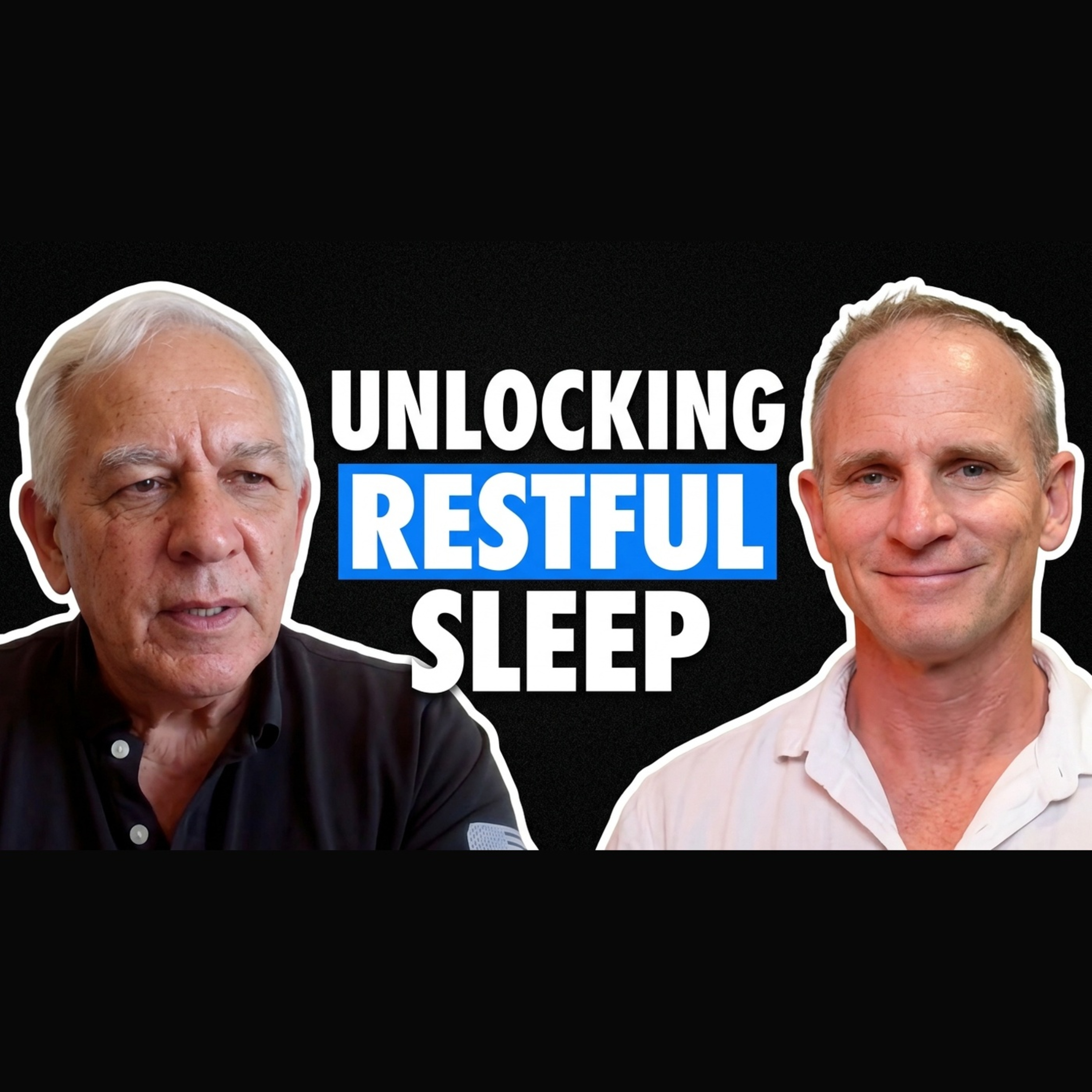
In this episode of Arthur’s Round Table, Tim Thomas shares his extraordinary journey from Australian Special Forces operations in Afghanistan to developing a global breathwork and nervous system recovery platform focused on sleep, resilience, emotional regulation, and human performance.
The conversation explores:
nervous system recovery
breathwork
sleep optimization
fight-or-flight states
trauma and stress
executive function
leadership and service
human connection
emotional resilience
high-performance living
Tim explains how chronic stress and fatigue disconnect people from their executive function and how simple breathing practices can restore clarity, resilience, emotional regulation, and human connection.
🎯 What You’ll Learn
How fight-or-flight impacts decision-making and leadership
Why sleep is the “soil from which everything grows”
How breathwork regulates the nervous system
Why fatigue disconnects people from executive function
How emotional isolation affects performance and relationships
Why modern culture keeps people trapped in chronic stress
How sunlight and breathing impact circadian rhythms
Why human connection improves resilience and recovery
How Tim helped veterans struggling with PTSD and exhaustion
Why performance without recovery becomes dangerous
🧠 Key Insights from Tim Thomas
1. Performance Without Recovery Becomes a Liability
One of Tim’s most powerful insights:
👉 “High performance without proper recovery eventually becomes dangerous.”
Tim explains how:
chronic stress
sleep deprivation
hypervigilance
emotional suppression
eventually reduce:
clarity
resilience
leadership capability
emotional regulation
2. Fight-or-Flight Disconnects Executive Function
Tim describes how people trapped in chronic stress operate from the amygdala:
reactive thinking
survival mode
emotional defensiveness
tunnel vision
When nervous systems regulate properly, people regain access to:
executive thinking
creativity
long-term decision-making
emotional stability
3. Fatigue Creates Isolation
A major theme throughout the episode:
👉 exhausted people become disconnected from themselves and others.
Tim explains that when energy is depleted:
empathy decreases
patience disappears
connection weakens
threat perception increases
4. Breathwork Can Shift the Nervous System Quickly
Tim discovered in Afghanistan that focused breathing dramatically changed his physical and emotional state.
This eventually became the foundation for:
Breathwork In Bed
sleep recovery protocols
nervous system regulation practices
5. Sleep Is the Foundation of Human Performance
Tim repeatedly emphasizes:
👉 “Sleep is the soil from which everything grows.”
Without proper sleep:
emotional regulation weakens
physical recovery slows
stress increases
cognitive performance declines
6. The First & Last Five Minutes of the Day Matter Most
One of the most practical frameworks in the episode:
👉 the first five minutes after waking and the last five minutes before sleep dramatically shape human state.
Most people unknowingly poison those moments through:
stress
screens
intrusive thoughts
anxiety
Tim teaches simple breathwork practices to reclaim those windows.
7. Human Energy Works Like Financial Capital
Tim introduces the concept of:
an “energy portfolio.”
Some activities:
drain energy
create stress
reduce resilience
while others generate:
emotional abundance
clarity
creativity
vitality
8. Service and Generosity Restore Connection
One of the most emotional stories in the episode involves Tim serving coffee to fellow soldiers during deployment.
He realized:
service dissolves ego
connection regulates stress
generosity strengthens teams
This became foundational to his philosophy.
9. Natural Light Regulates the Human Nervous System
Tim explains how:
sunrise exposure
sunlight through the eyes
circadian rhythms
breathwork outdoors
help synchronize the body’s internal systems.
He argues modern artificial environments disrupt natural human regulation.
Want to learn more about Family Office Insights? Click Here.
Arthur (0:00): Hello, welcome everybody to another episode of Arthur's Roundtable. Really, as usual, thanking you all for participating, listening in, sharing it, and we've been having a lot of fun doing these, and so thank you for paying attention. I've been reading something lately that it's, there's, you know, well, there's a lot that goes on in the world, but most of it's based on attention. Like, if you can get somebody's attention, and they're they're you know, that's that is a big success. So thank you for for paying attention to our podcast here.
Arthur (0:34): So I wanna welcome Tim from Down Under. We're really interested to hear what he has to say, and, thank you for getting up early, Tim, and sharing with the group your your philosophy in life. Let's just start with that and your origin story and your business. So thank you for doing it, Tim.
Unknown Speaker (0:52): Arthur, it's great to be here. I get the sense that you've you've walked a long and rich life, and it's good sharing space with you, even though it's virtually and I'm, and I'm on the other side of the planet. Really happy to be here. And you know, I'm really glad that the first meeting, because we met maybe three hours ago and it was my 05:30AM. So you're going to get a much better version of Tim Thomas at 08:30 in the morning here down under.
Unknown Speaker (1:15): Awesome.
Arthur (1:16): Yes. So let me let me just say to the audience and to you, the universe didn't want us to do it then. We're doing it now.
Tim (1:24): Exactly. No. As soon as it was it worked out really well. As soon as you want because I always prepare at least an hour beforehand so I can have these conversations because to me, like the rarest thing on the planet is a true friend. Right?
Tim (1:38): And around a true friend you can just let yourself be yourself warts and all. Now I thought, well, I I can't be a true friend to everybody but what is it about that space that makes it so special? And it's like a it's what I would only class it as a zero threat environment around that person. There's no threat, there's no control of the outcome, you can just be yourself, you know, everything comes out and you're and you know that you're you're held in that space and I'm like, that would be a great thing to offer to others but it's quite exhausting if it's done wrong and I did it wrong for many years. I would sort of give of myself and not of my abundance.
Tim (2:15): So what I've learned right now is if I invest in myself first and I'm in an abundant state then I can connect with others, you know, openly, honestly and they can love me, hate me, tell me to f off, it really doesn't matter. So so when we pivoted, at 05:30AM my time, I had to get up at 04:30, get everything ready for myself and gotten the ice bath, did my breath work. So when that when that pivot happened, when that choice happened, I could then choose powerfully. So as soon as we couldn't do it at 05:30AM, I went to the gym, know, did a big workout, got the got the cleared the blockages out of my body so I could connect with, you know, what is important. Again, better version of Tim now that I've, I've, know, connected to myself and so that's basically what I've been doing in a nutshell for the last decade is working with veterans that are on, are in extreme levels of fatigue and isolation and they're in what's called fight or flight or the part of the brain that's the amygdala.
Tim (3:19): Fast but dumb and it's really exhausting. There's times and places to use it like when you have to get in that zone and make crap stuff happen exactly when it's supposed to be happening, it's good to be there. But if you can't go into your prefrontal cortex, you can't go into your executive function, that's that's where people get stuck because if you're the only one who's got your back, you can't drop your guard for a second. So going to sleep at night is a really hard thing because the nervous system says if we drop our guard for a second, if I let go of the you know this particular responsibility then something there's going to happen it's going to be my fault. So for the past decade I've had great success in shifting people's states.
Tim (4:02): So these veterans that were extremely fatigued, all these resources were getting poured into them and none of it was being effective because they were stuck in a sense of isolation and fatigue. So simply shifting the fatigue and shifting the isolation that they felt all of a sudden they went from their amygdala to the prefrontal cortex, their executive function where they could see it all be with all and yeah, I got this. And so with very little resources, we were able to remove the blockages between their fight or flight to their executive function and then they just they just knew exactly what to do next. And just to sort of back this up with a bit of some statistics, my lifetime goal was to save forty veteran lives from suicide. I would have died happy if I achieved that but that was actually achieved within twelve months because of those two things.
Tim (4:52): Observing that pain doesn't matter if it's emotional or physical, it gets you locked in your amygdala and then the resultant fatigue just blocks it all up. So I I noticed it doesn't matter if you're a veteran or civilian or corporate or whatever, it's the it's the isolation people feel when they've had to maintain a level of stress, level of emotional pain, level of physical pain that then transforms into loneliness and isolation. I'm the only one going through this. No one understands this. And so I've been very successful the last decade in having people go into their executive function, but also how to shift their nervous system into the rest, digest, all is well, I am safe sort of system and how did I get a system that worked so well?
Tim (5:45): I did all the wrong things.
Arthur (5:47): Yeah, learned through doing, right? Can I just ask you quick question? There's a little delay, so forgive me if I talk over you. Is it true or fair to say that if you're stuck in fight or flight, it's kind of like if you're struggling to pay the bills, it's pretty consuming. Like it saps all your energy, right?
Arthur (6:11): So you're so distracted by making sure you can pay the mortgage and the electric bill and so on. Then if you're in fight or flight it consumes all the resources that you would otherwise use for something else more productive. Is it fair to say that?
Tim (6:28): Yes, so fight or flight is an ancient wiring system that we all have, we survived through the ages with it, but these days this fight or flight mistake existential threats for real physical threats. So the idea that that mortgage is a threat or that bill is a threat and it doesn't matter how much money you have or you don't have, it's the it's association we have that that is a threat. And it's, again, time and a place for everything, but if you're in that zone perpetually, it's very exhausting. And, without getting conspiracy theory like if you had a group of people that were in fight or flight and were exhausted, who would be more easily manipulated? The ones that are exhausted or the ones that are sleeping well, know their value, know how to improve their value.
Tim (7:20): So even if somebody has a bunch of money and they're passing it down to their kids, the kids are inheriting not just the assets but the but the nervous system as well of the parent. So if if you and I'll and I'll and I'll explain this because you don't know you're in fight or flight. It just seems normal, and everyone's doing it. Right? But when was the last time you laughed for no reason?
Tim (7:44): Out loud. Okay? There's certain things that just drop off without you noticing it. When's the last time you saw something so beautiful that just stopped you in your tracks?
Arthur (7:55): Yeah. If you're not experiencing that, then you're being you're you're being consumed by the fight or flight, for example. Right?
Unknown Speaker (8:05): And there is a time to be hyper focused. There is a time to get out there, you know, kick ass, take names, chew bubble gum. But then if you do that too much and you don't know how to regulate back into your rest digest, so this is where people kind of get stuck. There's the ones that are over performing and cooking themselves and I look at the people that are underperforming that aren't really trying, why would I wanna do that? And the people that are sort of, you know, maybe too relaxed look at the people that are over performing say, look, they got all that stuff and they're not enjoying it.
Tim (8:36): Look, the family's terrible blah blah blah. So So to me there is actually, there's a shift between those two points that can happen. I mean, we'll talk about it later but when I'm talking to people, especially my corporates, I'll talk about the performance pyramid and how you can perform over you know, a lifespan, live longer, perform higher but know how to shift, you know, from the top kicking ass taking names to the bottom, rest digest because they look completely different and the the thing that people don't understand and I know I'm saying a lot here but in Afghanistan, we used to find that we used to attack the enemy's center of gravity. Alright? So if you're in war, you would find the enemy center of gravity and if you could attack it, you would off center them and essentially, you could make them do whatever you wanted to do.
Unknown Speaker (9:26): Yeah. Destabilize them.
Tim (9:28): Yeah. And one of the greatest destabilizers was attacking their sleep. You know, we didn't know about the science of sleep, but we knew if we could take it out for three nights, it would mess them up better than a bullet. And when I come back to my, you know, wonderful western world, I noticed our center of gravity as humans is our sense of self worth. And if you're gonna attack someone's sense of self worth, then you can really destabilize them.
Tim (9:54): Right? And so there's no problem going out there getting the money, getting the car, getting the relationship. But if you've attached your sense of self worth to something outside of your body, that's when we tend to lock into fight or flight, and it's really hard to relax and down regulate because if I relax and down regulate, if I do nothing, well, maybe I am nothing. And that's sort of the the greatest hinge people get stuck with to shift into relax, rest, digest. This is where the pharmaceutical industry, the drug industry make a lot of money to help down regulate because I need something because if I'm not doing something, maybe I'm worth nothing.
Tim (10:32): Does that make sense?
Arthur (10:34): Yeah, makes sense. I'm wondering if there is if it's true that some people naturally have that ability more than others to reset, to rest and digest, go into flight or fight when it needs to get done and then pull back and then in or do you have to intentionally get to that point with tools for example?
Tim (10:58): Well, you have to understand that you don't know how strong the current is until you try and start swimming against it. So right now, there's a cultural acceptance of working extra hard and ignoring sleep. And that's a very easy thing to say, but it's a soil from which everything grows. Right? And if that's suffering, then, you know, the trunk's suffering, the leaves are suffering, the the fruit on the trees.
Tim (11:25): And this is this is where people kinda get stuck because the world we currently live in is trying to ring the life out of daytime hours, and that's what I was doing. When I was in the special forces, I couldn't have worked any harder. I I, you know, there was all sorts of stuff going on, and the biggest shift for me was discovering how to improve sleep naturally and
Unknown Speaker (11:49): Without pharmaceuticals, you mean? No. For example?
Unknown Speaker (11:51): Yeah. This was this was this was in in the dirt of Afghanistan. 2009. Oh. Obviously, they train us to go without sleep.
Tim (11:58): They train us to be, you know, some of the world's toughest humans. Right? But I I learned that performance without recovery becomes a liability. And I and for people listening, this isn't just limited to soldiers. This is, you know, corporates, board members, family members.
Unknown Speaker (12:18): So it wasn't just fatigue. It was, you know, you lose your mates over there.
Unknown Speaker (12:23): Yeah.
Tim (12:24): You see things most people would never see. So there's a whole other level of fatigue and I I'm like, man, I'm gonna die in this place. I've only got, like, 2¢ worth of energy. What's the point? And then I'm like,
Unknown Speaker (12:36): wow, that's rough.
Tim (12:38): Well, I was a pretty thick skinned individual. I had to go over there, get my ass kicked that hard to realize this. Tim, if you've only got 2¢ worth of energy, you better invest that wisely. Now with nobody showing me this, Arthur, you never got anything that you'd call quality sleep when you're outside the wire fighting bad guys. But every now and then you'd get horizontal in the dirt and normally you try and sleep as much as you could as soon as you could.
Unknown Speaker (13:03): But instead of doing that with that 2¢ worth of energy, I looked at my left thumb. No one taught me this. This is just came to me and I was just it was like something took over because I was beyond fatigue, not even thinking straight. And I I pictured a little hole in the tip of my left thumb and I just sucked air through my nose pretending it was coming through my thumb like and I'm like feeling this thing going down my thumb. And eventually, my thumb turns into white light.
Unknown Speaker (13:29): In my in my mind's eye, my thumb turns into white light. I'm like, that feels really good. And then I pull it through my pointer finger and then I fall asleep and then that 2¢ worth of energy turns into $2. I'm like, that's interesting. Energy is like money.
Tim (13:44): How you invest it is how you get it back. Everyone can manage their, you know, assets and portfolios but how are we managing our energy portfolio? So I encourage everybody to create their energy portfolio because to me destiny isn't like a mystical thing. It's it's literally like a spreadsheet. You have things in your life because Arthur, you have a unique energy signature.
Tim (14:06): Right? So you've got something that you might invest a $100 into. It might be a little difficult, uncomfortable or or hard and it might cost you a $100 but then you get $10,000 back energetically speaking. So for all my clients, the goal for all of my clients is to find out their individual energy signature and make them energetic millionaires because that's the part your teammates are looking at. That's the part your kids are embodying.
Unknown Speaker (14:30): And my kids aren't gonna do what I tell them necessarily, but they're gonna do what I do.
Arthur (14:36): Right. They watch what you do. They'll listen to what you say. Right?
Tim (14:39): So what I learned was how your own body and improving simple sleep then improves everything else because it didn't just stop there. What happens with energy is it doesn't it's never static. It's always connecting to more things and more things. And I noticed as my energy level went up, when it was low, I'm like, screw everybody. I just gotta get through the day.
Tim (15:03): And if I had alcohol, I'd be drinking it. But as I improved the quality of my sleep, my days were still the same. They're still tough, but I had more energy capital. And eventually, I got to a point where I'm good, and I started being aware of what's outside of me. I started being aware of my team.
Unknown Speaker (15:20): And it doesn't and I was like, well, it doesn't matter if I'm good. If my team's cooked, I'm cooked. So what can
Unknown Speaker (15:27): I do? Right.
Tim (15:28): And who did I want around me when good times turn bad? I had to go to Afghanistan to realize that, but I hope people listening can sort of see the importance of having those connections because, you know, the hard times are coming and who did we want around us? You know? And so I then started pouring into my teammates the best way I could. That was sort of the origin story about me discovering about, you know, high performance without proper recovery just made me a a liability.
Unknown Speaker (15:55): You can't sort of out alpha your own biology.
Arthur (15:59): Totally makes sense to me. Can we go back to the part where you said you looked at your thumb and there was a hole in the light? Was that like a a serendipitous accidental thing? Or do you take that as the Divine giving you a signal in any way that made sense so you could go down this path and realize that you needed to recharge or do whatever you had to do to arguably rest and recover and then be better for yourself and everybody else? I mean, it some divine signal?
Tim (16:33): You know, good question, Arthur. I see it as two things. One, I was fatigued past conscious thought and I do believe the strength of our ancestors didn't disappear. It's still inside of us. Right?
Tim (16:45): But the physical world we live in is so under demanding. We don't actually get to discover their power because their power only shows up when we when we really need it, right? And so I was in a space where I was I was out of my own way, I was that fatigued and the other thing that contributed to that was the only thing we did about breathing in the military was when you take a sight picture, take a deep breath in, let it out slowly, and then you take up the first trigger pressure. But that's on my dominant hand, so it was my left hand and that I they didn't show me, you know, what I did. So I just think there was some kind of ancient you could call it alright.
Tim (17:25): Look. Without tangenting too much into the spiritual realm, if someone was to look at Arthur, do you think they could see everything that is Arthur just by looking at him?
Unknown Speaker (17:36): No. Of course not.
Unknown Speaker (17:37): Of course not. Right? There is a whole side of you that is completely unseen, and it's bloody amazing. And so there's a bunch of stuff about us humans that is unseen. Some people call it spiritual.
Tim (17:50): I mean, for me, if it's for me, if there's a spiritual event, you usually don't understand it because it's usually beyond your own understanding. And it's and it's in my experience of that, it's to have you affect something so much greater than yourself. And it normally kicks your ass six ways from Sundays. It's not always a pleasant, comfortable experience. But in that occasion, it, yeah, I there was something unseen that came to the surface that had me do that and then literally everything changed.
Unknown Speaker (18:24): And
Arthur (18:24): You know, I just want to let you know I'm not looking for you to explain it because I don't there's things that we have seen or know or feel that are inexplicable. I was just wondering how you perceived that, right? And it actually doesn't matter what it was as long as it worked. Right?
Unknown Speaker (18:48): Well, okay. Well, here's here's my spiritual view. I do believe that I have a faith that tells me when I get to the other side, whatever's there is gonna say, well, here's your life as you saw it. Right and you know through your own eyes well here's your life as you didn't see it you don't just see a one action second action you see how that one action then sort of created this family tree of actions either side of you So that that and in I believe in this life, the compass we can't see that, but we do we are given a compass. The things that we feel is our duty, the things that we feel called to do, and we're doing them in a way that brings, you know, more connection to the humans around us.
Tim (19:26): Peace within ourselves and others. Joy, seeing beautiful things, feeling like you connected to others, connected to nature. Those are the things because you can feel called to do a certain thing, which I was, right? But I was doing it in such a way where I was depleting my nervous system.
Unknown Speaker (19:47): Mhmm.
Tim (19:48): So when I'm talking about what I call the performance pyramid, at the top is all the things you want to achieve in the external world. Then at the bottom is your rest recovery and healing art forms. These are the things that give you that make you the energetic millionaire to then apply yourself from your executive function to the external world. And we can still perform as we age, we just need to widen the base of that and get more specific because like I said, we're all individual energy signatures and and most people sort of just go, well, how can I apply myself out here? They're not actually going back and go, well, let's get some energy capital so we can be in our executive function.
Tim (20:29): So when we apply ourselves, we're seeing, you know, far beyond what is being achieved in the external world.
Arthur (20:37): Totally makes sense. Would you argue that it's pretty accepted that if you eat well, exercise, move and even though people say get good rest, many don't intentionally do that. They just sleep as long as they can to get up and go do it all over again, right? There's no real intention to make sure that it's quality sleep necessarily. And I don't have any facts to back that up, that's what it seems.
Arthur (21:05): Would you say that just like you have to get up and go to the gym, there's intention and execution, right? So you have to do it. And once you do it, you realize, holy crap, I feel a lot better and I have more energy. And by the way, I need to recover from that, right? If you're paying attention and I probably will sleep better and I probably won't drink as much alcohol.
Arthur (21:34): I mean all this stuff's connected, So what getting at is, it seems to me like aside from I'm gonna sleep as long as I can and get up and do what I have to do probably before I'm rested but that's part of life. Is there a formula to learn and build that muscle to widen that base and become the multimillionaire asset owner of the sleep asset. Sorry to convolute all that, but I'm just trying
Tim (22:07): to, I can see what you're saying. What you're trying to say is what a lot of people say and people essentially, they all know what they're supposed to do. Right? But people are so busy. It's like the the the bucket is filled with gravel and it's hard and we know that big rocks are supposed to go in there, but it's my life is so full anyway.
Tim (22:27): How do I jam another thing in and if they do jam a few things in, I'll do a twelve week challenge because you know, they can tell ourselves I can put up with this for twelve weeks and then I say, Oh yes, I've done something good this year and then I can, you know, do the bad stuff after that. So what we have to understand is people are already busy enough. How can we give them a 2¢ investment that gives them $2 back and they go, that felt good. More, Mhmm. Meeting them where they are because where they where they often where often people wanna be, they wanna be fit, they wanna do this, they wanna do that, they wanna do this.
Unknown Speaker (23:06): That's think of that, like the energetic super highway and we have to build an on ramp. Meet them where they are to build an easy on ramp all that was an easy win that was an easy win that was an easy win and.
Unknown Speaker (23:18): Incremental wins.
Tim (23:20): I will give you the absolute gold here, Arthur. Your state, my state, is greatly impacted by two golden five minute periods every twenty four hours. Five minutes going to sleep and the five minutes waking up. Most people unconsciously poison those. They're poisoning the soil going to sleep.
Tim (23:43): They're poisoning the first five minutes of their day. The racing thoughts, the intrusive thoughts like another day when they wake up, what's the point? My body's kinda doing this and that. And if if we can give them an easy win in those two five minute periods, that's where I'd be starting. Forget about all this.
Tim (24:03): People don't want six things to have to do and remember because their life's busy enough. You can just like I said, that's how I turned everything around. I was a high performing dude. I couldn't have gotten any higher in my particular specialty. But if I simply worked on those two five minute windows, if I won the first five minutes of the day, I won the day.
Tim (24:23): If I went to sleep connected to my breath, my REM cycles were deeper. My anti inflammation was better. Presence of oxygen, absence of disease, there's a myriad of health benefits and, you know, Google them if you want, but just the idea is to give people an easy win and then give them that energy capital. So with energy capital, they can invest and and you probably need to make 10 investments in yourself before you find one that, oh, that just gave me $10,000 back and I only cost me a 100. So what most people do is they they treat their own energy like it's an endless supply and they end up broke.
Tim (25:07): And most people in this world are living in the in the western world of fatigue where sleep when you're dead, grind away, but the Dalai Lama says it well, western man is strange. He spends all his health getting money, then he spends all his money trying to get his health back.
Unknown Speaker (25:23): Right. Right.
Tim (25:25): I'm I'm more performance based. I'm here to achieve our intention in this world, but if we lose the ability like I did to shift it down, go to the bottom of the pyramid, the rest digest and healing art forms, then we start saying things like if we don't do that, we start saying things like, oh, you're over the hill at 30, you're over the hill at 50, you're definitely over the hill at 60. If you knew that every day you could wake up like an energetic millionaire, you know. It's a very different experience walking down the street with a million dollars in the back pocket than if you got 2¢ in your back pocket because when people are energy low, super defensive. Everything's a threat because I've only got 2¢ left and everyone gets taken from.
Tim (26:09): You know, that's that's a fact. Right? But if you can be in touch with something, if you know, if you got in dialed into your own energy signature and you knew that if I did this, you know, $100 there, $10,000 back, $100 there, 50,000, and you stack that unique to you in the mornings, you're in your executive function all of that day. And what no one tells you is your energy and this executive function has a 20 has a twenty four to thirty six hour function. So every day, the wise person knows there's if you don't choose to invest in yourself and create that bit more energy, the choices get made for you.
Tim (26:48): So if I don't wake up, if I don't win the first five minutes of the day, I've got all these intrusive thoughts. What's the point? I'm a I'm an angry dude when I'm not in my executive function. I'm reactive. What are you looking at?
Tim (26:59): And all the things from the past that have pissed me off, and that's wrong, and that's wrong, and driving through traffic, forget about it. Right?
Arthur (27:05): Right. So it sounds to me like it's not even close to a zero sum game. It's actually a wide open game. Like you don't have to steal from something else to get this big deposit.
Tim (27:18): Good point because one of the one of the prime experiences of when people are in their amygdala and they're fight or flight, it's like they're standing around a table, there's only one cake, and everyone's arguing about who gets the cake and who gets more and you've got more than me and I've got to trick that person. But when you're an executive function, you're like, you know what? I can make as much cake as I want and and whoever wants to come and learn how to make their own cakes come with me. I'm raising the flag right now. So that's that's the idea and and and this is why I don't listen to mainstream media because I believe that's a deliberate shift from your executive function into your amygdala where you're actually seeing resources as scarce and then that's exhausting and what does exhausted people do?
Tim (28:01): We buy more crap than we're supposed to. We believe things we shouldn't. Now we're in this sort of reactive state and we're paralyzed and polarized.
Arthur (28:10): Yeah and there was a book I read a few years ago about explaining why videos go viral. Like what's the virality? How's that happen? And it was largely based on the human nature for fight or flight. It's like, I gotta have that because I fear if I don't have that, something else is gonna happen.
Arthur (28:32): Doing a bad job at explaining it, but it basically was back to the fight or flight thing as a function of mainstream media or the news or the advertisements or all that. You know, want to get into how you execute on those goals that you gave us the first five minutes and the last five minutes. But I'm also super curious if you don't mind sharing real briefly or not, it's up to you. When you started doing this while you were in Afghanistan, what happened to you? And then how did that spread to your team and colleagues and so forth?
Arthur (29:06): Because we all know that it's a band of brothers, right? Everybody knows if you're not performing, you put everybody else at risk, right? This is not new theory, right? So, can you talk a little bit about what happened? What you realized?
Tim (29:24): So I've only ever heard two audible whispers in my life. One of them was in Afghanistan and it could have been, you know, it could have been all sorts of things, fatigue, stress, but when I started coming good and I'm like my team needs help, I was a private. I was paid to do what everyone else tells me to do. So what could I do? You know what?
Tim (29:46): I do have a fresh supply of coffee and a little coffee maker and some thermoses. I could make people coffee, right? But here's the thing, special forces are very special dynamic, Arthur. They're all alpha males and not all of them are in are secure. Right?
Tim (30:06): And if you do an active servanthood to a an unasked active servant to an alpha insecure male, then you're his servant. And I knew that if I did that, I'd be called the brew bitch. Right? And I'm like, I've worked too hard to be here. Someone's getting politely knocked out.
Tim (30:23): And then I heard this whisper and it said, take the ego out
Unknown Speaker (30:28): of it. Yeah.
Unknown Speaker (30:29): Take the ego out of it. And I'm like and and and but here's what happened. When I fully dropped my ego, it's like it became a bridge to everywhere I wanted to get to. Like, what would life be like if you didn't care about what anyone thought of you? Like, freedom?
Unknown Speaker (30:46): Hello? Like, what the hell was I over there fighting for? Here I am a slave to my own ego, and I'm fighting for freedom. How ironic. It was kinda a bit of dark humor there.
Tim (30:55): Right? And so what did I do? I brought coffee to people. I got called the brew bitch. But the advantage of living so close to people is you can see how they're interacting.
Tim (31:09): So before I drop the coffee off, they're arguing at each other. Like, when alpha males aren't fighting somebody, they're usually fighting each other. Right? I drop the coffee
Arthur (31:17): talking shit. Right? Or, you know, whatever. Yeah. Yeah.
Tim (31:20): And I step back and I observe. They pour out the coffee. They take a sip. And when they realize it's really good coffee, they immediately take another sip. Oh, that's good.
Unknown Speaker (31:30): Right? And then everything just stops. The arguing stops. You see these big broad shoulders relaxing. They look up at the horizon and they and you see them take this deep breath, and that's interesting.
Tim (31:45): Breath to regulate their nervous system. And soon enough, the officers started seeing this coffee, and then they asked for coffee too. And then all of a sudden, all ranks started sitting together, and they weren't in a orders meeting where the high ranking was doing this. They were just all around having coffee, and there was more achieved in those few moments of you know, there was no armor between people because normally in an orders meeting the officers saying this and the sergeants are saying that and there's this, you know, f you kind of attitude. We're not gonna be, you know, we know what we're doing.
Tim (32:21): There was there was this dialogue and conversation, these connections that were happening and I wasn't physically there because I was just a private. I'm not in that circle. Right? But then I'm like, I'm not there. I'm not saying anything, but I'm the most powerful person in the room.
Arthur (32:35): Yeah. You catalyze the camaraderie. Right? That's funny.
Unknown Speaker (32:41): And that's when it hit me though. I saw the difference between I'd confuse servitude with servanthood.
Unknown Speaker (32:48): Yeah.
Tim (32:49): And that was like a massive okay. Now I get it. Take the ego. That's what the whisper was for because, you know, who did I want around me when good times turn bad? Do I want disconnected, fatigued people, or do I want rested and connected?
Tim (33:03): I just I just dropped my ego, found a way to make it happen, and that's I I had to go to that environment to have the idea of looking after those around me pushed into my DM.
Arthur (33:14): Yeah. Totally makes sense. We can talk about the other whisper another time maybe. So let's can you can you give us a peek behind the curtain a little bit about the what to do in the first five and the last five?
Tim (33:26): Yeah. Sure. So this is I don't want a tangent, but everything I do, Arthur, is I run off three p's. Military love their acronyms, and I I call it my p test. Right?
Tim (33:37): It's a bit funny. It's gotta be powerful. It's gotta be positive, but the last one's most important. It's gotta be permanent. Alright?
Tim (33:45): So there's plenty of powerful and positive stuff out there, but how permanent is it? A week later, what has changed? A month later, what has changed? So I said if I really care about somebody, I have to care about permanency. Do they have access the next week, the next day, the next year?
Tim (34:00): And if it's gonna be permanent, it can't be about me. I've gotta give people access to something that is powerful and positive and they can access it in their own time. And so I went out with this knowledge about helping people sleep better with breath, and I was getting great results. But then this Louis colonel sent me an email saying, I had guys come to me saying that was the first good night sleep in five years that they had. But what he said next had me drop out of public life for about two years, Arthur.
Tim (34:32): He said, it was good when you're there, but what have you got when you're not there? And I'm like, shit. I've just failed my p test. I'm not permanent. So I withdrew from public life, funded all this myself, tens of thousands of dollars to create Breathworking Bed, and it's the genius is the simpleness of it.
Tim (34:48): Okay? You just tell it when you wanna sleep, when you wanna wake up, and then it just falls out of your phone automatically. Because, you know, when you're tired, you don't wanna have to remember six things. You just want, I wanna Uber Eats this stuff in, boom boom, and then you can you can access that. So I I I made breath working better at my attempt at being permanent, and there is a particular kind of breath work that will turn your bed into a cloud.
Tim (35:14): Create healing through your system, and have you REM sleep a whole lot deeper. And look, the high-tech thing isn't isn't breath work in bed, it's your lungs. But to get the medicinal dose of breathing, in my experience, it does help if it's guided. Right? Just to have that little thing to breathe in breathe out.
Tim (35:35): Otherwise, it's easy to lose track. And then in the morning, there's a kind of breath work to remove all that stuck energy because you've been still for eight hours. There's a particular way to move your body, points that you can massage to to make you feel like, I feel pretty amazing right now and my feet are swinging over the edge of the bed. I've won the first five minutes of the day. So that's that's the easy win that my company gives people where the advice these days, oh, do this and do that and do this.
Unknown Speaker (36:07): I'm like, no. Let's start small. Let's start in your bed and these very easy things that you can do with your own lungs is gonna create a massive, massive difference to your state.
Arthur (36:22): So would you say I'm just gonna use me for example. I get up and I'm usually energized and ready to go, right? I'm not, I'm not. Because I work out five days a week, I eat well, you know, throughout my life I've done a lot of drinking and smoking but you know, as I age, the working out has helped a lot with making sure that I'm in pretty good shape and feel good. Feeling good obviously is important.
Arthur (36:50): So do you and there are people that just want to be optimal performers, and so they'll do anything even if they're in good shape and feel good when they get up in the morning. Is it more apparent the result of those first five minutes to the last five minutes, or the last five minutes and then the first five minutes, if you're already in a fight or flight or distressed state, is the delta between how you feel before you use this and after you feel or use this significantly bigger if you're struggling with a good night's sleep, for example?
Tim (37:29): I will say this. I've had insomniacs of thirty plus years come to me. I've prescribed simple breath work, checked in eight days later. And they're like, Tim, the only time I woke up was when the dog barked and that that guy was in and he just thought it was normal because he thought it was normal, right? That guy, his name's Chris Thompson.
Tim (37:51): He actually became my business partner when when he had that experience, but it's not uncommon and the people that are high performers as much as they're they can, you know, biohack themselves for them, they're very body sensitive. So any slight difference they really notice. So if they're not doing breath work going to sleep and if they're not having that first five minutes then that would make quite a difference.
Arthur (38:13): Yeah, it's a very good answer. So is it really that, I mean oversimplifying it, is it just, you know, there's a lot of people on this call that have done breath work on some level in yoga or whatever, on a retreat or at an ashram or something. Can you give us an example of what it looks like or the type of process? I mean, don't have to do it. I'm just wondering, is it much different than what we've experienced in breath work in the past?
Tim (38:47): Okay. So the difference here is the ease of access people have to their own lungs. Alright? So when you do one workout, that's good. Right?
Unknown Speaker (38:58): But if you do a thousand, it compounds.
Unknown Speaker (39:02): Huge difference.
Tim (39:03): So the huge difference comes in when people are doing it regularly. They're doing it at least twice every twenty four hours because it's just falling out of their phone. They're pressing a button and they're doing it without even thinking about it because when you're going to sleep, you don't wanna have to hold stuff, boom, boom, right? So so this is the thing it it it compounds over time but look, Arthur, the exciting thing about this isn't for me isn't the good night's sleep in and of itself. Remember, sleep is a soil from which everything grows and when I look at people, I see these dormant seeds of greatness, dormant seeds of uniqueness.
Tim (39:37): And I can't do what they do, but if I can improve their soil quality, all of a sudden these seeds of uniqueness like fruit grows that you've never seen before and you'd never know it was there in the soil until it actually grows. So that's that's what gives me my greatest joy. Having people flourish in these unique ways and ultimately that's, I believe, what we're here to do. Bring out that uniqueness into this world and do it generously because you know how to if you knew how to revive yourself, if you knew that every time you lost an arm, could grow it back, it's it's a very different space if you just protect, protect, protect. So getting in touch with this ability to self renew allows you to to be generous, to invest in things that may or not work, and you know yourself when you're investing, you might have to invest a few times before you find something that actually really gives you the return you're looking for.
Tim (40:32): And so it is in the energetic space, and you're already in the in the black, sorry, the red if you're not sleeping well.
Unknown Speaker (40:41): Right.
Tim (40:42): So so like I said, the exciting part about this is how the ease of access to breath work twice a day compounds over time, the quality of the soil improves and then all of a sudden these dormant seeds go, oh, I can grow now. I've always I've always wanted to do that. There was a whisper in the back of my head, I've always wanted to do that but now it seems to happen naturally because this is what we're built to do, we're built to flourish.
Unknown Speaker (41:10): So sign me up. I mean, how to, it's just, just, just go ahead and tell us how, what the process is. Go go to the website, get the app, and there's function.
Unknown Speaker (41:25): Thing. Just pull out your phone, App Store, Breathwork in bed. You gotta put Breathwork, one word, in bed. You can try it for twenty eight days. Alright?
Tim (41:36): Free. I'm not gonna and after that, it only costs like a cup of coffee. But like I said, once you get that little thing under your belt, it's amazing all these other things start happening. And and just observe the people that know you the most, ask them. So my challenge to you, Arthur, is is do the do it for twenty eight days, and then we'll have this conversation again.
Arthur (42:01): Did you purposely pick twenty eight days because that's how long it takes to create a habit?
Unknown Speaker (42:07): No. I just I think one of my developers recommended it. They might have known that. Yeah.
Arthur (42:11): Yeah. Yeah. That's a Malcolm it's it's kind of common knowledge, but Malcolm Gladwell came out with that and it became popular that twenty eight days is the magic number.
Unknown Speaker (42:25): Four lots of seven.
Arthur (42:27): Yeah. So what else should we know? Seems pretty straightforward.
Tim (42:32): Well, I would I would yeah, it is straightforward, but the people that are listening to this show are very aware on how to invest their money and their assets. I invite them to look through the same lens with their own energy and make investments in things and they're not always comfortable things to do, you know. It could be some form of physical activity that might be a bit uncomfortable initially but then afterwards you feel amazing. And just know that the energy you create has a shelf life of at the most thirty six hours. So every day, there's two completely different types of people and they're both you and they're both me.
Tim (43:19): There's a person that wins the first five minutes with their breath, that with that extra energy, they connect to their body, connect to their mind, some sort of physical interaction where your mind and your body feels connected. And often in this state of connection, we wanna connect again. Remember how I said energy never is static. It always wants to connect to more. So generosity is something I really encourage people to do.
Unknown Speaker (43:43): So in fact, on the Breath Working Bed app, we have the generosity news wall where people can put their acts of generosity. And it doesn't have to cost you anything. It could just be as simple as saying good morning, Arthur, and send that message off. Mhmm. My favorite one is just hit the voicemail message.
Unknown Speaker (44:01): Oh, good day, Arthur. Thinking of you recently. Just want you to know you're a bloody awesome bloke. Have a good day.
Unknown Speaker (44:08): Yeah. Nice.
Tim (44:09): What is that? Ten seconds and and the impact of that. People don't understand the impact of their actions on others. So to be able to connect yourself first powerfully, connect to others powerfully, and then you've you've literally biohacked your system to be in your executive function. That on this day, I'm gonna make as much cake as I want.
Unknown Speaker (44:30): I'm not gonna argue about everyone else's. I'm not even gonna buy into that story, you know?
Unknown Speaker (44:34): Right.
Unknown Speaker (44:35): I got this and I got the people around me.
Arthur (44:37): So I I have to there's a lot of people including me from time to time, and it's not about me, but I just turn myself in, go into bed a little early, flip the TV on, watch a little, you know, we enjoy good TV, and then we habitually put the sound of rain when we're ready to crash, right? I mentioned to you there's a company called NuCom that has really some very scientific recordings that have special scientific backgrounds and noise and it's comforting and there there are so many of them that are it sounds like rain. So we'll either do that or noise in the TV. But there are times when I'll have a bourbon, call it a night, watch a little TV and conk out. Right?
Arthur (45:30): Is it no different than anything else? You have to just apply discipline if it's important to you. Look.
Tim (45:36): Life is for living. And if in in any discipline, when I'm training anyone to create a new habit, I say give yourself at least one cheat day where you completely go in the other direction. And you start understanding that there's a reason why I'm not doing this anymore, but we need to be continually reminded of that. But we're also here to enjoy life in every facet. Right?
Tim (45:55): But I wanna if you want one thing, if we could drill it down to one thing, it's understanding that our body is light sensitive. So artificial light, looking at the TV, blue light, that tricks your brain to think stay awake, raise cortisol levels. Now there is a mechanical way around that. Okay? You can get these kinda blue blocking glasses.
Tim (46:20): Alright? That that's I'm I don't sell these, but this is what I use when I'm down regulating my nervous system. Okay? So in my office, because what they're doing in The States right now is they're extending the peak career of the peak life playing career of athletes by having them work out in natural light because they're saying that working out in artificial light is like eating cheesecake because our body is responsive to to light. So I have these again, I don't sell these, but these are, you know, bio lights.
Unknown Speaker (46:50): So throughout Yeah. Yeah. They change and they don't have any blue light in them.
Unknown Speaker (46:55): Alright? Cool.
Tim (46:55): They're about twice as expensive as a normal one, but I have them in my office and you can you can change them as you as you need to morning, evening, night. If you want want a super awesome hack for your morning routine, when the sun first comes over the horizon, there's a certain frequency of light that if your eyes are naked in front of it, no glasses, no nothing in front of it, it goes through your eyes and hits a part of your brain called the super charismatic nucleus. Alright? That's in charge of our internal clocks, our circadian rhythms. And when that frequency of light goes through our naked eyes into that, all our circadian rhythms sync up.
Tim (47:35): And if you've ever had the experience going to sleep and there's a part of you still running around in your head, they're not synced up to anything else. And before we went on missions in the special forces, we'd always get our watches synced up to the second of the commander. Doesn't matter if the commander's wrong, everyone synced up, makes it right. And if someone was thirty seconds out, that would make a massive impact to the rest of the team. So if you if you want a excellent self regulating experience and I and I prompt people to do this within the Breath Working Bed app, going outside, natural light on your skin, natural light through your eyes and doing some deep breathing in that space.
Tim (48:15): And if if the sun's too high to look at, close your eyes and just let that warmth go through your eyeballs, warm your brain up. There's there's a whole lot of again, we could talk for hours about how much goodness the sun gives our body, but we are light Totally. Creatures. If we can control the light or dim the lights in that last couple hours, you'll find your body naturally shifts. And if you have to watch TV, if there's a filter on there, put a filter on or you, you know, like I said, you can wear those ones.
Tim (48:43): They cost like a $80,100 bucks, but those are the options that most people don't know about if you wanna set yourself up powerfully for a downshift in your nervous system before sleep.
Arthur (48:57): Is the morning sun, is there a particular time when it hits the horizon that is most effective in the context of what you were saying?
Tim (49:06): So in what I was saying, the frequency of light is there until the point it becomes uncomfortable to look at. But there's something called there's healthy sunlight, and that's called azimuth light. Azumuth light is whenever your shadow is longer than you are. Now in Australia, we get a lot of sun and we have to be aware that of how much exposure we have when it's, you know, directly above us and my shadow is smaller than me. But the funny thing is when we expose our skin to sunlight early in the morning, it produces this natural sunscreen.
Tim (49:40): A lot of people didn't know that. All these amazing things happen. Again, I could I could talk a lot about Mhmm. Natural light, but put it this way, as much as I can, that's part of my morning routine, getting my full body in the sun with some breaths and it's actually the colors of the sunrise start switching on the energy systems to get out and go kick ass outside the cave. And those colors in sunset are in reverse.
Tim (50:12): So it starts producing the melatonin. It starts naturally switching you into your rest and digest. Now you could go down the pharmacy, buy melatonin, buy all these different things or we could take a little bit of time, sit in that sunset. Ideally, I do it a lot on my own, but it's great to do it with a loved one. And nature will give you that balance.
Tim (50:32): So that that's just again, I would be happy fulfilling on my intention to give people permanency. Like, if if all you did was get sun on your skin and and take some breaths and get that light through your eyes, I'd be happy with what people walked away with because that's that is accessible to everybody.
Arthur (50:52): It is. We have amazing sunrises and sunsets here in the mountains. It's just outrageous. It's clear skies most of the time. Rare, but we love it.
Unknown Speaker (51:09): Yeah. There's no looking at
Unknown Speaker (51:11): it through a window, weren't you?
Unknown Speaker (51:12): No. I could walk right outside.
Tim (51:14): Okay. Well, all I'm saying is most people look at that through a window, and unfortunately, the glass does block those frequencies that need to get into your eye socket. So so I've I've personally taken it to an extreme when I heard about how our brains need natural light. I've now actually gotten rid of all my sunglasses. But, again, that's just me.
Arthur (51:34): Yeah. Mary's the same way. She read a lot about it and just it's unless you're driving or something and it's dangerous, there's no point in covering your eyes from the sun. Right? Seems to be the case.
Arthur (51:48): Wow. Well, like I said, I'm in. Gonna give it a try for sure.
Unknown Speaker (51:52): Well, let's how about we how about we catch up again in a month, whether it's, you know, on the show or not? I mean, I don't like I said, permanency here, this is I never try and hit it and quit it. So regardless of whether this is on the show or not or just a personal catch up, I would love because I can the other thing I like doing is I've observed that if you give someone with a heart of service one cup of energy, they naturally turn it into 200. So even if I'm being lazy, it makes a lot of sense to give your energy to those people with a heart of service.
Arthur (52:23): Yeah. Well, I I will definitely do it and report back because I saw based on our discussion, and I don't I don't mean to even make it sound harsh because it's not, but there's no reason not to do it. I can't think of one. Right? And and like and I will take a day and have a bourbon and not do it one night and then keep on doing it.
Arthur (52:48): Okay with that. So, Tim, thank you for doing this. This has been fascinating. And I think the audience is gonna really appreciate this and so I appreciate you sharing it with everybody.
Tim (52:58): Arthur, I like your relaxed mannerisms and your kind of stoic nature. It made it very easy for me to to share openly.
Arthur (53:06): Well, thank you for saying that. We have no pretense here. We're just having conversations. So that's one of the reasons why we really like doing these is because we have no agenda, just to share information with people. That's it.
Unknown Speaker (53:22): Doing life together, my friend.
Arthur (53:24): Yes, sir. All right. Thanks everybody for being there. Tim, hang on a second. Thank you.
Unknown Speaker (53:29): And we'll see you next time. Thanks for dialing into the show.
Founder
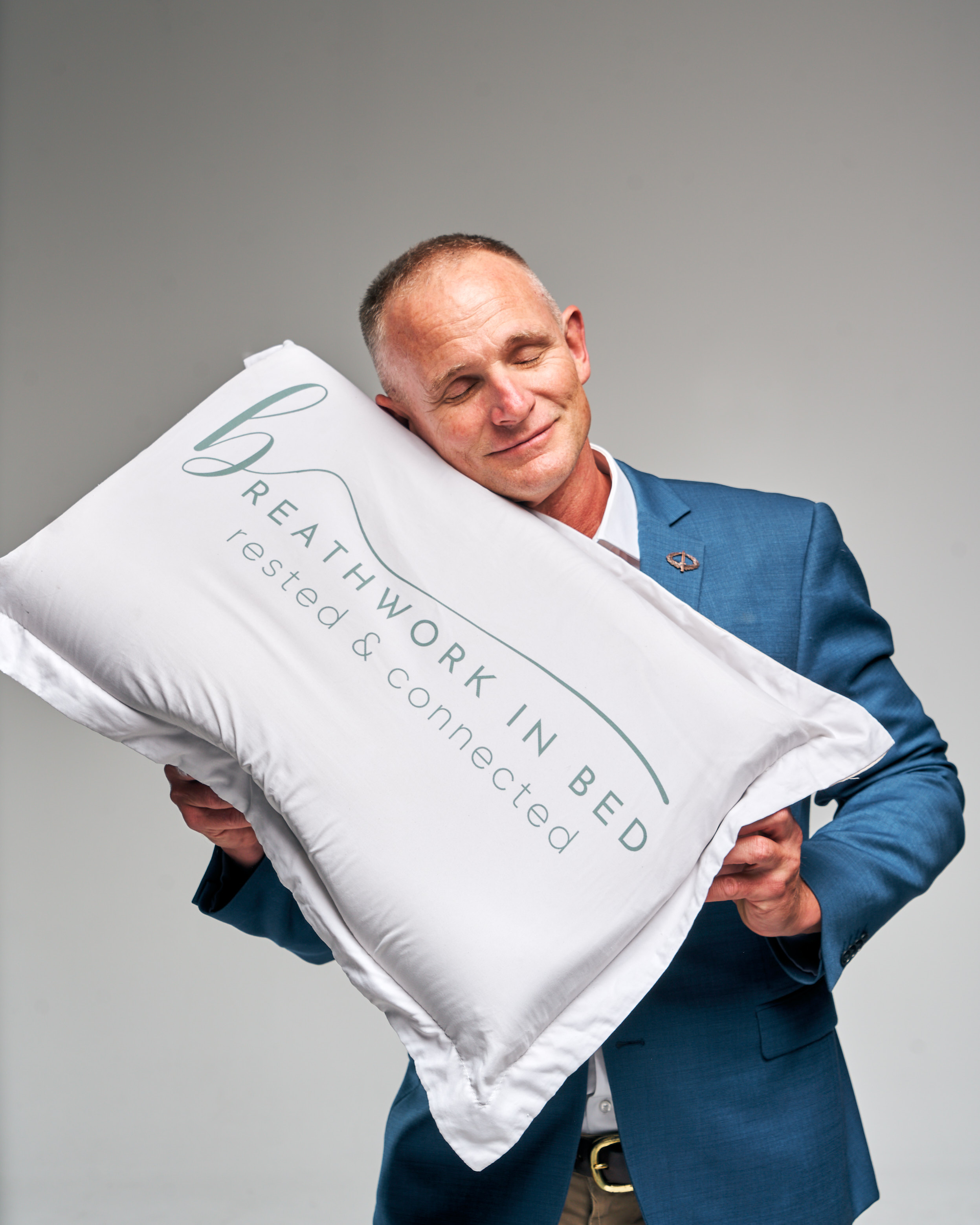
Meet Tim Thomas.
A former Australian Special Forces Commando who discovered something most people spend their whole lives chasing…
How to switch off stress on command.
After years in high-pressure environments, Tim returned home carrying what many veterans do, poor sleep, high stress, and a nervous system stuck in overdrive. He battled PTSD, addiction, and the breakdown of his personal life, all while still “functioning” on the outside.
But everything changed with a simple discovery:
The off-switch wasn’t out there.
It was already inside him.
That discovery, made lying exhausted in the Afghan desert, then refined while going through his own divorce, became the foundation of Breathwork in Bed.
Today, Tim helps people reclaim control of their energy, sleep, and state, not through theory, but through simple, physical practices that work in real life.
Because most people aren’t just tired…
they’ve forgotten what it feels like to be human.
And it’s hard to feel human when you’re not sleeping, when your system is constantly switched on, and you’ve lost connection to yourself.
Tim’s work is about bringing people back to that.
Back to feeling.
Back to presence.
Back to being human again.
He’s worked with veterans, athletes, professionals, and high-performers, and has raised over $1.3 million for causes close to his heart.
His message is simple, but it cuts deep:
You’re not tired because life is hard…
You’re tired because you’ve lost control of your energy.
Through his app, workshops, and live demonstrations, Tim s… Read More