Apple Podcasts
 Spotify
 YouTube
 Can AI Save Humanity? Inside Michael Nash's Global Investigation
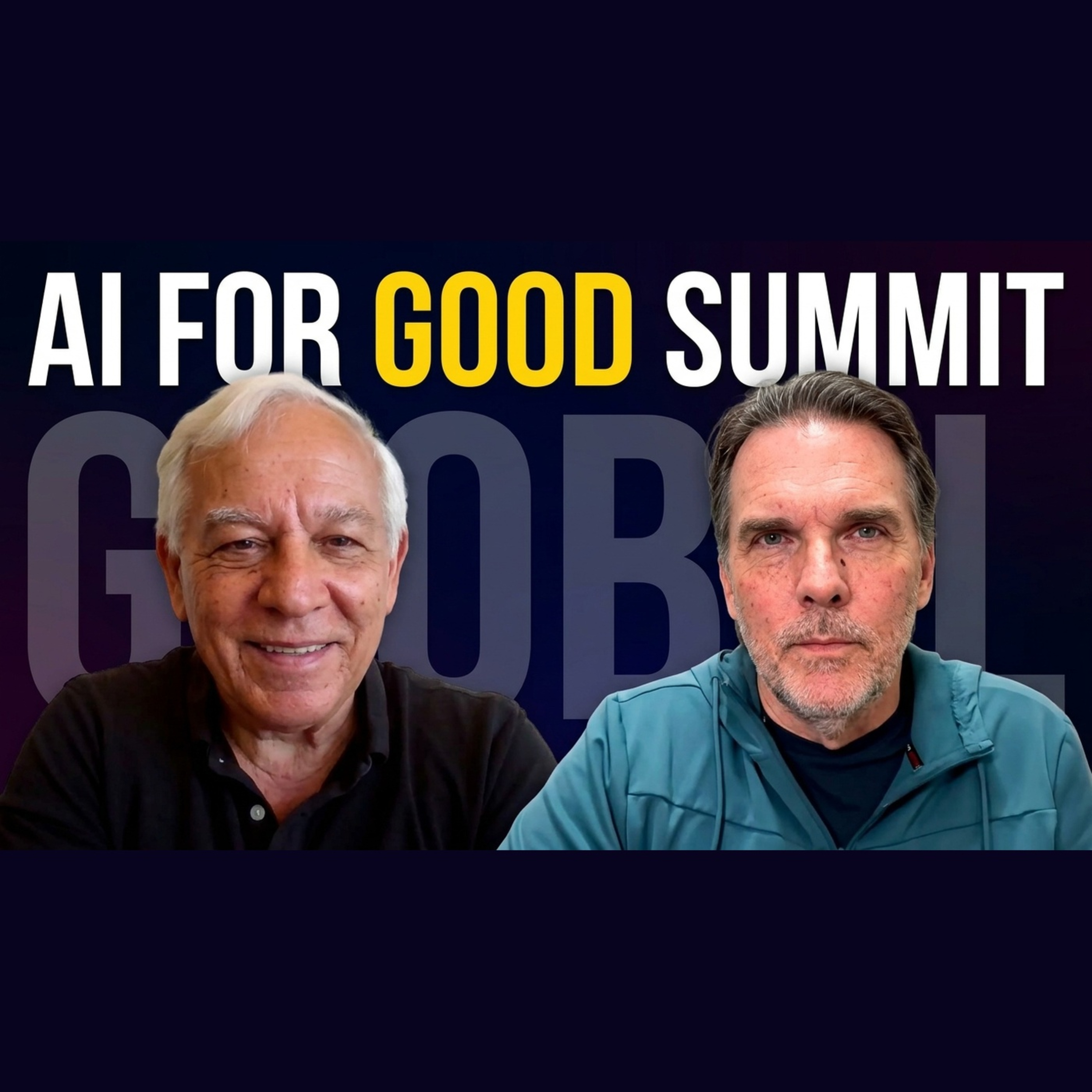
Filmmaker Michael Nash discusses AI for Good, the United Nations AI for Good Global Summit, and how artificial intelligence may help solve humanity's greatest challenges—from healthcare and agriculture to education, climate, and global accountability. Learn why the future of AI depends on wisdom, intention, and human values
Key Takeaways
- Filmmaker Michael Nash investigates AI's potential to solve humanity's biggest problems through his documentary series RAISE, highlighting its applications in agriculture, healthcare, education, and environmental protection.
- The conversation balances optimism about AI's capabilities with necessary caution, stressing that true progress hinges on human wisdom and values, not just technological advancement.
- AI can play a significant role in environmental protection, sustainability, and improving accountability and transparency across various sectors.
- Intentional leadership is critical for responsibly developing and deploying AI technologies, ensuring it becomes humanity's greatest tool rather than its greatest challenge.
- The episode touches upon the UN's AI for Good Global Summit, a key event for discussing the future of artificial intelligence with global leaders and innovators.
In this episode of the Family Office Investing Podcast & Investor Insights | Arthur's Round Table, host Arthur sits down with the acclaimed filmmaker Michael Nash for a profound discussion on one of the most critical questions facing our world today: Can artificial intelligence help solve humanity's biggest problems? Nash, the visionary behind the groundbreaking documentary series RAISE, delves into his global investigation of AI's potential to tackle immense challenges across agriculture, healthcare, education, environmental protection, and human development.
The conversation navigates the delicate balance between optimism and caution that surrounds artificial intelligence. It highlights the indispensable role of wisdom in guiding technological innovation, suggesting that the future of AI may ultimately hinge less on the technology itself and more on the inherent qualities of humanity.
Nash also provides insights into the upcoming screening of RAISE at the United Nations' AI for Good Global Summit in Geneva. This pivotal event convenes world leaders, innovators, policymakers, and technologists to collaboratively shape the future trajectory of artificial intelligence. This episode offers a thought-provoking exploration for family offices, investors, entrepreneurs, policymakers, technologists, and anyone with a vested interest in the future of society.
Key Insights from the Discussion:
- The motivations behind Michael Nash's creation of the AI documentary series RAISE.
- Real-world examples of how AI is currently contributing to solutions for pressing global issues.
- Anticipated advancements in healthcare, agriculture, and education driven by artificial intelligence.
- The critical importance of imbuing AI development with wisdom and human values.
- AI's expanding role in environmental protection and the pursuit of sustainability.
- How artificial intelligence can foster greater accountability and transparency across various sectors.
- An examination of whether AI will ultimately serve as humanity's greatest tool or its greatest challenge.
- The necessity of intentional and ethical leadership in the rapidly evolving AI era.
- An outlook on what to expect from the influential UN AI for Good Global Summit.
- Why this conversation about AI might be the most important technology discussion of our lifetime.
About Michael Nash
Michael Nash is an award-winning filmmaker, storyteller, and the founder of Beverly Hills Productions. His work has gained international recognition for its powerful exploration of major humanitarian, environmental, and societal issues. His latest project, RAISE, directly confronts the question of whether artificial intelligence can serve as a vital tool in helping humanity overcome its most significant challenges.
Want to learn more about Family Office Insights? Click Here.
Frequently Asked Questions
Can AI help solve humanity's biggest problems?
Filmmaker Michael Nash explores AI's potential to address major global challenges in agriculture, healthcare, education, and environmental protection through his documentary series RAISE.
What is the role of wisdom in AI development?
Wisdom is essential to guide artificial intelligence, ensuring that technological innovation is aligned with human values and thoughtful direction for responsible progress.
How can AI contribute to environmental protection?
AI can aid in environmental protection and sustainability by helping to monitor ecological issues and develop solutions for pressing environmental concerns.
What is the UN AI for Good Global Summit?
It is a significant event where world leaders, innovators, and policymakers gather to discuss the future of artificial intelligence and its potential to benefit humanity.
Arthur Andrew Bavelas (00:01.113)
Hello, welcome everybody to another episode of Arthur's Roundtable. We're super excited to have Michael Nash with us today. Many of you know who he is. I have to big shout out to Clint, my friend, who introduced us many years ago when we were in Costa Rica. We talked about this a related project to this, and I'm so glad to see that Michael was able to pull this together on a timely topic, which is AI for good. and so
Aside from being a very accomplished filmmaker, there's lots of here to talk about, including an event that we're coordinating with Michael in Switzerland with the what is it called? The AI for good, UN, is that the official name?
Michael P Nash (00:43.872)
Yeah, it's it's the well, first of all, Arthur, great, great to be on your round table and thank you for inviting me. I think this is a incredibly important message to kind of talk about. So, you know, we're excited to have a conversation with you today. The event is called the AI for good global summit. And it's the largest event the A the United Nations puts on with regards to AI.
Arthur Andrew Bavelas (00:47.439)
Yeah.
Arthur Andrew Bavelas (00:51.983)
You bet.
Michael P Nash (01:12.792)
With a focus on technology, but also from a humanitarian standpoint. so and at the core of it all is ITU. And I I never knew what I who the IT ITU was, but it they're pretty interesting when you when you kind of look at their past. They started somewhere around eighteen fifty, and their focus is really about when technology and communication crosses borders.
So I'm pretty sure, you know, they probably probably started out with with with the telegram and then maybe moved on to radio. Yeah, exactly. you know, radio, then television, then the internet. And now, you know, the big conversation is obviously AI and you know, what happens when it crosses borders and and all of those things. So they're behind the summit. And you know, it's it's in the first kind of week of July. I think it's like the the sixth to the tenth, and our screening.
Arthur Andrew Bavelas (01:41.335)
Right. Only express the whole thing, yeah. Yeah.
Michael P Nash (02:07.158)
Is on the ninth, so
Arthur Andrew Bavelas (02:09.272)
So let let let's just give them a little background, the audience on what we're screening, and then we wanna go back and talk about your journey a little bit, if that's okay.
Michael P Nash (02:20.46)
Yeah, so you know, I I think when a lot of people first of all, it it's it's titled Raise, and it's based off of a six-part docuseries that we've been putting together for the last two years. We've traveled around the world. really with the focus, it all started out with one question, and that was is it possible for AI to solve some of the largest problems?
That humanity has. You know, problems that were truly moonshots without the assistance of some higher intelligence. Problems that we have been unable to fix by ourselves. And if indeed artificial intelligence is able to do that, how do we control it? And how do we build a world that we all look forward to? That was really the
I think when you know filmmakers or storytellers or authors kind of start a journey or a mission, it normally begins with a single nugget. And that was kind of the kernel that, at least for myself, you know, I still I I started really questioning it and and and for no other reason, I suppose, than at that point there were two conversations that have kind of existed throughout the world on AI. One is the dystopian conversation.
where Hollywood and sci-fi writers have done a masterful job, you know, on on illuminating this over the last seven 70 years, and perhaps to some degree given us an element of PTSD over it all. And then the other side of it is the utopian aspect of it, where you know, have you have a lot of like key people in this saying we have nothing to worry about. And
Arthur Andrew Bavelas (04:02.306)
Totally.
Michael P Nash (04:12.716)
We decided myself and my partners on the film early on decided that.
Let's go down the middle and see what's there. Let's let's actually, you know, illuminate, evaluate, do research on where the rubber meets the road with AI. Not next year, not a decade from now, but right now. And that was really, you know, the beginning of it all. an interesting little side note, we had the funding for a different film. And it was actually a sequel to a film I did many years ago.
And it was right as Chat GPT was kind of coming out, you know, it was that October, November, I think, and and it just became very clear that like AI is gonna be the biggest conversation that we're gonna have over the next, you know, decade or two and and maybe we should jump, you know, switch lanes on this.
Arthur Andrew Bavelas (04:58.126)
Yeah.
Arthur Andrew Bavelas (05:08.748)
Yeah, isn't it interesting that what you concluded that rather than expressing your agenda to being on one side or another, and I'm not saying that was your agenda, but one's agenda, you you made the smart move and gone down the middle and let's see what's happening here, right? How reasonable is that? Right.
Yeah, it's it's really funny.
Michael P Nash (05:34.358)
Yeah, well, it's you know, it was the converse it was a conversation that wasn't happening. And I have so many friends that don't even want to have a conversation about AI because they're just they've just closed their mind on it. They're in fear of what's going to happen. And they have every right to have that fear. I mean, anything as big as AI is, we should be concerned about.
Arthur Andrew Bavelas (06:02.094)
Yeah.
Michael P Nash (06:02.274)
You know, and we're not saying by no means are we painting a picture within this film that that we have no concerns. but we we do focus on the solutions aspect of artificial intelligence. And you know, in in some of the conversations that the film team had early on, just because we saw our families and our friends, the majority of them really kind of unsure and in fear of all of this, we did not want want to make another film that
you know, this doomsday scenario where people don't even want to watch it, where they stick their head in their sand and just kind of move on from it. We wanted to if there was a story out there and we could and and and we could find it, we wanted to share, you know, that, hey, may maybe maybe maybe there's some hope in all of this.
Arthur Andrew Bavelas (06:50.178)
Yeah. I actually think there is, and what a great time to be alive, but that's just my siloed opinion. and we we have already experienced, at least publicly, that AI has helped mathematicians solve problems that they never thought they'd be able to solve. I mean, just math by itself, right? Which makes sense. Like, okay, computation, compute, math.
Michael P Nash (06:57.941)
I agree.
Arthur Andrew Bavelas (07:19.158)
Iteration, right? Experimentation. Totally makes sense that AI would help you with that. And of course, if we're optimistic about it, which it takes the same amount of energy to be optimistic than pessimistic, right? then we are likely to solve a bunch of medical issues that we've been ch challenged with just because we I mean, look at you can get a human genome printout for your human genome printout for two hundred bucks on the internet. Like
What's a it used to take, you know, four years and a few million bucks. I mean
Michael P Nash (07:53.836)
Yep. We we get into all of that. So, you know, if if if we looked at the series, the series is a six part series and and we break it down. And you know, so the first episode, we dig deep into agriculture and global food supply. And, you know, is it actually possible for AI to help us create really a new space on how to grow food?
will will AI hold these chemical companies that are pumping stuff and you know, all of this into our food and making us unhealthy, unhealthy? Will AI allow, you know, an average person to hold those companies accountable? And so we really kind of get deep into the conversation of of agriculture and food. and we, you know, we we illuminate some really cool companies. I mean, just to give you an example of this one company, and they actually are are through the series.
It's a company called Planet Labs. And Planet Labs takes a picture of every three meter by three meter section of the Earth every week. They know every single tree on Earth. Crazy, right? And so, you know, and and and when we were talking to him, he was like, you know, when we started this company, which wasn't that long ago, a satellite that we would send up in space was the size of a school bus.
Now it's literally like this big. just to give you an example of like one of the things that we spoke about in the series that Planet Labs is doing, they Will, who is the founder, you know, shared a story with me. He goes, To give you example, you know, in Brazil, Brazil has had a big problem with trying to protect the rainforest. People come in, they want rare earth minerals, they want to deforest it. The rainforest is the size of the United States. How do you control?
You know, every square meter of that. So through satellite imagery, the the Brazil now gets the information. And what they've learned is that when people start cutting these thin roads and avenues into, you know, the places where they need to go in order to get the goods, it takes them a while. And they were never able to find those people until they extracted what they needed and and they were gone most of the time.
Arthur Andrew Bavelas (10:17.977)
Too late, yeah.
Michael P Nash (10:18.922)
Last year alone, with this technology, the Brazil government arrested three thousand different cases and confiscated over five billion dollars in heavy equipment.
Michael P Nash (10:33.974)
And those are things that like when you think about AI, you never even really think about, right? Planet Labs is also monitoring fishing vessels. So, you know, if countries are going off, you know, the coast of poor cities and robbing them of their fish, Planet Labs is tracking all of that. And Planet Labs is just one of I think we probably have like thirty, thirty-five companies that we kind of showcase within the the series, just just that are doing unbelievable things.
Arthur Andrew Bavelas (10:37.358)
Yeah.
Arthur Andrew Bavelas (11:02.979)
Yeah, you know, we talked about this on another podcast, but it's always been a topic that people are troubled with having glyphosate in our food system, right? And that alone, we we know that glyphosate continues to be used by the farmers because they don't have a credible alternative, even though we know that the effects of that are bad across the board, right? And we also know that the company who owns
glyphosate is continued to use it because there's such demand and that they've set up sinking fund to play pay for the lawsuit. So it's kind of a screwed up system, right? Yeah, we know we're liable, but we've we make so much money that it doesn't matter. And I'm not trying to make an evil corporate argument here, but you know, I I I I have the opportunity to talk to a bunch of farmers and they're saying
We we're open to an alternative. It's just that for the alternative right now, for example, we know of a alternative of glyphosate. It's just too expensive. At the end of the day, they would not be able to produce a product for the consumer. That doesn't make it right that we have glyphosate in our soybeans, but or perhaps it almost everything. But a thing like that, you would think AI could solve pretty quickly, right?
Michael P Nash (12:25.59)
It can. And, you know, we w we interviewed several people in this space. One of them was Carlo Mandavi, the great the grandson of Robert Mundavi. And, you know, he shared, you know, his own understanding when, you know, his friends that are farmers and himself, you know, when they got to 18 or 20 years old, their parents throwed him the keys to the tractor and said, Hey, go do better. And, you know, and so they went out and they tried to make their way on the farm and figure out the best ways to do it. And all of a sudden,
you know, corporations showed up and said, Hey, you know, we can you can eliminate mowing if you put this strip down here, if you put this chemical here, it can save you this. It's actually gonna save you fuel and oil on having to mow every time it rains, which is good for the climate. You know, and they and they were sold this to the point where it's actually in universities as well. And so, you know, Carlos' was by the time you're, you know, twenty-five-thirty and you're you're really like ready to to
to you know set your feet into the soil, the chemical companies, they already have you. You know, and and and they're making great cases on how to save money, which is important for farmers. I mean, every nickel to a farmer is everything. So, you know, I don't I I I think what and what Carlo kind of highlighted was the the the error, what he called two point which is the chemical error in agriculture, it's not needed anymore. you know, w with with
satellite imagery and stuff like that, you can tell like if you have a disease within your, you know, 12,000 acre farm, you're gonna be able to tell that disease within the first couple of days because of the satellite before it, you know, takes over 60 or 70 acres of your product. So it's just a different space that we're kind of moving into. And it's it's just that's just another scenario where AI you know, has the opportunity to help.
I one of the key parts of this series, and this is one of the beautiful things, Arthur, when you're when you're, you know, traveling around and you're sitting down with people and communicating with people and having dinner with people and and then you put a camera in front of them and you have an outline of the film that is fluid enough to allow the truth to come in. and I think that was very important for this film. You know, we
Arthur Andrew Bavelas (14:46.553)
Yeah.
Michael P Nash (14:50.648)
The funding that it was a donation and nothing attached to it. Go, go find the truth. Go in search of the truth of this. which was important to everybody that's in that that that's involved in the film. But one of the things that kind of came out of this was we were in Amsterdam interviewing an indigenous woman, actually a healer, a holy woman from the Maui tribe, who represents a lot of the Polynesian
villages and things of that nature. And I'm and we're, you know, we're interviewing her. And I said, well, tell me about, you know, what are your thoughts on AI? Like, like, and like, be honest, like be straight. I want to hear the truth from and she goes, well, first of all, let's talk about the other AI. And I was like, okay, Auntie Ivy, tell me about the other AI. And she goes, ancestral intelligence. And when she said that, the hair on the back of my neck stood up.
Arthur Andrew Bavelas (15:42.158)
Yeah.
Michael P Nash (15:47.618)
Because we always knew in this film, you know, when when when when our with when the my my partners on this, which are the DiCaprio is Leonardo DiCaprio and his father, George DiCaprio, and my producer is Laura Cox. it was always incredibly important to us to go to the center of this. And so to give you an example, in agriculture, in that first episode, we go back to the seed, you know.
Go, we go back to the beginning because in the beginning we really had everything that we needed. And there's great value in that. and and what we learned through this process is that wisdom supersedes intelligence. You can have intelligence without wisdom, but you can't have wisdom without intelligence. You can tell a child, don't touch that stove, it's hot.
Arthur Andrew Bavelas (16:32.747)
No doubt. Totally.
Michael P Nash (16:43.63)
Junior, I'm telling you, don't touch that stove. It's hot. It's 400 degrees. If you touch you're gonna get blisters on, you're gonna be, you're gonna be able to play baseball. You're not, you know, please don't touch it. You you can give them all of the information they need not to touch that stove. When they touch it and they feel that pain and they experience that, they now have wisdom on what the father was trying to educate the son about the hot stove, right? And so when you take that and you scale it out.
we think there's great lessons to be learned in all of this, especially with what we're doing now. And so one of the key like taglines that we have within all of this is do we need to lean on the wisdom of the past to guide the intelligence of the future?
Arthur Andrew Bavelas (17:29.251)
Why wouldn't we? I mean who would argue against that?
Yeah. I mean we see that forever in terms of just people training
To change horseshoes or build HVAC systems. I mean, plumbing. I mean, you just look at all that stuff and the experience that people have because they've done it for so long, hand it down to the next generation. I mean, we could talk about that in almost anything. you know, ch even in mythological studies, right? That was just wisdom pass it down, right?
Michael P Nash (18:16.61)
Yeah, you know, when when we were a lot of people had well, we don't understand why you're interviewing, you know, Chief Looking Horse or this indigenous woman from Maui. Like, this is a film about AI, isn't it? Like what w like this doesn't make sense to me. but to us it made sense. And we weren't actually sure when we were doing all of this whether we were going to actually put this be able to put this together in a way that did make sense. Because th
Arthur Andrew Bavelas (18:27.087)
Yeah.
Michael P Nash (18:43.522)
This conversation, this series raise and by the way, we called it raise because we believe if executed correctly, it could raise all of humanity. And and and we love the word because AI happens to be in the middle of the word.
Arthur Andrew Bavelas (18:57.475)
Be in the middle of the yeah.
Michael P Nash (19:00.008)
but the film is much more a film about humanity in the decisions that we make today than a film on AI. Even though Jensen Jung from NVIDIA
Is featured throughout the series and starts out every episode. and Jensen and I had some really great conversations about some really, you know, interesting things with regards to humanity and how we move all of this forward and
Michael P Nash (19:36.298)
I should also say that NVIDIA was very, very helpful through a lot of this process in helping us find some of the companies that were doing really amazing things.
Arthur Andrew Bavelas (19:47.479)
I bet some of those conversations were hard subjects, right?
Michael P Nash (19:51.618)
They were and
Michael P Nash (19:56.96)
I don't my hope is that this film.
First of all, the people don't run from it because they see the AI title in it, right? That they sit down and they watch it and they realize that.
There is hope out there. And we have something at you know, we have a tool to the likes of which we've never had before to help us solve some of these global problems. But it's not gonna happen by accident. Like we can create a great world, but it has to be intentional.
Arthur Andrew Bavelas (20:30.871)
It has to be intentional for sure. Cause things can get run off the rails pretty easily.
Michael P Nash (20:36.536)
They can, and you know, if if history has taught us anything, it's there are evil people in the world, and those people use the newest technologies for ill will. And so and they will continue to do so, and that's a story that's going to happen. the key is to minimize it as much as possible.
Arthur Andrew Bavelas (20:46.937)
Yeah. And they and they will continue to do so, right?
Arthur Andrew Bavelas (20:58.713)
You know, when people talk about AI, people who understand this on some level, which are arguably credible, that you know, you would think that they know something about it. you know, w some of them say, okay, we need the regulators to get involved, and others say, no, we don't need the regulators, we need to be self-regulated.
I mean, is it that that is a sticky wicket, right? And the the solution is not obvious. and I mean you just l had and this is just my opinion, but had Elon not bought X, we would be in a a a real pickle about freedom of speech. That's just my opinion. because he
He didn't buy it for his agenda besides freedom of speech, arguably. he bought it because you know people were being coerced into doing things that were aligning with somebody else's agenda. So I kind of think about it that way. Like, how can we make it so it's not driven by somebody's agenda to either advance their interests or do
ill will for the world.
Michael P Nash (22:26.188)
Yeah, it it's a delicate dance. And we we you know, we interview the Secretary General General of the ITU, Doreen Martin Bogner, and and she we sh we get into quite deep conversations with her about that, as well as Jensen on this issue of regulation. And I don't know if there's a sp like a clean answer for, but one of the things that was said in the film, which I think is important.
Is had we set all the regulations for AI five years ago?
They probably wouldn't work today.
Arthur Andrew Bavelas (23:07.191)
Yeah, they don't apply. It's move too fast, right?
Michael P Nash (23:09.632)
And if we set all the regulations today, they may not work five years from now. And that's that's a challenge. The speed that this is taking place is really problematic in certain areas. you know, the jobs that it's going to take are really problematic because it's going to happen so quickly. It's going to also supply a lot of great jobs, but how do we manage all of that? You know, and
That's really what we attempt to answer within the series. I believe and every single person that I interviewed in the film.
The last question that I asked them was
I believe in the next two years, five years, ten years, whatever the time frame is, AI is going to hold a giant mirror up to humanity. And that mirror is going to reflect the good and the bad of us and hold us accountable to the likes of which we have never been held accountable before. Not even close.
Arthur Andrew Bavelas (24:15.885)
Yeah, 'cause you can't you can't fake it out, right? Yeah.
Michael P Nash (24:19.286)
You can't, and so the decisions that we're making today.
Are going to be reflected in this mirror. And so I think this needs to be as much mission-based, if not more mission-based, than money-based at this point. You know, one of the other challenges is, and I'm sure most people have, you know, heard or seen this, it it it you know, it's a national security risk. And the framework of that really just
Arthur Andrew Bavelas (24:37.571)
Yep, totally.
Michael P Nash (24:54.466)
deregulates everything, you know, just opens up everything for just we need to move forward with this. And and every single person that we spoke to, they truly believe that. you know, we're in a race with China, with this or that, and and other people, and
But it's incredibly complicated. And even when you ask AI to try and give you the answer in something like that, it's it's problematic.
Arthur Andrew Bavelas (25:24.821)
It is problematic. There are people that are saying, for example, with the loss of jobs, that we're not asking the right people about whether they're concerned about or that concerned about losing their job or not. For example, if you're a a warehouse worker at Amazon, do you want that job or do you not want that job? Right. And then I'm thinking they may or may not want that job, but they need that job, right?
so it's not whether I like it or not. It's whether how else am I going to support my family? Right.
Michael P Nash (26:01.282)
Well and that's one of the conversations that we've had that
I personally have a problem with the answers that I've heard. And, you know, there's this conversation about UBI, universal basic income. Right. And it's, it's going to be great. You know, people will have money and they'll be able to write poetry and they'll be able to do things that they were never able to do before. I lived in LA for 25 years. The people that I know that had were trust fund kids or never had to worry about a job, or it they it was great in their 20s. It was really good up to maybe 35.
But then somewhere between 35 and 40, they realized that their life had no purpose. It had no passion. And when you ston't have that, you have no hope. And depression sets in and anxiety sets in. So yeah, that's a really complicated issue. I mean that's a documentary on its own, just trying to, you know, figure out the best methods forward with all of that.
Arthur Andrew Bavelas (26:42.767)
Yeah.
Arthur Andrew Bavelas (27:04.995)
Yeah, and it's I've said this about politics in general, and then some of the things that are happening in the world in j in general as well, is that the preponderance of the population doesn't dig deep enough on issues or politics to understand what's really going on to the extent you can figure that out. And it's not because they don't care, is they have bandwidth issues, just like everybody else, right?
What am I going to do? Am I going to make sure I get a good night's sleep, get up in the morning, do my job, take Johnny to soccer, pick up Susie from ballet, and do it all over again to make sure that I'm taking care of the family unit? And when do I have time to drill deep about an issue related to the world or politics? It just doesn't happen. And so people as a default position will attach themselves.
To an ideology, I'm not saying everybody does this, but and I'm not judging it, that supports what they think their position is, and that's it. And they keep moving, right? Because there's no point in digging any deeper because it doesn't do them any good. So I think that's going to be true here is that, shit, I'm going to use lose my job because I didn't figure out how to be a good AI prompter.
Michael P Nash (28:13.762)
Yeah. Yep.
Arthur Andrew Bavelas (28:32.787)
so what should I do about that? Right. And what's really interesting is we know that is efficient that agents of agents are really good. You still need a human to tell it what to do and check it. It's like quality control, right? So that skill set's gonna be never mind the whole I I see it happening in in my adjacent world where
It's more important to get together in person with people than it ever has been, right?
Michael P Nash (29:06.444)
Yeah. You know, it's that's a big problem area, and hopefully
Хопфолі та ПІПІЛ да двіс.
embrace this from a humanitarian standpoint because it's going to be troublesome. And you know, there's a lot of people that I friends of mine in LA who just they're like, I I'll never make a film with AI. And I remember 25 years ago when we were moving from film to video, and you know, the purists were like, no way I'm shooting on video. It, you know, the you can't the blacks don't look the same. You can't do this. You can't do that. And of course what happened? You know, it I I remember, you know,
So my father had a computer company and wrote code in the in in the late 50s and 60s. And then he kind of got, you know, left that business and went into something else. But I remember like in the early 90s, he was telling us that we're going to be Christmas shopping online, like on the computer. And we were like, what? And we thought he was crazy. Like we we would never trust anybody to give us, well, look at where we are now. So
Arthur Andrew Bavelas (30:07.681)
Online, like, can you believe it?
Michael P Nash (30:18.53)
You know, I I think there's some there there's always early adopters to new technology. you know, my my filmmaking friends who who who have that opinion, they certainly have the right to have that opinion. and I try to share with them, look, I get that, but you also have an opportunity to embrace this right now and and secure your your you know your position moving forward. that's not going to happen by accident. Like you need to take initiative to do that. Yeah, because someone's going to.
Arthur Andrew Bavelas (30:45.249)
Intention. Intention. Yeah. Yeah.
Michael P Nash (30:48.492)
That doesn't solve the problem with all of these others' folks that may be losing their jobs because of this. But I'll but I'll share a story with you, which is interesting. We in again in episode one, we go to an indoor farm, run completely off of technology. And, you know, when you go to a traditional farm, I don't know, there what are there, maybe 20, 30 people working on the farm.
you know, in overalls and they're, you know, getting rained on and snowed on and they're Yeah, I mean hard work, right?
Arthur Andrew Bavelas (31:18.617)
Doing the hard work, yeah. Yeah.
Michael P Nash (31:23.66)
I don't know the exact number of employees at this farm, this indoor farm had, but I would say it was well over a hundred. And they're in a grow zone wearing almost like hazmat suits, you know, like the plants are in this perfect scenario because of AI, where they're giving the plants everything that they need. And at first, this, you know, these things were incredibly expensive. Now they're on the shelf at Kroger for the same price.
of organic food, and they believe in a year or two they'll be at the price of normal food. Well you can repeat and scale what they've built around the world. so there are new entities that are going to take place where new jobs will, you know, will spring up. But you know, these aren't farmers that are wearing overalls. They're sitting in grow zones or on laptops writing algorithms for their next, you know, for their next crop.
Arthur Andrew Bavelas (32:20.195)
Yeah, to make sure everything's getting the nutrients they want. I mean science, right? Totally.
Michael P Nash (32:23.564)
Yeah. And the the the same with think with medical. You know, when we we spoke to a lot of folks in the medical space and it's unbelievable what what what what's going to happen. and I guess at the at at the at the center of it, it's really moving from crisis management management to predictive and prevention in our own health. But I think right now the global number, and don't quote me on this, but I think the world is in need.
Of forty thousand doctors right now.
Arthur Andrew Bavelas (32:53.827)
Yeah.
Michael P Nash (32:56.194)
And and a bigger short of an of nerd nurses. And when you get to teachers, it's enormous. so this is where AI is really going to be help you know, allow humanity to be able to, you know, bring the intelligence to people that where they don't have specialists or experts around them.
Arthur Andrew Bavelas (32:56.705)
And nurses, there's a shortage of nurses as well, right?
Arthur Andrew Bavelas (33:18.275)
You know, the other thing, and this is super political, so forgive me, but I don't really care. imagine that even if a f it's a fraction of the dollar amount that's true, that we apply the AI on accountability of all the fraud that's going on in the federal government, right? We're the cleanest, dirtiest shirt in the laundry, right?
We're the the worst or society except for all the others. So we have fraud, and what we've discovered in Minneapolis and LA and California is just a tip of the iceberg, arguably. And they're claiming that if we just get rid of that fraud, on one hand we're there's a lot of people that are gonna be twisting in the wind because they've been on the gravy train for a long time, so we're not really you know care about them. But it could
eliminate the a fair amount of the deficit. I don't know if I believe all this, but the argument is that they would. And imagine if we applied the AI to make sure that the money that is arguably going to go solve a problem actually does. Like how cool would that be?
Michael P Nash (34:37.976)
The accountability that AI is going to
give birth to in all sorts of fields, including, you know, crime, is should be welcomed by everybody. because there has, I mean, yes, we we we you know one one of the interesting things in this film and and someone that we spoke to, and it was profound, and and I hope I can par per paraphrase it in in even
An elementary level to what he how he actually delivered it. But you know, his thought was basically: how are we supposed to get AI to understand compassion and ethics and morals and honesty if we haven't been able to figure it out ourselves? Like, who are we to think?
Arthur Andrew Bavelas (35:32.207)
Yeah.
Michael P Nash (35:40.012)
That we you know, that that we have the ability to do that when we couldn't do it ourselves. And if AI mimics us, we're going to blame it on AI, but is it actually mimicking who we actually are?
Arthur Andrew Bavelas (35:50.455)
Yeah. Dangerous, right? Revealing the truth.
Michael P Nash (35:52.278)
It's dangerous. And you know, a lot of the people that are like a lot of the coders and the the people that are like setting all these algorithms, and this is what this gentleman you you know went on to say, they a lot of people that are really good with their minds from a technical standpoint have never really been in touch with their heart. And so a lot of these, and I'm not saying all of these coders, there's certainly some coders out there that are, you know, wonderful, but I but I think there are many that
are brilliant at what they do because they're technical. And and so, how do we make sure that they understand the other side of this? And I hope this series, I hope they watch it and I hope they realize that they have the ability. Yeah, you know, algorithms for are great for this or that, but what about if we created an algorithm along with all this other stuff that included all of the knowledge that we've ever gained from nature? Imagine what that would do.
Arthur Andrew Bavelas (36:25.476)
Yeah.
Michael P Nash (36:51.626)
for curing disease. And so are we going to be smart enough to be able to open those windows within this space? And I think we are.
Arthur Andrew Bavelas (37:02.255)
Yeah, I think so too. Can you share what the you you're you're saying a film, but it's a series, right?
Michael P Nash (37:12.578)
Yeah, so we created a six-part series that we're just taking out for, you know, to find the the right distribution for it. From that six part series, we have cut a one hour version of it. And so just a little bit of a backstory on why we would do something like that. A lot of the films that my company, Beverly Hills Productions, has has has done.
Became or still are instruments for change. many of the films that I've been involved with, they end up screening in venues like Davos, The Vatican, the Pentagon, the White House, the House, the Senate, the Parliament, where you know, we'll go and do a QA after the screening with experts.
to really try and start driving this message to policymakers and to people that have the ability to change the world, innovators, corporate leaders, you know, to to bring our message to them. And so when you kind of look at, you know, yes, we make a lot of movies to entertain, but a lot of it is for education. It's kind of what we call edutainment. It's where entertainment and edutain
And of co co coexist. and we wanted that for this too. We believe this message is so vital to get out to as wide of an audience as we can. that we cut this one-hour version. The European premier of it is going to be on July 9th at this event, the AI for good global summit. they you know, fortunately they gave us center stage. will be there'll be a QA afterwards.
Arthur Andrew Bavelas (39:00.61)
Nice, yeah.
Michael P Nash (39:04.072)
with myself and the Secretary General of the of the event. But then we will take this film, this one hour version of the film, as the other film ends up on, whichever you know, networker or streamer it ends up on, and we will have what we call event educational screenings, art with impact, in key positions around the world to give people the opportunity of the knowledge that you know we've gained through this whole kind of journey.
Arthur Andrew Bavelas (39:34.627)
Yeah, super cool. Is it really so the first film is an aggregation of everything you did to create the seven part series?
Michael P Nash (39:46.348)
We cut the six part series, which is yeah, six part series. We cut that. each episode is between like forty forty, I think forty-five and fifty-two minutes or something like that. And then from there we took sections of it and created this one hour version. Cause you you know, you can't show a six hour movie to people and and then have a QA afterwards and
Arthur Andrew Bavelas (39:49.101)
Six, sorry, yeah, yeah.
Arthur Andrew Bavelas (40:07.757)
No, no. Yeah. Shh. Totally. Yeah. Just just to be clear to the audience, we're what often happens, even though Michael's gonna be on the main stage with Secretary General, we're gonna do the screening to the wider group. We're having a you know what a f a family office insights gathering of people separately of that out within the conference but outside. So
We're inviting a whole group of people to that as well. So I'm super grateful to be able to do that, Michael. Thank you.
Michael P Nash (40:42.284)
Yeah, you know, and it's it's I love doing this. Sundance every year they they used to they'd pick two films that you know would would premarit Sundance and one year it was my films and and and these two films they screen to the platinum card members of American Express. And it's this real you know, so these these people come in and it's this very intimate setting and and then I have lunch with all of them and part of my film team has lunch and
Arthur Andrew Bavelas (41:00.088)
Yeah. Yeah.
Michael P Nash (41:10.286)
And you know, it's a it's a wonderful experience for us to kind of get feedback on their thoughts and
And you know, I I think the same type of scenario I'd love to see happen in Geneva with you know with with what you you guys are doing and you know what how we're partnering partnering on all of this with some of the stuff.
Arthur Andrew Bavelas (41:29.283)
Yeah, super grateful. so let's talk a little bit about your filmmaking journey. You know, you've done a lot of very cool stuff. can you share with the group some aside from not being comfortable about bragging about yourself, can you share some some of that with us?
Michael P Nash (41:48.898)
You know, I'm a storyteller. You would think this would be easy, but when you start talking about yourself, it it it never really is.
Arthur Andrew Bavelas (41:51.085)
Yeah.
Michael P Nash (42:00.748)
Well, t to you know, if to set the backdrop correctly, I never wanted to be in the film industry.
For the first eight, ten years of my life, kind of, you know, post college, I turned companies around. You know, I would go into companies it that had lost their way. And, you know, they basically pushed me out of a airplane with a parachute and I landed, you know, on this ship, lost and you know, there was a mutiny going on. And the idea was to get, you know, a hold of the steering wheel and see we could find calm waters. And I did that with sixty different
companies. I never thought it would have anything to do with you know f film once I got into film, but it did because film is, you know, nothing ever goes right on a film set. You it is. It's Murphy's Law. And so, you know, I I had a great kind of kick start to
Arthur Andrew Bavelas (42:52.215)
Yeah, it's like like a a curvy road, right?
Michael P Nash (43:05.528)
You know, just understanding the importance of a company story and telling a story, and then moving into film. So literally for like the last twenty-five, thirty years, I've been making films. I've I've also consulted with with with some networks and things like that. I've made
Michael P Nash (43:29.228)
some really bad films. And, you know, I we we've been lucky enough to get a a a a couple good ones. Well an interesting side note, when I kind of, you know, left Florida heading toward California, I I think everybody gets in that desert that's going out there, whether they're a writer or a director or, you know, an actor, and they have dreams of like, man, it would be great if, you know, I like this accolade or that accolade.
And the one thing that I never thought of once, not even for a second, on that long journey through the desert as as I was head heading out to Hollywood, was that, you know, maybe someday one of my projects would end up on the moon. And you know, a film that I did 15 years ago recent well, two and a half years ago, I got a call that, you know, there is someone was putting together a time capsule.
an arts and humanity time capsule to send to put on a SpaceX rocket that would take off from NASA and they would land it on the moon and it would be this story of the human race and our journey while we were on Earth. Yeah, it's pretty cool. And so they they picked 222 artists, everybody from Beethoven to Stan Lee to
Arthur Andrew Bavelas (44:44.611)
How cause that?
Michael P Nash (44:56.696)
Elvis, Rembrandt, and the sole documentary film that they took was a film that I did years ago. So you never know, like really where the subject of the film was, it was called Climate Refugees. And the subject of the film was the intersection of civilization where
Arthur Andrew Bavelas (45:08.815)
What was the subject of the film?
Michael P Nash (45:21.76)
Overpopulation, overconsumption, lack of resources, and a changing climate are slamming into each other. And the outcome were these people that were forced to relocate because they were running out of water and food. And it's really the first climate film that was received well, both on the left and the right. In fact, our test screening of the film was for the House and the Senate. And I knew the left would love it. I was really interested on, you know,
Whether the right would love it or not, and then the film really kind of speaks about
Regardless of whether the our climate is changing because of natural terms or because man is causing it, these people are running out of water and food and they're crossing borders and we're gonna have to deal with it at some point in our life. You know, in in the past, if you ran out of water or you no longer had fish at your, you know, along the bay, you could pick up your stuff and go travel to where you you we were nomadic. Well, we live in a border nation society now, and you know, it's it's not as easy to cross borders. So that was the project that that yeah, I was sitting up on the
Arthur Andrew Bavelas (46:24.665)
Super cool. So you made the trek to Hollywood. And I mean that that whole world is completely different than what you were I mean, you probably made built some chops and like like you said, flying down and riding the ship. but that really interesting. You made the trek out there.
Michael P Nash (46:25.518)
Yeah, pretty cool.
Michael P Nash (46:50.006)
Med the truck out there after I'd really kind of carved out a a good career for myself. but I just, you know, I'm I I've always been an artist and you know, I just thought it was the right thing to do. and it was a journey. I mean, it was, you know, Hollywood is not an easy n n nut to crack. They, you know, they don't really
You don't get ahead just by hard work, ethics, and morals.
Arthur Andrew Bavelas (47:20.463)
Well that's put politely. So, you know, there was a a show that we were watching about restaurants trying to get a Michelin star, and they went into LA and the narrator was saying the restaurant scene in Los Angeles is markedly different than everywhere else. The people who go to the Michelin star restaurants are not as interested in as most people are to get good food and
stunning experience. They're more interested in who's in the restaurant.
Michael P Nash (47:55.64)
Yeah, I mean there's a lot of if you if you like people watching, I mean, Los Angeles is certainly one of the places to be. I had a one I had a great time there. I I loved it. You know, I I've lived there longer than any other place I've lived in my life. I live in Nashville now. So
Arthur Andrew Bavelas (48:11.449)
What a great town that is. Yeah.
Michael P Nash (48:14.114)
The the energy and creativity in this town right now is exploding.
Arthur Andrew Bavelas (48:19.831)
Yeah. And it's comfortable to be there. It's safe, right? You know, it really is they've done it whoever's responsible for that has done a good job. And
Michael P Nash (48:29.43)
Yeah, I live right downtown and I've never had a moment where I did not feel, you know, safe. I mean that's it's a very safe city.
Arthur Andrew Bavelas (48:36.269)
Yeah, it's yeah, you got a lot of bachelorettes running around drinking and having fun, but that's sort of the, you know, shtick down there, right?
Michael P Nash (48:46.24)
It is. That's definitely the summer shtick on weekends. but you know, I the for for me it's like I love going to hear the music throughout the week. And i there's just there's a create I'm sorry. Food's great, it's it's fried a lot. I mean it's it certainly doesn't have the they don't have the healthy cuisine that that California has.
Arthur Andrew Bavelas (48:49.869)
Yeah. Yeah.
Arthur Andrew Bavelas (48:59.939)
Food food's great. The food is awesome.
Arthur Andrew Bavelas (49:07.715)
Okay.
Michael P Nash (49:13.73)
But no, I I I I love it here. I'm I'm excited that that that I'm here.
Arthur Andrew Bavelas (49:18.605)
So I would say is it fair to say that this six part series is going to consume a fair amount of your time on the next year or two?
Michael P Nash (49:33.526)
It will. It has for the last two years as well. Yeah, we have
Arthur Andrew Bavelas (49:34.415)
Yeah.
Yeah.
Michael P Nash (49:41.45)
We think this message is so important.
that we are creating a mission based force.
To share this with the world, to you know, for the people that that don't want to hear anything about AI, you know, we wanna we we want to let them know that there is, you know, there is an opportunity for gr for really greatness if we really focus on this and we figure out a way how to manage this. but I think at the core of it, love is really important. And you know, the and and as I've said before.
This does not happen by accident. Like we all need to get involved in this. You know, we need CEOs of companies. We need politicians to educate themselves. we need artists, we need innovators, we need coders, we need wisdom keepers. you know, we need high schools and grammar schools and universities to really
put on the table the reality that, wow, we have an opportunity to create the greatest world we've ever lived in. You know, the question is, will we?
Arthur Andrew Bavelas (51:03.299)
I think
Yeah, Michael, I think that's the epic question. And I we've talked about this before, but it is all about loving-kindness when you figure it out. and I'm just talking about life, but the like if you could activate people to to reach out and get engaged, it'll be far better than if they just sit on the sidelines. Because they can craft what it ends up looking at. I don't know whether
There's a fair amount of controversy around Chat GTP and how they went from nonprofit to profit and those lawsuit with Elon and all that kind stuff. But I was listening to the CFO of ChatGTP at OpenAI. And they, if you believe her, the they want the free version to be available to everybody. And so that's one of their missions, right? And they they've got
Anthropic and you know all of them just go down the list with the exception of Grok. they have compute problems. Right? Compute. They they have it's a big problem. and so I I get what I'm saying is I think that there's some evidence already that the people who are controlling the companies that can provide access to the
Michael P Nash (52:11.32)
Favorite one? Yeah.
Arthur Andrew Bavelas (52:32.941)
the population are int has some intention to make it available, you know, for a free version, even though it has limited tokens and all that kind of stuff. But it's better than just shutting the door, I would think.
Michael P Nash (52:46.646)
Yeah, and you know, I think you're right, and but we also need to be careful with that free version 'cause look what the free versions of social media did. You know, what we learned were we were we were the product.
Arthur Andrew Bavelas (52:54.563)
Yeah, totally.
We were the product, that's right.
Michael P Nash (52:59.886)
And you know, it's incredibly easy for the people that control the algorithms to control the truth. And everybody's truth needs to be calculated within these algorithms. You know, from in from indigenous people to the most powerful, you know, business innovators. I mean, the whole spectrum, everybody really should be included in this because this should this should be for everybody.
And if we're gonna build a world that not only benefits some people, but all people, I I think the round table should be fairly l large and you know include everybody.
Arthur Andrew Bavelas (53:45.348)
Yep. All the constituents. I agree. Well, I admire that you've taken this and I just want to repeat again what you said because when you follow the money, it's often revealing. And in your case, the money didn't come with any attachment. The money came to make this that basically said
Do whatever you think is best and we don't have an agenda that we want you to express. Is that a fair way to put it?
Michael P Nash (54:15.564)
Yeah, and it's even more than that. The money came for a different project. You know, when I when I went back to the donor and I said, Hey, you know, we're thinking about making a change here, but I wanted to, you know, I want to make sure that you're cool with it. and he was like, Wait, wait, what? Because it was completely different than what we were doing. And you know, after I shared with him, look, we're we wanna just
Arthur Andrew Bavelas (54:19.085)
You're right.
Arthur Andrew Bavelas (54:31.896)
Yeah.
Michael P Nash (54:40.3)
We want to like focus on where the rubber meets the road. We want we we want to tell the truth on this. Like, do we like is there is there an opportunity for great things to happen through this? And how do we do that? And how do we manage, you know, the other side of this? And so he was like, Yeah, great. They have nothing involved. There's yeah, there's no propaganda issues with this. And you know, with some of the people that are involved in this film as executive producers, that was incredibly important.
you know, that we didn't have anyone pushing an agenda. You know, as as I mentioned earlier, you know, Jensen is in the film. He was interviewed, you know, he we he spoke his wisdom in his words. NVIDIA was incredibly helpful with introducing our film team to people that maybe we should s look at what they're doing. Cause the film has a crazy wide scope. And we're we're talking to people who are communicating with whales.
Like literally communicating with whales, you know, all the way to people who believe that they're going to be able to solve pretty much most diseases in the world. And but no one from NVIDIA to the funders or the donators had anything to do with any decisions that were made within this film.
Arthur Andrew Bavelas (55:39.918)
Nice.
Arthur Andrew Bavelas (55:52.109)
Yeah.
Arthur Andrew Bavelas (56:05.537)
And setting the agenda, right? Yeah. Yeah.
Michael P Nash (56:07.49)
Yeah. Which is rare. You know, we you spoke, you know, about Clint earlier, and that's kind of how we met. Clint and I have had many conversations with regards to the importance of independent documentary filmmaking. And so most of my friends who make independent documentary films or film series, they spend eighty percent of their time
Looking for the funds to make the film and then just get the getting the film distributed. They're the last real source of investigative journalism that isn't under large legacy banners, you know, where they have these guardrails and guidelines that that they have to stay within to tell the story. So when we have donations for films like the or the series like we just did, it's incredibly important. you know.
Because we hold people accountable. We share stories that we think people should should hear about. And, you know, we believe that.
If we focus on the right things and we allow wisdom to guide our intelligence, we can create a world that perhaps very few of us ever thought was possible. We can clean the majority of oceans and rivers of plastic by 2040. You know?
Arthur Andrew Bavelas (57:40.227)
Yeah, I believe it.
Michael P Nash (57:44.888)
But again, it's not going to happen by accident. We have to be intentional about this. We have to manage this. We have to set the guidelines. We have to set the guardrails for it. But I'm, as you stated earlier, I'm incredibly excited. I think it's an awesome time to be alive.
Arthur Andrew Bavelas (58:02.637)
Wild. It's you know, every time you you th th think that the most miraculous thing just happened, another miraculous thing comes right behind it. Like it is just happening so fast.
Michael P Nash (58:15.456)
Yeah, and if I was eighteen years old right now, like the the things Yeah, the things that you can create in your basement now.
Arthur Andrew Bavelas (58:19.801)
Popping the champagne, baby.
Yeah.
Michael P Nash (58:26.574)
I mean you can build a billion dollar business.
Arthur Andrew Bavelas (58:29.057)
It is unbelievable. There's a a term that has been used in Silicon Valley now calling the AI vampires. These people who were developers are realizing how quickly they can spin up a product or develop something.
And they are so enthusiastic that they don't want to sleep because they start an agent of agents to build something that they were dreaming about that would take, you know, two million dollars in two years. They can do it in an hour, right? It's that dramatic. And so they don't want to sleep because they would move on to the next one while that agent is working away in the background, right?
Michael P Nash (59:10.52)
So I am guilty of that as well. you know, I got consumed with creating certain things within this film. And, you know, one of the cool things in this film is for the we give Mother Earth a voice. You know, and we we've been talking for Mother Nature for quite some time, and we've done probably a pretty, pretty bad job of it. but what if she could have a voice and she could speak for herself and she was this digital avatar? And yeah, I mean it.
Arthur Andrew Bavelas (59:14.071)
Yeah.
Michael P Nash (59:39.926)
I think I I think creative people that like tune into the abilities of AI, it's it it can keep you from going to bed because it's just you can just go so deep into this creative lane. Yeah.
Arthur Andrew Bavelas (59:53.729)
Inspiring. Totally is inspiring. Well, we're gonna wrap it up. Michael, thank you for doing this. And to the audience, if you're we hope to see you in Geneva. And we're really, really excited about the screening, but also pulling together people who can be intentional about helping this become a better world, the whole loving-kindness thing. It's not to be taken lightly. And so
I appreciate it and I really appreciate you doing this, Michael.
Michael P Nash (01:00:24.12)
You bet, Arthur. Thank you very much. I hope to see all of you in Geneva and you know, have a conversation with you and 'cause it's gonna take all of us. We all need to like, you know, move this forward.
Arthur Andrew Bavelas (01:00:35.812)
No doubt. Great. Thank you for everybody for joining us today. Till next time.
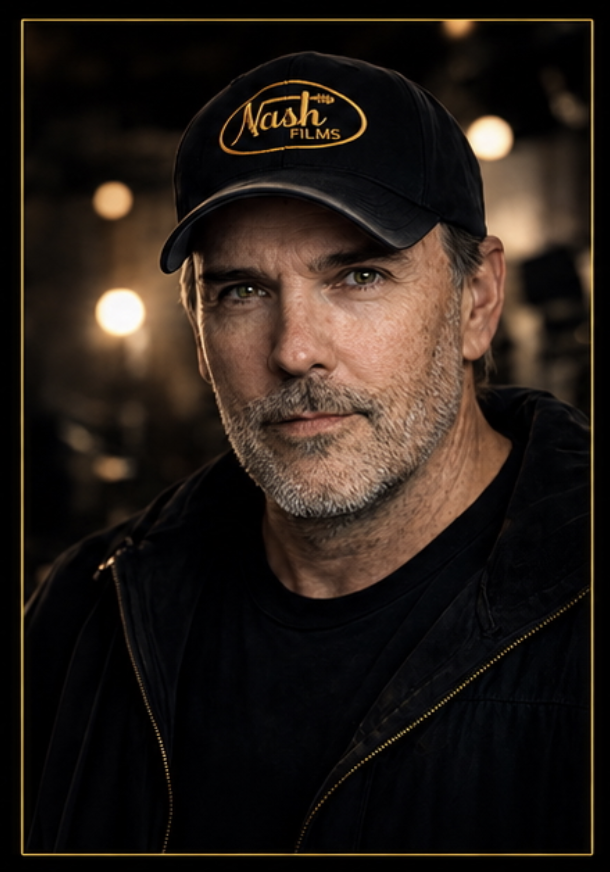
Filmmaker / Founder Beverly Hills Productions
Founder, Beverly Hills Productions | Filmmaker
Michael P. Nash is an award-winning Irish-American filmmaker, founder of Beverly Hills Productions, and a Sundance alumnus whose work has earned international recognition. Named by MovieMaker Magazine as one of the “Top 10 Movie Makers for the Planet,” Nash is known for creating powerful films that combine compelling storytelling with social impact.
Nash is currently partnered with Leonardo DiCaprio on RAISE, a groundbreaking six-part documentary series exploring the transformative impact of artificial intelligence. In 2024, he became the first filmmaker in history to have a film placed on the lunar surface when Climate Refugees was included in a lunar time capsule dedicated to preserving arts and humanity beyond Earth.
Over the past 25 years, Nash has filmed in 48 countries, producing documentaries, feature projects, and series that have screened worldwide. Several of his films have become influential instruments for change, embodying his philosophy of “Art with Impact.” His work has been presented to heads of state, government leaders, the United Nations, the Vatican, the Pentagon, global forums including Davos, universities, educational institutions, and audiences across theaters, television networks, and streaming platforms.
Through Beverly Hills Productions, Nash and his team create content that is both entertaining and educational, reflecting a commitment to storytelling that inspires awareness, dialogue, and positive action.