

 Apple Podcasts
 Spotify
 YouTube
 Hypnotherapy & Subconscious Healing for Trauma | Peter McLaughlin Interview
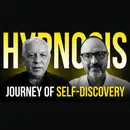
In this episode of Arthur’s Round Table, Peter McLaughlin shares his extraordinary journey from working on Wall Street to discovering he had a rare form of leukemia and Lyme disease shortly after 9/11. Faced with a life-altering diagnosis, Peter began exploring the connection between subconscious healing, trauma, spirituality, and physical health. The conversation dives deep into hypnotherapy, emotional wounds, the subconscious mind, nervous system regulation, quantum reality, and how unresolved trauma may influence every aspect of life.
🎯 What You’ll Learn
How unresolved trauma impacts the nervous system and physical health
Why the subconscious mind may drive emotional and behavioral patterns
How hypnotherapy and regression techniques can neutralize old wounds
The connection between stress, fight-or-flight, and chronic disease
How the placebo effect challenges conventional views of healing
Why forgiveness, integration, and emotional processing matter
The relationship between spirituality, consciousness, and healing
🧠 Key Insights from Peter McLaughlin
1. Chronic Stress Damages the Body
Peter explains that the human nervous system was designed for short bursts of danger—not continuous modern stress.
When people remain trapped in chronic fight-or-flight states:
immune function declines
digestion weakens
hormone systems become dysregulated
👉 leading to long-term health consequences.
2. Symptoms Often Point to a Deeper Root Cause
Peter believes most chronic conditions are not simply random events.
Instead:
👉 symptoms may reflect unresolved emotional wounds, trauma, or subconscious patterns.
3. The Subconscious Mind Does Not Recognize Time
One of the core ideas discussed:
👉 the subconscious mind reacts to past emotional wounds as if they are still happening in the present moment.
This can trigger:
anxiety
stress responses
emotional dysregulation
physical symptoms
4. Trauma Can Be Rewritten Through Hypnosis
Peter describes how regression work and hypnotherapy allow individuals to:
revisit traumatic experiences
reinterpret them
release emotional charge
integrate wounded aspects of themselves
👉 effectively “updating the software” of the subconscious mind.
5. Fight-or-Flight Was Never Designed for Modern Life
The body responds to:
financial stress
relationship conflict
uncertainty
the same way it once responded to predators.
👉 modern stressors can create constant physiological overload.
6. Healing Requires Integration—Not Suppression
Peter emphasizes that healing is not about “cutting out” wounded parts of ourselves.
Instead:
👉 healing happens through understanding, compassion, reintegration, and emotional resolution.
7. The Placebo Effect Reveals Hidden Human Potential
The conversation explores how the placebo effect demonstrates:
👉 the mind’s extraordinary influence over physical outcomes.
Peter argues this should be viewed as evidence of untapped healing capacity—not dismissed.
8. Shame and Guilt Prevent Emotional Resolution
Peter explains that unresolved guilt creates emotional loops that trap individuals psychologically.
True healing often requires:
forgiveness
accountability
release of shame
self-acceptance
👉 before deeper resolution can occur.
9. Healing Radiates Beyond the Individual
A major philosophical theme of the episode:
👉 healing impacts families, relationships, and even generational patterns.
Just as trauma spreads outward:
healing may also radiate through systems and relationships.
👤 About Peter McLaughlin
Peter McLaughlin is a hypnotherapist and trauma-resolution practitioner focused on subconscious healing, emotional transformation, and spiritual growth. After being diagnosed with a rare form of leukemia and Lyme disease, Peter began an intensive personal journey into hypnosis, trauma work, spirituality, and mind-body healing that transformed both his life and career.
Want to learn more about Family Office Insights? Click Here.
Arthur (0:01): Hello, everybody. Thank you for joining us in another episode of Arthur's Roundtable. Super grateful for everybody that's paying attention and sharing. I you doing that. And thank you for being here today.
Arthur (0:12): And thank you, Peter. Peter McLaughlin is with us today. For the record, we don't know each other. We just had a nice little chat, but we're super interested in hearing what he has to say today and looking forward to this conversation. So Peter, again, thank you for being here.
Arthur (0:25): And let's start at the beginning, if it's okay with you.
Peter McLaughlin (0:29): Sure. Sure. Thanks for the invitation. And I guess where I'll start is when my life took a major turn. So this was in the immediate wake of nine eleven.
Peter McLaughlin (0:39): At the time of nine eleven, I was working on Wall Street, and we had moved from Westchester County to a town in Connecticut. And I'd wanted to be a volunteer firefighter. And our kids just got to an age where my wife said, this is the time, this is the place when you can do it. And so I went and volunteered. One of the first things they have you do is take an extensive physical.
Peter McLaughlin (0:58): I did the physical. I remember the doctor saying to me, wow, you're in really good shape for your age, which at the time was 41, come back and give blood. Came back and gave blood alarm bells went off. When I finally got in touch with somebody at the doctor's office, I could tell they were kind of nervous. They were uptight.
Peter McLaughlin (1:15): And they basically said, we think that you have both Lyme disease and a rare form of leukemia. And I immediately went into this denial that that's ridiculous. Let's do it again. Did the test again, came up with the same result. When I asked them how long I had to live, they said maybe ten years.
Peter McLaughlin (1:32): This was twenty three years ago. And I went to see a hematologist oncologist and they said, we don't know what causes this and we don't know how to cure it. And I realized at that moment I was going to have to figure this out on my own. I had a security guard business in Westchester County, and I just kind of put that on autopilot. In other words, I only did the bare minimum.
Peter McLaughlin (1:51): I sent out the invoices and I did the payroll. If something huge came up, I would have to deal with that. But otherwise, I would spend day after day on the Internet researching. And as I did this, I went more from the purely physical cause and effect regarding leukemia into the power the mind has over the body. And over the period of about three years, different events occurred that in one moment, everything crystallized.
Peter McLaughlin (2:15): And I realized I need to be trained as a hypnotist. I need to be trained in how to control my subconscious mind to extend my lifespan.
Unknown Speaker (2:25): So that's sigmatized at that point?
Peter McLaughlin (2:28): Yes. And, and so I didn't know it, but when I went to get trained, which happened to be a school that was started by a guy who used to be a paramedic at the time I was identifying with being a first responder.
Unknown Speaker (2:39): Yeah, totally. Yeah.
Peter McLaughlin (2:42): The emphasis of this particular school was the adjunctive uses of hypnotherapy in medicine. And I thought, well, this is the perfect place for me. And part of the training was we picked one of the instructors to be our hypnotherapist. So there was a lot of work that I did with another person, as well as doing work on my own. And this really became the foundation of how I work with people now and my view of what causes problems and how we resolve them.
Peter McLaughlin (3:13): So I consider myself someone who focuses on two things really, which is root cause and spirituality. So I believe like a lot of people that this life on this earth is the kind of school that the problems are not anomalies. They're not bugs. They're features.
Unknown Speaker (3:33): Mhmm. Yeah.
Peter McLaughlin (3:34): And that I think of myself in the way, I guess, an auto mechanic would think of themselves. If you brought your car in because it was making a strange noise or there was smoke coming out of the engine, you would expect that the mechanic was going to trace that symptom, the smoke or the noise to its root cause, resolve that, and then the symptom's going to take care of itself. We happen to live in this weird paradigm, at least what I noticed when I was an EMT, where and as a patient, where if trauma, if you've broken a finger or if you fell out of a tree or something and you go to the hospital, that's where you want to be because they'll be able to fix it because they can see what the problem is. But if you go to the hospital with a chronic disease, it's a totally different ballgame. In my opinion, I'm not a doctor, don't take my advice, but they are really treating the symptoms.
Peter McLaughlin (4:22): Like the tumor didn't cause the tumor, something else did. So I'm really interested and focused when I work with people on whatever the issue is on the root cause. And I do believe that there is a spiritual component to everything.
Arthur (4:37): You know, I don't mean to jump ahead, but by the way, every time we hear about somebody having some chronic problem, we immediately go to where you're going. There's some other reason. There's a reason for this, right? And it's not a perfunctory, Okay, you just happen to have cancer because your DNA suggested or your family did blah blah blah. There's some other thing that caused it to manifest.
Arthur (5:05): And we do some work and try to figure out what that might be, you know, based on, you know, it most of the times, it's not somebody that is close to us, we're just wondering, you know, what does that mean? Right? And it could be interracial trauma, could be, you know, all that kind of stuff. I just wanted to jump in there and say that, you know, we have some there's some credence to that in our view. I'm saying our Mary and I.
Peter McLaughlin (5:33): Yeah. Yeah. Yeah. Mean, it's another way of saying everything happens. Everything that happens is happening for a reason.
Peter McLaughlin (5:40): Or what you and I were talking about before, were you were using the phrase the universe has your back. And if that's true, which I believe it is, then everything must be happening for our betterment, for our awakening, even the painful stuff. And you and I have lived long enough to know that you learn more from the times in your life when you're struggling with something or dealing with some kind of pain than you do when everything is perfect.
Arthur (6:06): Totally. Yeah. Joseph, I use this all the time because I think it's he's brilliant. But, you know, Joseph's famous Joseph Campbell, you know, life is full of sorrow, embrace it. Right?
Arthur (6:17): It's sort of the same idea. Right?
Peter McLaughlin (6:20): It is. It's it's sort of the same idea. Yeah. Yeah. And it's so easy to dive into a kind of victim mindset because I believe the reason for this is that it relieves our ego of the responsibility.
Peter McLaughlin (6:35): We can pass it off. But I think the point is for us to confront those aspects of ourselves that are wounded, that have transgressed. Whatever the story may be, take responsibility for that, and in the doing of that, atone and then take a step up in some kind of cosmic spiritual ladder. And and Joseph Campbell, I mean, he's he really is such a huge contributor to this all these thoughts with his concept of the hero's journey. You know, how every one of us, everyone listening, you, me, everybody, we're all in a hero's journey.
Unknown Speaker (7:14): Oh, hootily.
Peter McLaughlin (7:15): And when the hero has some kind of cataclysmic or catastrophic fall, he will do anything to avoid getting back on the proverbial horse, but eventually realizes it's the only way home.
Unknown Speaker (7:29): And then brings the wisdom back to the village. Right?
Peter McLaughlin (7:32): Yeah. Exactly. Exactly. And I think there's there's even a bigger piece on that bringing the wisdom back to the village, which I I believe that the quantum physicists are correct when they say there's no time. The time is an illusion created by a planet that is rotating on its own axis and is orbiting the sun.
Peter McLaughlin (7:49): That gives us day and night in the seasons. But just outside of that, there is no time when we're asleep at night. We don't recognize time when we're absorbed by a novel or by a staged play or by a movie or a TV show. We don't recognize time when we're in love. We don't recognize time when we're playing a sport and we're in a flow state, and we don't recognize time when we're in a hypnotic state, which I believe is the quantum reality, and you could argue, I would, that you can enter the quantum field in a dream.
Peter McLaughlin (8:27): You can enter the quantum field using psychedelics, in hypnosis, in deep prayer, in love. All of these ways are ways of entering the quantum field. And that the point I'm I'm driving at is that when you heal yourself, because you're connected to everything, including your ancestral lineage, going backward, what we would call backward and forward, that everyone benefits. Because we know, for example, that pain radiates in all directions. If one person in your family has mental illness or they're an alcoholic, or they have some other thing that's causing major calamities, it affects everybody in the family.
Peter McLaughlin (9:07): Everybody. You know, if not the justice system and their neighbors and their friends and the people they're in relationship with. Well, it's the same with healing. Healing also radiates in all directions.
Arthur (9:22): I think that's right. So let's tell us what happened. So you started taking classes, you had somebody that was working with you. So technically you were being a patient or whatever you want to call it at the same time. How did this all, what was, what, what happened next?
Peter McLaughlin (9:38): So my belief is that most of us, if not all of us are walking around with invisible arrows sticking out of us and that these arrows represent old emotional wounds, traumas, and that because the mind and the body are connected, these wounds exert their influence on us. And at the most basic medical level, you could say that, all right, your autonomic nervous system, autonomic just means automatic, only has two modes. It has fight or flight. It has rest and digest. If you're chronically in the fight or flight mode, then all your body's major systems immune system, endocrine system, reproductive system, digestive system are are halved because all that half of that energy is being sent to your muscles so you can run or fight.
Peter McLaughlin (10:27): But that system, that fight or flight system is set up for a lion attacking you, you know, or having somebody from the neighboring tribe coming up over the hill with a tomahawk or with a shotgun. And either you're going to prevail or you're going to escape or you're going to get killed, but you weren't designed to be in that system day after day after day after day. And this is going to destroy your health. You know, we've always heard that, that stress kills. But this is specifically how it one of the reasons that it does it.
Peter McLaughlin (10:59): Because you're not supposed to be living in that state. When you're freaking out if when you're freaking out about your investments or about the bill stacking up or about what's happening in Washington or what's happening in the Straits Of Hormuz, it's as if to your body you're being attacked by a lion. That's how your body
Arthur (11:20): responds to this. And you argue that we've done a really fantastic job of keeping in and getting ourselves in an environment where we're not being attacked, for example, by lions, but our body hasn't caught up to not not be in that state.
Peter McLaughlin (11:40): So I would totally agree with you that we've done a really fantastic job of taking the dangers of life that all of humanity had to deal with pretty much up until relatively recently, last hundred, two hundred years, whatever it is. But I would say that we wouldn't want that system to go away because you still could encounter something. You were talking about living in New York City. And even in the '90s when New York City was really great, something Yeah, could still
Unknown Speaker (12:11): stay happen to alert.
Peter McLaughlin (12:14): And you could still be driving down the road and somebody's texting and they veer into your lane. So you still want that ability to automatically move into that fight or flight response without having to think about it. I don't think we would want that to go away, but we need mechanisms to heal old trauma so that we don't carry it for the rest of our life or even bring it into another lifetime. Or, or the next
Unknown Speaker (12:40): generation. Right?
Peter McLaughlin (12:41): Yes. Yes, indeed. That in my view is, is where we need to apply our attention. We can't eliminate danger entirely from the equation. I don't think we would want to do that.
Unknown Speaker (12:54): You know, if you wake up and smell smoke in the middle of the night and you've got to get out of your house, you want all that energy in your muscles.
Unknown Speaker (12:59): Want it to kick in.
Peter McLaughlin (13:00): You want it to kick in. That's right. It's exactly right. But you also want a way essentially of detoxing from things that you that you ingest, things that happen to you so that you're not carrying them around forever.
Arthur (13:16): Yeah. And if you don't mind, there's a variety of ways to do that. You can drink, you can do drugs, you can take care of your health. You could eat better. You can meditate.
Arthur (13:31): You can do psychedelics. You can do Ayahuasca with a proper shaman. There's all kinds of ways. I think what we're going to talk about today, and I'm not challenging what you're saying, please don't, I just, for the benefit of all of us, there's a variety of attempts to, to mitigate some of these problems. Right.
Arthur (13:49): How have you seen this some of those ways and what you do, for example?
Unknown Speaker (13:55): So the first thing I'd like to say is I don't mind being challenged. I kinda like it. Yeah. Because it forces me to dig deeper. So please take the gloves off.
Peter McLaughlin (14:07): Some of the things that you mentioned, I would say, are ways of distracting us from the symptoms of an unhealed wound. Alcoholism. When you drink, you're giving yourself temporary relief from symptoms of the underlying wound. That's what's happening. And it would be the same with all the quote unquote vices.
Peter McLaughlin (14:31): So gambling, pornography, overeating food. Like we have a million and one ways shopping excessively. And these are just ways, as I said, of distracting oneself from something that's painful. Physical pain, emotional pain, spiritual pain. These are all forms of pain.
Peter McLaughlin (14:50): Even boredom is form of pain. And human beings are wired to avoid pain and seek pleasure. Now, other mechanisms that you mentioned do have the capability. It's not a guarantee, but they've got the capability of resolving old things like Ayahuasca and other kinds of psychedelic drugs have that ability. And I think it does that by moving your conscious mind out of the way, which is really the part of us that has been programmed to doubt, to doubt the things we cannot validate with one of our five physical senses.
Peter McLaughlin (15:26): This is one of my enormous pet peeves. When I was in the business world and I would go to these conferences and somebody would stand up and say, if you cannot measure it, it doesn't exist. And forgive me if you've said this. But my immediate thought was, do you love your kids?
Unknown Speaker (15:42): Yeah. Right.
Unknown Speaker (15:43): Prove it. Yeah. Prove it to
Unknown Speaker (15:46): me. Yeah.
Peter McLaughlin (15:46): Give me the scientific proof. Measure it. Weigh it. I wanna know. You can't do it?
Peter McLaughlin (15:51): Really? This is the most important maybe aspect of your life, and you can't weigh, measure, so, like, spare me that part.
Unknown Speaker (15:59): Yeah. Totally agree. Yeah. That was a ploy to get you to do what they want you to do. They have an agenda.
Unknown Speaker (16:08): That's all.
Peter McLaughlin (16:08): And I think a lot of us in this culture have naturally accepted what we've been told that our version of reality is extremely small. You know, it's our vision and our hearing and our smell and our touch. And when you look at these things, it's insane. Like our vision, visible light. If you look at what percentage visible light makes up of the light spectrum, the number would astound you.
Unknown Speaker (16:35): It's this much. We, we see this much. Right?
Unknown Speaker (16:37): Five.
Unknown Speaker (16:38): Yeah. It's crazy.
Peter McLaughlin (16:40): Yeah. Point zero zero three five. So is seeing believing? Yep. In a tiny version of reality, it leaves out everything around it.
Peter McLaughlin (16:52): And we we stand back and we say, well, this is crazy. That's kooky. That's woo woo. This person is a nut. That one's sane.
Peter McLaughlin (17:02): How do we know? How do we know? We're living in a tiny little box. In Hamlet, there's a line, I will bind myself inside a walnut shell and call myself master of all I survey. That's what we're doing.
Peter McLaughlin (17:15): And then the and then the other line from the same play is, there is more in heaven and earth, Horatio, than is dreamt of in your philosophy. And all we have to do is look back in time. Let's look back a thousand years. What did people believe then? You know?
Peter McLaughlin (17:29): What was their understanding of the natural world?
Arthur (17:33): The only way they could explain it were multiple gods. Back to Joseph Campbell, right? For example, the mythologies. That was the how do you explain the inexplicable? In modern times, it's attaching yourself to a dogma with faith.
Arthur (17:49): And so let's go with that. Right? So there's multiple ways of dealing with the inexplicable.
Peter McLaughlin (17:55): Yep. And I'm where I'm going with this is that we have, there is another version of reality and science has begun to explore and uncover some of these things. So for example, the placebo effect, which is up to thirty three percent of the effectiveness of any drug or I believe surgical procedure is the placebo effect.
Unknown Speaker (18:18): It's wild.
Peter McLaughlin (18:20): So sham knee surgery, when it's been studied is just as effective as the real thing that you can build physical muscle by imagining it, that the uncertainty principle of a particle that is being observed by a human being behaves differently than a particle that is not observed.
Unknown Speaker (18:38): Not being observed. Yeah. That's quantum.
Peter McLaughlin (18:41): All of these things are existing uneasily and just outside of the paradigm we've all been persuaded to accept and live by. And we even in our language use things like it's only the placebo effect.
Unknown Speaker (18:56): When
Unknown Speaker (18:57): viewed through a different prism, you would say, my God, this is unbelievable. We should be using this with everyone. This is a miracle of power.
Arthur (19:08): So part of that reason is because people perceive it based on what they've learned as too woo woo to be real. Right? So people dismiss Basically,
Peter McLaughlin (19:20): like saying you are a heretic to our religion that we're going to call scientism.
Unknown Speaker (19:27): Right.
Unknown Speaker (19:27): And we're going to we're going to excommunicate you from the tribe. And the worst thing you can do to a person is to ostracize them, to is to banish them. From the side. We saw this during COVID, right? We saw this during COVID.
Peter McLaughlin (19:40): And so people self regulate. They self censor. Because nobody wants to get banished. Nobody wants to get fired from their job. Nobody wants to lose their husband or their wife.
Peter McLaughlin (19:49): Don't They want their kids to think they're nuts. They don't want their neighbors to think they're nuts. They want to be accepted.
Arthur (19:54): Totally true. So there's a study I heard about the other day. You probably heard about this. It was shamatha on all in. And there was a Stanford study where they put a mouse in a bucket of water, a 100 mice, each one of them for, and to a mouse, they drowned within four point two minutes, something like that.
Arthur (20:17): And then they took another 100 mice and in three minutes they took the mouse out and saved it. And then they put all of them back in after that and they stayed alive for sixty minutes because the mouse believed it could survive after it came out the first time. So it thought it couldn't survive the first time, but now that it came out the second time, they had the faith that it could survive. So it treaded water for sixty minutes, like between four minutes and sixty minutes. Wild, right?
Unknown Speaker (20:53): Same idea, right? Stuff that we don't know.
Peter McLaughlin (20:56): Stuff that we don't know. Yeah. Yeah. So healing these these old wounds for me involves a person's deeper wisdom, the access that they have to their deeper wisdom. And again, in our culture, we have sayings like if you're having a big important decision to make, and you don't know what to do, people will say to you, what does your heart tell you?
Peter McLaughlin (21:17): What does your gut tell you? What does your intuition tell you? Or sleep on it, which means allow your conscious mind to become unconscious because magic can occur while you're asleep and you can wake with the perfect solution to your problem.
Unknown Speaker (21:31): It happens all the time.
Peter McLaughlin (21:31): So I think every human being has the ability to tap into this on demand, to pinpoint the origin of whatever the trauma is that they're dealing with. And however it's related to the symptoms that they have to figure out what a baseline of intensity is of this trauma. And then once it's been worked on to go back to it and see, did I move the needle? Do I still need to work on this thing? Or have I resolved it?
Arthur (22:02): So I'm super interested in learning how you did that for your problem. But just to be clear, when you got diagnosed with leukemia and Lyme's disease, you had no symptoms.
Peter McLaughlin (22:16): Not that I was aware of at the time. The only thing I noticed after the fact was my knees had been aching. And I think that that was part of the Lyme disease. And I just assumed I'm getting older. This must be part of getting older.
Peter McLaughlin (22:28): This is another myth that we have in our culture.
Arthur (22:31): So just to be clear, I've done a number of plant based experiences and it's resolved lots of things. Plenty more work to do, I'm sure. But the way you just explained, identifying the trauma, doing whatever you have to do to resolve it and go back and see if it needs further resolution. Can you help us understand how that works in the context of how you view addressing these traumas?
Peter McLaughlin (22:58): Sure. So your body is clearly a feedback mechanism. If I ask you how you're doing today and you answer me honestly and you say, you know, I'm not doing that great. The reason you know that is because of how you feel. And you might describe it as my heart feels heavy.
Peter McLaughlin (23:19): Or I feel like I'm wearing a wet wool cloak over my shoulders. I feel I feel dragged down.
Unknown Speaker (23:28): Dragging a bag Yeah. Of
Peter McLaughlin (23:30): Yeah. Exactly. And it's the same with the other side of the equation. Your body is always communicating to you in every single moment. Every time you put something to your mouth, it's got an opinion about it.
Peter McLaughlin (23:41): And I guarantee you, if it's an organic apple, it's going to be saying yes. And if it's artificial sweetener, it's going be saying no. And there's something called, you've probably heard of this kinesiology or muscle testing, where different practitioners, typically chiropractors, some naturopaths use this, where you can get a yes or no answer from the body based on any question you ask. I had a naturopath that would do an exam by testing my muscle at the same time she would point at different systems in my body. So she pointed at a system in the body, like the thyroid or something, the muscle went weak.
Peter McLaughlin (24:18): She knows, okay, the thyroid needs help. So I've kind of taken that same concept of the body's wisdom and muscle testing. And I just have my clients use a pendulum. So a pendulum is just an amplifier of what the body is already telling you. Does that make sense?
Unknown Speaker (24:34): Yeah, totally.
Peter McLaughlin (24:36): So I have the client hold the pendulum. I don't hold it. And we calibrate it. So for them, the pendulum's going to move in a particular direction for yes and a different direction for no. Might be a clockwise motion, like for me, it's clockwise for yes, counterclockwise for no, and then back and forth for maybe.
Peter McLaughlin (24:54): Once we've got that, we now have the client ask a question in their mind they already know the answer to, like, am I eight twenty three feet tall? We want to make sure they get a no.
Unknown Speaker (25:03): Jast it, right? Yeah.
Peter McLaughlin (25:04): Yeah. And then they can ask any question they want. And if it's if it's we're getting accurate answers, then we can start going deeper. We can say, are the migraine headaches I get related to an old emotional trauma? Answer is going be yes.
Peter McLaughlin (25:18): Probably most more than more than likely going to be yes. Way more than likely. Okay. Is that trauma something that happened for the first time earlier in my present life? If they get a no, we know it's a past life.
Peter McLaughlin (25:34): If they get a yes, then we ask, is this something that happened before the age of 20? Yes. Is it something that happened before the age of 10? Yes. Is it before the age of five?
Peter McLaughlin (25:44): No. And we can nail down the exact age at which it happened. Did it happen indoors or outdoors, at home or at school, in relationship to an adult or another child? And often it awakens the client's memory of something, my God, I haven't thought about that in decades. And then we can assess, we can get a baseline of intensity of that trauma.
Peter McLaughlin (26:07): Yeah, I was called up in front of the class in the second grade. I was asked to solve a math problem. I couldn't do it. And all the kids laughed and the teacher just sat there looking at me. And so now this person either let's say has migraine headaches or they can't speak in public without feeling tremendous anxiety.
Peter McLaughlin (26:26): Well, there's your root cause right there in this hypothetical example.
Unknown Speaker (26:29): Yes.
Peter McLaughlin (26:30): So now we would know because the subconscious mind doesn't recognize time, which is the quantum reality. It's only the conscious mind that recognizes time that we have to essentially upgrade the software in the subconscious mind so that it no longer views that event as a clear and present danger, like a tiger or lion is attacking, but rather it has been healed or neutralized So that if the subconscious lands on that event during one of your 60,000 thoughts during the day, only you're only aware of 5% of them, that it won't put you into a fight or flight response. It will allow you to remain calm and neutral. Same as if you walk up on a stage and you're standing behind a lectern or you've got a microphone in your hands. That initial It
Arthur (27:25): back that event that caused the trauma, It neutralizes it.
Unknown Speaker (27:30): Exactly. Make
Unknown Speaker (27:31): it up for what you get.
Unknown Speaker (27:32): Yeah. Yeah. Exactly. Because I think what's happening in our mind when we get triggered is that part of the mind, the subconscious is saying based on something in the environment, it could be the tone of someone's voice. It could be a color.
Peter McLaughlin (27:44): It could be a smell. It could be any, a host of things. The subconscious is going to associate that phenomenon with the shit it's happening again. We need to put you into a fight or flight response. And when the initial, we call it an initial sensitizing event has been healed or neutralized, the subconscious is able to stand down in that scenario.
Arthur (28:08): So you've described how to reveal this, how to get to the root problem, which again, this is not about, I'm happy to have this conversation. I'm delighted. I don't want it to make about me, but we do this regularly. I don't do it. My wife does with the pendulum.
Arthur (28:27): And I can't tell you how effective it, I mean, it's beyond belief, how effective it is. So I'm with you. Do you tactically go to that core problem and either neutralize it, eliminate it, whatever approaches to cause it to not put you in a state of anxiety or whatever is caused by the trigger?
Peter McLaughlin (28:53): There are several different methods and there are some principles that one must follow. So one of the tools that I love because it's so fast is something called Havening. Havening is kind of like EMDR, which is the rapid eye movement. Don't know if you're familiar with that, but it's a way that a lot of conventional therapists are starting to use to neutralize an old trauma because the eyes are connected to the brain. Havening does the same thing.
Peter McLaughlin (29:20): It's basically like, and there are different ways of doing that, I have clients tap their thighs and blink their eyes at the same time as fast as they can. But before I do that, I'll have them close their eyes and I'll have them associate themselves with the trauma and explain to me what they are recognizing about the situation. So it may be that they're seeing a scene in their mind's eye, and I want to know what that is and how they're seeing it. Are you seeing it first person, like you're in your younger body? Or are you third person and you're seeing it from a distance?
Peter McLaughlin (29:54): If third person, who's the third person? Is it you at your present age? Is it you at a younger age? And essentially tell me everything that's going on, including how does your body feel? And what people will usually say is, I can feel my heart beating faster, or my heart is heavy, or I can feel kind of nauseous in my stomach, or I feel a pain in the back of my head, or I feel my muscles getting tense, I can feel myself sweating, fluttery, whatever.
Peter McLaughlin (30:21): And then we do three iterations, which are thirty seconds each of the havening, the tapping and blinking. After each iteration, I'm asking them, what's going on now? What's happening now? And generally, what's happening is that scene is getting transformed. You could imagine this as the software being rewritten in their deeper subconscious mind.
Peter McLaughlin (30:42): I also have recognized that when someone is doing this, they are entering a hypnotic state. So, by the second iteration, I say to them, This time when you're tapping and blinking, I'm going be speaking, but just ignore what I'm saying. Just focus on the tapping and blinking. So while they're tapping and blinking, I'm delivering hypnotic suggestions that are going directly into their subconscious mind based upon their unique and special circumstance. Now I can we can also, depending on the person and depending on the scenario, convert or shift from havening into a hypnotic regression.
Peter McLaughlin (31:22): So shamans have been saying for hundreds, if not thousands of years, that part of shamanism is to go back in time to rescue lost and wounded parts of you. I think modern language would be something like inner child is a lost and wounded part of you.
Unknown Speaker (31:42): Yeah. Totally. Yeah.
Peter McLaughlin (31:44): Right? Going going back in time, we would call maybe a a regression, like a hypnotic regression. And the way that I would do this, and again, it depends on the person in this scenario, but it might be, let's have your 47 year old self now join your eight year old self in that classroom where you were humiliated in front of the class, you know, and hug her, hold her tight, let her know she's not alone anymore. Let her know there's nothing wrong with her, that all kinds of people make mistakes and get nervous and can't solve problems, especially when they're children. And that this doesn't mean anything about her.
Peter McLaughlin (32:30): And then let's call the, let's call the teacher over that just sat through this and have the 47 year old say to the teacher, I want to know what you're thinking sitting there watching this happening. And usually what they report is, oh my god, the teacher's embarrassed. The teacher's looking down at her shoes. Or didn't know
Unknown Speaker (32:50): what to do or whatever. Wasn't straight enough to mitigate the problem. Yeah.
Peter McLaughlin (32:55): And now this is time for to give the teacher an opportunity to atone, to make this right. So the teacher apologizes to the, let's say, eight year old and says, oh, I'm so sorry, Annie. I I I should have said something, and I didn't. And I'm so sorry because this wasn't about you. My job is to teach everybody.
Peter McLaughlin (33:16): If somebody doesn't know something, it's kind of my fault.
Unknown Speaker (33:19): Yeah, your fault.
Peter McLaughlin (33:20): So, a way, we're kind of rewriting the timeline. And to the subconscious mind that has no concept of time, that rewriting is actually real.
Unknown Speaker (33:31): Yeah. It's interesting.
Peter McLaughlin (33:33): So we do it we do it every we need to do in this scenario to heal the eight year old, and then we integrate the eight year old with the 47 year old, but we do it with permission. Eight year old, are you willing to to fully integrate with your adult self? Adult, are you willing to integrate, have the eight year old integrate with you to fully integrate? And if the answers are yes, then I have them do that in a hypnotic state so they can feel it.
Unknown Speaker (34:03): Wild. I love it.
Peter McLaughlin (34:04): And then, and then after the integration happens, it's okay. The eight year old you've benefited because you're getting all of the maturity, all the experience, all the wisdom, all the ability to, to support yourself.
Unknown Speaker (34:18): A 47 year old. Yeah.
Peter McLaughlin (34:19): And 47 year old is getting the wonder of life, the innocence, the creativity, the zest for living, the playfulness. And this is how in that shamanic sense, we're rescuing lost and wounded parts of clients and reintegrating them back. We never want to cut anything out like there's something wrong with it. We want to transform it in my view. And the only time that I've discovered when havening will not work or won't fully work is when there's shame or guilt involved.
Peter McLaughlin (34:56): When there's shame or guilt involved, I've discovered you have to do a hypnotic regression. And you have to help the earlier version of the client release the shame or the guilt because guilt is a highway that has no exits. Guilt is a highway where the focus is placed upon the person who feels guilty, not on the person they feel they transgressed. And guilt is a place where no one benefits. The person they believe that they harmed doesn't benefit.
Peter McLaughlin (35:27): The client doesn't benefit the client's kids don't benefit. No one benefits.
Arthur (35:31): No good can come from it.
Unknown Speaker (35:33): Sometimes I have to behave like a spiritual lawyer presenting a Yes, case of the exactly. Exactly. Exactly.
Arthur (35:42): It's like, what's the if you're going to hold somebody forever account or not accountable, but resentment or not resentment, but anyway, the old Buddhist, you know, you better dig two holes, one for you and one for them. Right?
Peter McLaughlin (35:58): Yep. That's right. That's right. I I conceive that a state of non forgiveness is like consigning yourself to being emotionally handcuffed to that other person.
Arthur (36:12): You use an upper arm. I mean, you're using a bandwidth that you could use for something else. Right?
Peter McLaughlin (36:17): Yes, that's exactly right. And there's another fact, which is if you can't forgive someone for some transgression, you will not be able to forgive yourself for something else that involves another person in another scenario.
Arthur (36:32): Yeah. Didn't did I'm gonna get this wrong, was it Scott Peck wrote a book called the road less traveled? Yeah. He's got a bunch of this, past life regression stuff. Sorry, someone's sending me a message that looks like I've got a meeting.
Arthur (36:50): Hang on a second while we ran over. How'd that happen? Hypnosis. Yeah. All right.
Arthur (36:55): We're still recording. So I'm going to turn it off, but I apologize. That was super interesting. That was fantastic. I really appreciate it.
Unknown Speaker (37:02): Sure.
Unknown Speaker (37:03): Sure. My pleasure.
Arthur (37:05): We should continue if that's okay with you. Do need to go to this other we had a we had a bunch of time leave at the beginning beforehand, but my fault. Yeah. But stick to Paul Peter. Yeah.
Unknown Speaker (37:15): Really appreciate Nice
Unknown Speaker (37:16): to meet you.
Unknown Speaker (37:17): You too. Take care. Thanks, everybody. Bye.
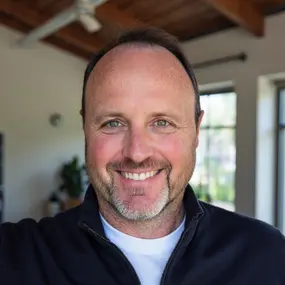
Peter McLaughlin is a certified hypnotherapist and life coach whose healing journey began after a leukemia diagnosis in 2003. This turning point led him to explore the powerful connection between mind, body, and spirit.
Peter helps clients find and resolve root-cause trauma using Havening, present and past life regression and other deep, spiritually-oriented healing methods.
He’s the creator of the popular YouTube channel BlueSky Hypnosis, with over 130,000 subscribers and 17 million views, where he shares tools for emotional healing and personal breakthrough.
A former volunteer firefighter and EMT, he brings compassion and purpose to his work. He is a part time actor returning to the stage as Shakespeare’s King Lear after 22 years away.

