Apple Podcasts
 Spotify
 YouTube
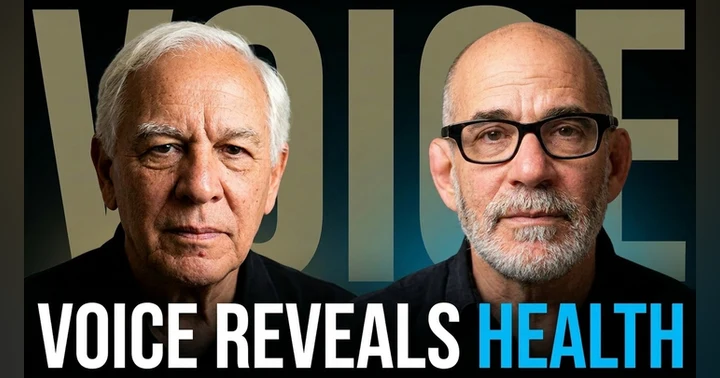
 Can Your Voice Reveal What Your Body Is Trying to Tell You? | Alex Fredericks

Can your voice reveal hidden health insights? Alex Fredericks explains how AI-powered voice analysis is helping people better understand sleep, stress, recovery, nutrition, energy, and overall wellness. Discover how personalized wellness, longevity, and preventive health may be transformed by voice technology.
Key Takeaways
- The future of healthcare is shifting towards proactive prevention by understanding the subtle signals your body provides.
- AI-powered voice analysis, like ToneWell's, can generate personalized wellness insights by analyzing nearly 1,000 biomarkers from a short voice recording.
- Voice analysis offers actionable wellness insights, distinguishing itself from data overload by empowering users to make impactful daily habit changes.
- Frequency science and bioresonance form the scientific basis for understanding how sound waves can reflect bodily states.
- Entrepreneurs often identify breakthrough opportunities by solving problems, driven by personal experiences and a deep understanding of market needs.
- Wearable technology offers objective data, but voice analysis provides more direct and understandable insights for daily health optimization.
- Context is becoming a crucial missing ingredient in healthcare, enabling AI to help individuals make better daily health decisions.
Welcome to Arthur's Round Table, the Family Office Investing Podcast and Investor Insights. In this episode, host Arthur sits down with Alex Fredericks, the visionary founder of ToneWell, to explore a groundbreaking intersection of artificial intelligence, personalized wellness, and the future of preventive healthcare.
The core idea driving this conversation is a profound shift in how we approach health: The future of healthcare may become less about waiting for illness and more about understanding the subtle signals your body is already giving you. Voice analysis represents one of the earliest examples of AI helping people become proactive participants in their own health.
Unlocking Health Insights with Voice Analysis
Can your voice truly reveal what your body is trying to tell you? Alex Fredericks firmly believes so. With a rich background spanning decades in building successful consumer products and wellness companies, Alex has pivoted his expertise towards empowering individuals to gain a deeper understanding of their own health. This is achieved through a simple, yet powerful, 30-second voice recording. ToneWell leverages advanced AI-powered voice analysis to generate highly personalized wellness insights, offering guidance to optimize crucial aspects of well-being, including recovery, energy levels, nutrition, sleep quality, hydration, stress management, and overall performance.
This engaging discussion navigates through fascinating topics such as frequency science, bioresonance, the evolving landscape of wearable technology, the dynamics of entrepreneurship, the pursuit of longevity, and the critical role of preventive health strategies in the age of AI. A central theme is the compelling argument for a healthcare system that becomes increasingly proactive rather than reactive.
Entrepreneurial Vision and Disruptive Opportunities
Beyond the wellness technology itself, Alex shares invaluable insights into the entrepreneurial mindset. He elaborates on how innovators identify breakthrough opportunities, emphasizing why context often holds more significance than raw data alone. He also discusses how AI can empower individuals to make smarter daily health decisions, potentially preventing minor issues from escalating into larger health concerns.
For anyone interested in health optimization, the practical applications of AI, the science of longevity, the journey of entrepreneurship, or the future trajectory of healthcare, this episode provides an exciting and forward-looking perspective on the evolution of personalized wellness.
Key Areas Explored in this Episode:
- How voice analysis can generate personalized wellness insights
- Why AI is transforming preventive healthcare
- The underlying science behind bioresonance and frequency analysis
- The critical importance of recovery in optimizing performance
- The future synergy between wearable technology and AI
- Why personalized wellness is superseding one-size-fits-all healthcare approaches
- The distinction between health analytics and definitive medical diagnostics
- Strategies entrepreneurs employ to discover and capitalize on disruptive opportunities
- Why context is emerging as the crucial missing ingredient in modern healthcare
- How AI can assist individuals in proactively optimizing their health on a daily basis
About Alex Fredericks
Alex Fredericks is the innovative founder of ToneWell, an AI-powered wellness platform dedicated to delivering personalized health insights through sophisticated voice analysis. His diverse career has touched upon consumer products, the music industry, wellness technologies, branding, and cutting-edge technology. Throughout his professional journey, Alex has focused on building groundbreaking businesses designed to enhance human performance through practical and accessible innovation.
This episode is a must-listen for understanding the potential of voice analysis wellness and how it's poised to reshape our proactive approach to health.
Want to learn more about Family Office Insights? Click Here.
Frequently Asked Questions
Can voice analysis provide health insights?
Yes, voice analysis can reveal subtle signals your body is giving you, offering personalized wellness insights related to recovery, energy, and overall performance.
How does voice analysis work for wellness?
A 30-second voice recording is analyzed using proprietary algorithms to extract numerous biomarkers, which are then used to generate personalized wellness reports, distinct from medical diagnostics.
What is the science behind voice analysis for health?
The technology is based on frequency science and bioresonance, understanding that sound waves carry specific frequencies that can be measured and interpreted to reflect bodily states.
How is AI used in voice analysis for wellness?
AI serves as a workflow and engagement tool to deliver auditable and reliable wellness insights, rather than being the core of the information architecture.
What is the difference between voice analysis and medical diagnostics?
Voice analysis provides personalized wellness insights for proactive health optimization, whereas medical diagnostics are used to identify specific diseases or conditions.
Arthur (0:00): Hello. Welcome, everybody, to another episode of Arthur's Roundtable. Super happy you're here with us today and grateful for everybody that's paying attention and sharing, and we're super grateful for that. And thank you again. Many of you have seen Alex in a prior episode, longtime friend and colleague of mine, superhuman in many ways, just a stellar, stellar guy.
Arthur (0:26): So how about that, Alex? And and I don't have to rub you the right way. I just want to. So thanks for doing this today. We're gonna talk about a little bit of Alex's journey, but the subject today is Tone Well, which some of you have heard about, and I think you'll find it super interesting.
Arthur (0:44): So, Alex, thanks for doing this. Let's start at the beginning.
Alex (0:47): I appreciate you having me on, Arthur, as always. It's a pleasure just to chat. So here we are.
Unknown Speaker (0:53): Yeah.
Alex (0:55): So the beginning. I started in the music business. I am a consumer goods person, so I don't have any other extraordinary talent other than when I see something, I tend to know what to do with it. So I'm very good at problem solving, which is really all music was, is not a musician or trying to be discovered. Like, you found something that you thought the world should know about, and then how do you get the world to know about it?
Alex (1:21): And that's what I did. And like, I had a great time out of college and and through the nineties is what I like to describe as just being a pirate. Like, you'd you'd load into a van and I had a Rand McNally map and a roll of quarters and right off off to the next town. And and you had to collect your your booty along the way and your little prize pieces and figure out how to do that. And it was a wild, really fun time.
Alex (1:46): I recommend that everybody kind of, you know, go the way of Kerouac, right? Like just go out and find the great adventure and see what happens. I then tried my
Unknown Speaker (1:56): Almost Famous, right?
Alex (1:57): Yeah, exactly. Well, that's You know, the funny thing is, is that the truth of that story is it's where I recognized that I wasn't gonna be a music business guy. Cause every time I would find something like the guy with the bigger, better deal would show up. You know what mean? Like you'd toil to do something and be like, I got you guys a tour bus.
Alex (2:14): And then the guy with the airplane would show up and you're like
Unknown Speaker (2:17): Right.
Alex (2:18): So I I recognize that like, I'm a you can leave me alone guy. And I don't mean that in a bad way. I mean that like I'm pretty self sufficient as a human being. Like to give, I like to help. But if you leave me out of it, was never upset if I wasn't invited to the party.
Alex (2:37): And a lot of the music business was like, what crew did you come from? And I didn't actually come from any. I was just like a guy that was good at solving specific problems. And it just never was gonna be like, I'm gonna be Clive Davis, may he rest in peace. I'm never gonna be like, you know, one of those guys, regardless of what I thought talent I had.
Alex (2:59): I just didn't get the groove. So I just moved on into things that, well, I could derive a paycheck from. And that was like product. And even in that world, like skincare, cosmetics, fragrance, supplements, like, look at me. Like, really wanted I once had the great distinction, this is a very true and very funny story.
Alex (3:20): We were approached by Lou Reed's team. And Lou wanted to do a fragrance and all of these wonderful things. And the guy that I was working with at the time was like, Alex, you know what your job is? I said, no. I guess, you get to go explain to Lou Reed that nobody wants to smell like a 65 year old homeless man.
Alex (3:37): Right? And so, like, I got those jobs. Like, you know, go in there and recognize that like, that's really just problem solving on a large scale. Like people don't actually think what goes into cosmetics or fragrance, like how many parts and pieces and where they all come from and how does plastic and metal and glass all get together, whatever. And I did that, you know, to whatever point of success I could have and then on to the next and on to the next.
Alex (4:05): And it's really what made my career was solving the next set of problems and finding the client. And that led me into things that I found really interesting. Not that any of the other stuff wasn't, but like I had clients that were in the green revolution. Okay. And then I had clients that were in the organic space, which I really loved until you realized that organic is just a sales tool.
Alex (4:30): And that moved me into wellness, which was really paying attention to the universe, which is another, I think, kind of skill of mine. I get it when I'm being tapped on the shoulder. And unfortunately, my wife was like super ill with copper toxicity from an IUD from our child. And nobody wanted to listen to her that that's what she had. Like, you know rare that is.
Alex (4:53): Yeah, but that doesn't negate the fact that one person might have it because not everybody gets it. And legitimately paying attention to the universe. I met my business partner today that you know well, Doctor. Baer, And I met him by pure happenstance. And he changed not just my wife's life, but the outcome and the trajectory of what I was doing because I was putting super shiny useless objects in the world.
Alex (5:20): They were successful, they were great, But how many stacker two products do you really need into GNC? It's still speed in the bottle. Right? And I was doing it well for an agency, but I wasn't fulfilled. And when somebody like switched on the wellness switch for me, like you can do things that are efficacious and sell.
Alex (5:39): Like it's the yes and moment as opposed to the yes but moment. That's just where my life started. And I've been on that track, I think 2015 is when I met Bayer
Arthur (5:48): or maybe a little earlier. A stud. I I shouldn't mean, use that name, but I mean it in the most, affectionate way, but he is also like a pure human. What a guy.
Alex (6:03): You know, so I get to play bouncer for him sometimes because as I describe myself, I'm just not the softest pillow on the bed. Right? You're not gonna fall asleep on me. And Bear is of tribe, like, you know, Abishinabu Indian raised on reservation, let alone PhDs and all of that wonderful stuff. So his sense is like, how do I build communities all of the time and bring people into the fold and into the tribe?
Alex (6:30): And sometimes you're like, no, no, no. That person is not actually allowed to hang around. Alex, I'll deal with it, right? We Take became care of it, yeah. Yeah, we became the fastest of friends.
Alex (6:43): I consider him a brother. And so along the path, when I found a certain technology that became ToneWell, one, he was my source of validation. So he is an absolute pioneer in what are called biotracker machines. He actually pioneered a machine called the biotracker, but legitimately, how do you track your bioresonance and your bio fields and all of those things. And how do you quantize them?
Alex (7:14): And in somewhere in the early eighties, he developed a system that allows you to track using frequency and harmonic the 32 operating systems of your body. So when I came across the technology that is now ToneWell, he was my first phone call. Like, he's my brother, would partner him on anything. We were pretty close to buying coffee farm in Costa Rica and calling it a day, you know, right after the So when I started doing this, he was the first natural phone call, let alone would have been my first phone call anyway. Just be like, Hey, doc, what do you think about this?
Alex (7:47): And it proved true, like what I saw. So, coming out of music when I first started in the business, I wanted to be a producer. So, I learned how to make records. And when I would make records, there was an oscilloscope and, you know, a circle with a diode and you'd look at everything. And if it was out of phase, you'd go through the frequency stack, find the thing that was butting up against the other one, clear it out and move forward.
Alex (8:12): So fast forward a very long period of time. I am looking at a set of technology that I think I understand, you know, be smart enough dangerous kind of thing, but also could be completely stupid. And I wanted to prove it. So I called up Bear and I was like, hey, what do you think about this? And he said, Alex.
Alex (8:34): And he went on a lecture is not the right word, but lecture of why, how, what, where. Here are the questions to ask to make sure, and it proved true. And one of maybe only two times in my life like an entrepreneurial bell went off. I like being an agent, agent of change, agent of discovery, agent of know, that's what I like doing because I just like problem solving. So it was always interesting to have somebody, a new set of problems come in.
Alex (9:02): But I had this eureka moment where I was like, hey. And I'd never really had that. My wife is happy for me because I'm finally building something for myself. Like, can't get fired for my own business kind of thing.
Unknown Speaker (9:17): Has agency.
Alex (9:18): Yeah, it has agency. Exactly. Has. Though it's totally daunting, as you well know, like you talk to enough people that are in that world, but like there's reason to get up in the morning, you know, and reason to go fight that next battle. And, you know, we were very fortunately featured on CNBC this morning, and I got all of these Yeah, amazing.
Alex (9:41): I got all these kudos calls and I'm looking at a list of things that I actually needed to accomplish today. Like, wow, if this could negate all of these things, that would be awesome, you know? And that's fun. So that's how I get here. It's just like, it goes back to music, like legitimately.
Alex (9:58): Found a band in a frat house. We ended up doing two fifty shows a year for many years in a row. We took them to the height of what they could have been. We sold about 500,000 CDs, full price, full boat of the And it started with like, I just closed my eyes and I went, you know where these shit I should go? And I've never lost that, thankfully, that like wondrous, like how the world get to know this?
Arthur (10:23): Well, I know you well enough to know that there is that wondrous thing and that you can see the dots to be connected and problem solved. But I also know that you're listening to the universe. Yeah. Like when it's tapping you, because that's a muscle one has to build people can say that's woo woo all you want. But I've been living by that my entire business career and life for that matter, and it works.
Arthur (10:52): You just have to build the muscle to pay attention.
Alex (10:53): Exactly right. You know, what's funny is that, like, people say, oh, you got there because of X. I did because I decided to take the ride, but it was cashing in the ticket to get on the ride. And that's the thing that people don't do, right? Like, I've taken an enormous amount of risks in my life.
Alex (11:16): Believe me, I got all the scars to prove it. Like I can tell you exactly what's in the bank account because I have no idea how much time is left. And that's just actually how I've lived. So I had friends when I was living the life of yore, you know, out on the road, whatever. And they were at you know, Bear Stearns.
Alex (11:33): I'll just pick a place that isn't there any longer, you know? And did the one hundred hours, one hundred and twenty hours, whatever the crazy, you know, of the nineties used to be. There was a car downstairs to take you home to change your clothes to bring you back. Right. When they were doing that, I was out seeing the world.
Alex (11:49): Now, the converse of that is like when I was in my like late 30s to 40s, and I was trying to figure out how to build a business, they were already in that group, right? So there is like the slap back of both things. And that muscle of being like, well, the universe says, go do that and go do it. I've had plenty of things not work out, but believe me, I have a brain I remember, you know? And that's the thing that I think a lot of people lose out on is like, yeah, it went wrong.
Alex (12:22): Okay. I'm still here.
Arthur (12:24): And you learned a ton.
Unknown Speaker (12:27): Yeah.
Arthur (12:27): Right? So I think this would be a good time because we were talking about Tone Well and your background, we brought Tone Well into the discussion, but it is arguably sci fi to the max.
Unknown Speaker (12:44): Yeah, Buck Rogers.
Arthur (12:46): And once people hear it, they go, You're kidding. Like, that can't possibly work. Right. And so describe it so the audience at least has an idea. And I encourage everybody to go use it.
Arthur (13:01): And not just because Alex and I are friends and Bear and I are friends, but we've used the ToneWell process to what is arguably a great outcome. And so
Unknown Speaker (13:23): the
Arthur (13:23): technology is like stellar and really amazing, but describe how it works.
Alex (13:29): Sure. So ToneWell, it says exactly what it is. So we use tone to make you well. And what I mean by that is this. We take a thirty second sound bite, we run it through our proprietary algorithm, we extrapolate pretty close to 1,000 biomarkers, then we use our workflow and deliver a wellness report to people in under five minutes.
Alex (13:54): Why the under five minutes is important is because it makes it actionable. So I like to think of us as an analytic and not a diagnostic. First off, diagnostic is a medical world. I'm not a doctor. I don't even play one on TV kind of thing.
Alex (14:09): But an analytic is how you look at something and process the information so that you can make the next set of choices. So voice is used as a diagnostic in other worlds. That's not what we're trying to do. We're trying to be a consumer facing opportunity. And why it's really interesting to me is a couple of things.
Alex (14:30): First and foremost, the technology before we process is called FFT, And it stands for Fast Fourier Transfer Technology. And what that does is it takes a waveform sound and makes it zeros and ones. It's kind of how we're having this conversation. It's not the sound that's going through the microphone beaming off the satellite and coming back. It's made into zeros and ones so it can travel independently and be put back together in the speaker.
Alex (14:57): Okay? So that allows us to take a waveform and make it into something we can process. And then after that, our algorithm is actually So AI gets complicated and confused in things. What we actually do as a process is we have a static database of about 150,000 and growing every day, pieces of information that we can prove are true. This correlates to that.
Alex (15:25): This is associated with that. It allows us to scale, defend and audit, Meaning every time I put something in, it came out the same. I can do one at a time, 5,000 at a time. I can show you exactly where the correlation is and why. That's the defend part, right?
Alex (15:43): And audit. Oh, you need me to go back and find that? Sure. And then once that output happens for us, it's in a JSON script, and that's when AI takes over. So AI is our workflow, the templates we build, our engagement strategy, but not the information architecture.
Alex (16:02): So therefore, it doesn't drift, it doesn't hallucinate, it's right up the pipe. Now, why this is really interesting for the wellness space is the immediacy of it. We are literally having a conversation. If I hit record for thirty seconds on this conversation, and I waited twenty five seconds for the process to happen, And in five minutes, the email shows up, I can do something about the now. So if I did it first thing in the morning, I can figure out my patterns of my day, what to eat, how to exercise, what to supplement, what I'm missing, what I'm deficient in, maybe what I'm hyper in, as opposed to other tests, which all have time and place.
Alex (16:44): Doc, I don't feel well. Alex, make an appointment, come in, I came in. Oh, yeah, we should take a look at that. I'm gonna set you up for a blood panel. Go make that appointment, go to the blood panel, have the lab do it, send it back to me.
Alex (17:00): I'm gonna give you a call. Alex, this is what we found. That's a diagnostic, you know?
Unknown Speaker (17:07): And it's about a month process.
Alex (17:09): Yeah. But the thing about it is, is that that's not actionable for you today. Right? So, I live on a really simple premise, which is the world is drowning in data. I think it's purposeful, but the world is drowning in data.
Alex (17:23): Yet you come up with like the most basic questions. Why don't I feel well? Why aren't I functioning well? And those two things, feel and function, are actually like an input output equation. Right?
Alex (17:36): And if I could change some of the input, feeling, who I'm around, they make me feel like junk. So you eliminate them, right? That person makes me feel great. You spend more time with them. So unlike the chemistry experiment level of us, like the DNA level of us, if you knew that you were deficient in zinc, boron, manganese, vitamin K, so on and so on and so on, then you could be like, Oh, I could source that.
Alex (18:02): My empathetic nervous system is really jacked up right now and I don't have enough magnesium glycinate in me. So it says, Oh, I can go to the supermarket, the Rite Aid, the vitamin shop. I can find the best bespoke Himalayan version, if there is such a thing, right? And have it delivered and take it. That you can do something about.
Alex (18:25): And if that makes you feel better, then you might say to yourself, what else can I do? When I left Sony in 2007, I literally used to drink like a six pack of Coke a day because it was free in the fridge. And when I left Sony, I was like, well, I'm definitely not paying a dollar every time for soda any longer. And in like two weeks, I lost 15 pounds. All I did was eliminate soda.
Alex (18:49): So, I said to myself, what else can you do? And I started eating better and now in my 50s, I'm in much better shape than I was in my 30s. Right? Because I just
Unknown Speaker (19:02): Go ahead.
Unknown Speaker (19:03): No, I was just saying, because it's just little habits. It's little things.
Arthur (19:06): Yeah. So you talked about how you can validate the data because you have this
Alex (19:16): Yeah, like a corpus of information.
Arthur (19:19): Corpus of information, thank you. And so one would say, Well, wait a minute, how could you possibly do that from a voice note? So help us understand that. Sure. Why that's real.
Alex (19:32): So first I'm going to go like completely esoteric on you and say, in the beginning there was the Word. It is the first line of the Bible. It means that creation was spoken. The good Lord didn't come off the mountain and toil with a hammer. He said, Light, water, animals, right?
Alex (19:53): And then named them, by the way, so that there was a differentiator in them. So, first off, recognize that the universe is a giant waveform with frequency bundled into it. That is your reality, which is why your mindset matters, which is why it should be, you know, if you can see it, you can be it. And that's who you wanna be. So you start projecting that into the world and you start acting that way and you start reading the books that make it, right?
Alex (20:19): And that's that notion of it. So there's that. And then there's science. Okay, so science is Nikola Tesla, Wilhelm Reich, both pushed out of mainstream society, fine. Then there is recognizing the Texas Instruments and GE, or probably the MRI machine or the CAT scan or the CT scan or the QEEG machine.
Alex (20:44): These are all using frequency. Some of them use magnets to bounce them back, but they're all using frequency to either measure like a QEEG cap is measuring the frequency in your brain, or an MRI or a CAT scan. The reason you're going into those little tubes is because the metal bounces back the frequency. And they're using specific frequency, not broad spectrum everything, but specific frequencies that they bombard the parts of the body that's supposed to be looking at with. And then what comes back is what they map, right?
Alex (21:17): So there is a hundred years at this point, but we'll call it thirty plus years of hardcore Mayo Clinic, John Hopkins, Harvard, MIT. Matter of fact, there is a voice company called Sandin Health that is a joint venture between MIT and the Israeli Tech Highway that comes out that uses voice as a qualifier for employer employee, very B2B or B2C. Mayo Clinic uses voice for cardiology because it's much faster to tell if Alex is having a heart attack by the way that he's speaking, then get them all hooked up and connected, just as accurate and easier. So there is a plethora of science in what is frequency resonance. So like from the real outside singing bowls, or go to YouTube and put on four thirty two Hertz and sit there quietly, or go to an amazing company who I know that you've had on before, like a NuCom that's using frequency to reset your alpha and your beta and your theta waves, right?
Alex (22:25): Like these are all there. Or if you've ever said to somebody, I don't have the bandwidth for that. That didn't resonate with me. You better watch your tone when you talk to me. You're speaking to them in frequency, you're just not buying into it.
Alex (22:41): So for us, there are a couple of things that we look at on a waveform like peak and valley, like, you know, there is literally the Hertz. Like the earth is 7.82 Hertz, it's what it vibrates at. So the bottom of your Hertz scale is like a two, You don't hear it, but it's that noises you make, right? And then the top is probably when you're really upset. Yeah, squeaky up here, right?
Alex (23:07): So those are Hertz, like on a bandwidth on your radio dial, you can go from the bottom of 88.1 or whatever to 108.7. And that's your bandwidth. It's just going this way in a wave form. Then there's like the auditory stuff, like the acoustics, the temporals, like where in time and space temporal, the acoustics, how far apart, what it's hitting, how thick is all of the sub tones, these things really matter. So if you've ever had like a kidney stone and you got into one of those dunk tanks and they're bombarding you with frequency to break up the kidney stone so you can pass it easier.
Alex (23:44): Well, if they had the wrong frequency, they would be breaking your bones, but they don't. They have the right frequency. So it's still calcification, it's what those kidney stones are, but they're the right one so it just dispels that, right? So we're using these things every day. We just don't recognize them.
Alex (24:07): Like, how is my laptop working right now? It's not plugged in. We grew up with copper wire, right? Like you had
Unknown Speaker (24:14): to go sit there. Right. Yeah.
Alex (24:16): Right. So it's because the bandwidth that my laptop uses carries a specific frequency pattern that Comcast or whomever is dialing into and Riverside is amplifying, right? So these things we are already engaged in. What makes this feasible today is actually the ubiquitousness of the phone. Okay?
Alex (24:39): So, it's not the know how of how to, it's the delivery system of is it capable. So, our phones today have as good of There's only two microphone companies in phones that matter, really. Otherwise, it's like a junky phone. And those microphones are as good as like what the Beatles recorded the White Album on. Right?
Alex (25:00): Or you've heard it a million times, your phone has enough processor to send a space shuttle into space. Well, could we harness this and use this for something? Sure. As our workflow, as our delivery systems, all of these things that are now like second nature to us, they're not. It's hardcore technology, right?
Alex (25:23): Like, is Google really listening? Yes. But are they microphone listening? No. They're subliminally listening.
Alex (25:31): They're using parts and pieces of the atmosphere. Like the real crazy ones are like, they can map your house with WiFi. Well, it's kind of like what they used to do with sonar or radar sixty years ago because it's pushing out a, you know, a signal and whatever gets in its way, it can map.
Unknown Speaker (25:55): Right.
Alex (25:55): So, you know, we're already at this turn. It wasn't I mean, we have a ton of science. I don't mean to be flippant about it because I'm the entrepreneur here. But we have a ton of white papers and studies. And that's the fortunate part here.
Alex (26:09): It's like I'm standing on the shoulders of giants and all I have to do is look above the rim. It's my job.
Arthur (26:15): Look, it will become clear to many, but with just our little experience as a dataset, I mean, the thing works. It doesn't go off the rails. It doesn't hallucinate. It says, all right, it looks like this is a problem. And then we go solve that problem and the evidence is there that the problem, first of all, existed, and second, the solution actually mitigated the problem.
Arthur (26:47): And don't mean to be woo woo, and I'm glad you explained it in a much more interesting way than I expected. But to me, we already know that this table is hard because of the frequency at which the atoms are moving. Yes. That simple. So everything's free.
Alex (27:06): That simple. Everything. So the interesting thing about that for me is like, again, like I started making records when it was a two inch tape, which is a magnetic strip, and you would edit it with a razor blade. And when I finished making music in 2007, so let's call that a almost twenty year period of making records, everything was in a laptop. You know what didn't change though?
Alex (27:35): The drummer still was hitting a drum. Yes, they're drum machines and fine, great, terrific. But the guy playing the saxophone was still playing the saxophone. So, even though it went into a microphone that might now be a different style of microphone, still had to move the air And that had to be turned into a signal flow, right, electricity into some sort of board, even if your computer is a board, like the dashboard in the computer still looked like a mixing desk, right? So, of those things evolved, but like we've been playing drums in a cave for I'll give them the one hundred thousand years.
Alex (28:14): I think they're lying to us, but that's a different conversation. Right? Like, you're still beating the drum. So, in music, again, you can't actually copyright rhythm because there are only so many rhythms. They're either South American, like down here or African, like those are the rhythms.
Alex (28:34): And we all know them, they're in our DNA. It's the melody that you can be like, I came up with the melody line. But the rhythm, which was my point is like, that's always been there. So do you care how it was translated to you? No.
Alex (28:48): And that's really what we are. We're a translation layer. Blood is completely valid, urine's valid, swabs are valid, hair is valid. All of those things are super valid for what you use them for. Blood is a great chemistry experiment.
Alex (29:02): It really is. It's like a great diagnostic for chemistry. The problem is it's latency. So you can't use that on a daily. And like function health is a great example because I truly wish I have raised 800 and some odd millions of dollars.
Alex (29:18): But you know what they did modern? They sent the blood test to your house. You still have to get a phlebotomist to draw the blood.
Unknown Speaker (29:24): Yeah.
Alex (29:24): Okay. So all they did was what? Direct it to you. You still have to go make the appointment, which is why they claim we're gonna give you a 100 tests.
Arthur (29:34): Yeah.
Alex (29:34): Okay. But by the time that that interaction has happened, all you get are these big markers and not like, what can I do today to feel better? How do I build a better solution set for me? More optionality, make better choices. The choices you make limit the choices you have.
Alex (29:53): Good choices, bad choices go away. Bad choices, good choices go away. But you don't know that unless you're informed. And then like the wearables. A wearable for me is like, I've been an athlete my whole life.
Alex (30:06): I have kept journals my whole life. When I'm running, I know how to take my HRV. When I'm eating, I know how to write down my calories. I know how to write down my exercise. And when it's done, it's just simplified that.
Alex (30:19): When I started in the business world, I used to have to make my database with FileMaker Pro and then somebody introduced Excel. And two days ago on Manus AI, I just built an Excel spreadsheet, well, it's not Excel, a spreadsheet for a client and it took me two minutes. It used to take me two hours just to set the field properly, but it's still a spreadsheet, right? So wearables to me that are tracking, that's my point. It's like, that's why we're drowning in data.
Alex (30:49): You could track your sleep score forever, but all you know is that you got an objective score to something that you don't know why. And it could be like the simplest solution for you. Like take GABA an hour before you go to bed. Don't eat spicy food after 03:00, whatever. Like whatever your thing is, but until you can identify what that is, it's like this And that was the moment for me, like not trying to jump into a hot flop crowded world, but I actually think that's where opportunity sits.
Alex (31:21): When everybody's on the field playing, you know, stands are full.
Unknown Speaker (31:24): And if the
Alex (31:25): stands are full and I can just run through that crowd and get the touchdown, the whole place is gonna go, Oh my God, I want that guy. Right? And that was where Tonewell was. People like, You're crazy. What about wearables?
Alex (31:36): How are you gonna compete with Google? Like the most incredible thing of this last week for me. Did you hear about Midjourney Medical?
Arthur (31:44): I did read something about that, yeah.
Alex (31:47): Brilliant. So Midjourney, arguably the first real AI image company. They happen to make everything look like fantasy Dungeons and Dragons, but that's neither here nor there. And they had it on Discord, which was brilliant because they got to every gamer and every cosplay person in the world right out the gate so everybody can make their own little emojis. Brilliant.
Alex (32:08): But they've been so successful at doing that, that they internally funded a medical company that they have this now like an immersive dunk take. It's the easiest way to explain it. That in sixty seconds, from foot to head, reads your whole body and helps you figure out what your protocol should be. And they want to launch spas. They have a claim of like by 2031, they want to have like 50,000 locations.
Alex (32:38): It's fascinating. And the reason that that is possible is because they've been riding this technology like the AI, and now they understand imagery enough that they can just do the converse, which is actually how my tech came along. I had a client that was in PEMF and they were delivering waveform and frequency to help people with things like Lyme's disease and real medical issues on top of I have a torn meniscus or it's a new moon and I'm in a bad mood, all of the things that are opportunity set in PMF. But you have to be able to change the shape of the waveform or else your body gets used to it and starts eliminating. And you have to be able to change the frequency because not all frequency is for the same thing.
Alex (33:24): I can't get rid of my headache with the thing that's also gonna fix my knee, right? And when I had a conversation with them because I was doing marketing and audience capture, and this is where I called Bear. I said, Bear, what do you think about PAMF? And he went on forever. I went, Okay, cool.
Alex (33:41): So what about the converse? And that's my point with mid journey. What about the converse? So you're delivering waveform with specific bundled frequency. Can I go the other way?
Alex (33:51): Can I take specific frequency on a waveform called your voice and analyze it back to what the basic components are? And their answer was yes, we're just not doing it. And I went, great, so we're gonna do Right? And that's where this came together because you just look at these opportunity sets of like, the world is drowning in, I don't know what to do, but I've tracked everything, right? God willing, you have an Eight Sleep.
Alex (34:17): Amazing product, who by the way is a great company because they recognize they had to do an FDA pathway. Because if in the middle of the night they see a heart murmur, they can't not tell you. On the other side, they can't tell you. They can't tell you unless they have FDA approval to tell you. And they can't not tell you because what's the point of having anything that's efficacious if I can't be like, Hey Alex, last night at 03:00 in the morning, you had this little cardiac event.
Alex (34:45): You might wanna go get that checked out, right? So that's where this comes from. Like, how do you help somebody build a better relationship with themselves that's actionable like now?
Arthur (34:57): So walk us through the process, and I've done it, so I'll just start. So you take out your phone, you put a thirty second voice note, you're not reading from anything, which is apparently important. You're just casually-
Unknown Speaker (35:13): Not just talk.
Arthur (35:13): Dictating something without any pressure, without any looking at something. And then you hit send, and within seconds, like not minutes, seconds, it produces this report. The report is really robust. Yes. So tell us a little bit about what
Alex (35:34): you're So you've gone to tonewell.co, tonewell.co, and you have decided to engage with us. So, pick your package. At the moment, it's one or three, we'll evolve in a minute and I'll tell you about that. And it prompts you to speak. The reason that we don't want you to read anything is because reading is thinking, thinking is processing and processing is playing the part to the world, right?
Alex (36:02): All the world's a stage, you're just playing your part. No. This is just speak. There are two caveats here. One, nobody actually listens.
Alex (36:12): It's not the business we're in. As I said earlier, we instantly turn it into an FFT file anyway. So, the words are gone within a second of you finishing. And then secondly, because of data privacy, which is very important to us, we're not trying to ask you questions. I don't want your family history.
Alex (36:34): We don't want that. So then what happens is you'll get a prompt in your email that you say, yes, that is me. It's a magic link, whatever. So we can confirm it's you. When you're done recording, you put down your phone.
Alex (36:46): The rest is on us. You do not need to stay on the platform. There's no app to download. You probably found us via a hyperlink or a website or whatever. We're easy to find.
Alex (36:57): And then we do the rest. And what we do is thirty seconds to speak. It literally takes twenty five seconds to process. And then the rest of us is AB testing, gotta make sure we're right. Can't just give you a slop.
Alex (37:09): And then we send you a report. The report is very straightforward. Though it's about 16 scrolls, it's about nine pages, it's very straightforward. We prioritize the top five things in our eight buckets. Eight buckets being things like sleep, digestion, energy, hydration, pathogens, toxins, you know, those type things.
Alex (37:33): And then we prioritize for you so you can actually do something. Here are the five priorities. We always tell you something that's good. You should have a baseline that you're doing well. I mean, seriously, we live in such gloomy days.
Alex (37:46): It's nice to know I'm doing something well. Great. And then we prioritize like the things that you can work on. Keep this on your radar. Consider them the yellow light.
Alex (37:56): As long as you're good with crossing that lane because you don't see any traffic coming at you, good to know the light's yellow, about to turn red. And then we have our red, what I'll call our full stop moment. This is what you should prioritize today. And then our roadmap is day one, day three, day 10. And in a ten day cycle, you should be working on these things so that you can change your output.
Alex (38:20): So your input and your output are very much aligned in life, very much like your intention and your attention. Like if you ever want to accomplish something and you have no intention, then you're not gonna do anything. All of your attention's going to nothing. And if you have intention, but you can't put any attention to it, it's like, you know what I should do? Yeah, you should do the thing that you said you should do, right?
Alex (38:45): So what we do is we make really basic game plans. And everything that we recommend is what I'll call over the counter. So like, if I were to say to you, go exercise, I don't mean go to the gym for two hours, congratulations. I mean, like go for a walk for ten minutes, fifteen minutes after you've eaten. It's summertime in our hemisphere currently.
Alex (39:02): Like do yourself a favor, eat a meal, go outside for ten minutes and take a walk. If you want to go to sleep, yes, all of the other things I said, the boron, the magnesium glycinate, the GABA, the melatonin. How about you turn off your screen an hour before you go to bed so that your body knows? One of the things that people don't understand about technology is that we're revved to use it more. So again, we were raised with the cathode ray tube, the television set.
Alex (39:30): And the television set is a middle C on a keyboard, keyboard, middle C, very warm. It's a very nice note. The phones and the screens that we use are sharp A, that's all the way to the right. It's the last key. Ding, ding, ding, ding, ding.
Alex (39:43): That's why you're so anxious. And unless you turn that off, your body is fear of missing out, fear of missing out. What's next? I got to scroll. Put it down, let your body take a breath, and then go to bed.
Alex (39:56): And if you combine that with other things that could be recommended to you, and I can change your sleep, you now get this cascade event. Well, that means your inflammation might go down. It might mean your digestion becomes better. Your energy might be better. Your focus, your acuity, right?
Alex (40:11): Because we're just a Rube Goldberg machine. It's like what thing moves the other thing? The feather could move the bowling ball if in between that there's a candle, a rope and a boot, right? So that's really our process today. What I call is our tool is available, our analytic tool.
Alex (40:31): In short time, like a week from now that we're recording, so early July, we will open up what I call our intelligence concierge. And our intelligence concierge is AI because most of what I've spoken about prior to is not. It's actually automated workflow different than AI. And what we've just built and are about to launch is our concierge. And our concierge is really cool, and I'm super excited about it.
Alex (40:57): Because it's temporal and contextual. So temporal is time and space. When did Arthur say this to me? I should understand it and know it so I can keep it in my context, right? And then contextual, what does Arthur say to me?
Alex (41:10): So, when you've done a scan with us, you then will get a notice, please participate with us. You'll have a twenty five minute phone call or a conversation recording, take it how you want, with our agent that we've built for you. Like Bordie. Yeah, like Bordie. Thank you.
Alex (41:32): Just like Bordy. That gets to know you, that contextualize Arthur because we haven't asked your question. I've asked first name, last name, email, phone number. So I don't actually know anything about you. You're just like a tokenized opportunity, right?
Alex (41:48): So, I now wanna get to know you so I can contextualize what I'm looking at. So that our opportunity set goes from just like here to here. Because if you were to say to me, you know, I'm really stressed right now, I'm working on a project, everybody's coming at me a million miles per hour, I then have context to why your cortisol might be through the roof or why your manganese might be low or whatever, like with the correlations. And then I can help you with me and you prioritize. So if you're like, Don't worry about my sleep.
Alex (42:20): I just want my energy. All right, cool. Won't worry about your sleep. Let's work on your energy. Funny enough, if I can work on your energy, believe me, I'll start pulling up your sleep also.
Alex (42:28): Right? And that context allows for the better outcome. So for us, when you do a scan with us, you get a like a fourteen day companion that checks in with you. You can tell me, don't call me, email me, don't email me, text me, don't text me, what's at me? Like Bordie, right?
Alex (42:49): And that's how we'll reach out every day. Hey, Arthur, what's going on? And in that, as you talk, we can begin to hone in on the operating. And that's where we're headed, is into the personal operating system.
Arthur (43:04): I'm excited about that.
Alex (43:06): Yeah. Oh, good. It is so cool. I think you've met Oliver. Actually, know you've met Oliver who we're building it with and like
Unknown Speaker (43:15): Yeah, he's smart.
Alex (43:15): So when I first started building this, as I do with everything, like, you know, I sketched it out. Like if you're gonna model something, go get some cardboard and cut it out. You know what I mean? Like literally make a model. And so when I first started building this, I built it on Maker and then I realized Maker wasn't right.
Alex (43:29): So then I built it on N8N because I understand how to build workflows. I've done that enough times. And it kept breaking because it was kind of designed to, because everything was like out of the box, Oh, this Lego piece goes with that Lego piece. They're not of the same Lego set, but good enough for now. Like, I can just mock it up.
Alex (43:47): And I did that until I found Oliver, who actually I've known for years, but until I reconnected with him and he was like, cool, I'm gonna throw this all out. However, I totally understand the blueprint. There was no, okay, so what do you mean? He was like, oh, I totally understand what you're trying to do. You're doing it wrong.
Alex (44:06): Fine, that's neither here nor there. Right? And so now we've gotten into this cadence. So, we'll start opening up features like if you allow us into your calendar, I can set a reminder every day, turn off your phone, take your manganese, go for a walk. Happy to send you, ultimately you want nutritional plans?
Alex (44:27): Do you want a mantra? Whatever the thing is that you need to build that relationship with yourself. And that's really
Arthur (44:37): I think the calendaring would be helpful for a lot of people because you already know I have a human calendar.
Unknown Speaker (44:44): Yes.
Arthur (44:44): And so it's always sitting there waiting for me. Yes. For the audience, there were outcomes that clearly needed to be addressed. And so there were some supplements that we're taking that are mitigating some of that.
Alex (45:01): Sitting immediately to my left right here are all of the supplements that I take because they used to live in my refrigerator and I would never take them. And my wife is like, why? I was like, because now I have to go remember and turn them around. So they're now sitting on my desk and they all have labels on them, right? But that could exist in my pocket.
Alex (45:22): I just so happen to have a wife that loves me and wants me to be better. But like all of those things like the optionality set that we sit in right now of like, how do you automate your life? How do you build your own personal operating system? You know, like I have no problem with Western medicine. It's just not for me kind of guy.
Alex (45:46): Like I'm just that person. But I burn the candle at both ends. I'm only a start up guy and I run a consulting business, but as you know, like I do Brazilian jujitsu. So like I ask a lot of my body and I need to recover and I need to have that built in and that type of repetition, which just isn't natural for me. So I had to schedule it into my life.
Alex (46:10): And so when we were building out this layer, I was like, hey, I need a calendar. He's like, yeah, that's easy. Hey, I need a So where we're headed because after that, the next turn is like, how do I let Arthur upload his wearable? Those are all open APIs. You should be able to put your Garmin or your WOOP or your Aura or your HRV into
Arthur (46:32): I think it was open API now. I'll tell you, I don't know if you did it intentionally, but I think it is, I don't know if it was intentionally gamification, but what we haven't said is when you do your first baseline report, you have a score. Yes. And the score is kind of amorphous. You really don't It know what that is.
Arthur (46:53): But when you do the next one and your score goes up, you're going, holy cow. Right? So there's a little gamification built in.
Alex (47:03): So that score actually, it took myself, Bear, and our science team a minute to hone in on it. It's a coherence score. So it's actually taking the average of all of the pluses and good, bad, indifferent, and saying, you should actually know that this is how in tune coherence you are with yourself. It's not a evaluation score, which most people take it at. It's a so you know, right?
Alex (47:34): Because you could have a high coherence score and then have something that is miserably off the rails. That doesn't make you defective. It makes you a human being, right? And that's one of the things that like, it drives me crazy about the world that we live in is like, I have to point out all the things that are wrong with you so that I can tell you how we can No, it's it's why I say like, I don't want to tell you what's wrong with that. I'd rather tell you what's going on with you because I don't know what the factors are to get there.
Alex (48:02): I don't know the story. I don't want to judge the shoes you're walking in. I just want to tell you what the next mile could look like. That's really So we had to put a score in there because everybody wants one, right? And at the same time, wanted it to be based on you, not us.
Alex (48:18): Like I'm not ranking you, this is what you're putting out. So, one of our great case studies is So women that are going through hormonal changes are one of our big personas. And one of our big cases that came through Bayer was a woman in her, I'm gonna say mid sixties, she's already been through menopause, but she's having all of these hormonal things happening now. And when I spoke to her on the phone, she was telling me that like she wakes up at like 03:00 in the morning, 03:30 in the morning, like her house is on fire. And she's been to every doctor and had every test and da da da da da And I would say to her, Yeah, but those are like 02:00 in the afternoon, aren't they?
Alex (48:55): And she's like, Yeah, how'd you know that? Because it's a doctor, of course And they when you show up at 10:00 for the blood test and 02:00, like everything's fine. She's like, Yeah, it's driving me crazy. I said, Here's the interesting thing. You have a phone, right?
Alex (49:09): And she's like, Yes, Alex. You know I have a phone. I was like, Good. Because it was a rhetorical question. But the next time that happens, grab your phone, do a tone lock.
Alex (49:18): That's the opportunity. It's the snapshot of the actual moment. So, when that happened for her, she got our scan, she got a report, it was awesome for her. But because she came through a practitioner, not just Bayer, but a practitioner, we pulled the raw data, which I do not do customarily because of HIPAA and blah, blah, blah. But when a practitioner sends it every Okay, cool.
Alex (49:44): Great. Terrific. And it was a physical file, not through our app. I should put that all out there. But I sent her the raw data.
Alex (49:50): Funny thing happened on the way to the forum, as they say. She took that information and went to the doctor. You know what was going wrong? Her doctor, nothing against the doctor. Not Baer, who she went to afterwards, she's a naturopath, her doctor, doctor.
Alex (50:05): Because she was on like seven different medications. And the problem with that isn't the seven medications, is that when you take them stacked in the course of the day, they were doing this at 03:00 in the morning and they were causing this alarm. The really interesting postscript on that is she's now down to like two because she didn't actually need the other five. And as soon as she started eliminating them, other things started going away. And it was because I could send her in with an empowerment tool.
Alex (50:37): Very affluent, very successful human being. But when you walk into a room and you have twelve minutes with somebody, you're more in the listening stage than you are in the I'm my own agent. I'm going to go my own advocate. I'm just going to let But they told me it could be. Yeah, it could.
Alex (50:58): But it doesn't mean because there wasn't enough transactional information for you to advocate for yourself. And that's, again, another thing like for tone loans, like it's a snapshot. It's like if you've ever been on like a photo shoot back in the day, everybody had a Polaroid because you actually needed to take the shot right now. Before I go spend all of this money trying to shoot the cover of Rolling Stone, does that outfit look good on them? Well, a 90¢ Polaroid was much Right?
Alex (51:26): It's that snapshot. That's that opportunity.
Arthur (51:30): So, like, this is all speculation, but it sounds to me in that example that you use, that eliminating those five other drugs probably let her body heal itself to a greater extent than them fighting each other during all that time, right?
Alex (51:46): Yes. You know, and the thing is, it's like, once you're on something, you're on something and nothing against doctors, maybe against pharmacists. Never like, so, you know, we recognize that you've been on that for five years. Maybe go get another evaluation of it because now you're just using it, is it benefiting you? So like I say this the other way contextually, like NAD plus NAD plus is one of those things that everybody needs, but not everybody needs to take.
Alex (52:16): Your body needs NAD. It's one of the building blocks. But if you're already making it, just because some Instagram influencer told you that they have the best, doesn't actually mean that you need it. Like, I don't take TRT, you know, because I don't actually need it. I have good testosterone.
Alex (52:35): I take an estrogen blocker because they're actually the exact same pathway of creation in your body, and I'm just trying to block my body making estrogen in my fifties. I don't actually need TRT because my body's still making it, right? And that's really important because if I were to start testosterone replacement therapy, then that's what I'm doing, Right? And that's where Tonewell comes about and like why we built it as a company. And, you know, obviously why I'm trying to raise money and trying to get to the bigger world and, you know, why you do the CNBC stuff.
Alex (53:12): It's like, I have no desire to be a talking head. I don't I like anonymity.
Arthur (53:17): No, the interview was good though. She did a good job of, even though it was short and, you know, it was designed to be short, is she did a good job piecing it together.
Alex (53:27): Yeah. Was you know, it's funny. I've had a bunch of people ask me, they're like, was that paid media earned? I said, well, I paid the PR guy to get me the interview, but I
Unknown Speaker (53:36): earned
Alex (53:38): the spot on television. So you take that as you want. I don't You know, like I paid to go into that amazing place, but yes, there was a beautiful girl at the bar. Don't know. You know, it is what it is, man.
Unknown Speaker (53:53): It paid the guy at the door.
Alex (53:55): Yeah. I paid the guy at the door to walk in. It didn't mean that like anybody was gonna pay attention to me, believe me. Like, as I was saying earlier, like we're in the process of like trying to pitch Bloomberg. I'm not their cup of tea, my PR guy still did his job by getting me to the producer.
Alex (54:12): If the producer doesn't like me, TV for you, you know? So
Arthur (54:20): Yeah. What's the for an investor, I think the path is clear because it's a revenue generating enterprise. But beyond that, is this an exit to WHOOP? Is this an exit to somebody like that? Or is this
Alex (54:41): Yeah, so I said it earlier, like, I think that we're just a translation layer. Like, it's legitimately what I think that we exist to be in the world. So how do you take this completely objective conversation and make it subjective to the individual? So the way that I liken us is like my goal is to be like the Intel chip. So think about this, when Intel first went into business, there was Gateway and Dell and, you know, and Compact and they totally could have been Intel computers.
Alex (55:10): But they said to themselves, you know what we do better? We make chips better than anybody. And now there are chips and everything and Intel is still the winner. And that's kind of how I feel. Like, don't wanna be Nike, I wanna be the shoelace So for us, we're a translation layer.
Alex (55:24): The exit is, it could be to a whoop or an aura. It could be to, you know, a Samsung or an LG if you want me in your smart fridge. It could be to a car company. It could to any, or it could be to Meta for your glasses. It's anybody that wants the translation so that the individual consumer can engage them themselves.
Alex (55:47): So for example, in like the, how do you build your business? SEO is the old buzzword, is now GEO and AGO. Because if you're not on chat GPT and say, I don't feel well, what do I do? And it's so as to say to you, Oh, go get a tone well and bring me back the results. And then I'll tell you exactly what to do, right?
Alex (56:08): So that's down the road. We're an exit company. Want this to be my legacy and my life's work, but not what I do for the next thirty years, I'll be in my 80s. So, we're an API translation layer that fits to the next wave of consumer, right? And that's really like, it's always been my goal as a consumer package guy.
Alex (56:34): Like it always has been. How do you build it? Like I've done a lot of fragrance independently for like licensors and their whole goal has always been to sell it to L'Oreal or Revlon or Estee Lauder. It's the same model, but this is based upon a couple things. One, contextual information, not data.
Alex (56:53): Like I'm not trying to sell Arthur, I'm trying to collect. Like, for example, if somebody asked me today and I'm only like 20,000 scans in. But if you ask me today, what would be a product that you would build? My answer would be something to kill candida. I see it in about eighty to ninety percent of people.
Alex (57:09): I know it's crazy.
Unknown Speaker (57:10): I don't even know what that is, Alex.
Alex (57:11): So candida is a yeast caused by fungus in your digestive tract. It's one of the things that causes bloat. It's one of the things that makes you always feel full but nauseous. So we have a fungal problem in The United States, like mold spores and candida is a yeast. And it is in more digestion tracts, particularly people on the East Coast, particularly people North of Washington, DC, than almost anything I see, that and H.
Alex (57:38): Pylori. But H. Pylori, I actually understand. I don't understand why there are so many people with candida personally. And like if I was in the supplement business and you came to me tomorrow, I'd be like, yeah, go build an oregano pill because it kills candida.
Alex (57:53): It's not a complicated thing to do, but unless you know it, it's the thing that like, it went away and then it came back and then went away and it's a yeast. It's like my sourdough starter in my fridge. It's totally dormant until I feed it, So you
Arthur (58:10): I think I mentioned this to you and you probably are, but when we're feeling a little iffy, like maybe a cold coming on.
Unknown Speaker (58:19): Oregano oil.
Unknown Speaker (58:22): Have it in our
Alex (58:23): Oregano oil. It's magic. So oregano is one of the most unsung heroes of the medicine cabinet. So this first inclination of an itch in my throat, oregano oil.
Unknown Speaker (58:38): Oregano oil.
Alex (58:38): The first sense of oregano. And my neighbor every year grows oregano and I've never figured out why because she doesn't actually use it to cook. Think she just likes the plant and it keeps bugs away. So, at the end of every season, she has this huge crop and I take it and I press it, just mostly because I like to, because you can just go buy it, right? It is whatever.
Alex (58:59): But for your digestive tract, man, it kills everything. It's like it's Simonizes the place, right? So, my point was like in the large scale information, what's going on in a population, not the who individual. Everybody's got the who individual. It's the what's going on in the population.
Unknown Speaker (59:18): What's the context? What are the conversations? We have a Super bunch of
Arthur (59:21): interesting. Without that interpretation layer, you wouldn't have recognized what the hell is going on with this, right?
Alex (59:28): Yes. Right. So that's really like, we're an exit. I think we can build fast. I'm pretty confident.
Alex (59:34): So right, as I was saying, like right now we're on like a one tier, you buy the scan, you get our concierge. By the fall, we will have moved into a subscription model so that like, you know, you'll pay X amount a month, you'll get Y amount of scans, but then you'll obviously top off with credits to get more. And in that, we'll have more offerings. So like, what does a daily check-in look like? You don't need to do ToneWell every day.
Alex (1:00:00): First off, it would be cost prohibitive. But more importantly, you don't need a nine page document every day. You really don't. That is paralysis by analysis, right? You actually just need to check-in.
Alex (1:00:12): Oh, cool. My score has done X and it's telling me to prioritize this today. One or two things a day could change the whole outcome of the race, right? Like a little adjustment, a little tack it takes, you know, in startup world, as I've said to every person I've ever worked with, 60% of your fuel is lost on launching pad. Because once you're up in space, it's a little So, like on a daily check-in, you'll need one or two things.
Alex (1:00:38): So, we'll get to that point and we'll have more offerings and more engagement. Yeah, and our concierge will be involved more in people's planning and integration into things. So we are building to be acquired. And we're also building because we're not a marketplace, like our goal is not actually to sell product. I think that will eliminate our credibility, right?
Alex (1:01:06): But we are looking at enterprise things like, I think that in telemedicine, wear a laser, right? Like Arthur has an appointment with Alex an hour from now, his practitioner. A half an hour beforehand, Arthur gets an SMS. You do a tone well, you get our beautiful report that's simple, straightforward. And then you go meet with Alex, the practitioner who actually has the raw data, checks in with Arthur, has a first person conversation, then I can diagnose what's going on and my protocols.
Alex (1:01:39): And that's any practitioner. You're a kinesiologist, you're a Reiki healer, you're an MD. Fine. Right? That's really where we're headed.
Alex (1:01:48): And then as our context layer moves out, things like, as silly as this sounds, but if I can get your birth date and your geography, I know what's going on with you in climate. You're in Utah. It's a very high heat weather day and you're in this part of your moon cycle. Funny, I'll be a lot more accurate in what my recommendations to you will be, and then you'll be far more likely to share with us. Right?
Alex (1:02:12): So that's where we're headed
Arthur (1:02:13): as a It's cool. Yeah. I'm excited for the concierge because people are accustomed to talking to Grock now.
Alex (1:02:22): Yes.
Arthur (1:02:22): They're accustomed to having a conversation with AI. It's not just Gordie. It's all- No,
Alex (1:02:29): look, still, you know, in my consulting world and what I do for like biz dev for people, I do a lot of AI consulting because believe me, I'm really thick in the weeds right now just from what I've built personally and what I've had to do for other clients. And the first thing I say to people is stop typing, hit the microphone and talk to it. And they're like, why? I'm like, because that's actually what you want to do. And then you stop and you've had to think about it.
Alex (1:02:54): And I can type 85 words a minute. I've been typing since I was in fifth grade. That's not the problem. It's this sentence structure that's the problem. I'm thinking noun, verb, adjective, comma, period.
Alex (1:03:07): Nope. Just talk to the damn thing, understand what structure it wants, and that's where we're moving. So I don't think it's a leap for somebody to get engaged with our concierge. Since us, like everybody else, is using Eleven Labs, what voice do you want? Makes no difference to me what voice talks to you, right?
Alex (1:03:31): That's where it
Arthur (1:03:32): connects the British voice. And they have the device now you hook into your computer, use the computer mic, you got a foot pedal, you push the pedal, it turns the mic on, you let go of the pedal. Like you don't even need to can just sit there and throttled.
Alex (1:03:45): Everything's been throttled, right? And that's Yeah, so that's where we're So my point was like, imagine if your fridge like was actually a smart fridge and wasn't like, Arthur, you're out of milk, but hey, you you've drank a lot of milk recently. I can tell that the enzymes are So milk or cheese, you choose. By the way, you can still have ice cream because they're totally different enzymes. Right?
Alex (1:04:06): You're like, oh, well, that's a tough call. Let's see, I can go to almond milk so we can get rid of milk. And cheese really isn't that important to me because I love ice cream, right? And now you can begin to engage in your own personal nutrition because you don't have to just follow the trend. You could be your own trender, like your own information palette.
Alex (1:04:26): And that's kind of where we're trying to get to.
Arthur (1:04:29): Yeah. Aside from the trend for people talking to their AI, people are really interested in longevity. I mean, they're hyper focused on it. It's not just a trend. It's happening.
Arthur (1:04:42): It was catalyzed by COVID along with everything else in the wellness. And as I mentioned to you, we know for sure that there's cybersecurity, AI and wellness in corporate budgets.
Unknown Speaker (1:04:58): Yes.
Arthur (1:04:58): And the people are actively deploying capital.
Alex (1:05:02): In corporate wellness, it's funny. So like I had a conversation with a big law firm about a month ago about their corporate wellness program and they kept talking to me about sick days and how they were. And I was like, bro, what about the guy that's like your high performance person that also wants to run a marathon and just wants to be a peak performer? Like, don't you want them to be at their best so that they can do the best for you? Yeah, it's one thing to have less sick days, totally get it.
Alex (1:05:29): But wellness is a state of mind. And like, if I can engage with your guys or your gals in the sense of like, oh, let's keep you performing better. You just did a hundred hours as a huge attorney or whatever, and you want to go do a Tough Mudder this weekend. Like, let me help you help you, you know? Yeah.
Arthur (1:05:51): Have to again, I'm a big fan. We've already established that. But for example, you know, we did our ToneWell just a week or so ago, and I would have gone on a three and almost four hour hike up into the mountains in Utah, independent of what I knew with ToneWell. But I also was helpful in me saying, okay, I need to make sure I recover after that. And then, you know, the next report we do, we'll just demonstrate how-
Alex (1:06:23): That's what use it for. I use it for recovery mostly in my own, unless I'm feeling off or whatever. Because as I said, like I do jujitsu, you know me, I do it every day. It's like, it is my yoga, it's my meditation. So I do it every day.
Alex (1:06:37): Now there's varying degrees of output. Some days I'm 100%, some days I'm 60%, but I still do it every day. And I need to recover. Like, I have to get up the next day and go build a business or service clients or whatever. And that's how I check-in with myself to make sure that I've fulfilled, you know, filled up the cookie jars.
Alex (1:06:56): Oh, there's not enough manganese. Oh, my zinc, my boron, whatever. Like all of those things. And for me, it's changed my personal life because now I'm not just like, you know, dragging ass. Like I'm gonna go do it regardless.
Alex (1:07:12): I have the mentality to just push through it like we all do. But like, I don't want to just push through it. I actually want to
Arthur (1:07:20): Optimal operating condition.
Unknown Speaker (1:07:22): Yeah, exactly.
Arthur (1:07:24): And recovery is underrated. Man, it's so amazing. And Mary has taught me that. It's like, okay, stretch. Okay, let's do this.
Arthur (1:07:33): Let's foam roll. Let's do the whole and it is miraculous what a difference it is.
Alex (1:07:39): But here's the thing. You've heard the expression ridden hard and put away wet.
Arthur (1:07:46): Yeah, that's an old rock and roll expression.
Alex (1:07:48): Yeah, exactly. But we all do that to ourselves. You're like, no, no, no, you actually walk the horse off until it's nice and cool and then you put it back in the bar. Exactly. And we forget about that.
Alex (1:07:59): Like, I just got a great workout in. You're like, okay, what'd you do afterwards? I got in my car and drove twenty minutes. Oh, you mean, so all of your muscles just went, thanks. You know, and you wonder why your back hurts, you know, those type of things, you know.
Arthur (1:08:11): Well, you know, we go to the gym every day too. And at the end of our workout, we walk the track.
Alex (1:08:18): Yes. Cool down, right? Cool down. Yeah. I have a buddy of mine that's, you know, like was a division one wrestler, went to like the tournament a couple times, like the big show.
Alex (1:08:28): And not until I started doing jujitsu with him did I ever like do a cool down workout. Like I would stretch, would take it easy, whatever. But he's like, no, no, blah, blah, stop, stop, stop. Like, let me show you. And it's changed everything for me.
Alex (1:08:46): And I don't have as much atrophy. I don't know if that's the right word, but it's the word I'm gonna use. As much recoil in the muscle being like, when you wake up the next day, I'm it takes you a minute to stand up straight. Yeah, yeah. You know, where you're like, oh, hold on a minute, hold on.
Unknown Speaker (1:08:59): Oh, there we are. Yeah.
Arthur (1:09:03): Well, this has been awesome. Thanks for doing this, man.
Unknown Speaker (1:09:05): My pleasure.
Arthur (1:09:06): Appreciate it. And just tell everybody the website again.
Alex (1:09:09): So we are tonewell.co, tonewell.co. And as I say, we're in our seed raise round and going out to the world as ambitiously as we can. So we are very active in if you need to reach out to me for anything, I'm just alextonewell dot co. I legitimately have no unread messages in my life. And if there are any questions or if anybody wants to participate with us in our round, great.
Alex (1:09:37): In our enterprise side, or if you're in the hospitality world and you own a retreat and you want to do something special, or if you're in corporate wellness or any of that world, those are really our targets.
Arthur (1:09:49): Yeah. Awesome. Feel free to reach out everybody. Alex, thanks for doing this and thanks everybody for joining us today. Until next time.
Founder
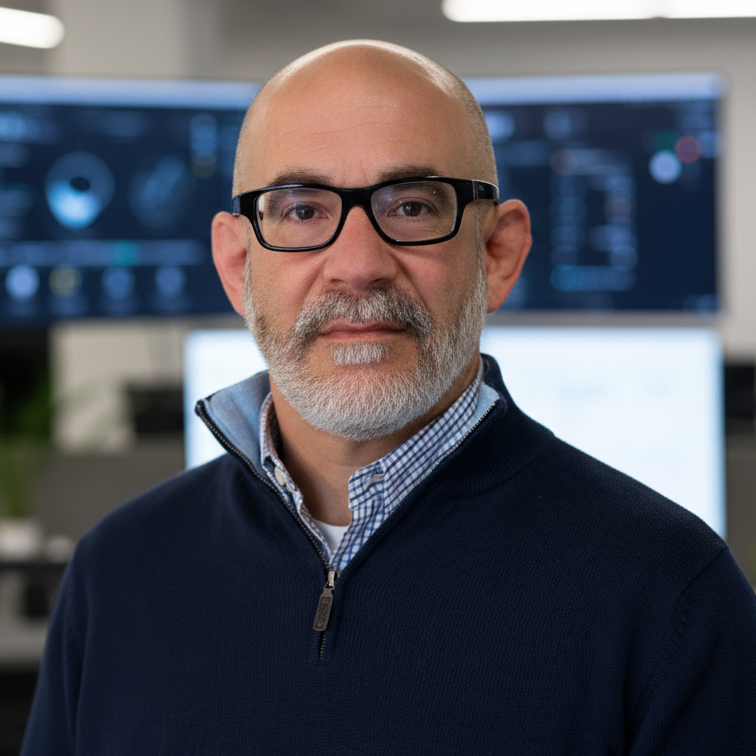
Alexander B. Fredericks is the Founder and CEO of ToneWell, a voice-based wellness intelligence platform that turns a 30-second voice sample into personalized readiness insights across stress, sleep, energy, recovery, hydration, inflammation, and performance.
With more than three decades of experience as an operator, entrepreneur, and growth strategist, Alex works at the intersection of AI, frequency-based wellness, human performance, and behavior change. Through ToneWell, he is building a non-invasive, accessible layer of wellness intelligence designed to help individuals, executives, athletes, and high-performance communities better understand what their body may be signaling before stress and dysregulation compound.
Alex speaks on the future of personal wellness intelligence, the role of voice as a biomarker, and the opportunity for investors and family offices to participate in the next evolution of proactive, personalized human performance.