Apple Podcasts
 Spotify
 YouTube
 Why Relationships Still Drive Family Office Investing | Richard Wilson
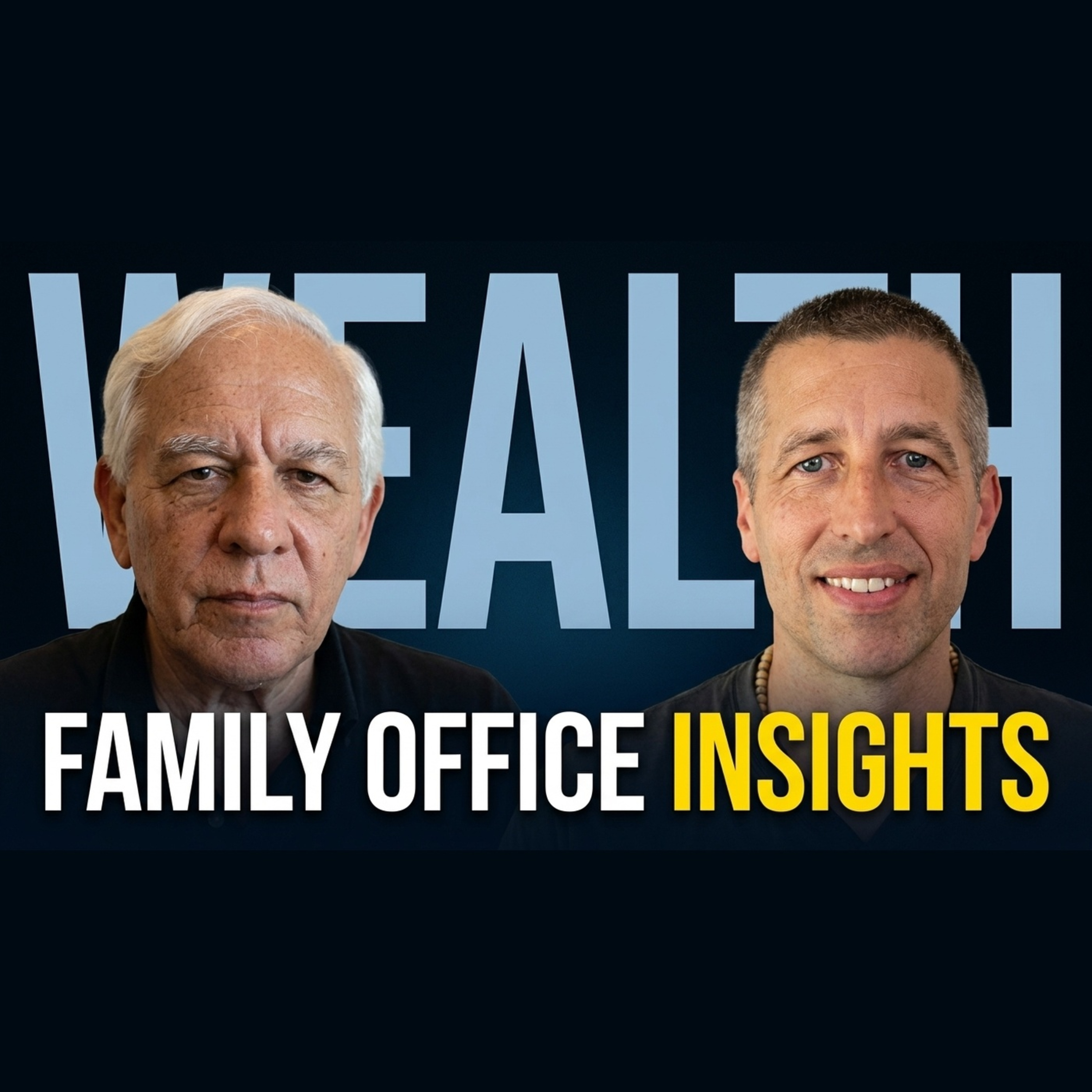
Richard Wilson explains why relationships, trust, and human connection remain the foundation of family office investing despite advances in AI, technology, and automation. Learn how family offices source opportunities, evaluate investments, raise capital, and build long-term wealth through trusted networks.
Key Takeaways
- Despite AI advancements, authentic human relationships and trust remain the most powerful drivers in family office investing, essential for sourcing deals and building long-term wealth.
- Face-to-face interactions are scientifically proven to be significantly more effective for closing deals than digital communication alone, emphasizing the need to shake hands after expanding reach digitally.
- In a crowded 'attention economy,' investors demand concise messaging and clear communication; AI tools can help distill information, but human judgment and trust are key decision factors.
- Effective capital raising today requires exceptional clarity, focus, and trustworthiness, as investors are more cautious and competition is fierce.
- Entrepreneurs must build strong personal credibility and tell compelling stories, as investors invest in people as much as in the deal itself.
In this episode of Family Office Investing Podcast & Investor Insights | Arthur's Round Table, Arthur sits down with Richard Wilson, founder of Family Office Club, to discuss why relationships continue to drive family office investing despite the rapid rise of artificial intelligence, automation, and digital platforms.
Drawing on nearly two decades of experience building one of the world's largest family office communities, Richard shares insights into how successful investors, entrepreneurs, and family offices build trust, source opportunities, raise capital, and create long-term wealth.
The conversation explores relationship capital, family office networks, AI-powered due diligence, direct investing, entrepreneurship, wealth preservation, and why face-to-face interactions remain one of the most powerful forces in business and investing.
Richard also explains how family offices are using AI tools to improve decision-making while still relying heavily on human judgment, trust, and authentic relationships when deploying capital.
Whether you're a family office executive, entrepreneur, investor, founder, or capital raiser, this episode offers practical insights into building trusted relationships that create opportunity and long-term success.
What You'll Learn
• Why relationships remain critical in family office investing
• How trust influences investment decisions
• Why face-to-face meetings still outperform digital interactions
• How AI is transforming due diligence and deal evaluation
• The importance of storytelling when raising capital
• Why focus creates competitive advantage
• How family offices source proprietary opportunities
• The role of direct investing in wealth creation
• Why entrepreneurs must stand out in a crowded marketplace
• How relationship capital compounds over time
About Richard Wilson
Richard Wilson is the founder and CEO of Family Office Club, one of the world's largest family office investor communities. Since 2007, he has helped connect family offices, investors, entrepreneurs, and capital raisers through conferences, education, investor networks, AI tools, and advisory services. He is the author of multiple books and a recognized authority on family office investing, capital raising, and relationship-driven business development.
Want to learn more about Family Office Insights? Click Here.
Frequently Asked Questions
Why are family office relationships still important with AI?
Even with AI, authentic family office relationships and trust are critical for deal flow, capital raising, and building long-term wealth because they foster the confidence needed for investment decisions.
How does AI impact due diligence in family offices?
AI tools are used to enhance due diligence and deal evaluation by analyzing data, but they complement human judgment and trust, not replace them, when deploying capital.
How can entrepreneurs stand out to family offices?
Entrepreneurs need to focus on building trust through authentic relationships, deliver clear and concise messaging, and leverage storytelling to capture attention and stand out in a crowded market.
What is the value of in-person meetings in investing?
In-person meetings are scientifically proven to be significantly more effective for closing deals, making them a powerful force for building trust and securing investments in family office investing.
Arthur (0:00): Hello, welcome everybody. Thanks for joining us, another episode of Arthur's Roundtable. With us today is Richard Wilson. Many of you know him from the Family Office Club. We've known each other for, I don't know, a long time.
Arthur (0:15): And so I'm super grateful that Richard is joining us today. And I forgot to thank you for allowing one of my friends to join your meeting in New York. I really appreciate that. I'm super grateful for that as well. So thank you.
Arthur (0:33): So Richard has a long history of doing successful conferences for the family office community, not just the people that often are there that are looking to connect with family offices, but family offices themselves. And he's got some adjacent businesses that we'll talk about. And so we're super grateful to have this chat with you today. So, Richard, let's start at the beginning.
Richard Wilson (0:56): Sure. Yeah. So, basically, I started this in, June 2007, and, essentially, it started out as just a blog on hedge funds, family offices, and raising capital. And I found out that even though I initially started it with the most focus on hedge funds, that people are most interested in hearing about family offices, raising capital, and then hedge funds is the least interesting to people. So I was like, oh, okay.
Richard Wilson (1:20): Well, you know, at age 26, I got in the front page of the Boston Globe. I got flown around to, like, 17 countries for guest talks at different events because the blog had taken off. And I went from blogging once a week to once a day and then five to 10 blog posts a day. And then we started hosting our own events and launching products, and we formalized it into family office clubs. So the first, like, three years was finding our way to 7 figures in revenue.
Richard Wilson (1:46): And now nineteen years later, you know, we've hosted 300 events and written written, 13 books and just, we do about 30 events a year now.
Arthur (1:55): Yeah. And and the the events are global. Right? I don't remember exactly where they are. You know, obviously, there's the iconic events that you have in Florida and New York, but where else are they?
Richard Wilson (2:10): Yeah. So we've done events in, Toronto, Singapore, and spoken in many countries. But for right now, ever since COVID, it's been focused on The United States. And so all 30 events are in Dallas, Los Angeles, New York, and Fort Lauderdale. And that way, anywhere you are in the world or anywhere in The United States, it's relatively easy to get to a good portion of our events.
Richard Wilson (2:31): And we always start at 10AM, which allows people to fly in that morning if they want to or get their exercise or their email inbox kinda cleansed up a bit. Because, basically, we're working with family offices that are, you know, like, super entrepreneurs, ultra wealthy, and we're working with founders who are raising capital or they have a private equity platform or a real estate development firm or a start up or a, you know, like, of our clients is a $50,000,000 a year roofing company. Like, those types of folks are are very busy, obviously. So we it's important for us that we start at 10AM each day that we host an event.
Arthur (3:03): And so I I remember this, Richard, early on that you were, and I imagine it's a byproduct of having the blog, were one of the early ones in the family office space that figured out that you can't send attachments or links or it won't get through to your email. Like you were sending text emails rather than having beautiful content that, I'm not saying you didn't do this, I remembered that early on you were making sure it got into people's inbox.
Richard Wilson (3:38): Right. Yeah. I think that, the most important thing to pull out of that, I think, is just that we have been focused on the same thing for nineteen years, which is, like, building a platform that adds value first. And then there's, like, a thousand nuances that go into like, you need to have a one liner for anything in the world that you're promoting. You need to have, like, a one minute video because the wealthiest people are the most busy.
Richard Wilson (4:01): You need to have a one pager, not just a pitch deck, and your pitch deck can't be 70 pages long or your own spouse won't read it when you ask them to. Right? Like, things have to be concise and precise and well positioned or you just get lost in the world. And, part of that is email delivery. Part of it is building up social media following, etcetera.
Arthur (4:22): What have you found you have you found in the context of getting your constituents to participate, be it the family offices or those, entrepreneurs that aren't family offices or those people who want to glean the interest of family offices, is LinkedIn still an interesting place?
Richard Wilson (4:45): I mean, it saddens me that a percentage of LinkedIn seems to be these, like, auto reply comments that are, like, overly thoughtful and obviously written by AI. Like, LinkedIn needs to drop the hammer on those guys, like, now because it hurts their reputation a bit. Are the ultra wealthy largely on LinkedIn in some way? Yep. A lot of them are.
Richard Wilson (5:06): We had somebody yesterday that registered for our AI event next week, and they are worth over a $100,000,000. They've had three exits, they've had 50 passive investments, and they came in, you know, quote unquote, cold from LinkedIn. So so definitely the wealthy are there. And I think I find people that are over age 50 are more likely to think it's all about the handshake. All about the in person relationship.
Richard Wilson (5:30): You know? Forget this digital stuff. It's way overvalued. And the people that are 30 are like, it's all about the virtual. It's all about AI.
Richard Wilson (5:37): It's all you know, like, meeting in person is such a waste of time. And I find that the mix of the two is what's most powerful to have, like, a big digital funnel so you can shake more high quality hands in person. And then your big digital funnel, if you leverage, like, Robert Cialdini reciprocation and authority positioning and add lots of value to a very specific demographic and you're the most helpful to them, then it brings and attracts people to you because, like, the good karma you create in the niche. And so that's been our model for nineteen years, and a lot of people come and go in this industry. As you've seen, most of them go out of business, get sued out of business, ruin their own reputation, doing silly stuff.
Richard Wilson (6:15): You know? So I think that's been really our key to success.
Arthur (6:20): Yeah. There's a there's a lot of let's put it this way. There's something now that we call the attention economy. It's even harder with all this AI slop and Yeah. More noise than signal to get people's attention.
Unknown Speaker (6:38): Totally.
Arthur (6:39): It's, you have to really, and I think there's tools to, you know, we found that there's tools to mitigate some of that, but you really have to be thoughtful about, like you said, the one line, the concise message, because you've got, I don't know if it's true in the context of what you and I are doing, but, you know, with TikTok, you got like three seconds. And we don't participate in TikTok, is not anything we're interested in. Could be missing something, but it's okay. It's okay if we miss stuff. But I think even with all this AI, let's face it, it writes some really good stuff, it's really evident that it's been written by AI unless it's curated post.
Arthur (7:27): Totally.
Richard Wilson (7:28): It's like over verbose. It's like over appreciative of your great article and mentions two or three things in the article to try to prove that it read it when you didn't. But, like, I think the other thing is, like, the investment world has been beat up a bit in the last two years. Right? High interest rates.
Richard Wilson (7:43): If you have 30 investments as an investor, probably two to four turned out to be frauds and five to seven cut off distributions. A couple lost all your money. A couple aren't communicating with you at all, you have no idea what's going on. So investors have the taste of their own blood in their mouth. Plus, high interest rates means that the hurdle rate that any investment needs to get them is higher than it used to be, and they're not in the best mood.
Richard Wilson (8:06): And the uncertainty index is very high right now. And so when you combine all of that, what it means is banks will lend you less money on a $10,000,000 asset. So you need to raise more money than before. But according to PitchBook, two and a half times as much capital was raised in 2023 versus 2025. So in other words, it's two and a half times harder to raise capital, plus you need to raise more capital, and you get lost in the ocean of AI slop.
Richard Wilson (8:33): So what that means is you need to be, like, super focused, super clear on who you are, what you're doing, super clear on what the competition is doing, and very careful who you surround yourself with because the most expensive advice is the wrong advice. Right? And so, oh, yeah. Great. This event's free.
Richard Wilson (8:50): Like, oh, great. Well, when's the last time you went to a free event that was, like, super valuable? Right? So I think
Unknown Speaker (8:55): that It's worth all the time that you paid for it. Right?
Richard Wilson (8:58): Yeah. Yeah. The the cheapest is never the best, and the best is never the cheapest is one thing we like to remind people. And we we try not to be the most expensive, because that just adds friction. But, you know, we just find that if you're not dialed in on what you're doing now, the world is harsher on you than it was two years ago where you could just snap your fingers a certain way and raise money for something.
Richard Wilson (9:20): You know, that's not the case anymore because of everything we talked about.
Arthur (9:24): Yeah. And it doesn't matter how good your deck is, how good the team is. And this is my editorial, and you can agree or disagree, but, the storytelling is still paramount.
Richard Wilson (9:39): Right. Yeah. Totally. And also, like, anybody can put anything on a piece of paper. Anybody can make a deck look pretty and promise a 23% IRR, say you're gonna get 2.3 x, and say we have a world class team with nine hundred years experience.
Richard Wilson (9:53): Like, it all means absolutely nothing if they don't trust you. So, like, you need something unique to get their attention, but then, like, you have to meet in person. And Robert Cialdini has scientifically proven you're 16 times as likely to close a deal if you meet somebody in person, and that's for any type of transaction. That's for buying a watch. That's for buying a car.
Richard Wilson (10:12): It's for buying a vacuum. Imagine if you are selecting your spouse or buying a house or putting a million dollars into a deal or 10,000,000. Do you wanna meet the founder in person or meet that spouse in person one time at least? Yeah. Of course you would.
Richard Wilson (10:26): Right? So it's, like, way more than 16 x. And that those stats were all done before AI could fake everything. So is it a 100 x more likely? I don't know.
Richard Wilson (10:34): Like, nobody knows. Right? But it's way more than 16 x more likely. You know?
Arthur (10:39): Yeah. Look. I have some compassion for people that are likely to lose their jobs as a result of AI. I think there's pivots that are available. But I also am encouraged because most people that I know that are successful operate the way you just described, and the handshake is still paramount.
Arthur (11:02): You just can't, no one's writing checks blindly. And I don't care how much money you have on your balance sheet. Don't care whether you have venture fund that you need to deploy capital. It's highly unlikely that someone's cutting a check without looking somebody in the eye.
Richard Wilson (11:23): Right. Yeah. For sure. The more you get beyond, like, just a a 1 to 5 or $10,000 check, then, you know, people wanna meet in person. And oftentimes more due diligence is required.
Richard Wilson (11:32): The more capital you're asking from somebody, more trust is required. So at the end of the day, it's about how to craft a unique position that attracts opportunities, deal flow, and capital to you, and how do you have a credible long term focus that that builds trust and is different than everyone else. Like, Peter Thiel says, if you have three to five or 10 competitors, you've really screwed up somewhere along the way. Like, you've really made some poor decisions. So, like, be as unique as Palantir, or more is basically what he always says.
Arthur (12:07): Yeah. They're, wise words from Peter. No doubt. Yeah. Talk about, a little bit about beyond the conferences, the things that you do for your constituents, your members, your people who, find value in what you're doing.
Richard Wilson (12:27): Yeah. Sure. So one thing that confuses people often is, like, if you're a member, all the 30 events are free. Our core 50 AI tools are free. Our 2,000 investor talks in our portal are free and included.
Richard Wilson (12:41): We've got investor summits and investor mandates recorded in the portal. Like, all that's included. People get confused and think they have to also pay for events, but it's all included. Beyond that, that's really what we're focused on is trying to build, like, the best community of family offices and founders in the world, and we have 16,000,000 registered members in our LinkedIn groups. So we have more members in our LinkedIn groups than anyone else in the world.
Richard Wilson (13:03): And some months, we have, like, 50,000, some months, a 100,000 posts in the LinkedIn groups in a single month, and they'll get, like, a 100,000,000 views. But it's not all our content. It's just all the members posting stuff. Posting. So that takes up that's it takes up, like, a lot of our energy just managing all of that in 30 events.
Richard Wilson (13:21): And I go to every one of the events. So, like, we've got four events next week, And we're starting Fort Lauderdale, putting on AI implementation workshop, you know, and then I'll be in New York the next day and then Dallas. And I have one day breathing room and then LA on Friday. So that does take up most of my time, but, we do help put together and help launch family offices, like single family offices for folks. And sometimes it's just helping them, formalize their family office and they already have parts of it in place.
Richard Wilson (13:49): Other times it's helping them source transactions from the 16,000,000, you know, online members and the several thousand people that come to our, 30 live events a year. But many times it's a mix of things. They need help structuring deals. They need help sourcing deals, negotiating terms, selecting service providers, defining their values, and leveraging AI because they have like a lean team for how wealthy they are. They might only have like one to four true full time professionals inside their single family office many times.
Richard Wilson (14:20): And so, we do that, and, that's a large part of what we do besides just running the events. And then we have a division called expense audit. And expense audit is a business where basically it's a cost reduction service. So we look at we're starting to work with a 800,000,000 in revenue restaurant, a roofing company doing tens of millions a year, a series of dental practices doing about 30,000,000 a year. And we go and help them renegotiate vendor agreements and like merchant account services, health insurance, different software that they're using and help renegotiate that to reduce their costs.
Richard Wilson (14:58): And we find that usually the CFO and their accountant is way too busy to go vendor by vendor and help them optimize that to help them with their bottom line. So that's really what we focus on, but 80% of it is just running the events and trying to have the best community possible of founders and family offices.
Arthur (15:13): So I wanna talk about how you came about that business, but hang on. The AI tools that you're referencing, can you talk a little bit more about that?
Richard Wilson (15:24): Yeah. So I have spent well over a thousand hours developing these. And about twenty months ago, we had zero tools. Then we created a tool where we transcribed every public talk from billionaires publicly available, plus the 42 interviews I've done on billionaires.com, my media website on billionaires. And we combine them all into an AI tool where you could chat with the collective intelligence of billionaires, and it gives you feedback and then tells you the quote that that feedback came from, that advice.
Richard Wilson (15:53): That was popular. So we created a due diligence tool, analyzes any deal, 25 different ways. We created an agent for that. So when you get a deal in your inbox, our clients or members can just literally forward the email to a special email address, and the agent will analyze it and send them back, a score and a whole analysis of it. So it almost acts like one of your team members analyzing deals that you get pitched.
Richard Wilson (16:20): And when that started to take off, we realized, hey. This is something our members really love. So we created a series of 50 different tools. We have a tool that writes seven one liners for you. We have a tool with a thousand deal structures and a library.
Richard Wilson (16:33): You say what you're negotiating to buy or sell an asset, and it pumps out 10 deal structures. And you say, I like number two and four. Show me 10 more like that. And you do that over and over again until there's an amazing deal structure, and then we'll write the email to the counterparty explaining each part of the deal structure and showing how it's a win win. So I won't go through all the 50 and bore people to death, but we we built, like, 50 of our own AI tools that are like that very functional, practical, watching a billion dollars of deals getting done in Family Office Club.
Richard Wilson (17:01): We codified what we learned into the 50 AI tools. And then the other thing we built, that we're rolling out is right now and is fully active for our team is a kind of an enterprise quality super intelligence operating system. So it's based off of Claude. It could be adapted for GPT, but it's based off of Claude. And it basically builds out an intelligence center for each major part of your business with seven functions custom dialed into that division of your business.
Richard Wilson (17:32): And then you have a CEO intelligence center for the head of the family office or founder that oversees all the intelligence centers, and it all reports to a shared Slack channel. So there's ongoing memory and learning going on, and you can see how your team is using the tools. And if you don't do it that way, Claude just tells you, like, who used the tool. Like, you don't get any insight on how they used it or how often or what they said or so, we call that our super intelligence operating system, and we've been spending a ton of time on that the last, eighteen months. Been helpful.
Arthur (18:07): We don't need to get into the weeds, but did you do it with Notion so it keeps the memory and have a chassis for it and not just the Slack for memory?
Richard Wilson (18:17): Yeah. I mean, what we have right now is a version of Slack that has infinite, like, memory going back in time memory ability. So we're writing to a Slack channel that can be searched like a Notion box, like a Notion project or Notepad, etcetera. But, yeah, we found that that is something that I bet Claude is gonna patch that soon. Like, Claude's probably just gonna, like, buy Obsidian or buy Notion or know what I mean?
Richard Wilson (18:44): It's, like, worth a trillion dollars. Like, why do we even have to patch together some of these things when they're spend spending, like, a billion dollars per day on data centers? They should just buy one of these platforms for 30,000,000,000 or 50,000,000,000 and and make everyone's lives more simple on the memory side. Right?
Arthur (18:59): Yep. It's gonna happen. It happens. It's everything's happening so fast. It's a great time to be alive.
Unknown Speaker (19:05): Yeah.
Arthur (19:05): The that product, is it subscription based? And do you or is it part of the club?
Richard Wilson (19:15): Yeah. It's all part of the membership. Yeah. Basically, like, if you're a member, it's kind of like Netflix, but instead of videos you can stream, you get the 30 live events a year. And, like, most of our members only come to, like, four to five events a year.
Richard Wilson (19:29): Maybe we've got a couple that come to 10, but there's 30 across the country to make it easy to use your membership. But you can also stream the 2,000 Decamillionaire, Since Millionaire Talks in the Portal. You can also use the AI tools. And if all you did was use the AI tools, you never came to an event, you never streamed a video, like, it it'd be massively helpful. It's just everybody's busy, and not everyone wants AI tools right now.
Richard Wilson (19:51): They want live events, or they wanna participate virtually from Germany or whatever. You know?
Unknown Speaker (19:55): Yeah. So, Richard, you don't have to disclose the stats, but are people using the AI tools?
Richard Wilson (20:02): Oh, yeah. We've had over 30,000 uses of the AI tools. And so, you know, if you ask AI, it'll say something ridiculous. Like, oh, that's equal to twenty seven years of full time employees working for you. But, like, you know, it's like some of the work done the main point is, like, some people think of AI as, like, how do I write something quickly, or how do I, like, skip steps or not have to think?
Richard Wilson (20:24): But the biggest use of AI I found is how to be more thorough and more effective. Right? Like, how to get a deal structure that's win win for everybody, how to design your positioning that sucks people into your world and they wanna work with you because it's so unique what you offer versus others. And how do you focus your time as a founder to scale your balance sheet and net worth like a centimillionaire does, and not scatter your energy. Right?
Richard Wilson (20:50): So I I find that that is the best use. And so, but, yeah, we've had about 30,000 uses of the tools over the last eighteen months, and they're almost all just restricted to our members.
Arthur (21:03): Yeah. And is this, when we're using some of these AI tools, we have a method or an option, so it's not learning on our data. Is that true for you as well?
Richard Wilson (21:17): Yeah. With Claude teams that comes by default. If you have a Claude maps profile, you have to click, unclick a button that says allow, you know, Anthropic to train on my data. And it's true with most, it mostly comes default opt in. But going along with that, it's like some people are, like, freaked out by the whole thing.
Richard Wilson (21:36): They're like, oh my god. Like, even if I unclick that, I don't I don't wanna have my stuff in there and, like, provide a contract in there. Are you crazy? That'd be stupid. But one of the top three AI companies in the world arguably is Google.
Richard Wilson (21:48): People laughed at them three years ago because they were behind. Now they're really caught up. And I think that the reality is Google is one of the biggest AI companies, and your Gmails are in Google. Microsoft is a top seven depending on who you ask. And, like, your emails are in Outlook or Gmail, like, almost They're already They're already there.
Richard Wilson (22:07): And, like, your smart TV is taking pictures of you while you watch Netflix to see your facial reaction, and, like, 19 foreign countries are listening to our podcast interview now probably. Right? So it's kinda like, I wouldn't say anything out loud that you don't want recorded on 50 servers. Right?
Arthur (22:21): Exactly. So I don't mind sharing with you. We we wouldn't have done this podcast because we have bandwidth issues because we have prioritized things that we do. And when I said that maybe we should do this, the only way that we can do this, because we're not paying an editor to do stuff manually, it's just not going to happen. So when we push out this content, we review it, but in large part, it's all done by AI.
Arthur (22:53): Show notes, clips, everything is done by AI. And had it not been available in this short period of time in the last eighteen months, for example, we would have just bailed on the podcast. It would just it's way too much work. Yeah. Right.
Richard Wilson (23:08): Totally. Totally. It is a lot of work. And I think that, I think that what takes a lot of judgment is that with AI, there's more possibilities. With AI, you feel like you can get way more done.
Richard Wilson (23:21): But, like, one thing that I I know from my three daughters is true is that no matter what changes in the world, the laws of the universe will only get tweaked a little bit. Like, if you study physics, like, that's literally how the universe works. And so one law of physics is that if you drop mass, you gain velocity. And one of my favorite quotes is that clarity multiplies action. And so getting more clear and using AI to learn faster, but staying hyper focused is really important.
Richard Wilson (23:50): And another law of physics is that with the same amount of pressure applied over a wide area, the actual force is small. But if you apply that same pressure in a very narrow area, then it's a massive amount, you know, of pressure or force applied there. You know? And so I think that studying, you know, making sure that you use AI to learn faster and become even more focused when the whole world is distracted and doesn't have the attention span of a goldfish like you were talking about earlier at four seconds. Like, the world is just like, brain rot was the word of the year two years ago, because everyone's just scrolling on Instagram
Unknown Speaker (24:26): Zoom and like scrolling, yeah.
Unknown Speaker (24:28): Yeah. Yeah. It's crazy.
Arthur (24:31): It is. It's it's really, I asked you about LinkedIn because I'm, without a lot of effort, we can still point to LinkedIn as a place where we glean some interesting connectivity that then spawns into real connections. And it also is kind of like the old days when if you didn't have a website, that was your yellow pages. At least if you had a website, that means at least you're starting to realize you you have the the sense that someone might have the sense that you're real. LinkedIn is more or less the directory.
Arthur (25:10): Right?
Richard Wilson (25:11): Right. Totally. Yeah. And I think that people like to see a face with a name. I think, like, a lot of people fail to be optimizing their communications.
Richard Wilson (25:21): Like, if you go to a large event, you probably should have your face on a business card so people remember who you are by your image just as much as your name. And same on LinkedIn. It has the headshot. You get to see a little bit of their history. It's just added context.
Richard Wilson (25:35): And without context, there's just no trust. Right? So I think it just adds to the level of trust. You know, when somebody has a LinkedIn profile and there's no headshot on there and there's nothing else on there, it's not the end of the world, but it helps to know who you're working with. Right?
Richard Wilson (25:48): Is this person 16 years old, or does it look like they've, like, had enough time in life to learn one or two things? You know? Like, it's just helpful information to have. You know? Do they look stressed out?
Richard Wilson (25:58): Like
Unknown Speaker (25:59): you know? Do they look right? Anxiety ridden? You know? Yeah.
Arthur (26:04): I I admit that I don't manage my LinkedIn for most of the time. So we have, you know, things that we have agreed on. Like if someone doesn't have a picture, then it's probably, I don't care how interesting they are, I'm probably not gonna have it accepted as a connection just because it's lame. You know, it's just lazy. Yeah.
Unknown Speaker (26:26): That's just lazy. Think. No. On
Arthur (26:30): the other hand, people are worried about security and family and kids, and so I get that. But Right. You're probably not on LinkedIn if you're that worried about it. Right?
Richard Wilson (26:41): Right. Right. Yeah. For sure. I mean, security stuff is a valid concern.
Richard Wilson (26:44): I can see if a family is worth tens and tens of millions of dollars or made their money in crypto or feel targeted or politicized, you know, then you go into hide under rock mode for very valid reasons. I 100% get that. But in the normal course of business, that doesn't describe 99.99% of founders out there.
Arthur (27:03): It's true. It's true. What else in the So business is a moving target, right? Oftentimes, even though you made it clear that you're focused on delivering value, and I understand all that, but what do you see trending right now? And I'm not asking the question that I often get asked, what are family offices investing in?
Arthur (27:29): I mean, it's a silly question. Sure. Yeah. But what I'm asking is what do you find interesting now aside from AI, for example, that you find yourself thinking about focusing on?
Richard Wilson (27:43): Yeah. I think that families want to have 10,000,000 to $30,000,000 in one to two or three foreign countries in trusts that have never been pierced by a US court or a judge or lawsuit so that no matter what happens, they've got 10 to $30,000,000 of start over money. And I just use that number because a lot of families we work with are sometimes worth 500 like, 50 to 500,000,000. We have a a billionaire we've done 19 transactions with and helped source many things from our community for. I'm sure he would want more than 10 to 30,000,000 of start over money.
Richard Wilson (28:23): But, for many families, having that in at least one foreign jurisdiction super protected, comes up more now the last two years than it did before. Farmland, the ability for the family to have, like, a farm multi structure compound somewhere that, feels safe, and one or two secure residential type assets has come up more often the last couple of years. And then, of course, no surprise to anyone that, you know, Bitcoin and gold, you know, has been coming up more. I mean, everyone's seen what's happened with those those assets, so no shocker there. But I think that the most important thing that families need to hear that are listening that have never gone through formalizing their family office is that what I found is that the most successful entrepreneurial families, they have one to three wealth advisors that pretty much all play the same diversify everything beat of the drum.
Richard Wilson (29:20): And and sometimes they'll slant it towards passive income or consider what you like and don't like, of course, but, like, they help you diversify. And then a lot of families invest in real estate private equity that's mostly cash flowing, and a lot of families don't like extreme debt on those things. They want, like, moderate moderate risk, moderate returns. But the most important part to hear is that, like, many families forget to still play offense in the industry where they made their money. Like, if you exited your dental practice for $50,000,000 because you had eight locations, whatever, or your auto dealerships, you may not wanna ever practice dentistry again.
Richard Wilson (29:52): I get that. Or own an auto dealership again. But every two to four location dry cleaner, you if sold your 50 dry cleaners, wants to be you when they grow up. And you can invest money and get access to deals that nobody else gets access to because they weren't really raising capital, but they'd love for you to be part of the platform. Or they're raising capital at a 12,000,000 valuation, and you can get in at 4,000,000, or they'll give you 2% advisory shares for free.
Richard Wilson (30:18): Then you could also buy 10% of their company, and you can help them play offense and defense. And so what I'm saying is, like, you got public markets, pure defense almost. You've got private equity real estate that tracks inflation, hopefully does well for you in a diversified basket, but not as diversified. But the most focused area that other people would think is most risky could just be five to 10 or 20% of your net worth, but it might double triple your net worth over time because that is where you have an unfair advantage. You have distribution, you have relationships, you have expertise, you have thirty thousand hours there.
Richard Wilson (30:48): So playing offense there is super important, and it's usually where the entrepreneurial first gen people have the most fun is how to be strategically investing into companies related to the niche where they made their wealth, and they can spike up and have more 10,000,000, $100,000,000 plus exits.
Arthur (31:06): Yeah, totally makes sense. We've seen that, Richard. I think that's really wise advice. It's back to do what you know, right? You don't have to run the dental practice, as you say, but you can leverage your experience and help somebody go from a $5,000,000 company to a $30,000,000 company faster than they would otherwise do it themselves and participate in the spoils depending on the type of person you get involved with that's open to that sort of thing.
Arthur (31:38): And then you articulated it well, and I'm not judging you, I'm just saying I agree, is that there's the stay rich money, which is the stock market, the public equities, which is often touted by the people who get paid to do that. And it's a good thing.
Unknown Speaker (31:56): Right. Right.
Arthur (31:59): And then the real estate asset class is super interesting because it comes along with lots of goodies. Right. Cash flowing and depreciation and cost seg and all that, you can ultimately push the tax out for a very long time. Are you still finding, even in those, are you finding in the in the first to second generation families that they still wanna have a slice of real estate in there because of all the goodies that come along with it?
Richard Wilson (32:35): Yeah, for sure. I still find a ton of interest in real estate, even like, it's probably a complaint we get sometimes because like a private equity venture capital or a founder of an operating business will come in and be like, oh, well, you know, I've got this HVAC roll up or whatever they have, and they're like, why did why does real estate come up so much? Are you guys just focused on real estate? And it's almost like they're complaining about gravity and planet Earth because, like, if a family made their money in dentistry or dry cleaning or biotech, they all want some real estate. It's just like a hard asset that brings out money and always has gone up over ten, thirty year periods pretty much unless you bought at the absolute wrong time in the wrong place or something and bought condos or something.
Richard Wilson (33:15): And so, basically, like, we can't help that that is gravity on planet Earth. Like, in the family office space, people are gonna want a little bit of real estate. Right? And so, it's like complaining about tax planning. It's like, yep.
Richard Wilson (33:26): They probably should have some tax planning. Right? And so I think it'll always come up and always has been. But what's fascinating to watch is, two things. One, that thirty, forty years ago in the public markets, almost all the value of the most expensive stocks was about their manufacturing plants, their real estate, their physical assets.
Richard Wilson (33:44): Now you look at the fastest growing company, the new billionaire list, much fewer of them come from real estate, from manufacturing, from hard goods. Much more of them come from digital goods, digital assets. But despite that, the average person doesn't value digital assets as highly as they should. That's just a super interesting thing to see. And then the other thing is that a lot of the wealthiest families I know are really good at acquiring, like, strategic choke points, or if you acquire that, you get massive distribution.
Richard Wilson (34:14): Or if you acquire this one asset, now you get more deal flow, more access to capital, you get better research, you get more high conviction due diligence. And a lot of people start working in their business, and they're taught to work on their business. But having a family office is working on your businesses and figuring out how you can dominate a niche sandbox and play a different game than everybody else. And so helping founders play the strongest game they can with their DNA and their passion, their track record, helping them play that game well and have that game be unique from others is what Family Office Club is all about. So we always say that we're about proximity, like proximity to wealth, super intelligence, AI tools, and then scaling.
Richard Wilson (34:54): And scaling is all about deal flow, choke points, vetting partners, navigating your own extreme focus on how to scale up, getting distribution, etcetera.
Arthur (35:05): So it's clear that the value of the members who want to connect with family office is, you know, that value is clear, being part of the club. Is what you just described the value that for the family office members doing that sort of thing on an ad hoc basis for them, like for consulting fees or something like that? I don't need to, like I said, dig too deep, but I'm just, does that just happen? I mean, what Yeah. Obviously, it takes effort.
Unknown Speaker (35:41): But Sure.
Richard Wilson (35:43): Yeah. I mean, one thing that's very much true is that the wealthy founders who had multiple exits or single family offices that come to our events, they like connecting with each other for sure. They like leveraging the AI tools. We've had one sent a millionaire randomly set on stage that he fired his executive assistant who was just screening deals for him. And now our Dewey AI due diligence tool does it for free twenty four seven more thoroughly, and he reallocated that money and hired a controller who adds much more value for just a little bit more money.
Richard Wilson (36:14): He got a controller, and, like, the AI tool can do the lower level work now. And so they like the AI tools. They like connecting with each other. They like seeing higher quality deal flow. So for the most valuable families coming to our events, we'll look at the the 532 people that were at our event in New York ten days ago, and we'll read the bio of every single one.
Richard Wilson (36:33): And then we'll see what are the three to four people in the room out of 532 that are exactly what they're looking for. And then they're not just at the event, like, bumping into random people and hearing random pitches and, like it's like every other investment event where it's a zoo of people or a total waste of time. We do five to fifteen minute talks at our events. All the sponsors just get five minutes talks on stage, so it's very fast moving. And then we make sure they make some valuable connections.
Richard Wilson (36:59): And then only if someone we get to know them, we really enjoy working with them, and they really need help setting up or formalizing their family office, then, okay. We're happy to work with them either on on setting that up and and working with on a much more close basis, or if they want to do a cost reduction process, like for expense audit, we have, like, a a process for going through that, them renegotiate their vendor agreements. They waste less money on wealth management or merchant account processing or whatever it is.
Arthur (37:28): Yeah. Just a unsolicited review by somebody I know that went to the New York thing that we're working with and have for a few years, was bragging about how good your post the the the conference was good, but the technology to connect with people post conference was he was he was suggesting that it's really good.
Richard Wilson (37:55): Awesome. Yeah. Appreciate you saying that. We we operated on one membership platform for about half a decade, and we just moved over to a new modern, like, mobile app driven platform. And all of our AI tools are in there, all the videos.
Richard Wilson (38:07): So you can you can walk around and just just with your mobile phone, you could just stream the interviews we've done with billionaires. And to be able to access nowadays an AI tool and videos where you can literally get feedback from from billionaires and stream their thoughts and emulate them and have that a touch of your fingers is, like, it's crazy that that's even possible. So we're we're excited by it. And, you know, but but people really join for the in person events because nowadays, anything digital gets commodified a bit, and it's kinda like the in person is where the real magic happens. Right?
Arthur (38:43): Richard, how many times have you and I heard some developer in this part of the world or another part of the world bragging about how he's got the technology that's gonna connect people in a digital way, and it never works. Right?
Richard Wilson (39:01): Totally. Yeah. Thousands, thousands of times. And, like, the more AI takes off, the more that IRL, like, in real life
Unknown Speaker (39:10): Yeah.
Richard Wilson (39:11): Becomes more valuable, because you can spin up and create any app you want with some vibe coding lovable platform or quad code if you know what you're doing halfway and and stuff like that. But, like, that fly around and deal with the hassles of spending $800,000 a year on chicken and scrambled eggs and organizing the event team and getting everyone to show up and getting you know, we had 75 speakers on stage at our New York event. And at our annual event, we have a 125 speakers on stage. And, it's a lot of, like, chaos to manage. Right?
Richard Wilson (39:41): It's not it's not easy just like you do in the podcast. It's not as easy as it looks. And so to do what you've done consistently over time is what's hard. Like and that's what separates you from others for and every family office listening already knows that. But, like, for anyone that's younger, like next gen, it's performing at a high level with extreme focus over a sustained long amount of time that sets you apart from everyone else who gets distracted every year with, like, oh, mobile apps.
Richard Wilson (40:08): Oh, crypto. Oh, gold. Oh, pipe coating. Like, whatever. You know?
Arthur (40:12): Too many objects. Yeah. Yeah. Yeah. It's it's really it was the interview with Bill Gates and Warren Buffett, independent of what Bill said the other day in Congress.
Arthur (40:28): Yeah. But I think it was Charlie Rose, an independent of what me Charlie Rose got me too'd. It was he Charlie Rose said to each to them, they were together in this interview and said, what's in one word, what's the most important thing about business? And they both said it simultaneously, focus. Focus.
Richard Wilson (40:49): Yep. 100%. Yeah. And, like, my friend, Evan Pagan, is the one who taught me, like, clarity multiplies action. And the most important thing about that is that, like, if you are clear with what you're trying to get done, then you take more action yourself.
Richard Wilson (41:05): Your team also takes more action if they're clear on where you're going, and the world around you will organize itself around you and opt in or out if they're super clear about what you stand for and what you're trying to do. If it's murky, they just don't even notice you exist most of the time, and you can't even take action on stuff. And so I have, like, a one pager I laminate. I update it every month, and I train my AI tools to base this responses off of this one pager. The And one pager is my monthly, quarterly, annual goals, and then about 35 to 40 mental models I wanna operate on.
Richard Wilson (41:37): And I read that, while I'm shaving every morning so I know what summit I'm headed towards, like the monthly, quarterly, annual goals, and then how I'm gonna get there with the mental models. And then all my AI tools are customized to keep that in mind, and I update it each month so that my daily AI task management tool and my planning tools and my customization settings and Claude, etcetera, are all customized based on that road map. And that's like a really easy, free, practical thing. If anyone wants, like, a a template of my dashboard, I I give it out all the time at events and stuff, and I'd be happy to email it to anyone who wants it so they could implement that for themselves.
Arthur (42:14): Yeah. It's super valuable. Can you imagine what we had to do before AI?
Unknown Speaker (42:21): Like, we
Arthur (42:21): had to manually update that. It was just just incredibly efficient now.
Richard Wilson (42:29): Yeah. Yeah, for sure. I think that, that's the thing is that some people have such a negative view. I mean, like some of those have a negative view just of life in general, of course, but like some people have just had surprisingly negative view of AI and they're like, it's just rotting people's brains. They don't use their brains anymore.
Richard Wilson (42:47): And it's like saying, oh, bicycles exist and cars do, so everybody is gonna instantly get obese and never use their legs. It's like, well, if you wanna go from LA to New York to come to an event, good luck only walking. Like, you'll be take quite a bit of time. Right? So sometimes it's appropriate to use technology.
Richard Wilson (43:03): Sometimes you gotta use your your legs or your brain. What I find is that, the top point one percent, the super founders out there, they use AI to learn faster, be more thorough, more accurate, double check what people are telling them, do their homework before walking into a meeting, negotiate enterprise level accounts with vendors leveraging AI, etcetera. And because they're able to be more thorough and faster and more effective, they can just, like, learn faster using it. And their brain is still going the same 80 miles per hour that it always has, but it just gets more done with that 80 miles per hour. And some people just choose to be lazy, and they'll be ever dumber because of AI, but then some people are gonna be ever smarter.
Richard Wilson (43:43): And that is gonna create more of a divide, I think, than anything else.
Arthur (43:47): I I hope not, but I think you're right. The gap could widen, but it will widen, I think, because people do exactly what you said, is that they dismiss it out of hand without recognizing that at their fingertips, they have the collective knowledge of the world at their hand. Yeah. And it's getting better and smarter every day, and it's epically smart already. And even if you're just a very pedestrian user with ChatGTP or Perplexity or Claude or any of them, you can just write a prompt that says, You're the smartest IP attorney on the planet, and here's your challenge.
Arthur (44:35): And you, I mean, you could simply say that to them and it'll do the work.
Richard Wilson (44:41): Oh, yeah. Yeah. It's a great equalizer for someone who's hardworking and thoughtful and willing to try things and take some risks in life. And, like, I think it will lift people out of poverty from around the world who never had that chance before. It's an amazing equalizer.
Richard Wilson (44:55): I also think I'm, like, a huge fan of capitalism. I mean, if you look at forty years ago or a hundred and forty years ago, like, the standard of living and the number of people as a percentage in the world that are in dire property and starving to death continues to go down. And I hope that will still be the case for sure, but I just see, like, an exciting opportunity for those, like you said, whether you're ultra wealthy listening to this or if you're like, one of my clients who came to our club, had never raised capital. He raised $10,000,000. His name is Michael Scott, and then he had a $100,000,000 exit three years later.
Richard Wilson (45:30): And he said that he was lucky to have a PhD growing up. He was poor, hungry, and driven. And, like, honestly, if you have that combination and you're willing to learn and always be learning, then, like, AI is your friend. Right? So I think that you just have to stay with that mindset.
Richard Wilson (45:46): Like, if you're pessimistic, you might be right most of the time, but it's the optimists who create all the wealth in the world.
Arthur (45:51): No no doubt. Yeah. Musk said, you could be a pessimist, but and be right. But if you're an optimist and you're wrong, you're still better off. Right?
Richard Wilson (46:04): Totally. And like, who was it? Like, Jocko, I forget his last name, but, like, Jocko, the Navy SEAL guy who's always he's like a Goggins type character out there and pretty smart guy. But he, he said something the other day I saw in a video. He said that when you're practicing, you have to be humble day to day.
Richard Wilson (46:21): You have to assume that you don't know enough and always be learning more and always be studying, always self improving, always training hard. But then when it comes time for a performance, you need to be confident and really strive to win and have the confidence and and having that humble learning mentality day to day of getting better and sharper, I think is super important.
Arthur (46:42): Yeah. Look. And I'm I'm Greek when I was born here. And so I look back, you know, it's just kinda like what you built with the billionaires before AI caught on to what it is. I said, Wouldn't it be awesome if we had Aristotle, Socrates, and all these people's wisdom built into AI, and you could have a conversation with them and present them with a problem.
Arthur (47:07): Well, we have it. Like all of a sudden it just appeared, right? Even the Buddhist said, as soon as you realize you know nothing, you're in good shape, right? Just keep on learning, right? What do you think is happening with, So I didn't coin this phrase and only recognize it because other people are talking about it, like Marc Andreessen.
Arthur (47:39): And he was just, in the Silicon Valley, there's a new thing called a coding vampire, right? Yeah. And it's not necessarily the coders, it's the engineers and entrepreneurs that are building. And they're so pumped because for years they wanted to build their favorite thing, whether it was a business or a project, and they set an agent up and then they have an agent run it, and then they go, okay, now what can I do while that's running? And so nobody wants to sleep, right, because they can get all this shit done.
Unknown Speaker (48:15): It's crazy.
Richard Wilson (48:16): I I can relate to that. I've I've gotten up like, I'm in Hawaii, so I always get up pretty early. Like, if I sleep in, it's because it's 05:30AM or something like that. Like, I I get up as early as 01:30 in the morning and many times at 3AM sharp. And my team is East Coast, so it can be up to six hours after me, so it's not that early East Coast time.
Richard Wilson (48:36): But sometimes when you're working on things and you're making progress on multiple threads at once, it's consuming and firing off multiple types parts of your brain that is like a dopamine rush because you are learning and you can feel that you're learning and you can see the strategic progress and you're taking something that the team used to take twelve minutes or, you know, let's just say, just like, two or three minutes to go look up and be like, alright. Who is this person? Should I approve them to speak at the event? What's their background? Are they a risk to our platform?
Richard Wilson (49:08): Are they more of an investor or someone raising capital? But now the AI tool can search for 20 things at once, which is more than the six that my team would ever look for. And in thirty seconds, give us a confidence interval on who they are, their background, their reputation, are they a heavy hitter, their credibility level, their net worth estimate, signs of wealth, all of that in, like, thirty, forty seconds. And, like, so when you create that, you know that you've created a little brick of value to build your AI foundation on because you've turned an old process into an instant thirty second little machine. And now that machine is gonna work for you every time, which is, like, multiple times a day.
Richard Wilson (49:45): And it's like you're like, holy crap. And then he was like, I gotta build a 100 more of these. And then, like Exactly. Yeah. That that's, like, how you get addicted to it.
Richard Wilson (49:54): And, you know, people some people will listen to that and be like, oh, Richard's crazy. He's training these models to learn his whole business, but there's so much judgment day to day still required. There's so much showing up in person that like a lot of life is actually showing up and also being a human being that people can relate to, that they enjoy being around. Like, you can't just be a super nerd. No one's gonna wanna do business with you or trust me.
Arthur (50:15): Yeah. Look. There's people that are being paid $50,000,000 a year that are no codex and cursor inside out and are working for Google and Anthropic and Grok. Mean, that's a different altogether. I will tell you that I didn't expect this, but as a result of AI, and I was doing it on a very selective basis, not that I'm so selective, I'm just saying it was only a couple of things, because we have seen so much deal flow over the years, and I'm just a private investor, that's what I do most of my time.
Arthur (50:55): And I have gotten to be pretty good at asking the right questions.
Unknown Speaker (51:02): Right.
Arthur (51:02): And looking people in the eye and getting a vibe you know, operating on my gut for as long as I've known. Right? So so if you take that, all the AI intelligence, and then you can dispense with all the analyst work that normally would be, you know, just a slog, and then you get to meet somebody, and then you can make a judgment based on all that analyst work and the vibe that you get. Has happened is that I'm been hired to sit and meet with people, like what would arguably been the role of an investment committee member.
Unknown Speaker (51:47): Right.
Arthur (51:48): But to sit down and in person meet with somebody, that somebody's just about to deploy some capital and give them feedback just because I've been doing it for so long, not because I'm super good at it necessarily. Yeah. But just, you know, the Socratic method. Right?
Richard Wilson (52:03): Sure. Yeah. For sure. I mean, if you think about it, you know, there's a Harvard Business Review article that said, should you cut should you trust your gut? And then the answer was basically, well, it depends on what your gut is made out of.
Richard Wilson (52:13): And, like, well, your gut is made out of, like, thirty years of vetting founders and private deals and real estate and private equity and all of that. And if you think about it, your brain is almost like an LLM, and it has all these inputs. But your brain is ridiculously more powerful and efficient than an LLM is in terms of energy usage for high quality output. And so your internal brain LLM has been trained for decades and decades, this ridiculous level of efficiency, and you can't calculate all the neurons firing and memories that are being combined into, like, general rules and mental models that you operate on. But it's basically, like, you don't wanna rely only upon AI or only on your gut these days.
Richard Wilson (52:52): It's like because the AI has this ridiculous search of data and best practices. And so when you combine the two, that's when, you know, you get you get great results. And I just find that, like, now before I get on a call with someone, I wanna see their materials so I can analyze everything, ask five questions ahead of time over email, see what their answers are, maybe ask three to five more questions, and then get on a call because 99% of the time, it's a fit for somebody else, not me. Or it's just a decline because, yes, I love, you know, medical practices, but, you know, I'm just not currently investing in them if they're based in Australia or China or something. You know?
Richard Wilson (53:30): And so, like, some people don't disclose all the details upfront and like, oh, you're losing $4,000,000 a month. Okay. So let's not get on the phone because I'd rather just focus on people that, aren't losing that much money per month or something. Right? And, like, you end up wasting so much time as an investor realizing, oh, if I'd known that upfront, I would have never gotten on this call.
Richard Wilson (53:47): You know? And so that's part of the value of AI too.
Arthur (53:50): So one of the things I wrote many years ago, Richard, as a result of somebody wanting me to write a newsletter, I don't know, know Agora Publishing? Agora does all these newsletters. And the guy that started that I know, his name is Bill Bonner, and he started by writing a, it was secret hideaways and we put it in snail mail and it was just enough below the stamp cost in a bulk it was funnel marketing at its beginning. It was 37 pages of all kinds of print. And if you got to the end, you were giving them $35.
Arthur (54:32): So the whole idea was he wanted you to opt out. But if you made it to the end, you would give him $35. That was the whole follow-up So marketing anyway, he asked me to write something. And so I wrote something. And one of the things, it was like this with the Bavela seven, seven principles.
Arthur (54:51): And the number one principle was, tell me the bad news first, right? When you're talking to somebody that's a family office or an investor, don't wait till the end to tell me the bad news. Tell me the bad news now. If you wait till the end, and it's bad news that's gonna make me opt out or not even consider it, I'm pissed. Like, there's no hope.
Arthur (55:15): Right?
Richard Wilson (55:17): Yeah. Yeah. Yeah. For sure. And like in, doctor Cialdini is, like, the godfather of influence persuasion.
Richard Wilson (55:24): He always says, like, address the elephant in the room. And so, you know, you might not want it to be the first half sentence out of your mind out of your mouth. But, like, when you're talking about, like, the five to seven things about your company, admit what's not perfect or what, you know, what's not ideal. You know? Like, hey.
Richard Wilson (55:39): By the way, I had a partner for five years and then they left, but our strategy has stayed the same or whatever. You know? And, like, if you don't admit that, then people are almost like, alright. Well, what's the catch? Or is there something bad?
Richard Wilson (55:50): Like, what are they hiding? So it's just better to disclose for multiple reasons.
Arthur (55:56): No. Disclosure's king. There's no doubt about it. So Yeah. If there's something that somebody who's listening to this could do or reach out to you about, what would that be that would be helpful to you?
Richard Wilson (56:15): Couple of things. I mean, if anyone is, wanting to be in a community of founders and family offices, I'm happy to answer their questions and just make things clear. Sometimes, you know, we get we get questions often about like, you know, what do we talk about at the events or who speaks on stage or whatever. We have a lot of details on familyoffices.com. But if they wanna reach out directly, I'm happy to have them do so.
Richard Wilson (56:39): But then also if they're looking to set up or formalize their family office, I'm happy to help with that. If anyone wants free access to our our billionaire collective intelligence AI tool or one of our other AI tools, just let me know. We have 50 of them. So we often are giving out a link, for free to a couple of those just so people can play around with them and see that they're real and and super powerful. And then they the only final thing would be that if somebody is doing 10,000,000 plus a year in revenue and even more so if they're doing 50 or 100,000,000 plus in revenue, we have a analyst as well as software and, like, an iterative AI process as well that we use for negotiating vendor agreements.
Richard Wilson (57:19): And yesterday, we signed a quarter million dollar contract, and it's a enterprise agreement with a vendor that everyone would recognize. And we got 52.5% off the publicly listed enterprise pricing. And part of this is just running businesses for nineteen years and watching how centimillionaires negotiate with folks. And part of it is leveraging our network. Because we have 16,000,000 members in our LinkedIn groups and we run all these events, many times we can secure some family office quality pricing.
Richard Wilson (57:51): And if we can do that for one client, then we do that for others in our network. And we have family offices that have their own merchant account processing company, and they want to give people an amazing rate to win them over. We have people in the insurance business. So, like, if a family office has that as an operating business, they win by getting the client, and we win that expense audit by helping people reduce their cost by, you know, half 1,000,000 a year or quarter million a year on that one that one area or overall in their business. And that the details on that are at expenseaudit.com, but that's a fun business because it's it's no risk to our clients.
Richard Wilson (58:30): So, basically, like, if we don't save them, like, hundreds, thousands of dollars, whatever, there's basically no fee until we save them on that that spend. And we just find that in this environment that family offices love that idea because of inflation. And many times you get, like, family office pricing everywhere you go, and they just, like, triple the price or 10 x the price you should be paying for stuff, and it and it's obnoxious. Right? So
Arthur (58:54): So is it is it operate like the traditional negotiation where you get a percentage of the savings?
Richard Wilson (59:01): Yeah. There's basically no no retainer, no cost upfront, no consulting fee for for that part of what we do. It's usually tacked on when we're helping a family office create their family office, but we can do it separately as well. But it's basically just only after we've saved them money, we get a percentage of what we what we save them.
Arthur (59:19): And if it's an operating business that has nothing to do with a family office, it's just an operating business of an entrepreneur, it's the same. It applies the same way. Right?
Richard Wilson (59:27): Yeah, exactly. And that that's like the most common use case. It's just with a family office, they're often paying a retail wealth management fee, which is sometimes five times more than they should be paying if they're ultra wealthy. They should get more institutional pricing. And sometimes they just don't know what they don't know there.
Richard Wilson (59:43): And sometimes it just takes, like, dog birding each one, following up 30 times, and, like, getting it done with with the team and just being iterative and focused on it. And so we have some some approaches we found worthwhile for that and some partners that are that are eager to to help in those areas.
Arthur (59:59): Yeah. Without revealing, I mean, was a big business when there was competitive for long distance services where you could negotiate somebody's VoIP or whatever it was. Yeah. It's not like that, but are you finding that it's wealth management fees? Is the low hanging fruit?
Arthur (1:00:19): You don't have to disclose your secret sauce, but SaaS like Salesforce. Where are you finding the majority of the savings?
Richard Wilson (1:00:29): I mean, we're finding it's industry specific, but areas is related to health insurance, software vendor subscriptions. We look at like favored nation clauses and length of the agreements, and we look at ways we could make it good for the vendor because we have such a large community and we can press that lever. And the lever gets pressed in two ways. It's leverage because we're the largest community of family offices and founders in the world, and then we can use that to get that vendor more clients. If they do well by us for this one client, we could refer you to many other families.
Richard Wilson (1:01:08): They're worth tens of millions or hundreds of millions of dollars, so it's gonna be good for you to work with us. And the other leverage is is, as I mentioned before, if somebody has like, I interviewed a centimillionaire on stage who just sold his third company to a large bank for almost a 100,000,000, and he has a merchant account processing company. So he can decide what rates he's gonna charge to his clients. And he wants to win over an 800,000,000 a year in revenue restaurant. So he's gonna offer a dang sharp rate compared to what maybe somebody is paying right now and could save someone a couple 100,000 a year in fees just on that one area.
Arthur (1:01:45): Yeah. Merchant cash advances, lots of margin in that oftentimes, especially with the restaurants. Right?
Richard Wilson (1:01:53): Yeah. Yeah. I mean, the cash advance stuff can get out of control so fast, but just merchant account processing even, just charging credit cards, you know, can add up or other supply vendors. Like one of our closest clients, we actually work as our outsource CIO is for a import export family. So their expertise is sourcing things globally and importing them at a better rate.
Richard Wilson (1:02:15): And so that's the dynamic that comes up most often is it like our relationship with one family is helping the other family and can help the family, you know, reduce their costs and just run a more efficient operating business?
Arthur (1:02:30): Yeah. So we can talk about it offline, but I have a friend that owns a huge merchant business. There's some pullback from some of the banks. And so he's looking for one or two extra banks to do the processing for them. So we might be able to talk to you Yeah.
Unknown Speaker (1:02:52): About
Richard Wilson (1:02:54): for sure. Happy to help with that. We know, a couple of family offices that own banks and one that just bought a bank and one that's in the middle of the lengthy painful due diligence process of buying 10% of a bank. I guess it's like the only area that's more regulated and painful than broker dealer world is if you wanna own part of a bank, I guess, is what he's telling me.
Arthur (1:03:13): The OCC's rough. We're big fans. I don't know if you probably know about Mercury.
Unknown Speaker (1:03:21): Yeah.
Arthur (1:03:22): Big fans of Mercury. I interviewed the founder. Some of my best friends work there.
Unknown Speaker (1:03:29): Oh, nice.
Arthur (1:03:29): And we've been, you know, we've got dozens of accounts with them for multiple businesses. And, you know, it's a fintech which figured out how to be, you know, really optimal user interface and results for venture capital funds and entrepreneurs. And they just are at the they've just been approved for their own charter because they've been just So overwetting another I'm super happy with Wow.
Richard Wilson (1:03:58): That's awesome. Yeah. We like Live Oak. I mean, obviously, do your own due diligence if you're listening, obviously, but like we've we've had a good experience with them, and they pay out a nice, you know, 4% and change last time I checked on just, like, your normal
Arthur (1:04:14): saving of your checking account. On the flow on the TDL. Yeah. I'm happy to promote Mercury because we're super friends of theirs. One of the things that's turned out to be, first, their API is amazing.
Arthur (1:04:29): And two, there's no wire fees. Like
Unknown Speaker (1:04:32): Right.
Unknown Speaker (1:04:33): Zero wire fees, which adds up. Awesome. Right?
Richard Wilson (1:04:36): Oh, yeah. Totally. Yeah. Bank of America. I'm like, okay.
Richard Wilson (1:04:39): I have this balance with you, and you're still dinging me, like, $35 every time. Like, either way, I'm like, what? Yeah. It's crazy. So, yeah, I think that's, like, that's the way of the future.
Richard Wilson (1:04:49): Those banks are gonna grow massively in size because, like like, neither of us are millennials by, by any definition, but, like, those types want a digitally enabled bank more than anything. And all these people becoming centimillionaires from Anthropic and x AI and and, you know, SpaceX. SpaceX. They all want a Yeah. Yeah.
Unknown Speaker (1:05:09): Type one.
Arthur (1:05:10): Yeah. Totally. Yep. Well, Richard, this has been awesome. Really appreciate you doing this today, and congratulations on building an amazing business and and serving the community well.
Arthur (1:05:21): I know lots of people appreciate it.
Richard Wilson (1:05:24): Yeah. Well, thank you. And consider it open invitation if you wanna check out. You know, we're in four cities next week for the the AI workshops, but also we have more summits coming up this year. So just let me know when something lines up at at familyoffices.com, and we're happy to have you come in and be on one of the discussion panels or just come in as our guest to participate.
Richard Wilson (1:05:44): And, you know, if anyone listening needs any of the resources or questions, it's just richardfamilyoffices.com. I'm happy to be helpful to them.
Arthur (1:05:52): Super. Thanks for doing that. And thank you everybody for joining today. Till next time.