

 Apple Podcasts
 Spotify
 YouTube
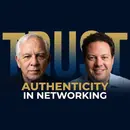
 The Hidden Currency Behind Every Great Opportunity | David Homan
Key Takeaways
- Authentic trust, not mere transactions, is the most valuable currency for creating lasting opportunities in business and investing.
- Relationship capital, built on genuine connection and generosity, is the true driver of opportunities for family offices and investors.
- Many successful investors and entrepreneurs underestimate the critical importance of maintaining meaningful professional relationships.
- Distinguishing between opportunistic networking and authentic, generous connection is vital for building deep, sustainable trust.
- Super-connectors play a hidden but powerful role in leveraging trusted networks for business, investing, and philanthropy.
- Human connection remains paramount, even more so in the AI era, highlighting the enduring value of authentic relationships.
The Hidden Currency Behind Every Great Opportunity: Understanding Relationship Capital with David Homan
In this episode of the Family Office Investing Podcast & Investor Insights | Arthur's Round Table, host Arthur engages in a profound conversation with David Homan, a distinguished relationship strategist, author, entrepreneur, and renowned super-connector. Their discussion delves into the critical roles of trust, relationship capital investing, and the intricate, often unseen networks that fuel success in business, investing, philanthropy, and opportunity creation.
From Composer to Connector: David Homan's Unique Journey
David Homan shares his fascinating trajectory, transitioning from a career as a composer and arts executive to becoming one of the most influential relationship builders within the family office and impact investing spheres. He articulates a core principle: it is authentic trust, not mere transactional exchanges, that cultivates enduring opportunities. Homan highlights a common oversight among successful investors, entrepreneurs, and family offices – the underestimation of the value derived from consistently nurturing meaningful professional relationships.
The Psychology of Trust and Authentic Connection
The episode unpacks the psychological underpinnings of trust, examining why it's frequently undervalued by individuals focused on quantifiable metrics. A key distinction is drawn between opportunistic networking, which is inherently transactional, and genuine, authentic connection. David Homan emphasizes that true generosity, extended without immediate expectation of return, serves as a potent strategy for building long-term value and solidifying relationships within the investment community.
Relationship Capital as the Engine of Opportunity
Central to the conversation is the concept of relationship capital investing, exploring how this accumulated social and professional equity acts as the primary driver for new ventures, investment prospects, and philanthropic initiatives. The discussion illuminates how leveraging these trusted networks can unlock access to exclusive deals and opportunities that are otherwise unavailable.
Super-Connectors and the Power of Hidden Networks
David Homan sheds light on the significant influence of 'super-connectors' – individuals adept at cultivating and navigating hidden networks. These connectors play an instrumental role in facilitating business deals, investment placements, and philanthropic endeavors by strategically deploying their established web of trusted relationships.
SOAR Connect: Quantifying and Preserving Trust
Insights are offered from the development of SOAR Connect, David Homan's innovative platform designed to empower individuals to effectively leverage their trusted relationships while meticulously preserving both privacy and authenticity. The conversation also touches upon the intriguing potential for technology to assist in quantifying and fortifying these vital trusted connections, striking a balance between measurement and genuine human interaction.
The Enduring Value of Human Connection
In an era increasingly shaped by artificial intelligence, the episode powerfully concludes by underscoring the irreplaceable and ever-increasing importance of authentic human connection. This foundational element remains paramount for navigating the complexities of modern business and investing.
Who Should Listen?
This episode is indispensable for family offices, investors, entrepreneurs, founders, philanthropists, and anyone committed to cultivating deeper, more meaningful, and ultimately more rewarding professional relationships. Understanding and investing in relationship capital is no longer optional—it's a strategic imperative.
About David Homan
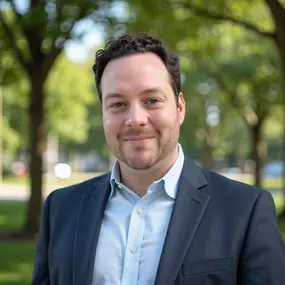
David Homan is a prolific entrepreneur, advisor, author, and connector, best known as the founder of SOAR Connect. He is also the author of "Orchestrating Connection." For decades, Homan has dedicated himself to building and nurturing trusted relationships across diverse sectors, including family offices, philanthropy, technology, entertainment, and global leadership communities. His core mission is to guide individuals and organizations in creating substantial opportunities through the principles of trust, generosity, and authentic connection.
Want to learn more about Family Office Insights? Click Here.
Frequently Asked Questions
What is the most valuable currency in business and investing?
Authentic trust is the most valuable currency, driving opportunities and lasting success rather than transactional interactions.
How does relationship capital create opportunities?
Relationship capital, built on genuine connection and generosity, creates opportunities by fostering deep trust within networks, which leads to deal flow and collaboration.
Why do many investors underestimate the value of relationships?
Investors often overlook relationship maintenance because they may focus more on quantifiable metrics and underestimate the psychological and long-term value of deep, trusting connections.
What is the difference between networking and genuine connection?
Networking is often transactional and opportunistic, while genuine connection is rooted in authentic generosity and builds deep trust for sustainable opportunities.
Why does authentic human connection matter more in the AI era?
In the AI era, authentic human connection becomes even more critical as it fosters trust, empathy, and unique insights that technology cannot replicate, driving deeper value.
Arthur Andrew Bavelas (00:01.167)
Hello, welcome everybody to another episode of Arthur's Roundtable. I always say thank you to everybody because you've been kind and sharing this and paying attention and listening in. And so we're super grateful for that. David and I, it turns out that we met each other some time ago in New York City. I don't remember, but I I'm glad to have reacquainted. And so I turned myself in, David, that I don't remember, but I'm super glad to have you here today. And we have some very
interesting common friends together as well. So David, thank you for being here. You want to start at the beginning?
David Homan (00:36.686)
Absolutely. Although actually, let me just start with how we met years ago. I was dragged I was dragged to one of your events by a mutual friend who thought I could add value. And because you trusted that person, you let me, who is not a family office, into that trusted room because they said I could add value. But of course, at that point there wasn't a need for me to meet you, Arthur. And there wasn't something I thought that I could give. So I sat there absorbing and trying to help.
Arthur Andrew Bavelas (00:40.826)
Sure.
David Homan (01:04.456)
one of the opportunities that you were putting in front of some of the other people within your community. What's evolved since then is a much more sophisticated business book company, all aimed at figuring out how to build trust one person to the other. That is not how I started in my world, but as we get back there, and hopefully the gratitude you extended to everyone to start will be gratitude we extend to everyone for continuing to listen. but I if you want, I'll just give a
Arthur Andrew Bavelas (01:09.924)
Nice.
David Homan (01:33.314)
Brief overview of how I got to that place where I got into your room and how my network is deeply intertwined with the world of family offices.
Arthur Andrew Bavelas (01:42.021)
Sure, by all means, please.
David Homan (01:44.429)
So my late father, Sidney, was a college professor. He taught at the University of Florida, so that's where the Florida Gators are. Growing up, no one knew Gainesville unless you knew Emmett Smith, then the late, later Tim Tebow, the Joaquima River Phoenix, and Gatorade. So I did not really grow up around wealth. the wealthiest people were doctors or lawyers. But something in me thought of I could get to college near New York, I might end up in New York. I got to Bard College, ended up in New York through graduate school.
Arthur Andrew Bavelas (02:13.987)
Nice.
David Homan (02:14.27)
professionally as an artist, I'm a classical composer. So if you say to the device that Jeff Bezos built, which I'm actually looking at as we do this interview, and therefore I won't say her name, you can hear over a hundred of my works as a composer. But no one has ever met a living classical composer. Maybe now, hearing me, they might some of your audience might go listen, but that I knew wasn't going to be grounded in in the reality of becoming it my career is something in between a hobby and a career right now.
Arthur Andrew Bavelas (02:28.136)
nice.
David Homan (02:43.8)
Have street cred, I just had a retrospective of my work, but it wasn't how I could make my mark. I ended up meeting the widow of the violinist Isaac Stern. She hired me to run her gallows. Three years later, I was running this foundation, three years which is a fantastic group supporting artists in Israel. Itzak Perlman and Ohad Naharina, the most known names in the arts world. These were all people I worked with. I thought I had a dream job until three years later, little old Ponzi scheme called Bernie Madoff came along.
And the foundation that had been invested since the early 90s was dead overnight. But it wasn't because I figured out a different way to network. What I started to do during the housing bubble recession was get completely outside of my bubble. I was in arts and philanthropy, and I got involved in people investing in women, climate change, refugees, sports, entertainment, worlds that were completely anathetical to my day-to-day. But everywhere I went, I met one type of person.
Turns out one of those people was one of your oldest friends in the family office world, our mutual friend Marcia Nelson. And I believe she was the one who dragged me. Yeah. And I think she dragged me into your event all those years ago because she knew that I might have had this network that was specifically one heritage, one culture, one focus. But every time somebody told me no, I'd go, Well, I'm sorry you don't want to support us philanthropically. What can I do to help you?
Arthur Andrew Bavelas (03:49.024)
And she is she is a force. Yeah.
David Homan (04:11.83)
And all these ultra high net worth people, now we would define them as family offices, but in the mid-2000s we did not to the same extent. They would be flabbergasted that somebody would be asking them how they could be helped. And the person would say, I'm doing a lot of work around dementia and Alzheimer's. And I'd go, Do you know Bob? And they wouldn't know Bob and I'd connect them. And I'd keep connecting left and right. The power of no became information for me. And as I did this over and over again, the pattern that emerged was I wasn't just talking to
people in each of these spaces, I accidentally built a network of connectors and superconnectors. Because in the world of wealth in particular, there are few people that you can trust that are not opportunistic and stay relational first. And in twenty fifteen I started to formalize this. By twenty seventeen I was running an event, which became a follow up event where people would walk into a room, usually forty to fifty people. I won't get into all the different formats and the ways that I
Pioneered event to be deep and meaningful and actionable. But what would happen is people that should have known each other started to meet each other. And a lot of these were either the gatekeepers or the wealth holders. And by the time 2019 rolled around, I had caught the eye of a group who were a family friend and went from running this cultural foundation to incubating a film company for Ray Dalio and Ray's son Paul and Paul's wife Christina.
And my mandate was to scale a company and to figure out the the use case for this company in Hollywood without using their name. For because if you want to call up anyone and say, I I represent Ray Dahlia, would you take a call? They'll take the call. But it wasn't authentic to the reason that the call needed to happen. So the theories I had built around my network brought them in less than 18 months over 300 organic, incredible intros. I took, Paul and Christina took.
Arthur Andrew Bavelas (05:51.79)
Sure.
David Homan (06:06.582)
A few were suggested for Ray to take related to this company, all incredible wealth holders, Hollywood moguls, people that could help guide the direction or confirm the direction of this company.
Arthur Andrew Bavelas (06:18.474)
In one of the asset classes that are most difficult to fund, right?
David Homan (06:22.946)
You know, everyone what one of the mentors to Paul, John Abnett would say is that he had, you know, he had made the Tish family a a small fortune out of a big fortune. And that was the joke, although Abnet and Tish have done incredible work from risky business and fried green tomatoes and many amazing works together. but Hollywood was for the most part a playground where somebody rich came in, everyone else heard that that person had money.
Promised them the moon and then didn't deliver it. And so part of my mandate was to figure out what are the best examples of family office money that have had incredible success in Hollywood. So my friend Brian, who I knew from Jewish Philanthropy, introduced me to one of his friends, Colin, who was incredible VC. Colin's dad was actually an ambassador during Clinton to a country in Europe. And that man, Howard,
Told me the story of how he went on behalf of his friend Steve, met with a bunch of Hollywood moguls and producers, and found this one visionary, Wes Anderson. And that's how Indian Paint Brush was built. And once I found an example, I was able to backtrack to show the family, incredible humans that I worked with for several years, a great example of how to be mission and purpose driven, but also create valuable film.
Arthur Andrew Bavelas (07:33.561)
Hmm.
David Homan (07:46.297)
But it wasn't on the backs of the name I was representing. It was based on the authenticity of the ask. And everything I've done since then, my own business, my advisory firm, where I partner with a lot of family offices, funds, and groups to scale their impact and coach them on the strategy to get the access I can also provide. The tech company that I've melt built, my global network, which is called Orchestrated Connecting, which is 2,700 people in 35 countries and 189 cities.
All of it is based on this idea that if you can get two people to ask with purpose and intent, whatever the opportunity, and the right connector or chains of connectors can thread that to make an authentic real connection happen. Deals happen, impact happens, philanthropy happens at the speed of trust. And so that's what if I had had this perfected when I was in your room years ago, I would have come to say, Here's what I do, I know this is what you do as a connector and convener.
But at that point, I wasn't at that level. Now from the book that I've written and the community I run, I figured out a way to keep trust even when transaction happens and create access to amplify voices together. And that, not a quick version, maybe a medium one, is why I'd say for everyone still listening, I'm grateful for you listening to my story. And now let's now let's dig in.
Arthur Andrew Bavelas (09:07.65)
Yeah, so David, thank you. First of all, I appreciate that. And and I appreciate you being mindful of where you thought you were, even though we would have welcomed you, beyond just sitting in the room and listening. But thank you for being authentically that way. Isn't it odd to you on some level, and maybe it isn't, that one would think that even
Being in New York City where lots of people make lots of money doing transactions with institutions, and they are based on trust and relationship in some way that people wouldn't automatically understand that trust is paramount to developing a relationship.
David Homan (09:57.557)
If you are in a place of abundance and you have what you need, absolutely, I'll trust you, you trust me, let's make it work. When you have desires and wants that transcend what's in the moment, especially if things are not going as well, people tend to throw that relationship value and the need for trust completely out the door because they believe that the opportunity in front of them has to exist for them at that moment. In a in a capitalistic society where we need to
Arthur Andrew Bavelas (10:23.32)
Yeah.
David Homan (10:27.246)
Take in order to then give, which is not everyone's mindset. It wasn't Buffett's mindset, but it's been most. New York is absolutely cutthroat that way. And, you know, as an example, right? I walk into most family office conferences from Opal and DC Finance and Preston and Family Office Circle and many of the others where I've been able to be a keynote or a speaker. And I look at who dismisses me once they realize my last name isn't the last name that we're going to meet.
Arthur Andrew Bavelas (10:57.421)
Yeah.
David Homan (10:58.284)
And people think of that as, you know, well, this guy wasn't the right opportunity. I'm trying to get to this person. But then what invariably happens, because I've built an insane network, is I'm that trust maker to those people. And if I say this person treated me poorly, that's all that Family Office needs to scoff and write off the person who was opportunistic. So unfortunately, it doesn't surprise me. but I used to think this was the the reason I built my community, Arthur.
I used to think that because I approached an intro with something I took as a sacred trust and a value to honor, other people would, until I got to a point between madoff and then divorce and many other things in my life where I had to come to the realization, no, unless I stated to you this was a value, something I needed to you to honor, most people would just think they needed it. They desire, they wanted it, they deserved it, and they wouldn't value it until you asked with an intent to say, like Arthur, I'd love to.
Arthur Andrew Bavelas (11:52.451)
Mm.
David Homan (11:55.577)
connect you to this person, would you honor that? And if they do become part of your Family Office Insights group or on your podcast, would you give them the r the respect to thank me at the very least for that? And once you put people's reputation on the line, honor comes back. Very few people have the audacity to do that because they think it's not something worth or needed to ask for.
Arthur Andrew Bavelas (12:20.066)
Yeah, it's really interesting that we know by experience that if something comes in from left field, for example, on LinkedIn, and that carries very little weight compared to somebody who said, I know this person and I'd like to introduce you to them, that is exponentially more valuable.
not just in a relationship building way, but a potential bits business way. And so why wouldn't one treat that with the respect and value that it it by by definition requires?
David Homan (13:03.566)
So okay, if I answer that with a little bit of an anecdote. Okay. It's because people, two things. One, people don't understand that the way they would expect to be treated isn't the necessarily the way they treat others. Because we all live in this place where we think what we do matters more, because based on Freud and all psychology, we need it to matter more. Only natural givers, which is a requirement in my community.
Arthur Andrew Bavelas (13:06.532)
Yeah, of course.
David Homan (13:30.114)
Meaning somebody who actually gives without an expectation of return don't have that. But they're the ones who fall most prey to that, the disadvantage of people who won't honor it. So a couple years ago, I was host hosting a family office dinner with a friend. And we had 14 people around a really nice table. The room itself was a little too tepid because their AC wasn't working. But other than that, like the company was good and the food was good. And one of the guys sitting next to me, he is a major
Private equity guy. I cannot mention who, I cannot mention the companies, but you would know his companies, you would have consumed what he had the innovation to buy. And he thought my world of relationship value and introducing people around impact, he basically said it was stupid. So I smiled in this tepid room and I took up the challenge. And I said to him, You know, you've done such incredible work. Like I I know I consume so many of the companies that you turned around and scaled. What were your top five deals?
And the guy told me his five deals. And I just smiled because I knew where this was going and he didn't as we both slowly ran out of water, for which there was no refill as I challenged him. And I said, Okay, well that that, you know, every private equity deal, every MA I ever seen, somebody introduced somebody else to that company. Who introduced you to those deals? And he paused for a second, he thought about it, and he named two people. And I said, Well, you know, he's like the first one introduced me to deals one, two, and five, the other one's deals three and four.
I said, well, th that's incredible. Two people fed you your five greatest achievements. what are you doing with them now? And he hadn't been in touch with the person who had fed him one, two, and five in over six years. What I got him to understand was strategically maintaining that relationship, even if it didn't have value at the moment, was more important than the way he had seen it, which was that.
Arthur Andrew Bavelas (15:13.751)
Mm.
David Homan (15:26.72)
Who's gonna get me my next big deal for me to be the big shot to get the capital and turn around something and make it worth billions instead of millions? But he had neglected the person who was the catalyst who used to trust him, and he broke that trust. So when you get people to see strategically that maintaining trust, which cannot be manipulated, you have to sincerely earn it through actions, through generosity, through honor. If we continue that cycle, we end up getting more.
And once people understand it's strategically valuable to maintain it, we live with a different code of ethics, especially in a world of private wealth, which in most cases everything is behind closed doors. No one knew the people who fed him those deals. They just thought the private equity guy made great choices. He didn't make great choices, but he made a poor choice to neglect the person who was his best breadwinner as a friend, not a part of his company. In this case, like the guy cried, like
salty tears and like a hot room. But what happened was I got him to understand that the way that I saw his world meant that a big shot had betrayed the trust of somebody that he used to find most valuable. And I said, all you have to do is call them back up and say that you're sorry. Thank them for what they've done and ask what you can do to help. And don't ask them for anything. And you can rebuild that trust. They did respect you, but you ruined it.
by feeling that opportunity trumped in this case honor.
Arthur Andrew Bavelas (16:59.222)
In in that anecdotal example, do you believe that he
was entitled that he felt he was entitled to that person bringing it to him and that he was the only one that could in a meaningful way execute on that and that the catalyst to that introduction was one that he was entitled to.
David Homan (17:27.192)
Yes, absolutely. when your ego trumps the opportunity, you believe that you are the best to do something. This private equity guy had to find all the money for it, had to put his own money, had to take risks, had to gut renovate a company, turn it around because there was a reason why he was buying things like this. But to neglect the person who fed him his best opportunities was the miscalculation because we don't look at relational value.
As the same as our value of our time or the value of our money? And what I try to challenge people to, right? And like be being friends with and knowing thousands of different people in the family office space, I've polled them for years. Like, Arthur, how many families collectively does one group often do their most deals with? What number of other families? What's your experience, Ben? Yep. Sometimes up to seven.
Arthur Andrew Bavelas (18:19.14)
Three. Three.
David Homan (18:23.682)
Which means that a trust circle is somewhere up to seven in that space. And yet the overlaps is where opportunity comes. Where your second most trusted person you've done a couple deals with, even if you've lost money on a few, brings you to somebody outside of your circle, but in their circle. And when you are asking with intent and strategically building trust, you can expand outside those small circles. But trust overrides opportunity.
And it makes it stay relational, even when families have co-invested and lost money because they trusted the intent behind it. But when somebody is opportunistic, you write them off. When somebody is an asshole or a snake, you push them to the side. But in many cases, you'll take the money of somebody you don't find reputable because you need it for the opportunity that you think is valuable. And at some point that moralistic compass comes back to bite you, because that person turns on you like they turned on somebody who was your friend's friend.
Arthur Andrew Bavelas (18:59.917)
Louis.
David Homan (19:21.622)
And what you can't predict is that because no one talks about failure. No one talks about loss. They only try to look at opportunity or trust. And that's why all these circles in the family office space stay incredibly small and aiming to be tightly controlled.
Arthur Andrew Bavelas (19:37.766)
Do you know whether in your example with this particular private equity person, that aside from not treating the person well or dismissing them, was there an expectation of a trade that would garner the money, the introducer, for example, that the private equity guy just dismissed and didn't?
make good on or he just n didn't consider it valuable enough to do something even if there wasn't an expectation. Sorry about the convoluted question.
David Homan (20:13.32)
No, and so to understand that correct, the person who made the introductions, from my understanding, didn't need any of the money that might have come from introducing it. They were in the world of that, therefore they were so deeply entrenched and successful that it was literally just like, you know, hey, so and so take a look at this. It's a good one. And so there wasn't an expectation of quid pro quo of like, well, here's your carry on this, here's here's some stock before it IPOs or whatever it might be.
In this case it was simply a neglect of the relationship once the relationship wasn't bearing fruit at that exact moment.
And this is a huge problem. It's a huge problem overall in the deal flow space, because you're only as good as the deal you can get money into or the person you can bring to the table. And in the in the venture world, you have people, you know, swinging like they're incredible sluggers when you don't know within 10 years if they're actually going to be successful or not. In the family office space, you have money that was gained or inherited through a legitimate, incredible business.
Arthur Andrew Bavelas (21:01.828)
Yeah.
Arthur Andrew Bavelas (21:11.875)
Yeah.
David Homan (21:18.754)
That then starts to swing up the fences as if the merits by which that money was gained equals the merits by which they're applying it. And when you when you meet these people as you and I know and you know them intimately, then you understand one, they're just people, two, they're trying to figure out what space to have legitimacy or success in, and what everyone is aching for over and over again is the word we keep coming back to, which is trust. It's the hardest thing to earn. It takes
The data science says you really can't really build somebody's trust unless it's seven to ten years in. So how do we hack this space to understand where opportunity comes? An opportunity that doesn't have a lot of red flags or silver linings that somebody else that you don't know to trust could have told you about.
Arthur Andrew Bavelas (22:08.355)
Yeah, I I'll go back to my question or comment and s just say it just was seemed natural to me to understand that if you don't have trust, then you don't really have anything in a relationship. Unless you're sitting on a trading desk and institutional investors have to buy what you've got. That's a different thing, right? but
Yeah, I guess it's it's hard for me to imagine that that isn't something that's embedded in in people's ethos out of the gate, but I guess it's true.
David Homan (22:48.152)
So I'll give you an example from my own current fundraising. So for ten years, people have been asking me how I connect with such ease to such power and how I keep track of it. My answer has been, well, what do you use? I haven't found anything. And then like deeper, I'll be like Google spreadsheets and an admin or an EA or now like an AI agent. And they'd be like, No, but how did you thread the needle to get somebody to that major family office?
Arthur Andrew Bavelas (23:03.023)
Right.
David Homan (23:12.926)
And I wouldn't have an answer technologically. I've kept looking and looked at all the current tech. I've never found something that worked for what I believe was trust building, private, but also an amplifier. So I built a company around that. That company's called SOAR Connect, where in beta testing now I've raised two rounds, a million one to date, from 29 investors. All but two were people I've known for a very long time. But the two who came in for my one for my first round and my pre seed.
They were some of the most trusted two people in my network. And when I asked them why I'd never met this person who just invested with me with very little diligence, because it was trust to trust. Well, part of the flaw of the system, which is what my tech aims to solve, the people who had introduced me thought I already knew them. But a LinkedIn first degree is meaningless. So what does it mean if you're not connected or you are?
Arthur Andrew Bavelas (24:01.987)
Hmm.
David Homan (24:09.218)
And as I'm going out for my third round, which is what I'm in the middle of fundraising for now, I'm getting introductions to insanely successful family offices, venture capitalists, alternative worth individuals who don't know me, but they said to one of my investors or one of my network, Do you know anyone that's actually hacked how to quantify trust? And does this at a scale with privacy? And a lot of my friends aren't even selling my tech because they haven't been able to test it yet, but they're selling their trust to me.
And so I have people jumping on the phone that would be as a founder, you you salivate over trying to get to one of them. Currently I have a dozen. I have no clue if I'll be successful in this next round as quickly as I would like. But the currency is trust. And what treat creates that currency is the only thing that actually builds the trust, which is that a major, a major investor who gave me a small check because it was outside his thesis.
Arthur Andrew Bavelas (24:44.451)
Right. Right.
David Homan (25:07.992)
Called up a significant VC and said, This guy's different. You can't get preferred shares. You got to go common like every other investor. This valuation is is is modest for what it actually is. But this guy hacked it. Here's what he's done for me connecting me with three people that changed my life. And the guy told the story to this other VC. And the VC took the call, and then we realized I had helped that VC's business partner for several years.
But I had never pitched them. And when this one VC asked why, I said, why would I pitch somebody I don't know? I either will get a warm introduction that you think is valuable, or you'll ask for me. Otherwise, it's just another founder with another deck going, I have a dream, it'll be successful when 90% aren't. And because of that approach, the guy actually called another VC up.
Arthur Andrew Bavelas (25:45.295)
Mm-hmm.
David Homan (26:04.952)
To vet me with them, set up a call. In this case, it's in a week, so we'll see. but it but they got the system instantly that I was pitching because they were able to tell stories about generosity. And this is what we forget in the world of wealth is very few people who have millions or billions get asked what they need, are offered help, are given it un. Yeah. And
Arthur Andrew Bavelas (26:28.463)
You're almost always being asked for something, right?
David Homan (26:33.198)
When my friend Andy, who's an incredible entrepreneur and author, came out with his book, Burn Rate, which was about mental health and business, he sold the company Bonabos years ago. My question was, what do you need? And h his answer was something personal about he and his wife starting a family in Chicago and meeting people that I knew there that might be of the same mental temperament. That was the intro. When his book came out, I promoted it. I sent it to other family offices I knew.
Who focused on bipolar disorder like his. I've never asked for anything from it. But how rare is it to offer something of somebody of prominence and just help? This is what people forget builds trust more than anything else. Doing it for a family member or one of their loved ones, supporting something they do in impact or philanthropy. The amount of opportunity I've been able to generate for my startup, for my business, for my network.
That comes from generosity without expectation into completely strategic how did you get access to that person who sat with me at TED, who took my call, who flew to meet me. We we look at this as if it's some secret sauce, and in the end, if we're not curious and vulnerable for to people, and we're not offering with generosity and gratitude, no one wants to build trust with us.
Arthur Andrew Bavelas (27:57.112)
And and David
It's obvious when people have figured out that that sort of building trust is the way to open doors for whatever agenda they might have, when it's contrived, and it's obvious when it's authentic.
David Homan (28:19.458)
Yes.
Arthur Andrew Bavelas (28:21.241)
Because the contrived like if you all of a sudden listen to some podcast somewhere and decided that, okay, I'm gonna change the way I operate and pretend that I'm generous and care, doesn't work. Right? It's it's kind of a way of life.
David Homan (28:39.116)
Arthur, you you cannot fake vulnerability.
Arthur Andrew Bavelas (28:42.596)
Yeah.
David Homan (28:44.342)
I was at a conference in LA where I was one of the keynotes. I brought friends who were major Hollywood producers on a panel. And before everyone knew who I was that day, I was in a conversation with two pretty major family offices. And one of them said, Well, what brings you here? And I said, Well, I'm I'm a speaker, but I I wasn't sure I was gonna come. And the other one asked why and I said, My father passed away December first last year.
This is my first public event speaking since I lost him. And since he was a public speaker in a Shakespearean, like every time I speak, I channel my dad. And this is going to be the first time I'm standing on a stage in his image, but now no longer in his shadow. And the woman who asked me the first question goes, What are you speaking about?
I did not look back at her. The other gentleman said to me, I lost my mother fifteen years ago. It doesn't matter when it is. I can't shake the feeling that I lost something I can never get back. And I said, Let's have lunch. Now, strategically, that woman is one of the most sought after women in the family office space. I will not mention her name. She's actually a great person, just not my type of person.
The other one is one of the most dynasty families of family offices globally on the planet. And now I would consider him my friend 'cause he let me s gave me space to talk about my dad.
Arthur Andrew Bavelas (30:13.987)
Nice.
David Homan (30:15.842)
You can't fake it. Opportunistically, I should have networked with both. I took the option that was in front of me to be real and I built a different, better interaction strategically, valuably for you, for anyone else in my network, because you can't fake it. You can ask questions and try to be curious and be a narcissist. You cannot have somebody who's sharing of need. You can't fake that. So a part of my strategy in this weird world of wealth.
Arthur Andrew Bavelas (30:17.284)
Yeah.
David Homan (30:45.802)
Is can be completely raw, not unfiltered, but for what is the challenge for me? Right now it's a back injury that might necessitate st surgery. And in a conference, I mentioned that on a stage, and people came up afterwards to go, Can I help you with that? Not I saw who you talked about, I saw who you are, you're a best selling author. Will you help me with this? Like I just had people approach it with empathy because I said that's my MO.
And for a while people thought this was not the way to do it until that thing called COVID happened and we realized how lonely we were, despite how in often case successful or connected we were, because authenticity could be conveyed through Zoom. Opportunity didn't take that call.
Arthur Andrew Bavelas (31:19.501)
Mm.
Arthur Andrew Bavelas (31:33.979)
Yeah. You know, I again I I'm sorry to go here, but it seemed to me it's just natural to connect the dots and help people. And you know, we have ways of making money that we think are comfortable and no pressure and yeah, just go down the list. We're not holding the gun to anybody's head. And when what you said at the beginning is true, is if you're worried how you're paying Joey's tuition.
And putting food on the table and paying the mortgage. You know, desperate men do desperate deeds. and so the I think the trick is if you're going down that slippery slope is to put the brakes on and figure out how to get yourself out of that position before you start making mistakes that you can't undo. Cause like karma's a bitch, right?
David Homan (32:25.838)
Harmers of Bitch, desperation, pride, all of these things that don't result in real connectivity. You know, there's a lot of self work everyone could do, not that we all do it to any extent to which we should. But in the world of wealth where everyone wants something from you and you want something from everyone else, trying to navigate that and how and learning how to build trust is incredibly hard. Because I've had friends who have known people for years.
Like for instance, I'll give you example. Like one of one of my oldest, closest friends. I met this woman through a text message through our friend Rochelle. The text message said, Meet Mamie. You guys should have a lot to talk about. And I went to Brooklyn on like a hundred and ten degree day. All my stories involve it being really hot for some reason. and I met her and I do what I normally do. I got to know her, I offered help, and she was flabbergasted.
Arthur Andrew Bavelas (33:12.865)
Yeah.
David Homan (33:20.198)
because usually people ask something for her. And I was in Jewish philanthropy, and I learned later she was a Jewish philanthropist. And then I got her help. I introduced her to people that had become the CTO of the tech company she was building. And we maintained a friendship to this day. my partner and I had her and her husband over for dinner on this past Wednesday night. And the outcome that people would want to hear on a family office podcast is
I get to catch up with my friend whose family just sold Purella and Gojo to Clorox for $2.25 billion. The outcome that mattered is that my partner Rebecca is celiac, and my friend Mamie is also celiac. And we finally have a gluten-free angel food cake recipe that was so good that every friend of mine who's celiac, I'm gonna tell them or have them over for an angel food fruitcake party. And I maintain my relationship with my friend.
Arthur Andrew Bavelas (34:07.14)
Nice. The important stuff.
David Homan (34:18.296)
Who their family built by hard work and incredible company. And Mamie's sister, who's one of the most unbelievable women CEOs I've ever met, Marcella, like Marcella orchestrated that to be a company of more and more value until Clorox bought it. But to see them as an opportunity is to negate the need and to focus on their needs and to support them as friends opens up more doors in the long term.
Because everything can stay relational and people forget that repeatedly.
Arthur Andrew Bavelas (34:51.438)
Yeah.
Arthur Andrew Bavelas (34:55.524)
I've been connecting the dots my entire life, so I don't know how to behave any other way. may I give you an example of something that happened recently? This is your show, but I think it'll further illustrate why if you think in terms of how you somebody you would want somebody to try to help you, help you think in terms of helping them.
David Homan (35:06.487)
Absolutely.
Arthur Andrew Bavelas (35:23.812)
that it just comes naturally, I think. But we have a, you know, we have a little business where people are pitching to family offices. We charge them some money to do that. And then we're done. You know, we're not banking it. We're not getting fees. We're not getting commissions or you're not we're not a broker dealer. And so we're we're doing is creating a nexus of connectivity to hardly reach the people that you can tell your story to and if they want to invest, they can invest and we're done. And so it's been that way right from the very beginning.
And but what often happens is it's countless times. In this particular case, we have a company called Newcom, which is a started out as a medical device with you know sound technology, and they've done two and a half million surgeries without any anesthesia. I mean, it's a miraculous product, but they finally brought it into an app on the phone and you listen to it, and it has a variety of
levels of vibration that help you do certain things, rest, calm down, sleep, that sort of thing. And they came on and and pitched, we did a podcast with them. And a friend of mine here in Utah was unaware of newcom but while we're having a conversation where his daughter has an autoimmune disease
And while she was at the neurologist getting an examination, the neurologist takes headphones and put it on her head and says, Listen to this, this is newcom.
Right. And of course, he tells me the story. I said, You're not gonna believe it. I know the CEO, I know the founder, I know all about technology. And so what we immediately do is get the daughter the premium Tony Robbins version of this thing so she can go down the road of getting healed to the extent that this might heal her. All I'm saying is that I didn't even think twice about how I could monetize that, right? I just thought about wow, I can help you. And
David Homan (37:14.094)
Yeah.
Arthur Andrew Bavelas (37:27.93)
What's more important than helping someone's daughter or son? Nothing. Nothing. Right.
David Homan (37:30.808)
Yeah. I I love that. And that is one, it's an example about how you you're a giver, which I've known for years. Two, it's an example that could have been completely different if you hadn't have happened to have that mentioned to you. If there wasn't vulnerability to talk about one's kid and and the autumn and what they need, then maybe the opportunity would have been wouldn't have been what it needed to be for the kid, for the company.
So, you know, what I what I've been building is a system relationally to solve this connector to connector. That's what my community is. It is world's stupid business, stupidest business. If family offices listening, you go, how do you get into it? They have to be referred in as an action oriented natural giver that I would leave my kids with. There's no membership, there's no sponsorship. The code is you are a giver first. You are somebody who is very, very busy, and you happen to have an insane amount of
Relationships in whatever field or area. But what I found in studying this, because if I look at this, as I'm at the ecosystem, the nexus, so to speak, of thousands of the biggest ecosystems or most niche ones on the planet, what's the problem? That anecdote is always something that is, it happens by happenstance. It isn't, quote, orchestrated. So the tech company that I'm building, it's a few components. The most important one is the trust score.
Arthur Andrew Bavelas (38:51.153)
Mm-hmm.
David Homan (38:57.858)
This is the algorithm. This is my moat. We're gonna patent it. Everybody Reed Hoffman talks about trust. Everyone's writing about trust. For me, trust is longevity, duration, frequency, pattern that you can quantify into numbers, which is what we've now pioneered, what a relationship feels like as a ranking from your top on down. And if you can get that as a premise of a trust score and then add things which are smarter address books, fictional CRMs, the real point is.
If everyone has this technology and that is the goal, we'll see how far I get, but I'm trying to be a founder with a real real estate part of this. What happens if everyone has a private data set? And then if a friend comes to me and says, My daughter has autoimmune, this is what she needs, and you hadn't mentioned Nucom and the story on our podcast, I would not know, even though I have access to you and access through you two mo through multiple close friends.
That you could help somebody that I want to help. And what I've been figuring out technologically is how do you do that so things stay relational, but somebody can make an ask and the other side of it aren't opportunity, but is actually impact and synergy to transfer that trust across what could be three to five degrees of people. Because I think when we can augment people that way, you solve a problem, which is you maintain trust while also elevating, in this case, a company.
Arthur Andrew Bavelas (40:16.249)
It and it's
David Homan (40:24.482)
That if it could help one daughter, what if it helped a million?
Arthur Andrew Bavelas (40:28.473)
And isn't the challenge not so much well if if you don't mind, unpack that a little bit because I've s
You know, living in this world, I traffic in this sort of thing, so to speak. And the biggest challenge in the past of building this sort of technology has been that the technologists build it and they think there will come. And it's a real challenge. Just because the technology works doesn't mean that it's going to work for people. And then the second part of that is the reason why this
thing might work and forgive me David for I'm not hedging on you is yeah is that is I could be presented with a dozen things today that I could be helpful with, but my RAM is only this big. Right.
David Homan (41:13.691)
I hedged, so no worries.
David Homan (41:26.862)
So if I if I came to you if so actually no. If Marcia Nelson came to you and said, One of my oldest friends in New York, I've known for twenty two years, has an ask, This is what he's doing. Arthur, would you take a look?
Arthur Andrew Bavelas (41:47.003)
The answer is absolutely yes, without even a hesitation. She wouldn't even have to tell me why.
David Homan (41:50.271)
And that is the trust score. And so what if we were trading on our top hundred, our top two fifty, say say a potential different Dunbar number? Because if I were to text Marcia after this and say, David Marcia would say to you, David mentioned you guys spoke about me on the podcast. Here's his deck, help him with the startup. Who should he talk to? You look. Not because you get to know me on this and remember why we should have met years ago, but because Marcia asked.
Arthur Andrew Bavelas (42:13.979)
Yeah. Cool.
Arthur Andrew Bavelas (42:18.609)
Yeah. Absolutely.
David Homan (42:20.27)
Trust is a currency. So what I quantified was she's also an old friend of mine. And now if you look at the data internally, your system or mine are completely separate. This is data, private, personal data. This isn't given to an algorithm or AI to do it for you, which is all my competition. This is something you get because when you look at your relationships, you're gonna go, well, that's my family. These are my most trusted relationships. Where's Larry? And then what it will show is
Every time Larry writes you, you write back instantly. But every time you write Larry, he takes two to three weeks. Is he a real friend, or does your emotions get in the way of the data, the technology can help you understand how you want to reframe that relationship? Because trust and emotion are quantifiable and you can change a user's actions because of it. And if the whole point of the tech is how do you ask people for help, or how do you help people?
Through the people you trust. And so we built it on this basis that the problem that happens is that there are things operating in parallel for which there is trust in between, but no technology to weave that trust together. And when you do that right, you know, I I had a call this morning with the guy who built an incredible major nonprofit in the blue economy. And I looked him in the eye and I said, You must know this person who built another incredible thing in the blue economy, who launched the first fund.
In it, my friend Danielle, and he'd never heard of her. I'm sitting here going still flabbergasted. People in a direct space, a niche space, although the oceans are big, ocean tech is small. And they had never heard of each other. But when I bridge that and I say to my friend Johnnyell, this is my friend Jeff's closest friend, she'll take the call, this guy will take the call, and something will happen. But that had to take time.
Of me interviewing this person, figuring out the relationship. When with my technology, if the ask was around blue economy, would pull up everyone I know who's mentioned blue economy that the web can search for, but know that I also trust this person and they trust me. This is the missing layer that I'm very hopeful with what we've pioneered, we've built, we've mapped my brain into technology. Now I have to scale it with the premise that we need technology to change our behavior from replacing us an easy button.
David Homan (44:46.03)
To augmenting us, that we have to get back to a world where clicking to be a first degree connection on LinkedIn or to follow somebody is meaningless. But to build a volume of data and time spent together is meaningful. And that the longer game is more valuable than the short game of a cold call and a sale. So I'm banking on the tech will help shift people's minds because it also empowers people like you or me or Marcia, the connector who is the
the the best of us in terms of building that trust at scale. And ideally, SOR Connect makes everyone a better connector, whether they started that way or not.
Arthur Andrew Bavelas (45:26.353)
So I'm imagining, David, that because of how quickly AI's helping code stuff and you know, just go down the list of how accelerating it how it it accelerates time to market for many things. Has that been helpful to you in building this company?
David Homan (45:51.183)
It's been helpful, especially in the last six months, of adding some rocket fuel to it. But the trust score came from learned experiences in the thousands. The idea of how to get somebody to make an ask and match it in a system with privacy comes from doing it over 10,000 times correctly to rever reverse engineer. So people could look at my company and they could probably AI enable or agenc lot of it.
But there is no one that I've seen so far in technology that would say, Arthur, if I want to pitch you my startup, I'm gonna ask my network, who's in the family office space, that's a connector. That's gonna go to Marcia, who will look at it privately. And then Marcia will decide whether they're right, you and you will decide whether to take her intro. That is what human nature needs. And technology thinks it's smooth. And I believe that there are multiple gates or sort of bridge,
drop bridges on moats that have to be opened to make access much more trusted.
Arthur Andrew Bavelas (46:55.751)
I think you're right. What about the garbage in, garbage in out part of it? Am I crafting my own profile and saying how great I am and how deep my network is and how trustworthy I am? How does the system come to that score?
David Homan (47:16.184)
So your trust score to everyone in your network is a variable algorithm. The merch there's machine learning to it that's unique to you. Who have you known the longest? How many days have you spent together? How many hours? Who are you most responsive to? it there's a there's seven pages of variables, so I'm comfortable giving some of them because there's nuances to it. For instance, I'm a morning person.
So if you do a call with me Eastern, 5 to 7 a.m., that's normal. But I am barely up after 10 o'clock at night ever. My aura ring always tells me like prepare for bedtime at like 7 15 PM. So if I take a call with you at eight, your time and 10 o'clock mine, that is way more valuable because I felt it had to happen, even though I should be asleep. So we we took the psychology of that and transformed it.
Arthur Andrew Bavelas (48:07.409)
That makes sense. Yeah.
David Homan (48:13.504)
Into an algorithm, but each person is different. You might love late night calls and being two hours behind New York, you might just that might be normal for you to take calls a little earlier in your morning or a little later in your day. So we wanted to build something that psychologically made sense when you took the data back into narrative. And that is a huge part of our moat because I've studied this from thousands of different people in multiple cultures to go, Arthur, you should meet Tim.
And I've done that right thousands and thousands of times. So then we backfilled out how was that trust built? And how did I get you to make the right ask for me to identify Tim was the right person? And everything else is an algorithm replacing a human, an AI who makes introductions for you. And my way is a much more systematic way of taking what should have been done through technology technologically currently.
And shifting it, which is why a large amount of my investors and the first builds out are in this very weird private space of family offices. Because I believe if I could get to a bunch of these family offices and say, what if we could build 15 trusted circles? Your three to seven, Arthur's three to seven, the Sterlik family's three to seven, the so-and-so's family three to seven, and what if we had a super private family office circle where
The only interactions were when you opted in to hear somebody's ask, and then the the tech made it easier for you to answer that, not because it's right for you, but because it's right for your friend you just left vacation with. And that's the way I'm approaching it, which is why a huge amount of my interest in promoting this tech is in this family office space, because it will dominate the world as family offices get bigger and more vocal.
Arthur Andrew Bavelas (49:53.391)
Right. It's a
David Homan (50:06.956)
And that private wealth will become visible wealth. And the more visible it is, the more it's hard to build trust. Therefore, a trust based system creates a paradigm, whereas your actions as a philanthropist, as a board member, as an impact investor, as a human are equaled equal to the way you bridge connections to other billionaires.
Arthur Andrew Bavelas (50:29.359)
I like it. I think that'll work. The thing that I've struggled with is that there's a whole bunch of WhatsApp groups and recently this thing Luma, where it's events seems to be a popular thing. And each one of those and I and I'm not saying anything disparaging about them, but I opt out because if I
David Homan (50:41.806)
Mm-hmm.
Arthur Andrew Bavelas (50:55.895)
Exposed somebody that didn't want to be exposed, then it c falls back on me. So I just am out, right.
David Homan (51:04.556)
Yeah. I mean I I chair a celebrity theater foundation called the Arthur Miller Foundation. So our work, based on the playwright Arthur Miller, his daughter Rebecca is the founder of it, is about bringing theater education into New York City. We could never have a WhatsApp group where the Rebecca's asking Anne Hathaway or her husband, Daniel Day Lewis, because then their phone numbers are sitting on a WhatsApp group for somebody else to be like, I can call Anne Hathaway now. Like
Arthur Andrew Bavelas (51:24.901)
Right. Right.
Yeah.
David Homan (51:32.985)
Technology doesn't start with privacy. That was the opposite of how tech built it all. In my system, if you and I had never met, or say this: if you and one of your kids who lives in New York had never met, I would never know they're on my technology. It would be up for me to make an ask or you to make an ask that would tie me to one of your kids to help them or them to help me. I couldn't search them. I can't find them. It exists in the data, but it's
Arthur Andrew Bavelas (51:37.549)
Exactly.
David Homan (52:02.103)
your data, your family, and if you think it's relevant and they opt in, then I meet them. Otherwise, no game. It it's
Arthur Andrew Bavelas (52:09.551)
Yes, one way. So it's
Arthur Andrew Bavelas (52:17.607)
I have a bunch of questions about this, but let me start with
Arthur Andrew Bavelas (52:26.503)
Kind of a little bit of what we talked about and then see how we can help. and again, this is about me, and this is podcast is about you. But as an example, a few years ago, I published a list of all the all that I could get information on, family office groups. You've named a few of them. And I published it to my
David Homan (52:50.478)
Mm-hmm.
Arthur Andrew Bavelas (52:56.239)
network and our members and the universe as and you know openly to to whatever was in my network in LinkedIn. And I published it and I got multiple emails back from the various people who have these family office groups who I know and they know me, super friendly, and they said
Why in the world are you publishing and advertising our Family Office group to your membership? And my answer was really simple. Why wouldn't I? If somebody finds value in what you're doing, why would I care? Like to me it's really simple.
David Homan (53:43.097)
Yeah. There Yeah. So I want to answer this, I want to be mindful of time because we're coming up on the hour, and I'm happy to dig in even more. So the idea you can't Google or use Claude to figure out who somebody is or what you need, right? You could Google it before, now AI can figure out everything. It can't quantify trust. So if you promote this to all of your group and they
find value in going to some of these other conferences. And I found value in a lot of them. It's why I travel and I speak. I've met a lot of great families in them. But the model, mostly sponsorship driven, sometimes membership, it's about having somebody as if you own that relationship. But what you're saying is you can't own it. But if you keep giving value, then the people that are in your group may keep finding value in it. And it's a much different mentality.
I have friends, like my friends run opportunity collaboration and and breakout and many other of the other conferences and groups around impact. And I regularly promote to my group to go attend them. Here's the discount, here's the code, here's the full ticket. And everyone thinks I'm crazy. And I'm thinking, why do you think I'm crazy? If I'm not gonna go to Summit at C, but twenty five of my network are and they meet each other, then they meet more people who are connectors, I'm gonna benefit in the end because I have a network of network effects.
Arthur Andrew Bavelas (54:52.561)
Sorry.
Arthur Andrew Bavelas (55:04.305)
But that's a good thing. Yeah.
David Homan (55:08.642)
But I built it with authenticity and trust. What what technology, my technology can do is bridge that so that if there's somebody in one group needing value from somebody in another group, technology can augment both to find the intersection. But people look at this as this gated privacy of I own this relationship. And you and I have both been around a lot of different billionaires. If you said I own you, you can only come to my conference. They're gonna buy you.
Throw you on an island, they're they're gonna be like, What do you mean you own me? Whereas what I know is, and there are 67 giving pledge billionaires that I know, that I've met personally, I can tell you for more than half of them what I did for them. But I've never asked them for a thing. The second largest investors in my startup, I didn't pitch. They came to me. They said, You've always given us such value. We'd love to help you. Can we get involved?
Arthur Andrew Bavelas (55:41.41)
Yeah.
David Homan (56:08.216)
But few people want to play the patience game. But if you could have more of what you want two years after being more gracious and more generous, then have everyone thing you think you want now until the time that you don't get anything. People just have to shift their mindset from a give and take mindset to a give and give. But the difference is I could maybe help you, Arthur, and you could never help me. But in my world, if you could help somebody I could not help.
Arthur Andrew Bavelas (56:08.315)
There you go.
David Homan (56:38.456)
Then that's enough for me. And that is what my friendship with Marcia Nelson has been for years, just to give her a plug for my startup. When I closed my preceed round, I wrote an article. I didn't name who my investors are. I mean, they were gonna be public on the cap table, but it wasn't time yet. Marcia was responsible for forty-five percent of my fundraising. Not a direct intro, but the chain back all came back to her.
Arthur Andrew Bavelas (57:00.945)
Hmm.
David Homan (57:08.566)
So I thanked her. And she was shocked. I told her who privately. And she's like, wait, you I'm almost half your startup. I didn't even help. I didn't send your pitch deck to anyone. You closed before I was like, No, yeah, thank you. Like, what do you need? And then she tells me and I was like, well, you know, I already did an event with Texas Capital Bank in Austin. I'll help you with whatever I need during Dallas or any of my events in Austin and in Dallas that you regularly let let's do it. And then she came to my event in Dallas and she met family offices she didn't know.
Arthur Andrew Bavelas (57:10.129)
Yeah. Yeah.
Arthur Andrew Bavelas (57:18.074)
Right.
David Homan (57:38.338)
that the bank would love to work with. But when I say this is one of my oldest friends, the reason I built my community, she was responsible for forty five percent of my startup. Like, what more do you need than that endorsement?
Arthur Andrew Bavelas (57:47.195)
Amazing. So you know what? The most important thing about that is that you know that.
David Homan (57:55.789)
Yes. Well, I built a technology to track it, which helps. but I also live in a culture of gratitude where I'm constantly thanking or honoring the chain of connections. That's the practice of my community, the only rule that kicks people out. Is if you don't honor everyone that was the catalyst in something substantial happening to you, then you're not honorable. And therefore my group with no membership fees and no sponsorship isn't the group for you. I've kicked out forty nine people to date.
Arthur Andrew Bavelas (57:58.147)
Exactly. Yeah.
David Homan (58:25.058)
And they can't get back in because they chose when challenged to not be honorable and they showed me part of the content of their character, which made me want to be wary to ever introduce them to you or anyone else that I've built trust with.
Arthur Andrew Bavelas (58:37.797)
That's easy. It's easy to do that. Meaning it's an easy decision. So first r after we wrap this up, and maybe not right after, but only because I have a hard stop. But I want to talk to you about your back. I might be able help you there. and then let's tell the audience what you need now to be helpful to you.
David Homan (58:57.048)
Thank you.
David Homan (59:05.432)
So I need one thing more than everything. It doesn't help me. It helps the people in my community. I love to meet any action oriented natural giver who's a connector that I can bring into my world. I I I value that. I will take every call. My network is growing, but it is only as good as everyone giving into it. It's not me. It's a strategy to get out of the way. That is what I need more than anything else, because that fuels my book, my speaking, everything that I do.
But I'm also a founder. I'm not a wealth holder. And what I'm scaling with my startup, it needs more fuel in the tank because what I'm doing is exceptionally hard to build. So I'm about to launch a bridge round. And if people found at least my insights valuable, I'd love the opportunity to even Arthur, I could share with you the deck. And then if they opt in, you can send it. And then if they want to talk, great. I want to respect that privacy and you giving me this room, this floor.
Arthur Andrew Bavelas (59:54.833)
For sure. Yeah.
David Homan (01:00:04.116)
I know that I can do this analog. And I built the system to do it with an AI augmentation of the of humans. I believe that this way is the best way to do it. It may not be the way that wins unless I have enough wealth and power behind me to go, like to quote the Mandalorian, like, this is the way. I don't want anyone being able to click and become my friend by a link anymore. I only want it earned through trust. And if we only had that.
We would need to dig into it more. Everyone who thinks they get it would really get it. Those are the biggest needs. everything else is how I'd love to help other people as I connect with them.
Arthur Andrew Bavelas (01:00:43.099)
Yeah, so I have I I I don't know what the numbers, but on your first ask, plenty of those. and then second ask, we're happy to with pleasure look at the deck and see if we can be helpful in that way. I have to ask you a separate question about your music business, only because it was changed my life. do you remember when the guy that founded
David Homan (01:00:57.998)
Thank you.
Arthur Andrew Bavelas (01:01:11.311)
institutional investor who had s long had since sold it, his life's dream was to do Mahler's longest symphonic and I'm gonna get this all wrong, that he did it in New York. I was there.
David Homan (01:01:23.043)
Yes.
David Homan (01:01:27.192)
Mm-hmm. Okay. Amazing. I know what you're talking about. My father loved Mahler and would listen, despite Mahler being anti Semitic, loved Mahler as a composer. So always that tricky line.
Arthur Andrew Bavelas (01:01:30.919)
Do you remember what I'm talking about?
Yeah.
Arthur Andrew Bavelas (01:01:42.502)
Yeah, yeah, yeah. Well, look, I'm not dismissing the anti Semitic thing, but if we knew deeply about a lot of the things that we like, we'd probably dismiss them too, right? Yeah.
David Homan (01:01:55.213)
It's true. We we eat things that we don't want to know what's in them. We deal with people. We don't know what br brings them back. but yeah, but I I mean I've been fortunate to write classical music since I was twelve. And I I write music that people tell me they find gives them purpose and beauty and calm. And for anyone that would just write me, I put a lot on my website, Home in Music. But if anyone were to write me, I'll just send you it. It's never about the profit, it's about
Arthur Andrew Bavelas (01:02:06.055)
It's amazing.
Arthur Andrew Bavelas (01:02:12.995)
my god.
David Homan (01:02:22.774)
I'll tell you the w the one example. the work I just published this past year, it's a work about death and loss. I wrote it before losing my father. But for over fifteen years now, I have sent friends who have lost a loved one, this work called Black Ribbons. And I've had hundreds of people write me back to say in a moment where I felt I had lost all, listening to this music gave me a journey to remember the best of of the person I lost.
And that's just been a a gift I've been really pleased to keep giving and giving until it happened to me. And that work premiered a few months later as a at a major ballet company in Florida. But it's this is my other joy. You could criticize me, think my startup's stupid, my book wasn't good, my advisory firm doesn't work, my community's lame, but my music is unassailable because it's the core of what I hope to keep giving to this world.
Arthur Andrew Bavelas (01:03:15.107)
I'll definitely dial in and we can share it with everybody too. Is the book done?
David Homan (01:03:20.588)
book is done, Orchestrating Connection is available on Amazon and Barnes and Noble and now cause people have read it and recycled it on eBay and many other places. But it was a it was a USA Today bestseller when it came out in August.
Arthur Andrew Bavelas (01:03:31.751)
All right, so we'll make sure. awesome. We'll make sure everybody gets that too. So do you remember a guy, Jeff Michelle? There we go. So Jeff is a longtime good friend of mine, New Yorker, super successful, and started a networking group in New York City called Strategic Something or Other.
David Homan (01:03:43.128)
Not really.
Arthur Andrew Bavelas (01:04:00.231)
He built it in New York and Miami. And he wrote a bunch of books. One were in which I was mentioned, and I won't take up any more time telling you that anecdote, but it was called One Phone Call Away. And then he started at the wrong time, just because technology was so expensive, a net a software that was called Bintro, which was business business intro.
David Homan (01:04:26.478)
Okay. Yeah, I remember that.
Arthur Andrew Bavelas (01:04:30.196)
And the idea was that he had gotten hosed by one of his partners. And so he was passionate about building a platform where the level of trust was articulated based on people's behavior. Raised a bunch of money. It didn't work. Really good guy, longtime friend of mine. but I just wanted to mention it too because he was he was
David Homan (01:04:48.482)
Love that.
Arthur Andrew Bavelas (01:04:58.376)
catalyzed by a bad situation, but was a good idea at the time. but
David Homan (01:05:02.944)
Unfortunately, aren't we all? And I bet I bet everyone listening is thinking about the time that they thought they had trust and they were betrayed. And in many cases we find out later it could have been avoided if somebody we knew had simply known to warn us.
Arthur Andrew Bavelas (01:05:05.99)
Yeah.
Arthur Andrew Bavelas (01:05:19.592)
Or stepped in and patched it up somehow, right? Like had some wisdom to say, Hold on, time out. You know, what's going on here? you know, so well, we'll make sure I'm definitely gonna listen to your music. make sure everybody gets connected that way and the book. And I super appreciate you, David, being on today. And this has been a really inspiring conversation for for me as well.
David Homan (01:05:50.094)
Well, I'm grateful and thank you for your time and for everyone listening.
Arthur Andrew Bavelas (01:05:53.885)
Yep, and thank you everybody for joining us once again here. Till next time. Here we go. Hang on there.
CEO, Founder, Author, Composer
David Homan is the founder and CEO of Orchestrated Connecting, a global community of connectors; Orchestrated Opportunities, an impact-focused advisory firm; and SOAR CONNECT, a start-up focused on the strength of authentic relationships. He hosts a podcast called Orchestrated focused on developing relationship value, is an active classical composer, and is a proud father of two. From middle-class beginnings as the son of a college professor father and nonprofit-focused mother, he has built a network reaching into the most private and incredible circles globally while maintaining a code of purposeful community building called Orchestrated Connecting.

