Apple Podcasts
 Spotify
 YouTube
 Family Office Connection Capital & Trusted Networks. Tim Brown Interview
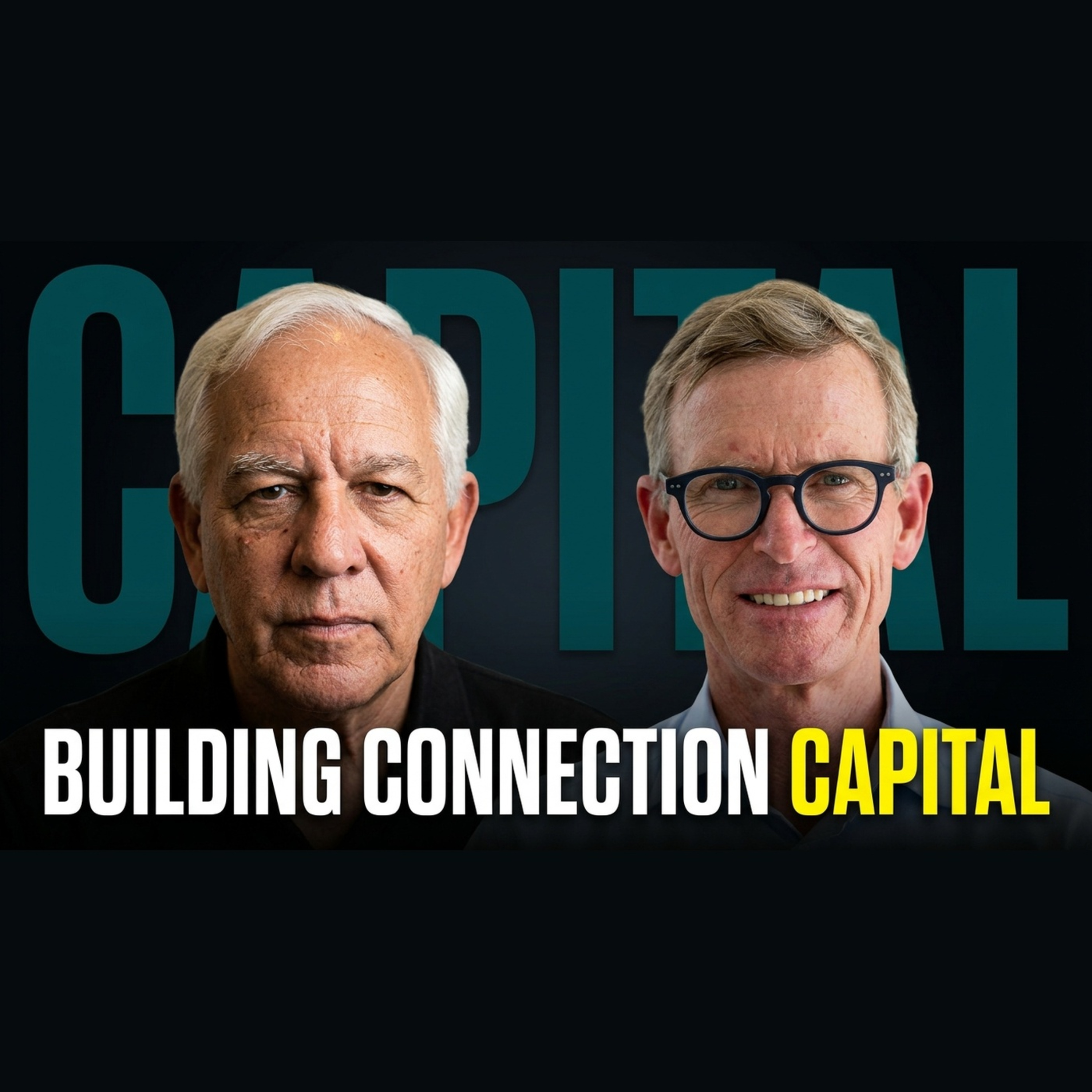
In this episode of Arthur’s Round Table, Tim Brown shares his remarkable journey from Colorado and Cisco Systems to building one of the most relationship-driven family office communities in the industry. The conversation explores family office governance, trusted networks, connection capital, peer-to-peer learning, next-generation leadership, AI, wealth stewardship, and why meaningful relationships may become one of the most valuable assets in the modern world.
Tim also discusses the creation of Somos22 and Fortaleza — two communities intentionally designed to help family offices and principals build deeper trust, stronger peer relationships, and long-term multi-generational alignment.
🎯 What You’ll Learn
Why connection capital matters for family offices
How trusted peer networks accelerate learning and decision-making
The difference between traditional conferences and relationship ecosystems
Why family offices often experience “responsibility-driven isolation”
How AI is reshaping leadership, wealth, and human relationships
Why private trust networks create asymmetric opportunity
The importance of governance, next-generation engagement, and shared values
How relationships compound like financial capital
Why successful communities require intentional architecture
How high-trust ecosystems improve long-term outcomes
🧠 Key Insights from Tim Brown
1. Relationships Compound Like Financial Capital
One of Tim’s strongest ideas:
👉 relationships compound the same way wealth compounds.
He explains that:
networks
experiences
trust
shared wisdom
all compound over time through intentional investment.
2. Family Offices Often Operate in Isolation
Tim describes what he calls:
👉 “responsibility-driven isolation.”
Because family offices are:
private
complex
relationship-sensitive
highly confidential
many principals and executives struggle to openly compare notes with peers.
3. Connection Capital Is Becoming a Strategic Asset
A major theme throughout the episode:
👉 trusted relationships may become one of the most valuable forms of capital.
Tim argues that:
opportunities
introductions
perspective
trust
collaboration
all emerge from strong relationship ecosystems.
4. Traditional Conferences Often Reset Relationships
Tim explains that many industry events:
create short-term interactions
provide valuable information
but fail to deepen relationships long-term
This realization helped inspire the creation of Somos22 and Fortaleza.
5. Private Trust Networks Create Asymmetric Advantages
One of the most important concepts discussed:
👉 private trust networks create access to:
opportunities
intelligence
relationships
ideas
capital partnerships
that traditional institutional systems often cannot replicate.
6. Peer-to-Peer Learning Is Extremely Powerful
Tim discusses how:
YPO forums
family office peer groups
intimate governance conversations
create transformational learning environments because members share:
similar responsibilities
aligned values
lived experience
7. The Future of Wealth Is Multi-Generational
A recurring theme throughout the conversation:
👉 great family offices think in generations—not quarters.
Tim explains that:
governance
next-generation education
trust structures
long-term alignment
matter as much as investment returns.
8. AI Will Transform Opportunity Creation
The conversation explores how AI is accelerating:
productivity
innovation
decision-making
knowledge creation
But Tim also believes:
👉 authentic human relationships become MORE important as AI advances.
9. Human Connection Cannot Be Automated
One of the most powerful philosophical ideas in the episode:
👉 AI can automate information—but not authentic trust and human connection.
This becomes increasingly important in:
leadership
investing
family governance
relationship ecosystems
Want to learn more about Family Office Insights? Click Here.
Arthur Andrew Bavelas (00:06.179)
Hello, welcome everybody. Thank you for joining us for another episode of Arthur's Roundtable. I say it every time, but I am super grateful for everybody who's paying attention and listening in. And it's not easy to scrape up an hour's worth of time. And so we certainly appreciate you listening in. So thank you for that. So Tim and I met through somebody else who we interviewed, his partner Brian Adams.
and so we got acquainted and thought it would be a good idea to do to do this. And I think you'll also think it's a good idea to listen in. So Tim, thanks for doing this.
Tim Brown (00:45.004)
Yeah, Arthur, great to be here. Thank you for including me as a guest on your program.
Arthur Andrew Bavelas (00:49.943)
You bet. So let's start at the beginning.
Tim Brown (00:54.254)
Like the beginning, beginning.
Arthur Andrew Bavelas (00:55.701)
Yeah, sure, why don't I mean you can you can give us the reader's digest version.
Tim Brown (01:01.738)
that sounds perfect. I I start off in Florida and my mother and I were driving down I ninety five one night when I was nine years old and she said, Your dad wants us to move to Denver, Colorado. How does what do you think about that? And it was March of nineteen seventy-nine. and I said, It was starting to get hot in South Florida
I said, Well, do you think I can have a dog? And she's like, I'll talk to your your dad and I negotiated this great dog named Bucky out of it that we got when we arrived in Denver. And he lived to be twenty two years old, which is pretty remarkable. Yeah, yeah, but left
Arthur Andrew Bavelas (01:44.899)
That's a long time.
It's a good that's a good bargaining chip. I mean how smart was that? I mean it wasn't a big deal for your parents, I guess, but all right, I'll move for a dog. Nice deal. Right. Kids are the best.
Tim Brown (01:59.01)
Yeah, you've always got to be negotiating, right? on those things. And but I had I had no idea how much that decision to move to Denver was going to change my life. Denver w was really such a remarkable community in nineteen seventy nine and you know, through the eighties. And it was wonderful to be in junior high school and high school and, you know, just have the outdoors right there and you know, really just the mountain west.
in general is a a wonderful place culturally. as as you know, you're in it. So you you get to experience that every day. And then went to to Colorado State University and loved that when I was in the it was it worked for a company called American Power Conversion, which was one of my first companies out of school. And I was back in Rhode Island
Arthur Andrew Bavelas (02:28.897)
Yeah.
Arthur Andrew Bavelas (02:34.337)
Yeah.
Arthur Andrew Bavelas (02:37.858)
Yeah, it's epic.
Tim Brown (02:56.822)
For our national sales meeting. And this is now I'm fast forwarded a little bit to where I'm 24 years old. And our vice president of sales said, What do you think about moving to Australia for us? And I said, I'd like to check it out. And he goes, Well, there's a trade conference in Melbourne and Sydney over a two week period. Why don't you go check it out? So I did. I was like, Hey, this is pretty cool being in Australia in the mid 90s.
when you're in your early twenties. And yeah, and then I moved to Australia and came back. and and then I was back in Denver not too long after that and went to work for Cisco Systems where my life really changed. But that was a that was a quick twenty eight year span in in five minutes. But I did I did bring up my dog in Colorado State. So those are two
Two important things.
Arthur Andrew Bavelas (03:55.613)
Nice. Nice. So did you did you Cisco System systems gave you technology, networking, SaaS chops?
Tim Brown (04:11.074)
I learned a lot at Cisco Systems that would would be what I would call on the field and off the field related. Working for John Chambers was phenomenal. He was an incredible strategist. And I worked for the telco operation side of Cisco. You had Enterprise, which is what Cisco historically was. And then after the nineteen ninety-six telecom act.
passed and you had all 400 of the competitive local exchange carriers that could now provision services, you know, against the regional Bell operating companies back then. John felt that the future of Cisco Systems was going to be with these telecommunication companies, that they were going to transform the world. And he was right. I mean, it really did transform the internet at a whole different level and it transformed the way we communicated and the way we transacted and how much bandwidth was available.
and and then when I say off the field, it was, you know, if if you believe like Jim Rohn says that we're the average of our five closest friends, being in a community like Cisco, where everybody really pushed to be, you know, the like at the highest level of excellence in everything that we did, I think it really gave me a great
perspective and foundational that kind of next the level. I talked to my son about this a lot. He's twenty-three and he's a a year out of college now and he's really been learning in this new role. But I said, you know, I I want you to think about something. The same way wealth compounds with the rule of seventy two, right? That it's gonna double at ten percent every seven point two years. It's the same thing.
with the relationships, Jeb, that you're making, with the experience that you're gaining with your your network, and and who's in that network are also compounding the same way. And by the time you're 30, you're gonna have this incredible perspective, this incredible network, and a lot of experiential growth that's come with that all together. And Cisco for me,
Tim Brown (06:33.932)
was right there where it would have been that first time things were really compounding after graduating from college and just being around phenomenal mentors. and so I think it really prepared me for what would come next in my thirties where I became a CEO of a of a variety of operating companies. But if it hadn't been for Cisco, I would have never met my wife, we would have never had our son, I would have never had an opportunity to
to be able to start my own companies at the at the magnitude and level that that my father in law really extended through having a family bank be embedded in the family office. It was a incredible privilege.
Arthur Andrew Bavelas (07:17.844)
Isn't it really interesting when we hear, and my biases are going to be revealed, that the people who have not had to work environments like that or meet a payroll or have employee relations issues and benefits that they they really don't understand.
how enriching it is to build a company, not just monetarily perhaps for the founder or the CEO, but in so many tentacles that it goes out and builds families and and gives people the opportunity to, you know, interact with people that raises your own level. I mean, it it just it's what it's all about when you when it comes down to it.
Tim Brown (08:09.92)
It's a it's a huge I agree with you, Arthur. It's a huge component of how we self actualize. I really believe that. You know, it's interesting, right? Back to wealth here. You if you put money in an account and it's in an ETF, you really don't have to do anything, right? I mean the market does what it's going to do and that ETF sits in compounds. But
relationships and experiences and how we decide to invest our time and and and people who are in our family and next generation related things like all of that requires hands on investment. You can't you can't be there's nothing passive about it. It's all it's all active management. That's that's exactly it.
Arthur Andrew Bavelas (08:57.971)
Active management, right?
Arthur Andrew Bavelas (09:03.49)
You know, I admit that when I was at the beginning of my business career or whatever that was, I was just so driven to run through walls to get done to whatever had to get done. I didn't really realize the you know, you know how you read a book and you go, holy shit.
That's exactly what I was trying to think about. And they put it into words and it means so much more, right? Now that somebody articulated it in a way that that didn't necessarily validate what you were thinking, but put it in context, right? And so at some point early on, thinking many people that were you know, I was fortunate to be around, s talked about making the
Tim Brown (09:43.522)
Yeah, yeah.
Arthur Andrew Bavelas (09:56.351)
relationship deposits in your relationship bank account, right? Not contrived, but you know, thinking about it that way. Like, what am I gonna do? Am I gonna spend my time, you know, at the pub or the bar hanging out with these idiots, or am I gonna go over here and try to improve my lot in life
by hanging out with people that can uplift me. Like I actually had the opportunity to have that realization at a reasonably early time in my life, which I'm grateful for.
Tim Brown (10:33.75)
Thank you for sharing that.
Arthur Andrew Bavelas (10:34.976)
Yeah. You're welcome. So it's all and and we'll we'll we'll get to it, but that's largely what you're doing with two of your companies in many ways. I have to ask you a question, because you and I, perhaps even more me than you, remember and I had my c first cell phone from the baby bells. From one of the baby bells. That was a long time ago.
Tim Brown (10:45.646)
Very much.
Arthur Andrew Bavelas (11:05.654)
and and did Chambers I mean he was really right, but in retrospect, was breaking up the baby bells good for the society?
Tim Brown (11:06.414)
Yeah, I was.
Tim Brown (11:21.927)
I think it was incredibly good for society.
Arthur Andrew Bavelas (11:25.334)
How so?
Tim Brown (11:27.466)
I I don't think the regional bell operating companies had any motivation outside of what the regulators were telling them to do to expand the amount of data and throughput and and create the capital expenditures of building the infrastructure that we have today. I mean we completely take for I think I'm I'm speaking me, Tim Brown, I think we completely take for granted
the the raw horsepower that comes out of fiber optical networks now, that comes out of the data centers and how they've been optimized, how AI works now. And I mean we're just in the first inning of AI. and when you look at cell phones and what five G did or frankly four G to developing nations around the world, you know, or you look at like web one dot was about reading
Web two dot was about two-way conversations, right? And some transaction. And web three dot right, is is about it all coming together. And and none of that would have happened with the R box. I it just because they were all oligopolies. And I just don't think you you would have ever had the motivation. And you look at
Arthur Andrew Bavelas (12:48.426)
Yeah.
Tim Brown (12:52.654)
Quest Communications, when I was at Cisco and I had Quest, you know, the inspiration behind Quest was a fiber optical point-to-point link from Sacramento, California to Los Angeles, California, of this small little department at the time called SP Telecom that, you know, was had been around, I think, for a long time within s within Southern Pacific Railroad. And it was it was made possible because of the
The Transcontinental Railroad Act of 1869 said if you put down track, you get five miles on both sides of the rail track, including mineral rights. and so you had the right-of-way to put down fiber optic. And then you had MFS come in, you had Quest come in, you had Cable and Wireless come in, you had a lot of these companies that put up
big, big capital expenditure dollars to transform, you know, everything. I think John Chambers back to that. And I'm sorry I don't want to get off on a tangent by any means here. But I think John Chambers had it right. You know, the the there's always something lost in translation when you go from one language to another, right? And you also have the lag time.
where you're translating from one to another. And so with with John, he said, you know, the old telecom architecture of these class four, class five switches that are all circuit-based, they're running an old architecture. We're going to do native voice over IP using routing-based technology. And instead of having these large switches or private branch exchanges running old technology, we're going to do everything packet based.
And make it look just like data, but we're going to prioritize it. And then there's nothing lost in translation like you had on a Northern Telecom switch or a Lucent switch or an Ericsson switch. Everything was integrated into the one architecture and it just became a function of your software doing it. And and it completely revolutionalized the I mean, do you remember when people used to call on Sundays because long distance was cheaper?
Arthur Andrew Bavelas (15:14.038)
People, sure, I remember that. People used to have party lines in their house with their neighbor, right?
Tim Brown (15:16.077)
Yeah.
Tim Brown (15:19.74)
Totally.
Arthur Andrew Bavelas (15:24.512)
No, you did.
Tim Brown (15:24.766)
That that is exactly it. Anyway, I probably went way too long on that one.
Arthur Andrew Bavelas (15:27.936)
No, that's okay. I was fascinated by that because when you think about so Mark Andreessen is thinking that even though we've laying all this fiber and continue to lay all this fiber, is that the bandwidth from Starlink is is gonna so get exponentially better that it's all gonna be satellite and it's gonna be everywhere, right? I mean I'm not arguing one way or another, but
Could make sense, right? Yeah.
Tim Brown (15:59.672)
No, it I think it makes a ton of sense. I that's why I I think when you're when you're looking right now, there is this space race going on. Because I think whoever controls space is gonna ultimately control the fence, is gonna control a lot of AI. you know, there's that is really the next frontier for a lot of s strategic reasons to the world. I mean it's fascinating.
you know, which I think dovetails to the point you just made on that.
Arthur Andrew Bavelas (16:31.638)
Yeah, it it's it's look, I don't know about the science, but I'm you know, trying to pay attention on some level. but it's it's easier to go up and back than it is to go around, right? I mean Yeah, it's pretty wild. And this whole this whole AI stuff is just mind blowing how quickly it's moving. It's just
Tim Brown (16:45.614)
Yeah, that's for sure.
Arthur Andrew Bavelas (17:01.578)
you know, even the sort of pedestrian everyday stuff that you would have somebody do and be happy to pay to do it because it was economically made sense for you know to have them do it, whether it's an analyst or a design person or s you know, just doing you know gr drudgery work that you just needed some sort of technical skill
that the learning curve was too great for to do it yourself and not that you should, but I mean you just tell it what to do and it does it. It's like and it's almost instant. And this whole inference thing is I mean it's just out of control how how super efficient things can get. And it's all kinds of arguments about data centers and people losing jobs and all that kind of stuff. But it's unstoppable, I think.
Tim Brown (18:01.198)
Yeah, I was gonna say I I think it's the equivalent of standing on a beach and holding up your hand and expecting to stop a wave of water. Like I I just
Arthur Andrew Bavelas (18:07.698)
Right. Yeah. Yeah. And and say it for the good of society, right? I I'm making fun of people, but it's like it's it's it's coming. It it is the wave.
Tim Brown (18:21.996)
I agree. But I think there'll be a lot of opportunities we can't see yet that also come from that.
Arthur Andrew Bavelas (18:25.794)
Tons. I mean, even in the short term, is you know, good prompters can be exponentially more productive than bad prompters, right? And it's only because I listened to it recently that I'm bringing up Mark Andreessen again. But there's this whole thing happening in Silicon Valley, it's called AI Vampires.
Like all these people realized how productive they can be with AI. And they were typically programmers, you know, writing code. And they don't want to go to sleep because they can get so much more done in the period of time that they're saying, Well, wait a minute, I don't wanna sleep. I wanna that project I wanted to do, if I stay up another two hours, I can get it done. And it would have normally taken me six months. Like
There's this whole emotional excitement that's going on with these people that were normally getting paid to write code and they don't have to write code. They just come up with ideas now and have somebody else write the code, right? Not somebody else.
Tim Brown (19:36.246)
No, it's i it it is, it's very interesting.
Arthur Andrew Bavelas (19:40.096)
Yeah, super interesting. All right, so go ahead.
Tim Brown (19:41.766)
no, I was gonna say I I heard I recently read a st a news story about a guy who recorded himself on Zoom, like in with different backgrounds and different clothes on. And he basically for like six or nine months would be have AI put him on these different calls where he would just be there and it wasn't him. you know and then somebody finally figured it out.
Arthur Andrew Bavelas (20:06.908)
yeah, right.
Right.
Tim Brown (20:12.747)
I yeah. Anyway, I interrupted too. I interrupted.
Arthur Andrew Bavelas (20:16.086)
Yeah. Well no, I just it's it's you know, I this is not my original thought, obviously, but for anything that is can you be used for good can be used equally as for bad, right? So I mean this happens with everything, right? Look at what your example, the eminent domain for the railroads. Well, you just lost part of your farm on five ten, you know.
10 mile swatch on either side. Is that good? Is that bad? Well, it depends on where you sit, right? Yeah. Yeah. So let's talk about, you know, take one at a time and give us a you know the intention of the business and then how it's going and what would be helpful to you.
Tim Brown (20:52.136)
I agree. Yeah, I I agree with you.
Tim Brown (21:09.198)
Thank you. well, why don't we a a a common question that I get has to do with Somos twenty two and Fortaleza. And number one, you know, what was the reason behind founding both communities? number two, what's the difference between both communities? and and number three, you know, why are you doing it? so I'll I'll go through all that.
Arthur Andrew Bavelas (21:39.34)
Great, let's do it. Yeah.
Tim Brown (21:39.566)
Like yeah.
Brian Adams and I have known each other for a long time. We met through YPO and then we became forum mates, but we were also going to a handful of family office conferences where he was representing another single family office that was family-oriented, and I was representing another family office that I was consulting with, which is my my former father-in-law's single family office. And
You end up getting a lot of good perspective about how are events run, what are the objectives of the events, what are people taking away. and it was about the same time that I was finishing up what had become a five year tour with NYPO of being the vice chairman of the investing network.
and be and then becoming chair of the investing network where we grew to over six thousand five hundred members of that network inside of YPO during my tenure. And we also created these things called personal investing forums, where it was principals who predominantly were Gen 1, were having liquidity events, were creating family office like structures for the first time. And
really wanted an opportunity to be able to talk about, you know, what do I do next? How do I talk to my children about wealth? How do I best prepare things for 10 years from now, for a hundred years from now, whatever kind of thinking might be, and and also integrating foundations and you know, a lot of times, what's next? Like there's a great book that Bob Buford wrote several decades ago now, called Halftime, right? Where
Tim Brown (23:36.96)
a lot of the skill set that we use to be successful in life, we go into halftime and kind of create what's next. And many times what we realize as we move from success to significance is that the same skill set that made us successful in business can be directly applied to how we give back in in and however we want to define that. So those were all conversations that were bundled up. And so
Brian and I founded Somos twenty two in Fortaleza in April of two thousand twenty-four, having spent a lot of time inside of those communities and really just seeing how things will functioned. And the interesting thing about the family office world is that for many, many years, family office communities have generally been organized more around events. They've been a around
speakers, panels, the exchange of information. And there's nothing wrong with that. But what we saw was that there's also a lot of responsibility driven isolation that occurs in the family office world because it is so opaque, so private, so siloed that it can be very difficult to compare notes with other people. Because if you get trust wrong in the family office world,
The downside to that is asynchronous. So whether you realize it or not, many times people are are, you know, I'm I'm running a close to the best kind of strategy, which is a risk containment strategy around relationships that I have. And what Brian and I said is: why don't we focus on let's create a community where we can have
families experience what we're gonna define as connection capital, which is a varying degree of high trust relationships from sort of the starter level up. Starter level being what we do a lot of times in Somos twenty two sort of basic events. Jeffersonian dinners that we do are kind of a next level up and Florida that is invite only would be sort of the pinnacle of that where it really becomes, you know, high functioning peer to peer type community.
Tim Brown (25:59.25)
but that's smaller and more intimate so that you really get to know the same people because you're you're interfacing with them a lot. And so the name Somos Vientidos, Somos22, is we are the 22nd century. And the thesis was, you know, it kind of dated back to another single family office in Colorado that I consulted with for three years, where the chief investment officer was trying to help me understand.
The way their family office viewed time. And he said, you know, you have traders that view time in seconds, and you have analysts who view time in quarters, and you have fund managers who view time in five-year increments. We view time in generations. And so we don't look at IRR, that's not as important to us as cash on cash, as an example as a metric.
And so that was really the thinking with Brian and I was let's create something that is five generations from now focused. hence the name Somos 22 of We Are the 22nd Century, 100 years from now, five generations out. What will this look like? And so 2024, we had, I don't remember, maybe 14, 16 events.
2025, we had 54 events all in person. This year we'll go over that. And I think of it this way: that we curate what I call a private trust network. We have a very specific set of rules about how you engage inside of that private trust network. You have an experiential architecture.
That's a lot of that's what I developed when I was the chairman of the YPO investing network that allows you to go broad and deep. And the output of that is that you compound trust at a faster rate than you would outside of that community. And yeah. Yeah. And so, you know, I'm not trying to compete with other family office communities. We think it's great, but
Arthur Andrew Bavelas (28:06.433)
Which totally makes sense.
Tim Brown (28:16.12)
other people are members of those and and that we coexist very well. We're we're just focused on different things. And I think a lot of times we go, I'm speaking again from my experience. I would go to a lot of family office conferences. I would see a lot of very helpful speakers and panels. I'd meet people, and then two days later I would forget who I met. And then kind of life gets in the way. Maybe you follow up, maybe you don't, maybe you have some, you know, conversations a couple of weeks from then.
But generally speaking, the relationships that you invested time in at that conference reset three, six months, nine months, a year down the road when you see them again. and so we wanted to try to create a way that was a different approach to it. And and so SOMOS twenty two is very broad in its orientation of connection capital, which are high trust relationships, who knows me.
shares my values, understands aspects of where I'm coming from, right? Steps forward if things get complicated instead of stepping back. And then we created Fortaleza to be a, you know, a vertical invite-only sleeve, if you will, inside of the broader Somos 22 organization for for families who were looking for, again, more frequent contact with the same people.
wanted to go deeper, wanted to to have, you know, what I would call a very similar to like a YPO experience, but with other family office professional managers and principals and next gen. And that's really the community that we've been building, you know, so that you don't have to explain what a private trust company is. You don't have to explain what an endowment style portfolio construction is or getting into bill pay or how you aggregate things into Adipar.
Or just other aspects to running a family off like everybody already knows how to do that when you're in those conversations.
Arthur Andrew Bavelas (30:19.147)
Is it fair to say that Fort Deleza allows those people who run the family offices to have meaningful conversations about those things, for example, that you just mentioned?
Tim Brown (30:32.246)
It does because now you're in a broader community, but it's still small enough to where you know everybody. But we also have forums that are subgroups of eight people inside of that community who really become your personal board of directors. And you meet in person with them four times a year for four hours, plus, you know, some Zoom calls throughout the year. So people really get to know you, but a a holistic side of you. They know
not just what you do professionally, they also know about your family, they know about you personally, they know about background details that make you uniquely you.
Arthur Andrew Bavelas (31:11.171)
So is it fair to say that the family office events, conferences in particular, are designed the way they are out of necessity, because somebody has to pay for it. Right? And so
Tim Brown (31:35.768)
Yeah. Totally. Yep.
Arthur Andrew Bavelas (31:40.48)
While the outcomes that you're mentioning that are problematic, which is you go, you get some good intel from speakers, you meet some good people, and then you life happens and you go back to whatever you were doing. If you're doesn't matter how good you are with follow up or how compelling the conversation is, it you tend to you know
go back to whatever you were doing in the interim, the solution that you propose is let's start with meaningful intention of k of having those relationships begin and continue. Is that fair?
Tim Brown (32:25.836)
It is. And but I also wanna just be clear about something. I mean, the fa a lot of the family office business models that are conference related are sponsor driven in terms of the P N L and how it works. I don't think that's necessarily a bad thing. it it's it's a one way of doing things and and they serve an important place in the world. Like it it is information that people need. A lot of the service providers who are at that conference are
highly qualified and and exceptional at what they do. and so I I don't for a second want to say that that is an important aspect to this. We were just simply looking at instead of focusing there, why don't we focus on how do we just deepen relationships, knowing that people that came to our events we're going to gravitate to both. Like we're not trying to to have people not go to regular conferences anymore.
Arthur Andrew Bavelas (33:21.219)
Course, yeah, yeah.
Tim Brown (33:22.274)
You know, it was just more of a how do we balance that?
Arthur Andrew Bavelas (33:25.687)
Yeah, and this isn't about me, but I will tell you that there was a a few times where I was helping other including Family Office conferences promote what they were doing, and I got emails saying, you know, aren't we competitors and why are you doing this?
And I go, why would I care if somebody found value in what you were doing? And if all I did is let them know that it's there and they took advantage of it, how's that how's how's that a conflict? I I see that as actually the opposite, right? So and so I think there's room for everybody. there's no question about that. Yeah.
Tim Brown (34:08.386)
Yeah, exactly.
Tim Brown (34:17.014)
But we're on the same page, definitely on that.
Arthur Andrew Bavelas (34:21.035)
So how does it, you know, one of the things that Tiger Twenty One was really good at, maybe still is, I don't know, because I was at the beginning of all that, got to know them at the beginning of all that, is they did do the quasi because the people came it built that, I think came out of YPO. And so the model of having a group of people that you get to know better on a long-term basis worked well for them too, right?
Tim Brown (34:50.326)
Yeah, I think what made and and and and and still makes Tiger Twenty One one of the most exceptional communities globally for what they do. And I I'm I'm a massive fan of Tiger Twenty One and and of their founder Michael Sonnenfeld and the team. You know, they they really pioneered a whole new space. with their portfolio defense, you know, it was really brilliant, right? Because you were in a room with
Other principles. You put together your short term goals, your long term goals, your entire portfolio. You talked about your trust in the state. You know, many times your spouse or partner who would be invited to that might see that for the first time, the whole thing. And then you were in a room with people where nobody was trying to sell you anything, and everybody was there to try to help you see blind spots that maybe were inconsistent with.
what you said your goals were, but with how you were investing, both, you know, your your your your treasure talent and time, you know, all of those. And and that I I think really took off. And, you know, the vistage model that that Greg Wells brought into Tiger Twenty One as the chief operating officer, I think has been outstanding. You know, I mean, where he he was prior to that. and just that peer to peer learning around wealth.
And a lot of the complexities that come from that. So that's a great example where I think, you know, when you're in a very when you're in a trusted smaller group of people who you see on a regular basis, where you share something in common in a lot of the same language, you can create a lot of connection capital. You can create a lot of depth within that.
Arthur Andrew Bavelas (36:41.76)
Yeah.
The number one question that I get, it's not a question, a request, is I want to I have a problem and I want to talk to somebody else who has had this problem with a similar fact pattern.
Adjacent to my advisors that is likely to be a peer that ask them how they handled that. And that is the number one thing, at least in my little world, that I get to be part of because of others, that people ask is: I've got this fact pattern, I want to talk to others who have.
experienced this and asked them how they handled it.
Tim Brown (37:41.224)
I I think what you're talking about is really where the magic is, right? There's something so special that comes from experience sharing at that level because it is so unique. And I think when you look at the number one request, you know, Brian Adams and I, all we do generally most of the day is we talk to to to people who are professional managers, principals, or advisors within the family office ecosystem.
You know, that's really our our world. And that's probably the number one request that we hear is, you know, I'm more interested in just meeting other people to experience share with. again, because it is so siloed. And a lot of families are wanting to build what I have kind of coined the word of private trust network. Because you know, large institutions, once upon a time, I think you could go and they would help.
Arthur Andrew Bavelas (38:30.317)
Yeah.
Tim Brown (38:37.486)
curate a private trust network for families. I don't think that exists at the same level that it used to. And I don't think there's ever been a time more important than now with so much change going on in the world. You go back to 30 minutes ago in our conversation about AI. And you know, the world is is changing so rapidly right now. you know, I mean, I you just look at the events that have happened over the last 100 days.
or the last six months in our in the world and just thirty days. Yeah, and the geopolitical ramifications that that has everywhere.
Arthur Andrew Bavelas (39:09.857)
Last thirty days, yeah.
Arthur Andrew Bavelas (39:17.653)
It is, do you remember when we used to look at Ray Kurzweil and he would tell us about exponential growth? And he would say, you know, over the next 10 years, well, what he predicted in the next 10 years happened in the last six months on some level, right?
Tim Brown (39:25.132)
Absolutely.
Tim Brown (39:39.016)
absolutely.
Yeah, and yeah, it's interesting too, right? you also look at you know, where is a safe place? Not just a safe place structurally, but a s safe place where I don't need to worry about someone in my family being hurt from a a war that's going on. Like there's all these different components now that affect different places in the world. it's an interesting time to be alive.
Arthur Andrew Bavelas (39:42.37)
It's
Arthur Andrew Bavelas (40:08.577)
Look, it is I think it's an amazing time to be alive, certainly interesting. an anecdote, I have friends that were I would say some of the most worldly people you would know or wanna know or in this world.
Arthur Andrew Bavelas (40:33.859)
Consulate General of Luxembourg to North America, lived in New York City, lifetime diplomat, lawyer, smart guy, moved, got a big post to become the ambassador from Luxembourg to Russia, lived in Moscow for almost 10 years, moved recently to Dubai, about three years ago, and just moved out of Dubai to Hong Kong because of what's going on in that region, right?
And so on one level it's like, holy cow, what happened to Dubai? And I'm not opining about Dubai because I really don't know. I'm just giving you an anecdote. but it's pretty amazing that you can do that, right? Like you can get up and move, right? You there's lots of things around that that might prevent that from happening, but you just
that doesn't justify the stuff that's going on in the Middle East, but you know, okay, this is not working out. It's kinda like you know, doing the same thing over and over again, expecting a different result. You just move, right?
Tim Brown (41:48.994)
I you know, it it it also I I think again, this is a neutral statement, right? geopolitics drive asset classes. Right. And you know, and and it just I think the s the cycles, like if if you believe, you know, in the eighty year cycle, like it's a very interesting period of time that we're in, you know, post twenty twenty, and of the next eighty year cycle. I'm of course using a US perspective on that eighty year.
Arthur Andrew Bavelas (41:58.475)
No doubt. Yeah.
Tim Brown (42:19.138)
but you know the the the rate at which things are occurring now is unbelievable. it's also exciting. I mean we may see in our lifetime because of AI and because of robotics and because of all these things like cures for diseases that we never thought could be cured before and you know the the empowerment of of you know
many, many people around the world who would have never had that. i it's it's a it's an incredible time, but to your point from a couple of minutes ago to be alive.
Arthur Andrew Bavelas (42:56.393)
And we we already have seen that AI has solved math problems that the best mathematicians in the world haven't been able to solve, and they've done it in a matter of months. It's like it's happening. And so it's reasonable to expect that what you're saying will come true is that we'll cure some of these diseases.
just because the heavy lifting has been compressed from this to this, right?
Tim Brown (43:29.568)
It it is interesting though, like when you 'cause I write a lot about as I think you you recall, I write a lot about mental fitness. And you know, the one thing that AI is not going to help us with is you know, being in community with other people, that connection with other people. And you know, we are relational beings and it's important for us. You know, I wrote a a a LinkedIn article.
about the barbelling of relationships. You know, and on one side you have all the people that you've known since you were born that are family and close friends that you grew up with. And on the other hand side you have all these people who are the family that you have picked over time. and the people who really stretch you. But if you look, you know, a lot of us spend time in the bar in the middle, because that's where business a lot of times is conducted.
And if you you know, many times I think why people in their fifties and sixties can be incredibly lonely is because this this side over here of people who we've known since we were children, they've you know, they're dying just by nature of getting older, right? And so it's it's that the size of that side is is reducing. And then on this side it's reducing if you're not spending the requisite time, right, to invest in those relationships and you can find yourself
Arthur Andrew Bavelas (44:39.415)
Yeah.
Yeah.
Tim Brown (44:55.404)
in a in a real predicament, you know. And and I wrote about that because I found myself in that predicament over the holidays in December. I was like, wow, like I have really created something that I didn't see coming. And
Arthur Andrew Bavelas (45:13.795)
So that's interesting bec but you're actively in business or you're engaging with people maybe in the middle area, but it bleeds over to the people that stretch you, does it not?
Tim Brown (45:27.308)
It does, but I'm you know, I'm an introvert by background. I'm not an extrovert. So when I'm done having, you know, when you're at like like Brian and I are, we're on calls all day long, we're talking to people all day long, you know, there's a lot of movement, twin cities and things like that. So when it's when it's alone time for me, I really dis c try to disconnect because it's where I recharge. you know, and so the challenge to me going into this year was
Arthur Andrew Bavelas (45:51.746)
Yeah.
Tim Brown (45:57.422)
You know, how do you put aside time for me to be with my son, you know, who's twenty three and to make time to or you know, relatives who are still alive that are older than me that I care about 'cause it's easy to put it off.
Arthur Andrew Bavelas (46:15.191)
Yeah, it was really easy to put it off. again, just anecdotally, I I didn't do this by design, but my kids went to college, I got divorced, moved from Villanova to New York City, and ended up being a Playboy for you know, over fantasizing that, for twenty seven years.
But as soon as my kids, three of them finished school, they moved in with me in New York City. And so my solution to the problem, which I didn't even really design, was I wasn't gonna have a meaningful relationship with another woman for a long time simply because I didn't want to. but it opened up the door for a period of time for a long time.
where my kids live with me without any incumbent woman. How about that for being harsh? and you know, had lots of girlfriends and all that kind of stuff in New York City, it just happens. But then my s the my girls lived with me, then they moved to Brooklyn and my son lived with me to two and a half years. And we did everything together. It was amazing. Like I wouldn't trade that off for anything, right?
So it was Yeah, it was really just I mean, I'm I look back on it and say how grateful and and they loved it too. It wasn't like I was imposing on them. It was like, well, it's you know, we're in New York City, let's just do it, right? It was amazing. So but I totally get the there's a lot of lonely people, Tim. I mean, there's a lot of lonely people.
Tim Brown (47:41.846)
love to thank you for sharing that.
Tim Brown (48:09.09)
Yeah, I I I get it. I understand. I can
Arthur Andrew Bavelas (48:15.287)
There's there's there's a notion that some of these lonely people will attach themselves to an AI as a stop gap, right? There's a lot of talk of that going on.
Tim Brown (48:15.683)
Yeah.
Tim Brown (48:32.152)
Yeah, there's a a lot of opportunities for us to come together in humanity to support one another differently.
Arthur Andrew Bavelas (48:40.215)
Yeah, no doubt. So you don't have to talk about anything you don't want to talk about, but what is the the business model for the two businesses? Is there f are there you don't have to say what they are. So it's like are there fees or you know, who's paying for all this? How does it get how is it how does it support itself so it can stay meaningful?
Tim Brown (49:04.362)
Yeah, so well we'll we'll start with the the first one, which is Fortaleza. Those are dues based. and so each of our members pay a yearly dues and and we we prorate those based on you know if they come in partially throughout the year. and then yep, and then related to Somos twenty two, when Brian and I first started this, you know, we had
Arthur Andrew Bavelas (49:11.425)
Yeah.
Arthur Andrew Bavelas (49:15.938)
Yeah.
Arthur Andrew Bavelas (49:20.663)
Yeah. Yeah. Pretty straightforward. Yeah.
Tim Brown (49:31.466)
on one side a you know very well respected North American based C level family office recruiter. and you had a an entire community of wanting a a safe place to see people that you knew and for them to meet other people, which we we've we've touched on that a few times, right? Of that desire of people in our industry to meet other people. and for me, you know, what I have done
has been looking for opportunities for the Anchutes investment company. and a lot of times you will see those through other families who refer that to you. and then having a network in regard to you know working with families both doing capital formation around private equity or private capital or those types things and also having a safe place for my network to come.
What that has evolved into is now we have a co-host for our Somos twenty two events in a city who are a paid co-host. and with that co-host, we integrate them into everything we do. They're at the dinner table for the Jeffersonian dinner. they're at our coffee connect or at our cocktail reception, or the needs and leads, but it gives them an opportunity to re meet everybody. And if you have the right rule system within that container, then
everybody is relationship driven and not transactional driven. and so that's one area. And then the other side to do it is the consulting work that I do where you're curating what I call again private trust networks. and so a lot of that may be introductions that I'm making to specialists or other families or other opportunities. And I think these private trust networks really are where access
information, opportunities, ideas, these things come to families that you would not get through kind of traditional institutional players. And so I have been building an entire business around the curation of private trust networks. And SOMOS 22 is a component of you know, our own private trust network of people who come and where we we meet a lot of very interesting people and and help create connection between that.
Arthur Andrew Bavelas (51:57.526)
Is the private trust network catalyzed by using dots that need to be connected or that somebody is saying, Okay, I see the value in a trusted network, help me do it?
Tim Brown (52:14.584)
Yeah, you know, I I work with a family as an example where they came to me and said, you know, we just want to club up with other family offices. We want to invest in operating businesses. we don't want to be promoted, we want to meet other families who are putting their own capital at risk. and you know, you've got a great network of different opportunities that you're seeing and also families who are stepping up and where there's an alignment of
capital at risk. And we'd like to meet them. and you know, they're not raising any money, they're 100% buy-side allocators. And what I'm doing is is helping them go directly to other family office principals and C level professional managers who are engaged in at that level. So that's a an example where we're helping them accelerate what it would look like to meet
Arthur Andrew Bavelas (52:52.952)
Mm-hmm.
Tim Brown (53:12.704)
other families for them to be able to club up.
Arthur Andrew Bavelas (53:15.757)
Yeah, totally makes sense. And back to the the events that the Jeffersonian dinner, for example, is the give us an example of the profile of somebody that's good for you to be that paid person for something like that. Or is it idiosyncratic to who you know? Right.
Tim Brown (53:43.734)
I I think partners for us tend to be outsourced chief investment officer related roles a lot of times or very relational. you know, and they have a lot of perspective because they are trusted counselors with other family offices and just by nature of having lots of conversations, they've accumulated great wisdom through that.
And so when they're at the table and and I'm asking different questions, because I write a different run of show for every single Jeffersonian dinner we do. It's it's those partners who really can lean in and and give input at a level where people can identify and connect. Again, it's completely different when the dinner that you're having has nothing to do with transactions and has everything to do with governance, next generation.
you know, engagement a hundred years from now. It has to do with complexities of wealth, it has to do with note comparing on, you know, different seasons in life that you may be going through. and that's that's really where it's great to have a partner at the table who i i I you know it's kind of interesting there's this book I I'm sh I I don't know if you ever read it called Zen and the Art of Motorcycle Maintenance.
Arthur Andrew Bavelas (55:07.125)
I totally. I have have it on my shelf. And I and I've also read Roan, by the way, early on, Amazing Amazing. Yep. What
Tim Brown (55:10.068)
Yeah, you know, and so on chapter one
Tim Brown (55:17.762)
Yeah, so I mean in chapter one of Zen and the Iron Motorcycle Maintenance, he's writing the difference between being on a motorcycle, feeling the wind in your hair, the vibration of the motorcycle, the the curvature of the earth, the leaning in and out that is the equivalent to being in the movie. And being in a car with the windshield and shocks and everything like that is the equivalent of watching the movie. And that's the the same way when I design experiential architectures.
I want everybody there at the table to be in the movie. it doesn't help help anybody to have somebody feel like they're bolted on. And I learned that from John Chambers at Cisco Systems. You know, John was always like, everything needs to be integrated. And and so that was, you know, like I keep going back to all these other points in our conversation, but back to like an hour ago, that was.
Arthur Andrew Bavelas (55:55.755)
Server only, yeah.
Tim Brown (56:16.068)
you know very much his philosophy.
Arthur Andrew Bavelas (56:19.895)
Yeah, love that book. I was introduced to that book when I was seventeen, which was quite a long time ago. And I was I used to race motocross and I thought it was about motorcycles. And when I realized it wasn't, I threw it aside and didn't read it. And then I read it
Tim Brown (56:22.306)
Yeah, it's a great book.
Arthur Andrew Bavelas (56:48.705)
maybe twenty years later and then again recently. Yeah. It's great, great stuff.
Tim Brown (56:54.784)
Yeah, great questions. Thank you for for all your thoughtful questions.
Arthur Andrew Bavelas (56:58.741)
Yeah. So what was the it's always nice to have a a partner. What was the idea of you you guys throwing together? Like the whole was better than the parts?
Tim Brown (57:12.3)
this is Brian and I. You know, we were YPO forum mates, so we really got to know each other yeah, really well. And we were in the habit of having a lot of conversations where you know that one plus one equals three, where you're able to challenge people by the kinds of questions that you're asking and by you know, really drawing out like you get in that forum experience. And then
Arthur Andrew Bavelas (57:13.346)
Yeah, yeah.
Arthur Andrew Bavelas (57:17.985)
That's right. You did say that. Forgive me. Yeah, that's right. Yeah. Yeah.
Tim Brown (57:40.422)
when you start going to a lot of the same events that has nothing to do with the forum and what you do professionally, you can kind of take that same construct and apply it in that world. And then we were sitting in a in a lobby, a hotel lobby in Palm Beach. And, you know, I literally brought out a sheet of paper and the two of us just started architecting what we thought it could look like. And, you know, it's it's grown parabolically on the Silmos twenty two level since.
You know, it's a relatively simple formula, just in terms of being focused on how do we generate you know, it's pretty black and white. Do we generate more connection capital for everybody or not?
Arthur Andrew Bavelas (58:12.225)
Yeah.
Arthur Andrew Bavelas (58:20.695)
Yeah. Seems like a lot of work, Tim.
Tim Brown (58:24.686)
It is. Yeah, it is a lot of work. But I I'm very passionate about it. And as a father of a gen three family, you know, someone that's gonna be very involved in family, you know, I believe in operating businesses of the family and the family office and the family foundation.
Arthur Andrew Bavelas (58:29.591)
Yeah.
Tim Brown (58:48.376)
I think this is a way as a father to be a better counselor too to my own son, just by nature of being in a ecosystem where I'm always in conversations that I I you know that I feel sharpen the saw.
Arthur Andrew Bavelas (59:02.281)
Th there's no doubt that you'll glean benefit from being in the rooms. Aside from the other people benefiting from you curating those rooms, but there is no the even the rub off is gonna be worth it, right? Truly. Yeah. so this has been amazing. I really appreciate it. I actually I wish we could talk I I wish we could talk more, but I
Tim Brown (59:19.074)
I appreciate that. Thank you.
Tim Brown (59:25.558)
Yeah. It's been a lot of fun, Arthur.
Arthur Andrew Bavelas (59:30.071)
We'll admit to you and everybody else that I've got a a little bit of a time crunch here. But that was amazing. Thank you, Tim. Thank you for doing this.
Tim Brown (59:39.842)
Well, to be continued. So grateful Arthur that you'd have me on your your podcast and we'll we'll keep on keeping on.
Arthur Andrew Bavelas (59:41.389)
Perfect.
Arthur Andrew Bavelas (59:48.353)
Yeah, and we'll do it again for sure. Like soon. We'll do it again. It's there was a lot more to talk about. So Thank you, Tim. Thank you everybody for joining us today. Hang on one second.
Tim Brown (59:54.232)
Fantastic. All right. Have a great app, team. Thanks. All right. Be well.