Apple Podcasts
 Spotify
 YouTube
 Building a Life of Meaning & Generational Leadership with Rick Walker
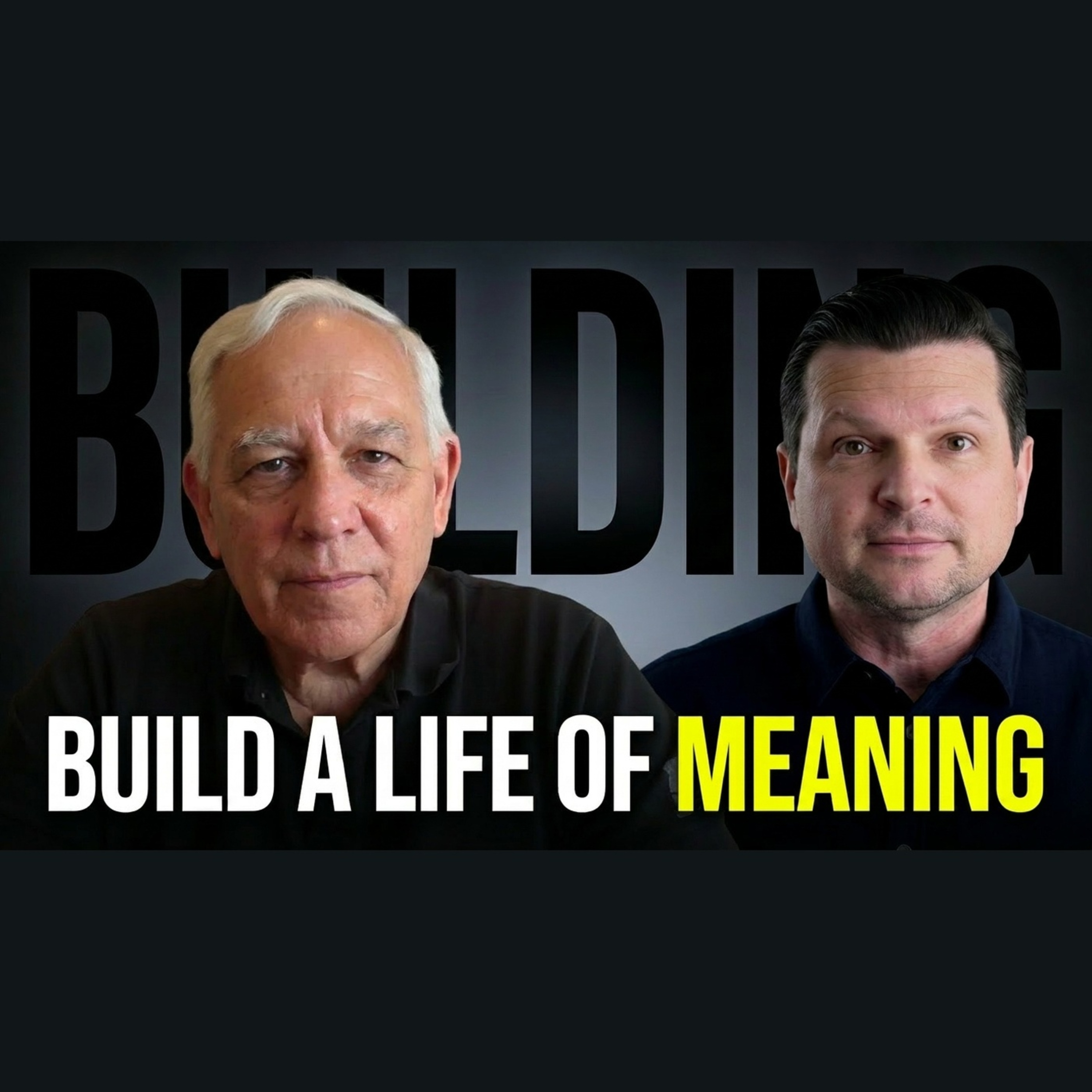
In this episode of Arthur’s Round Table, Rick Walker—Chief Investment Officer at Lumicree—shares insights on building a life of meaning, generational leadership, and the challenges facing the next generation of leaders. From scaling businesses at a young age to investing in real estate with family offices, Rick explains why discipline, responsibility, and purpose are essential for long-term success.
In this episode of Arthur’s Round Table, Rick Walker—Chief Investment Officer at Lumicree—shares insights on building a life of meaning, generational leadership, and the challenges facing the next generation of leaders. From scaling businesses at a young age to investing in real estate with family offices, Rick explains why discipline, responsibility, and purpose are essential for long-term success.
🎯 What You’ll Learn
Why many next-generation leaders are underperforming
How comfort can limit ambition and growth
Why discipline and responsibility create long-term success
How to build resilience through adversity
The role of purpose in leadership and investing
How generational wealth can either empower—or weaken—future leaders
🧠 Key Insights from Rick Walker
1. Comfort Can Limit Human Potential
Rick argues that excessive comfort:
👉 reduces ambition, risk-taking, and growth
2. Generational Wealth Can Become a Liability
Without responsibility:
👉 wealth can remove the need to strive—and reduce performance
3. Friction Is Necessary for Growth
The hardest thing to do is often the most important:
👉 growth comes from doing what you avoid
4. Responsibility Creates Purpose
When individuals:
have obligations
face consequences
must perform
👉 they develop strength and direction
5. Underperformance Is a Growing Trend
Rick highlights a concerning pattern:
👉 many young men lack ambition, discipline, and focus
6. Attention Is the Ultimate Asset
In a world of distraction:
👉 what controls your attention controls your life
7. Giving Creates Long-Term Value
One of Rick’s core principles:
👉 “Nothing you haven’t given away will ever truly be yours”
8. Success Requires Initiative
Opportunities often come from:
conversations
chance meetings
proactive engagement
👉 “who luck” happens when you put yourself in motion
9. Real Estate Is Evolving with Technology
Rick outlines emerging trends:
AI-driven infrastructure
power + compute demand
industrial real estate transformation
👉 new asset classes are forming around technology needs
👤 About Rick Walker
Rick Walker is the Chief Investment Officer at Lumicree, where he invests in commercial real estate alongside family offices and institutional partners. He is also the author of Nine Steps to Build a Life of Meaning, focusing on leadership, purpose, and generational development.
📊 Topics Covered
Generational leadership
Family office dynamics
Purpose and meaning
Discipline and mindset
Real estate investing
AI infrastructure
Wealth and responsibility
Want to learn more about Family Office Insights? Click Here.
Arthur Andrew Bavelas (00:01.736)
Hello, welcome everybody. Thanks for joining us for another episode of Arthur's Round Table. Super grateful for everyone that's joined us and listened in and shared and so forth. And so we really appreciate that. We're happy to have Rick Walker with us today. Big shout out to Ben who has connected us and we're looking forward to having our chat with Rick today and I'm sure you'll enjoy it. So Rick, thank you for being here.
Rick Walker (00:30.018)
Thanks so much for inviting me to be here. This is great. This is great.
Arthur Andrew Bavelas (00:33.278)
You're very welcome. Let's start at the beginning, if you don't mind. Tell us about your sort of origin story and we'll take it from there.
Rick Walker (00:41.922)
Yeah, I appreciate that Arthur. I guess the story starts in Corpus Christi, Texas. I grew up in the poverty of a two bedroom home. When I was in college, I borrowed a thousand bucks from my mom and started a company in the real estate business that did facilities operations and maintenance. we essentially provided like firm fixed prices to go and take care of schools and hospitals and other buildings like that.
and eventually grew that up to 400 W-2 employees when I was in my mid-20s. And so that was an interesting time because how we had grown up, I'd never met anyone that had that many employees. So I never had anyone to go to for advice. And so we scaled that business for time, started another business at the same time, scaled that business into about six states. That business was in the federal contracting space. And I exited that and actually gave it to my dad.
Arthur Andrew Bavelas (01:15.432)
Well, well.
Rick Walker (01:41.434)
who had retired from my first company for about three or four years and he was looking for something to do. So I gave it to my dad. That was probably a bit about seven or eight years ago, something like that. And so I've been in the original business for some derivative of that successor and you change entities for tax reasons, that sort of thing for, I think this is my 29th year. And so we've had a really, really, really great time.
does some other things sort of corollary to that. ran for US Congress a few years ago. also, last year, I released a book that by the grace of God became the number one international bestseller in the leadership category called Nine Steps to Build a Life of Meaning. And that was sort of a surprising fluke. I have no competency in the area of book marketing, so I'm gonna talk that up to a fluke.
Arthur Andrew Bavelas (02:31.006)
the
Rick Walker (02:35.438)
And so today I'm the chief investment officer of the successor company of that first company I started 29 years ago called Lumicree. And we invest in commercial real estate with legacy families and investment funds.
Arthur Andrew Bavelas (02:49.328)
And is it largely Texas-based?
Rick Walker (02:53.644)
Yes, yes, yes, we're heavy on taxes. We just exited our portfolio of retail and office back in January. And so we're going all in on industrial, what we call 10X industrial assets.
Arthur Andrew Bavelas (03:11.784)
So let's, I'd like you to define that if you don't mind, so for the benefit of the audience, but let's first take a little detour about the book. Why would somebody read the book? What would they get out of it?
Rick Walker (03:28.462)
I had a realization that there was a generation of young men that were struggling, that were sort of 25 to 45 year old age group. In fact, I did a little bit of a survey because I happen to notice people that are in that space from the, all the way from the clinical to the entertainment spectrum of dealing with that age group. And 95 % of the individuals I surveyed, I surveyed about 35 people, said that 75 % or more of the young men in that age group
were underperforming in life. Maybe they had a lack of love or a lack of ambition or a lack of attention to be able to pay to something that was important. so I was about 45 about that time. And I realized that I probably had a responsibility given the experiences that I'd gone through. I'd even at the same time of growing the business, I even scaled an international nonprofit from 800 to 2,300 employees.
across 50 countries. And so I was used to kind of staying busy, right? Staying busy trying to do a bunch of different objectives at the same time.
Arthur Andrew Bavelas (04:32.604)
Little different than the people you surveyed.
Rick Walker (04:35.246)
That's right. That's right. Yeah. Yeah. Yeah. And so, so I thought, what is the number one need of the men that are running the family offices that we work for? It's for the next generation of men to sort of pick up the, pick up the pace and grow and immature. And so I was in that interesting gap between the current generation that are running these family offices, investment funds and the, and the next generation. And so as a 45 year old, I could write that book.
because I thought that maybe the generation that was older than me would hope that the young men that are behind me would want to take up the same degree of effort, competency, and learning that I had undergone. And so I put this book out into the marketplace of July of 2025. And my hope was to help rip away the comfort that I believe was enslaving their potential.
And so the book was purely aimed at this 40 that the 25 to 45 year old underperforming male demographic. and I, and they're, they've been reaching out in mass, just asking for private conversations, private, you know, everything from business to family, to, depression. and it's actually been really, really encouraging to be able to pour into these young men that I didn't have access to before.
Arthur Andrew Bavelas (05:55.454)
Do you think that?
What do you think catalyzed the lack of ambition? And maybe I'm not terming it the right way. You know, my generation is really simple. You work hard, take care of your family, and, you know, have some sort of moral compass and everything's going to be all right. And was it because these people were sitting in the basement all night and playing video games with people around the world and taking the input from that?
cohort of people and just not feeling like they had any reason to be ambitious.
Rick Walker (06:37.05)
Yeah, I think it's, there's two parties that I believe are responsible. It was a little bit of that, but it was also the prior generation who allowed them to do that when they were younger. The prior generation that gave them the computers and let them spend 12 hours a day on their computers. The prior generation that had some success, they create a little bit of margin in their lives and they use that margin to provide comfort for the next generation. They want their kids to have to suffer the way they did and not suffering, you don't build
steadfastness you don't bring forward to you don't build strength. And without resilience, they had nothing else to fall onto. And so they, they're not, they're not looking to take any risk and not wanting to take any risk. You stay where you are and anything that stays where it is ends up ends up dying. And that's the unfortunate situation. So, so what do you do? You have to trigger such an emotional situation in their lives such that they want to change. They realize that they
have to change. And that's really what I was at. That's really what I am trying to do with that with that demographic. And through this through this book effort. But yeah, it is the comfort that enslaves their potential in my in my opinion, for my research, and that comfort. This is the interesting thing. If you follow the concept of comfort down to its logical conclusion, it ends every single time in an evil. It ends in an evil either it ends in the
the bastardization of what the potential person could potentially do with their lives, or it ends in the desire to never push the edges and grow and scale and learn. And anything that doesn't learn and scale it dies. And all that it can feed on is pride, pride that they already know everything that they need to know or can do everything that they need to do. And that's where the disconnect is, and that's what we're trying to solve right now, Arthur.
Arthur Andrew Bavelas (08:16.862)
Yeah.
Arthur Andrew Bavelas (08:29.01)
That's really, really interesting because I have been exposed to people that seemingly have, you know, are comfortable but have no real life. And I'm always perplexed and saying, how can you be so, you know, what satiate you just to stay there? Because it's not very interesting way to spend your time, right? I mean,
Rick Walker (08:52.803)
Yeah.
Rick Walker (08:57.624)
That's right.
Arthur Andrew Bavelas (08:58.214)
And of course I have my own point of view, so it may be irrelevant to them, right? You know, when we were growing up, it was like, okay, you saw other people living a different lifestyle and you wanted that on some level, aside from the responsibilities of family and so on and so forth, right? So you aspire to the, know, stuff isn't necessarily the solution, but it, you know, money gives you freedom, right?
Rick Walker (09:26.958)
That's right. That's right. And that's why money that produces freedom is best held by the hands that created it. Yeah. Yeah, yeah. And so I used to be chairman of the largest faith-based foundation, charitable foundation here in Texas, based out of Houston. And we had situation after situation where one generation had
gifted there's a trend back in the eighties where everyone put a million bucks into a trust reach their kids with the kids are young. Will that those those trust their invested in a lot of many were invested in oil companies just by the nature of the houston economy you know some of these trust have twenty five to sixty million dollars up now. Any rules are kids are kids ever have to work again and they keep the parents can't get the money back i mean the money becomes a curse in the comfort becomes a curse and.
great, great intentions, great planning probably from some masterful tax advisor, but it backfired. so the need to work to generate the income is a necessity in life because it's that friction. It's that friction that we all need. we do our kids a disservice. Say that again? Yes.
Arthur Andrew Bavelas (10:44.35)
Contrast, right? Contrast, it creates, if you don't have to do anything and you have sustenance, that's probably a good thing. But if you don't aspire to anything other than that and you just want to be a playboy, that gets old pretty quick, right? But you put a few years behind you and you go, is that all there is?
Rick Walker (11:11.416)
Yeah, yeah, yeah. Yeah, if you want to make someone unproductive, you would strip away all the means of responsibility. And so one of the things I tried to do through this at work is I had like a nine step process that I use for investing, for portfolio management. And I also have a nine step process that are based on sort of turning around the lives of these young men. And one of the principles in that is that
The thing that you know you're supposed to be doing, which is also the hardest thing that you could possibly imagine doing, and the thing that you're most avoiding doing, is also the same thing you should be doing very next. Right? And so it's always the thing you least want to do that you most need to do next. And it's that friction. It's picking up the phone to make that cold call, right? It's asking the girl out on the date to go get the Cherry Coke at Sonic. It's that sort of thing.
Arthur Andrew Bavelas (12:05.371)
Right,
Rick Walker (12:10.122)
And guys like you and me who have built some things, we understand that that's the way that you push through. But we never thought about it in that technical sense. We just thought, hey, we got to up the call and make this sell. We got to some bills.
Arthur Andrew Bavelas (12:23.294)
We gotta pay some bills, we have to make shit happen. What's the old saying? There's three kinds of people, one that watch what happens, people make things happen, and people wonder what happened, right?
Rick Walker (12:37.89)
Yes.
Arthur Andrew Bavelas (12:40.58)
Yeah, was an anthem to me that people just wouldn't have drive, but I get it, right? On some level. Do you think that this whole Charlie Kirk and the trend for young men to have listened to him, for example, and others to start attaching themselves to religion is
hard of the solution to the problem.
Rick Walker (13:12.91)
Yeah, so I've had a little bit of a unique perspective on that. About a year before he died, my wife and I had a three hour dinner with Charlie. And we talked about everything. We talked about politics, we talked about God, we talked about great literature. It was a wide range of conversation. Lewis makes this comment that on occasion, rare times in life, you'll run across someone that you realize is a dominant intellect.
Arthur Andrew Bavelas (13:20.946)
Nice.
Rick Walker (13:42.562)
that's trying to lift up a lower intellect into its realm. And that was the only time in my entire life. I've read a little bit, I know a little bit, I've been around some really smart people. That was the only time in my life where someone, who happened to be younger than me, where someone was clearly the dominant intellect. And I was in some sort of lower dimension of intellectual capacity. And he was trying to kind of lift me out of my...
my weak mindedness and my weak spiness and trying to kind of bring me along to where he thought. And he was such an amazing, amazing man that I, that's one of the few cases I would defer to someone like Charlie, just because of my personal interaction with him, that he probably knows better than I about certain things like that. And you look at the results, like look at the straight organization he built. Yeah, yeah.
Arthur Andrew Bavelas (14:37.958)
Amazing, absolutely amazing. You can't argue, this is my perspective, not necessarily a popular one, but aside from the problems with dogmatic religions that come along with all kinds of problems, it is a good basis for rules to live by. it creates a chassis.
for family and good construct. there's all kinds of crap that comes along with that just because religions have been notoriously been leveraged for other things. But in its core, it has good intention, I think.
Rick Walker (15:05.175)
Yes.
Rick Walker (15:22.316)
Yeah, yeah, yeah. And I think we often forget that was Christ's enemies were the religion. He was always that war religion. In fact, he was probably the most anti-religion person that's ever existed. He hated the religious class, and they hated him. I don't know if he hated him, but he was always sparring with them. And so I think what you just said is perfectly natural. It's something like the thing that we're all thinking, like we don't...
We can't stand the hypocrisy of these pastors that have the jets and all this kind of stuff. I think he was right there with us. I think he was right there with us. And so I think you're right. An engine without a chassis, like you said, is an engine that goes nowhere.
Arthur Andrew Bavelas (16:07.132)
Yeah, it's really interesting. It's actually inspiring to see these kids in schools going to fellowship and making whatever you might think of Catholicism or any other religion for that matter, it's actually the fellowship is what matters, right? I think.
Rick Walker (16:32.961)
Yeah, I think that's a big part of it, right? I think that the interaction, like I could never fake a love for a God, whether I believe it or not, unless I could love my fellow man. And if I can't figure out how to get through the crap of my fellow man who stabs me in the back, who robs me, who lies to me, like, I've got to, if I can begin to forgive a man like that, I could begin to comprehend how a
God forgive a guy like me. Because if I'm honest with myself, honest with ourselves, we would realize that we're probably the worst possible people we've ever met. Because we know what, yeah.
Arthur Andrew Bavelas (17:04.478)
Yeah.
Arthur Andrew Bavelas (17:13.19)
Isn't that really interesting? You know, it reminds me of a story where, you know, Joseph Campbell. So Joseph Campbell makes this trip to India and is really interested in meeting this guru. He waits and meets the guru and he asked the guru a question. He said, how do we reconcile the love of of humanity
Rick Walker (17:20.942)
Mm-hmm.
Arthur Andrew Bavelas (17:42.504)
for people who rape and kill and plunder and do all these bad things. And the guru says, for me and you, we can. So it's kind of like what you just said. It's just part of the human fabric, right?
Rick Walker (17:55.288)
Yeah.
Yeah, yeah, that's right. Yeah, I love the fact that you brought up Joseph Campbell. I mean, what just a great mind to understand the importance of the downfall, like the hero's journey. I mean, yeah, the hope, the downfall that if there's no opportunity to ascend, like you really have nothing. So therefore you've got to be in a lesser position, whether it's humility, maybe it's a tragedy that happens to you. Like it's all pin up in the ascent and nothing that has first descended
Arthur Andrew Bavelas (18:07.47)
yeah, totally.
Rick Walker (18:27.982)
gone through a tragedy, you can never have an ascent. And if you can never have an ascent, you can never have a story worth telling. You never have a life that really lives. I mean, that's just so important for the types of men that we've talked about. And even their fathers and grandfathers who sort of let that stuff slide while they were focused on the business.
Arthur Andrew Bavelas (18:47.73)
Yeah, it's what you said about the friction of doing hard stuff. Joseph Campbell said, life is full of sorrow, embrace it, which is an oversimplification of that. But really, when you think about it, it's going to happen. you know, I think the Buddhists were onto something about examining something and then letting it go sort of thing, you know.
Rick Walker (19:11.746)
Yeah, yeah, yeah. your power in life oftentimes is what you decide not to think about.
Arthur Andrew Bavelas (19:18.152)
Totally. Yeah.
Rick Walker (19:19.374)
Yeah, yeah, yeah. And so anything that captures your mind since you're a being that only has one attention to pay at any one given moment, anything that captures your mind controls your mind. And so every second you have a master that you did not pick, but that has picked you as chosen you, has determined your destiny at that point unless you can shake free of the thought. And I think, yeah, that's certainly a really big, really big concern of mine.
for the you know kids that are on the digital devices that's really addicted to the scrolling stuff is is they've lost their attention span i i for now that all of kids that are under twenty other teachers mentalist six seconds recent report that i saw i mean higher than develop a strategy
Arthur Andrew Bavelas (20:00.602)
It's yeah, yeah, there there's focus has its merits. There's a you I'm a New Yorker, but I've spent a lot of time in Utah in the last four or five years and met some really fascinating people that were former LDS and current LDS. And I bring it up because of the cold call thing about comment that you made. It turns out that
Rick Walker (20:08.867)
this.
Arthur Andrew Bavelas (20:31.434)
They're the best salesmen I've ever seen because they are sent on missions to sell this amorphous thing and they don't take it personally. So, you know, they're running through walls and trying to sell, you know, the LDS church and, you know, you're going to go on to the next life, which is, you know, kind of the hardest thing to sell of everything, right? And so they never...
They never take the no as a personal affront. It's really interesting. They build that resilience, right?
Rick Walker (21:07.406)
Yeah, yeah. And I remember when Salesforce moved their business development group to Utah a number of years ago, how they got a lot of news about the culture there. But yeah, you're totally right. mean, if you think about it, they're going door to door to sell a promise in exchange of everything. Like you literally have to give up your entire life and all your possessions if you're really gonna kind of live to live that life truly. And all you get is a promise out of it. Whether the promise has something, know, physical attached to it at the end is, know, there's, you know, that's for your own decision.
Arthur Andrew Bavelas (21:22.546)
Right.
Arthur Andrew Bavelas (21:36.794)
It turns out that promise has been pretty powerful through the years, but a lot of people do that. So super, super fascinating. Thanks for engaging that conversation. I appreciate it. So tell everybody the name of the book again so maybe they can pick it up for their next gen.
Rick Walker (21:37.037)
Yeah.
Rick Walker (21:43.086)
Yeah.
Rick Walker (21:57.497)
Yeah, yeah, yeah. So on, on Amazon, just nine steps to build a life of meaning or you just type my name in Rick Walker and steps. It's probably easier to find it that way, but there's a song kit. think it's on Kindle for free right now. so over the next, you know, next probably week or two, probably free on Kindle, just trying to give it away. but, it just, it's just an interesting thing that, you know, one of the, one of the key concepts of that.
is a line that nothing that you've not given away will ever really be yours. Nothing that you have not given away will ever really be yours. So that's the idea of the businessman or the investor who realizes that if I hoard the money to myself, inflation will eat it up. But if I give the money to an entrepreneur that can deploy the capital in efficient manner, I have hopes of not having inflation eat up that capital.
Arthur Andrew Bavelas (22:44.573)
Yeah.
Rick Walker (22:56.206)
this idea that if you want to really be able to keep your life, you've got to give your life away to others. It's all these paradigms you see in the farmer that sows the seed into the ground that literally gives up the seed. And that's the only way he's ever going have any hope to have shade and have fruit in the end. He's got to give it away. And so it's an argument for giving as the method to getting. In fact, giving is the only way to actually keep anything. And so I think that I've got principles like that throughout the book.
that there may be certain things that young men are going through. And even older men, I've had a lot of older men reach out about it, but they're anti-fedical. Everything is paradoxical or contrary on purpose.
Arthur Andrew Bavelas (23:42.066)
That's really interesting. think that's right. It's really fascinating to study people who have had success and try to deconstruct whatever your definition of success is, right? And deconstruct how they got there. And in my view, there's been a fair amount of luck in some cases, right? But there's others that they just...
everything they touch that turns to gold, right?
Rick Walker (24:12.78)
Yeah. Yeah. Yeah. And a lot of it's that who luck it's that, it's that one person you should never have met that you ended up sitting next to in a, in an airport when you got snowed in on a flight. That's, that's how you probably one of my two or three big who looks happened. And you you just get talking, but you have to initiate, you have to initiate and you're getting engaged with life around you for that. Who looked to able to happen.
Arthur Andrew Bavelas (24:23.09)
Yeah.
Arthur Andrew Bavelas (24:35.218)
Yeah. so, mean, let's, COVID was interesting, right? Cause it caused us to not be able to be in person, but you had a relationship bank, let's just say, of people that you did see in person. And so you were able to not have to have that in-person meeting to be able to get on Zoom and still execute on business, right? Because you had that prior relationship.
Rick Walker (25:04.909)
Yes.
Arthur Andrew Bavelas (25:06.174)
that was catalyzed by that in-person meeting. It's still, I think that that in real, they call it, what do they call it, in real life, IRL, that that's gonna become exponentially more important as AI does all the minutiae that nobody wants to do anyway, right?
Rick Walker (25:28.194)
Yeah. Yeah. And I think that I found since COVID reopened everything, I've traveled a whole lot more because the impact of being in person with people is so much stronger in the end. And I think missing out on that made us realize the value. You never miss something unless you treasure something unless you miss it first.
Arthur Andrew Bavelas (25:42.598)
I think so. I think that's right. Yeah.
Arthur Andrew Bavelas (25:54.308)
Exactly. In the context of Family Office Insights, we were doing two or three in-person meetings a week in a midtown conference room in a law firm, right, before COVID. And that pressing the flesh old school, you know, thing worked. Everybody got to know each other and things happened, right, all the time. And then we switched to Zoom and
Now we're doing it differently where we have just more casual rather than putting 30 family offices in the room and having people pitch to them. We're just getting together and having cocktails and sort of, you know, slow, you know, or no pressure type environment, which I think has been exponentially better, but that's something else. So tell us about the real estate business a little bit. I what a great asset class.
Rick Walker (26:51.886)
It is, is. so the asset class, really like Nishi assets. I like that I can Nishi assets with my portfolio. And one of the interesting things is everyone's building industrial right now and everyone's building data centers right now. Data centers are really interesting because you have a GPU that's being put in a lot of the hyperscalers that depreciates over 18 to 24 months. And then you have to replace it.
Arthur Andrew Bavelas (27:07.87)
Yeah.
Rick Walker (27:19.47)
So the main asset that's inside the building that the data centers are built around has a 18 to 24 month depreciation cycle inside of an asset that has a 30 to 50 year depreciation cycle, purportedly. But they're off kilter, right? They're two different total domains. And then lot of the hyperscalers do not want to keep the asset on their own books, which tells you something else. So they're licensing GPUs from NVIDIA.
and they're releasing the data centers from a developer or for some other institution, and they're not carrying the spread. And so there's a massive amount of risk there. And then you go back to the industrial sector and you see this demand for power and the obsolescence of so many of these warehousing assets that are in the right places, right? You've got a, you have a lot of market movement towards the Texas area, in the Sunbelt region.
just simply because of geopolitical facts that are in place, whether it be onshore and nearshoring, you look at the straight-up or museum, you saw that map with all the tankers, they can V-line for Texas to be able to load back up.
Arthur Andrew Bavelas (28:28.35)
And by the way, that map was just some percentage of the real, because there were a lot of, this is not inside baseball, but we have a lot of ex CIA friends. And a lot of those ships turned off their locators because they didn't want that data to be out there for whatever reason, whether it's China or what, it doesn't matter.
What we see in that map with that crowded straight, there's another 20 or 30 % that turned off their beacons. Yeah, it's super interesting. Yeah.
Rick Walker (29:03.308)
Wow. Well, that is interesting. That is interesting. So yeah, so you've got this thing happening with the data centers there that are traditionally, call it 16 foot clear heights and you've got warehouses that are anything between 20 and 40 foot clear heights, but they're underpowered. These are overpowered and they've got, in my view, a very short lifespan. Cause you've got, remember you got someone like Elon Musk out there that's sort of the harbinger of death.
of all industries and even a federal agencies who just got permitted to release to launch up to a million new satellites. A lot of those will be small data centers into space with this free electricity. There's low friction. It's another ball game there. So you've got all these terminal risk happening over here. You have all these risks over here. The warehouse is the wrong places. They're underpowered. And then you've got these other market instances that are market triggers that are happening right now. You have a new
Electric semi truck charging protocol that's that's that's being implemented where you might need between one two megawatts per you know, maybe 50 bay warehouse Additional power a lot of the warehouses can't saying that you have an increased automation and robotics Need that's all going to cry charging and power. I mean look at look at Elon He's closing down the Fremont factory. He's not building two was for models anymore and he's gonna go all around robots
Arthur Andrew Bavelas (30:29.35)
Yeah, it's crazy.
Rick Walker (30:30.55)
And by the way, I hear he's going to buy the first two years of robot production for his own personal use too.
Arthur Andrew Bavelas (30:36.048)
I believe it. Yeah. I he's just on another level. I just got this. haven't started reading it yet, but it's kind of like the Book of Mormon, the Book of Elan, right?
Rick Walker (30:42.466)
He is.
Rick Walker (30:48.434)
yeah. Yeah. Eric Jorgensen. Yeah. Great author. Yeah. He does a good job with those books. Yeah. that's going to be, that's going be fascinating. And so, so you've got, so you've got the semi truck charging, you've got the heavy automation, but you have to, this is, this is something really, really important is we're all using our chat, TBTs and our Geminis and, and, and querying these things. And a lot of these servers are, you know, a thousand miles away and you've got
Arthur Andrew Bavelas (30:52.392)
Yeah. Yeah.
Rick Walker (31:16.078)
a little bit of latency, you've got seven to 12 seconds and milliseconds of latency each way. And for some high tolerance manufacturing, and even for some security needs, you saw this recently with the open call, people building their own AI servers, Google has a product called Gemma that they just released version four of, where people are to their AI on site, not connected to the internet.
Arthur Andrew Bavelas (31:41.139)
Yeah.
Rick Walker (31:43.02)
We believe that there's gonna be a massive demand for onsite at genic compute in the next three to five years for these logistics, for these manufacturing facilities. And so all of this is gonna create a need for between 2X and 10X power demand than you would traditionally have in a logistics building. And so we've got our first 148,000 square foot warehouse and going up, logistics warehouse, going up now that I have 2X power, we're working on some pipeline.
projects right now that'll have 10x power, up to a million square feet of development here in the Houston area. And we believe that there's going be big demand from both sides. The data centers aren't going to be able to meet the atom level needs, the structural needs, whenever they're not used anymore. And the current facilities aren't going to be able to meet the bits and the energy needs. And so there's going to be a new need for a new type of asset that'll be these 10x assets.
that are going to power the future. And so we're building a future-proof
Arthur Andrew Bavelas (32:43.614)
So it's not just power, it's compute on site.
Rick Walker (32:50.382)
Yeah, yeah, yeah. have this technical need to have multiple accesses to multiple fiber chains. So you can't just have one fiber coming into a building. You need to have multiple routes coming to the facility to provide that additional redundancy. And so we've got one building right now. We're in the process of redeveloping with the family office that has 72 fiber routes coming into that city block, it's in a major downtown.
And 72 fiber roots is just an astronomical amount of redundancy there. And also has virtually unlimited power. And so that's going to be one of the really big needs. People will be thinking about redundancy because you're going to have buildings where there's not going to be really humans there. There'll be some engineers and we have some electrical staff there that are going to deal with actuators and things like that. But it's going be mainly robotics and mainly automation. And you're going need that redundancy because information and power are going to be the two
fungible currencies of the AI market. It's not going to be, it's not going to be financial currency anymore. It's going to be something different. And these AI automations, these AI LLM or agent, agentic types of data centers are going to be trading in bits and power, not money. They'll be earning money, but then they're going to convert that very quickly into, into compute.
or into data access to some sort of power.
Arthur Andrew Bavelas (34:20.028)
That's super interesting. So who would be the customer? So you have the building, you've got the computer in the building, you've got redundancy power coming in. Who's the customer?
Rick Walker (34:33.824)
It's any, the tenant would be any company that realizes that they're gonna have a shift to one of those three things over the next five years. And they realize their current real estate needs are not a good fit. Which that's gonna be, so anyone that's gonna be looking at electrified semis, you see that Amazon switched almost all electrified semis, UPS has done that, FedEx has done that a little bit. You're gonna see an explosion in that, since all the logistics companies have already switched that.
AI, everyone's using AI. There's going to be some need for some onsite agent and compute, especially when the cost. I mean, you look at the big AI companies right now, they're spending on average between 100 and 160 % of their gross revenues on licensing fees to Nvidia. So our little $200 a month subscription payment, like they're not even, that's not even coming to their license fees for the GPUs. So it's not going to say 200, it's going to be like two two or $3,000 a month. So it's going to be in the next three or four years.
Arthur Andrew Bavelas (35:26.108)
Yeah, yeah.
Yeah, it's really, I just finished watching Jensen from Nvidia being interviewed by Lex Friedman. And he described the building with all his compute in it as the factory, right? And of course, his balance sheet is so huge. Like you said, he's just leasing the stuff to them, right?
and printing money and and whatever the next generation is, it's kind of like outsourcing the compute to to Nvidia simply because whatever the chip will be, whatever the next chip will be, will be better off being on their balance sheet than your balance sheet, right?
Rick Walker (36:20.994)
Yes. Yes. Yeah. Yeah. You've got, you've got the depreciation factor there. Number one. you've got the cash flow factor, number two, and then you have this need to, that, that once the majority of the training of the, the current data that's on online or the, and the other sources is done, the training GPUs are not going to be as necessary going forward. And so, he's going to be able to repurpose those for other things, but a normal company that's
leasing all these GPUs from them, they're only going to need them, they're only need 90 % of them for the next two or three or four years and they're going to be done with them. So it's really a smart business model where he can repurpose those.
Arthur Andrew Bavelas (37:00.954)
Yeah, really interesting. What do you think? In full disclosure, I'm an investor in this solution. What do you think about the many nuclear power plants that fit on the back of a trailer?
Rick Walker (37:11.682)
Yeah, yeah, yeah. I think that's going to be with David, with David Sachs as the new, I think he's the czar of, of, was czar technology.
Arthur Andrew Bavelas (37:21.374)
He's the cryptos. Well, he was, he was on the administration for digital, right? Right. The sacks from all in. Yeah.
Rick Walker (37:30.793)
Yeah. Yeah, yeah, yeah. So he was, was, he was like the digital czar that I he's transferred to something like something even how like, like the infrastructure czars or something like that. But he's got multiple, he's a crypto czar than the digital czar, think is what it was. And, um, but yeah, he, I mean, this is the, the, the, the modular nuclear plants is one of his two or three, you know, emphasis like that. That's really what he's pushing right now. Um, and I think it's going to take.
Arthur Andrew Bavelas (37:42.098)
Yeah, yeah.
Rick Walker (37:58.125)
some time to get us there. think that's part of the bet too with Elon trying to push these satellites to space that the solar rays up there are going to be more accessible before he's able to build the modular nuclear reactors here and get those permitted here on Earth. So that's going to be the big technology race is against regulation here with the portable nuclear versus the space race and the launching of data centers into space that would
Arthur Andrew Bavelas (38:26.984)
That's really interesting. Yeah. What Jensen was saying is that if you position the satellite in the right place, it gets 24 hours solar. So it's like endless power, right? And then the challenge is then making it resilient, cooling, then radiation, right? Those are the things as I understand it.
Rick Walker (38:27.864)
Quill the demand. Yeah.
Rick Walker (38:53.248)
Yeah, yeah, yeah. And I've got some capital demand right now. I don't know that I'm going to do this, but I've got some capital demand right now to put together a data center short fund. So I've been thinking about this a lot the last month or so, but yeah, it's certainly...
Arthur Andrew Bavelas (39:05.053)
the
Yeah, I would really be interested in wondering how to express that because they're, you know, I mean, everybody just threw into that really fast, right?
Rick Walker (39:17.358)
They did, they did. And I decided like, I don't know that I to be the most hated man in real estate. I might have the data center short fund, it's, but it's, it's wild. So, um, I was, I was at a restaurant here in Houston last Tuesday or Wednesday night with my wife. We ran into some people that we know who's a senior executive at a big, you know, top 20 energy, natural gas firm. And he told me, yeah, Rick, we're, we're investing in a data center joint venture because we think we can provide the.
Arthur Andrew Bavelas (39:21.982)
Right.
Rick Walker (39:46.21)
the gas, the power of the turbines more efficiently. said, so you're talking about on-site power generation, natural gas. So have you looked at the lifespan of some of those turbines from, know, Enchanted Rock and a number of their providers? A lot of those, they're not going to run for more than five years with heavy, heavy maintenance, unless you're going to build a full force power plant on there, but you're going to need a hundred acres. You're going to need about 25 % of your footprint of a development to be just pure power plant.
Arthur Andrew Bavelas (40:04.104)
Cut.
Rick Walker (40:13.833)
And so, they just want to jump on the data center train. It's amazing. It's like, yeah, it's like, why don't we just short everything that has any excitement at any time? Like that's just the investment strategy. We should just short everything that anyone's excited about. Yes, yes.
Arthur Andrew Bavelas (40:19.102)
You're FOMO.
Arthur Andrew Bavelas (40:26.462)
would be a good fun. You would do more better than Nancy Pelosi, right? So I have a friend that's considering, he's talked to a number of power plants where a company has gone in and said, this is the thesis, right? The power plant has to provide 24 hours, 24 seven power.
Rick Walker (40:31.893)
You
Arthur Andrew Bavelas (40:54.834)
But it doesn't need it all the time. So it's got excess power regularly. And then it has the grid can't stand the spike, which is part of the problem, right? So when the power spikes, there's not enough power, and the grid gets fragile. We all know this is pretty, pretty. But what he's done is built the data center on the premises of the power company.
and taken the excess power, stored it, but also sent it out to data centers. You basically built the data center on premise, so they always have consistent power at a price point that would otherwise not be available because it's excess. And so they true it up, you know, and they sell it back to them when they need the spike. And so the latency for the power center might
Rick Walker (41:44.161)
Yeah.
Arthur Andrew Bavelas (41:53.914)
suffer a little bit that's kind of an interesting idea right right at the source
Rick Walker (41:58.318)
It is. Yeah. Yeah. Yeah. Definitely. Definitely. And I, you know, we saw a little bit of that in West Texas with the Bitcoin miners a few years ago where they would go, go take over these old gas taps and, and, and run it while they could run it. When, and then when the gas was gone, they just wouldn't run it. maybe, you know, I think that I, think what you just, you described is going to be something, uh, right. It's an, it's an efficiency slash an arbitrage. Um, right. And so, and so.
Arthur Andrew Bavelas (42:06.494)
Yeah.
Rick Walker (42:27.851)
I think that's a really, really great strategy for trying to do some work that's not two times since. It's like you could train the AI on that, but because you don't need to be training 24 hours a day, you could train 20 hours a day and that's sufficient. Yeah.
Arthur Andrew Bavelas (42:41.15)
It totally. And I don't know it solves the grid problem though, because the data center that's on site at the power plant still has to push out. It doesn't actually. It can do all the compute on site. Yeah, interesting. It could be. I mean, it's just at the beginning of all this,
Rick Walker (43:02.253)
Yeah, it's all going to change. I have a little bit of a thesis about this. I think that the big, the Facebooks and the Googles and the hyperscalers, I think that they're pushing out between 3X and 5X, so 300, 500 % of the demand to developers. So they're saying like, if I need 100...
If I need one development, I'm going to go to five different developers. I'm going to put them all on the job of finding this one development, but I'm not going to tell them about each other. And so these five developers, they go to five different power companies or 10 different power companies say, okay, we need, you know, 30 megawatts of power in this geographical location. What can you do? But they're all doing that. They're all doing that. And so I don't know what the exact number is. don't think anyone does, but I suspect there's between three X and five X more.
power demand on the market that the utilities think are going to be needed. I think there's going to be an overbuilding time. I think over the next three to four years, there's going to be an overbuild and there'll be an oversupply in years five and six and seven. And slowly the market will catch up and that power demand will be there. But if you take out the geopolitical nature of what happens in energy, energy over time should be approaching zero.
Because you've got efficiency, you've got scale, you've got automation, and you also have free source, quasi free sources like solar and geothermal that should be approaching zero over time. I'm just shocked that energy prices are this high. I just don't understand it. I don't understand what the business model is of it, especially on the grid side.
Arthur Andrew Bavelas (44:50.813)
Yeah.
Should we blame it on Texas? Yeah.
Rick Walker (44:55.863)
We could do that. Yeah. Yeah. I'd rather just blame it on Gavin Newsom. If we could just blame it on Gavin, that'd just make my life a lot easier.
Arthur Andrew Bavelas (45:03.998)
What a shithead. I mean, talk about if you took somebody and said, here's what the person from California looks like that all he cares about is optics, there's Gavin Newsom.
Rick Walker (45:19.277)
That's right. That's right. So funny thing, the next room over, Gavin Newsome's ex-wife has been here before.
Arthur Andrew Bavelas (45:28.574)
What an embarrassment she is. Where do these people live? They live in this echo chamber. Like, I've only heard her open her mouth a couple times and it was all just like, what world do you live in? Right?
Rick Walker (45:41.963)
Yeah. Yeah. Yeah. Well, she, I think she's the, she's the ambassador of Greece now. I think is, I think is what her role is. I think he may have had two X Y's. I'm talking about Kimberly Guilfoyle, the one that was on the, yeah. Yeah.
Arthur Andrew Bavelas (45:54.519)
Kimberly. Yeah, Kimberly is the ambassador to Greece, but she was dating Trump's son.
Rick Walker (46:00.184)
That's right. That's who she was here with. She was here with Don Jr. In the next room.
Arthur Andrew Bavelas (46:03.036)
Yeah. So I have spent some time with her, not intimately, just to be clear for the record. But I met her first while she was going on a date with a friend of mine. then because she was on the five, remember? Yeah. Yeah. And so I met her in New York first time. And then I met her again at a very good friend of mine's house party where
Rick Walker (46:22.519)
That's right.
Arthur Andrew Bavelas (46:31.548)
He was gonna date her, right? So I've had some, it was really two interesting interactions, but look, I have no idea what I'm talking about, but I think what happened is Don sort of dismissed her and they had to give her the, she's not even Greek as far as I know. Yeah.
Rick Walker (46:51.775)
I so either. I don't think so. Yeah. Yeah. I don't know. don't know. He found someone new in Florida. think that's what happened.
Arthur Andrew Bavelas (46:56.798)
It was like.
Arthur Andrew Bavelas (47:00.636)
Yeah, so, interesting. I happen to be Greek, so I don't give a shit one way or the other, but I see it on my feed that she's talking to the Greek ambassador. going, how did this all happen? So seems to make sense that it was kind of like here is an ambassadorship, right? Yeah.
Rick Walker (47:23.757)
Yeah, yeah, yeah. But yeah, yeah, it's kind of crazy, like all these people that are rolling around the world in these really important roles, like how they got there. It's a miracle for most of them.
Arthur Andrew Bavelas (47:41.67)
I think so. There's a fair amount of, you know, there's good ego and bad ego, right? But there's a fair amount of people that just need that, have to be viewed as something special in other people's eyes, right? I think that's part of it. I think, by the way, congratulations, not just you, but Texas.
Rick Walker (48:02.381)
Yeah. Yeah.
Arthur Andrew Bavelas (48:10.118)
making it a good place to be, right? People leaving California, going to Florida, coming to Texas, leaving New York, going to Florida, Texas. I don't mess with Texas, right? It's really, I mean, it has its issues, I'm sure, that I'm probably largely unaware of, but I've always felt like it was a welcoming place.
Rick Walker (48:23.521)
Yeah.
Rick Walker (48:34.667)
Yeah, yeah. mean, it's a place of freedom. It's a place of free enterprise. You look at the new stock exchange that's open in Dallas recently. You look at, I mean, just all the growth and everything. No one's leaving Texas. Like everyone's coming here from other places. Now we're hoping that they don't bring their political ideologies and their anti-family, anti-business policies with them, but they're welcome. So let me give you the example of how crazy Texas is.
I used to volunteer doing economic development. So we would try to recruit businesses to come here to Texas. And there was one year where we were just, this is probably Arthur, maybe 15 years ago, we were just going like gangbusters and we were having companies come in, know, CEOs would come in, they come into Houston and we would rent a Chinook helicopter and we put 15 people on a Chinook or however he'll fit on there. And we would tour the different areas of Houston. You know, you could build here, you could build here, you could do this.
And there was a, there's a Texas medical center, which is sort of a skyline type of area south of downtown, few miles off the downtown. And there's more square footage in that back then, then the entire downtowns of LA and San Antonio combined. Just, and it's all hospitals and research institutions, which is crazy. And, so, but that was one of the few places we could actually land a Chinook and get in there. But over that, over like a 12 month period.
Arthur Andrew Bavelas (49:51.57)
Yeah.
Rick Walker (50:01.505)
We brought so many companies here. We brought 5 billion in investment and created 5,000 jobs with that. But I was at one meeting one time. was an I think there's an old Air Force base south of Houston called Elamton Air Force Base. I think they had used it for some military still, but it's not really used that much. And there was so much business development happening at that time. There was a major company coming in and they needed a space port or something like that.
Um, and I was with the guy leading the delegation and he was like, Rick, I think we should start negotiating. Like they, they really need, if we could give them the space port down here, this Elton field, um, it would work out great. And so he calls the governor as I'm standing there, he calls the governor. think it's Rick Perry back then. And, uh, he says, Hey, you know, what do you think about us offering this to him? And, and have you talked to the congressional representatives about it and said, yeah, but we got it. We can do that, but we've actually just offered it to FedEx.
So they were offering these large military bases for multiple companies to come in at the same time. These companies were sort of outbidding each other to be able to get it. And that's just how active things were back then. it's accelerated so much that down the street from me, within 10 minutes, Eli Lilly just announced they're building one manufacturing facility, like one building for four billion, just one site. And it's not even inside of Houston proper.
Arthur Andrew Bavelas (51:27.932)
That's crazy. Wow.
Yeah, commerce is good. Right. And it's really amazing to see what's happening with all with the Ukraine war, which we don't hear about anymore. And then we've got the war in the Middle East, which is everybody's focus right now. And the stock market's frothy. And people are booking revenue. It's a time to be alive.
Rick Walker (51:36.716)
It is.
Rick Walker (51:58.51)
It is. Well, and it's interesting why we never hear about Ukraine anymore. The only thing I hear about Zelensky is he's out trying to sell drones to other foreign governments.
Arthur Andrew Bavelas (52:07.268)
Exactly. Using our money. Like he built them with our money and then sell them to foreign governments. Yeah.
Rick Walker (52:15.617)
Yeah. Yeah. You, you, you would think we'd be able to buy them before everyone else could.
Arthur Andrew Bavelas (52:19.61)
Yeah. Look, there's, you if you didn't think before Elon did a little doge work that there was nonsense going on, you know, circular talk about a circular economy, right? Money goes this way. Government deploys it. Half of it goes to somebody else, funds the campaigns. know, Vivek Ramaswamy wrote a book called woke or something like that right before he ran.
And he laid it out exactly what happens with the politicians who are able to get money deployed from the government taxpayer base and how it makes the circle all the way back to them. And along the way, everybody's taking their little slice. It's kind of like the mafia. Yeah, I need a little big, you know, right?
Rick Walker (53:13.94)
So I was, when I had the federal contracting business, was, of federal year is October 1st, guess October 1st beginning of so end of September. I was at a large VA medical center, multiple million square foot hospital, worth several billion dollars. And I was there the last week of September. This has been 15, 20 years ago. It's been a long time.
And I was, I was walking to go see some clients and, and in that facility and one of them came out of one of the board meetings that they have every morning there. And he pulled me inside and said, Rick, we've got to spend some money today. I said, well, what I, and we were doing, we're doing real estate services. So we're managing like complicated facility, uh, changes in construction and stuff like that. And I said, so what do mean you got to spend money? He said, um, he said, I need to spend.
$24 million today. What can you sell me for $20 million? I said, I really appreciate things. I know we do a good job for you. I really do appreciate the loyalty, but I don't want to go to federal prison. There's nothing I'm going to sell you for $20 million. You're on your own, my friend. That's just sort of the nature of it. If you don't spend it, you lose it.
Arthur Andrew Bavelas (54:21.446)
Right, exactly.
Arthur Andrew Bavelas (54:26.376)
Yeah. Yeah, yeah.
Arthur Andrew Bavelas (54:33.458)
Yeah, it's really troubling if you, you. But listen, I give most people that the preponderance of the population of pass to not know this stuff because they're busy taking care of their family. Make sure they get up and go to work and don't bring Johnny to soccer. know. Juggling things to make sure life is OK for their family, right? And like.
Rick Walker (54:57.773)
Yeah. Yeah.
Arthur Andrew Bavelas (54:59.73)
You're not gonna listen to the mainline news. You might doom scroll for a little while and you may attach yourself to an ideology that supports your current one and that's it. You don't have time to do anything else, right? So, you know, the people who don't know about how this all really works and it's probably best that they live in that sort of space because they probably couldn't do anything about it anyway, but it's...
Rick Walker (55:12.737)
Yeah.
Arthur Andrew Bavelas (55:29.32)
When you figure out what's really going on, it's kind of like, what's the, it's the US Republic is the worst of every Republic, except for every other Republic, right? So it's still the best game in town.
Rick Walker (55:46.401)
Yeah. Yeah. Yeah.
Yeah, yeah. And you wonder if the words of Solomon are true, that the people that know the least about what's going on are the ones that have the highest chances of being happy.
Arthur Andrew Bavelas (56:01.55)
Exactly. I think like it was what you said earlier is the things you choose not to think about, right? Having that free real estate in your head. Right? Yeah, just let it go. You know, it really is. So.
Rick Walker (56:11.585)
Yeah?
Rick Walker (56:15.437)
That's right. That's right.
Arthur Andrew Bavelas (56:21.616)
I'd like to do this again in a couple months if that's okay with you. I'd like to, one of the things I think the most fascinating thing you said was that, you know, it's kind of like getting re-traded on a real estate deal. You make an offer to somebody and you know they're gonna go re-trade you, right? Unless you go hard and put a, you know, stand sale agreement with some money down, they're gonna go out and say, okay, someone just offered me 120 million on
Rick Walker (56:25.697)
Yeah, love to, Arthur.
Rick Walker (56:40.141)
Yes. Yes.
Arthur Andrew Bavelas (56:50.556)
You give me 122 and you're in, right? Not a lot you can do about that. So the multiple bids for the power to create these data centers that has created artificial synthetic demand, which is going to backfire on us, right?
Rick Walker (57:10.283)
Yes. Yes, yeah. And they're all tied regulatorially into the states. Not all of them, most of them are. Right? And so it just impacts all of us.
Arthur Andrew Bavelas (57:19.016)
Yeah.
Arthur Andrew Bavelas (57:22.653)
Yeah. Yeah, that might be a good short, depending on how you can express it. like that. So yeah, Rick, thank you. Thank you for the chat. Really appreciate it. And thank you everybody for joining us today. Till next time.
Rick Walker (57:30.733)
Yeah, yeah. Look forward to coming back anytime, Arthur.