Why Comfort is the Enemy of Ambition: Lessons from Rick Walker
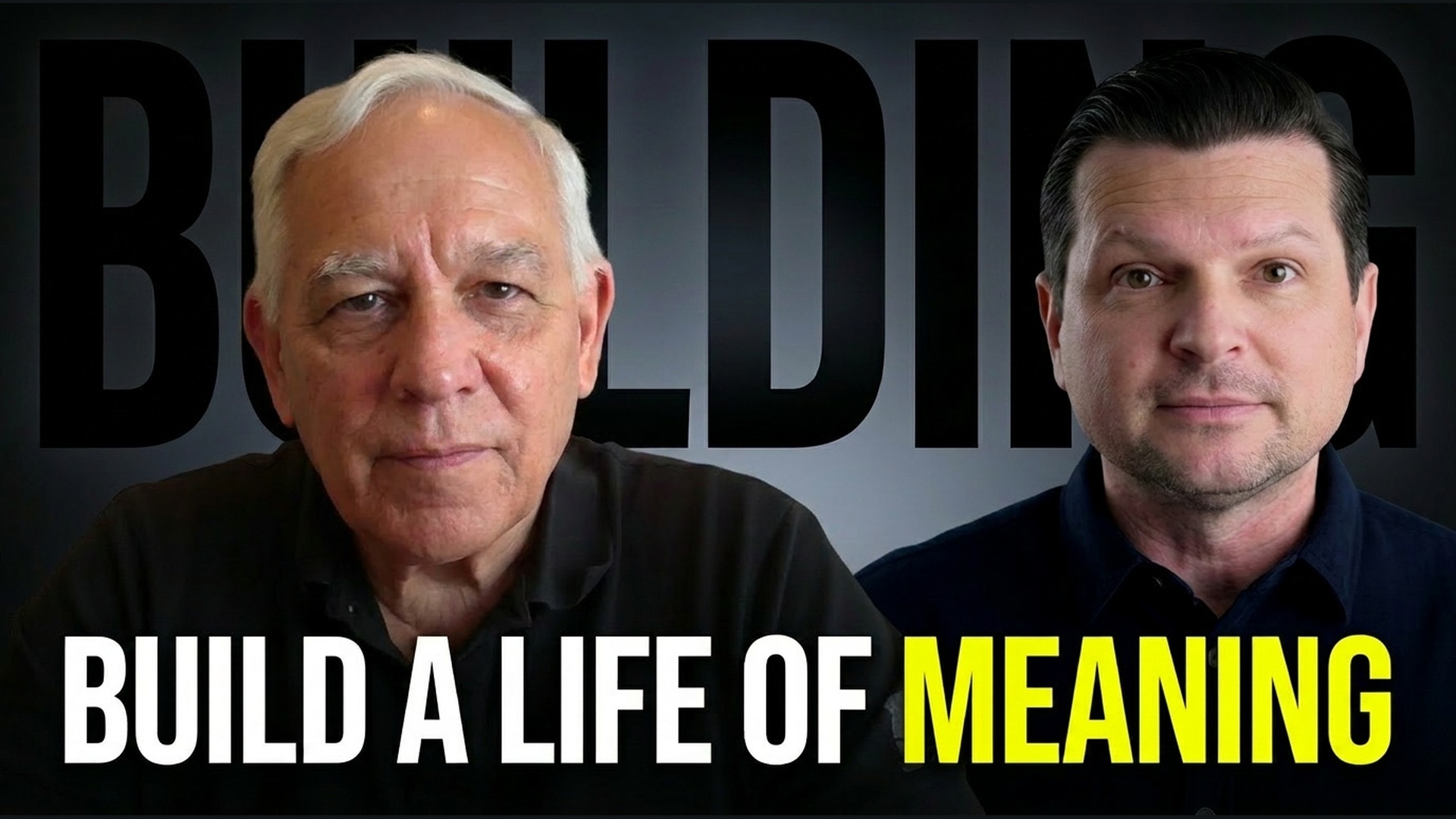
Welcome back to the blog, everyone! In our latest episode of Arthur's Round Table, we had the distinct pleasure of hosting Rick Walker, a remarkable individual who is making waves in the world of investment and leadership. Rick's insights are particularly potent because they cut through the noise of modern life and address fundamental truths about what it takes to build a meaningful and impactful existence. This blog post delves into one of the core tenets of his philosophy: the insidious nature of excessive comfort and its detrimental effect on ambition, growth, and ultimately, a fulfilling life. If you haven't listened to the episode yet, I highly encourage you to tune in to "Building a Life of Meaning & Generational Leadership with Rick Walker", as this post is designed to expand upon the crucial concepts we discussed.
Rick Walker's Core Argument: How Comfort Stifles Growth
Rick Walker's central thesis, which resonated deeply with me and, I hope, with our listeners, is that an environment of excessive comfort, while seemingly desirable, acts as a powerful impediment to personal development and ambition. We are, as a society, increasingly adept at creating systems and environments that minimize struggle, reduce risk, and maximize ease. While this has brought about many conveniences, it has, inadvertently, dulled the sharp edges of human drive. Walker argues that true growth doesn't occur in the gentle embrace of comfort; it is forged in the fires of challenge, necessity, and even discomfort. When life is too easy, the intrinsic motivation to strive, to innovate, and to push beyond our perceived limitations can atrophy. We become complacent, content with the status quo, and less likely to venture into the unknown where genuine breakthroughs and personal evolution occur. This isn't to say that comfort is inherently bad; it's the *excess* of it, the insulation from any meaningful friction, that poses a problem. Think about it: when was the last time you truly learned something profound when everything was going perfectly? More often than not, it's when we encounter obstacles, when we are forced to adapt, that our deepest learning and most significant growth takes place.
The Double-Edged Sword of Generational Wealth
A particularly insightful aspect of Rick's discussion revolved around the complex relationship between generational wealth and ambition. On the surface, inherited wealth appears to be an unequivocal advantage, providing a safety net and opportunities that others might lack. However, Walker presents a compelling counter-argument: when not coupled with a strong sense of responsibility and purpose, generational wealth can become a significant liability. It can remove the necessity to strive, to prove oneself, and to develop the resilience that comes from overcoming financial challenges. The inherent drive to achieve, the hunger that fuels ambition, can be starved when basic needs are effortlessly met and future security is guaranteed. This isn't to demonize wealth itself, but rather to highlight the crucial role of stewardship and the understanding that true value lies not just in accumulation, but in the disciplined effort and character development that often accompany the pursuit of wealth. Without the intrinsic motivation to earn, to build, and to contribute, wealth can, paradoxically, lead to a decline in performance and a stagnation of potential, particularly for younger generations who may not have experienced the struggles that built the initial fortune.
Why Friction Is the Catalyst for Personal Development
Walker's emphasis on the necessity of "friction" is a powerful metaphor for the challenges we face in life. Friction, in this context, refers to any element that creates resistance, difficulty, or effort. It's the effort required to learn a new skill, the struggle to overcome a professional setback, or the inherent difficulty in building something of lasting value. These are not impediments to be avoided at all costs, but rather essential ingredients for growth. When we actively seek to eliminate all friction from our lives, we also eliminate the opportunities for learning, adaptation, and the development of our capabilities. The most crucial and transformative lessons are often learned when we are pushed beyond our comfort zone, when we are compelled to confront difficulties and find solutions. This requires a mindset shift: instead of viewing obstacles as failures, we must begin to see them as opportunities for growth. The things that are hardest for us to do are often the very things that will lead to the most significant personal development. Embracing this discomfort, this friction, is what separates those who merely exist from those who truly thrive.
Responsibility: The Bedrock of Purpose and Direction
Central to Rick Walker's philosophy is the profound connection between responsibility, purpose, and direction. He posits that when individuals have obligations, when they face consequences for their actions, and when they are required to perform, they develop an inner strength and a clarity of purpose. Responsibility is not a burden to be shed, but a foundation upon which a meaningful life is built. It provides a framework for our actions, giving us a reason to strive, to improve, and to contribute. Without responsibility, life can become aimless, a series of passive experiences rather than an active pursuit of goals. The very act of taking on responsibility, whether it's for one's family, one's career, or one's community, imbues life with meaning and direction. It forces us to confront our limitations, to develop new skills, and to become more resilient. This is particularly relevant in today's world, where the emphasis can sometimes be on individual freedom and the avoidance of commitment. Walker argues that true freedom is often found in the exercise of responsibility, in the commitment to something larger than oneself.
The Modern Malaise: A Trend of Underperforming Ambition
Rick Walker points to a concerning trend he observes: a growing number of individuals, particularly among younger generations, who exhibit a lack of ambition, discipline, and focus. This "modern malaise," as it could be termed, is a direct consequence of the comfort-driven environment we've discussed. When challenges are minimized, when instant gratification is readily available, and when the need for hard work and sustained effort is often circumvented, ambition can falter. This isn't a judgment on any particular generation, but rather an observation of societal trends. The ease of access to information and entertainment, the constant barrage of digital distractions, all contribute to an environment where sustained focus and deep engagement can be difficult to cultivate. This underperformance isn't necessarily a sign of laziness, but rather a symptom of an environment that doesn't consistently demand the very qualities needed for significant achievement. The absence of adversity can, in effect, lead to a deficiency in the very qualities that fuel ambition and drive success.
Reclaiming Your Life: Mastering Attention in a Distracted World
In an era characterized by an unprecedented level of distraction, Rick Walker emphasizes that attention is the ultimate asset. The modern world is a carefully crafted ecosystem of stimuli designed to capture and retain our attention. Social media, endless entertainment options, and constant notifications vie for our mental bandwidth. Walker's insight here is profound: "what controls your attention controls your life." If we allow our attention to be passively dictated by external forces, we relinquish agency over our own lives. Reclaiming our attention is therefore paramount to reclaiming our ambition and our potential. This requires conscious effort and discipline. It means setting boundaries, curating our digital environments, and actively choosing where we direct our mental energy. The ability to focus, to engage deeply with tasks, and to resist the constant pull of distraction is becoming an increasingly rare and valuable skill. By mastering our attention, we unlock the capacity for focused work, meaningful learning, and the pursuit of our ambitious goals.
The Enduring Value of Giving and Proactive Engagement
One of Rick Walker's most inspiring principles, and one that he shared with profound conviction, is the idea that "Nothing you haven't given away will ever truly be yours." This concept underscores the enduring value of giving, not just in a material sense, but in terms of effort, knowledge, and connection. True fulfillment and lasting legacy are often built through acts of generosity and contribution. Furthermore, Walker highlights the importance of proactive engagement. Opportunities rarely fall into our laps; they are often the result of putting ourselves in motion, of engaging in conversations, of chance meetings, and of actively seeking out new experiences. The phenomenon he calls "who luck" happens when we are active participants in our own lives, creating the conditions for serendipitous encounters and beneficial collaborations. This proactive approach, this willingness to give and to engage, is the antidote to the passivity that can arise from excessive comfort.
Looking Ahead: Innovation in Real Estate and Technology
Beyond the philosophical discussions, Rick Walker also shared some fascinating insights into the evolving landscape of real estate and technology. He touched upon emerging trends like AI-driven infrastructure, the increasing demand for power and compute, and the subsequent transformation of industrial real estate. These developments are creating new asset classes and investment opportunities, driven by the fundamental needs of our increasingly digital world. This forward-looking perspective demonstrates that while foundational principles of ambition and responsibility remain constant, the avenues for applying them are constantly shifting. Staying attuned to these innovations, and understanding how they might shape the future, is crucial for anyone seeking to build and invest wisely. Rick's expertise in this area provides a tangible example of how ambition, coupled with informed action, can lead to significant impact and success in dynamic sectors.
Conclusion: Embracing Discomfort for a More Ambitious Life
In reflecting on our conversation with Rick Walker, it's clear that his message is not one of doom and gloom, but one of empowerment and clarity. He challenges us to confront the often-uncomfortable truth that our pursuit of comfort can inadvertently lead us away from our true potential. The insights shared in his book and in our episode, "Building a Life of Meaning & Generational Leadership with Rick Walker", serve as a powerful call to action. To build a life of meaning, to foster genuine ambition, and to leave a lasting legacy, we must be willing to embrace discomfort. We must seek out friction, cultivate responsibility, and master our attention in a world that constantly seeks to dilute it. Rick Walker's philosophy is a potent reminder that the most rewarding journeys are often the ones that demand the most from us. By consciously choosing to step outside of our comfort zones, to take on challenges, and to proactively engage with the world, we can unlock a level of growth and fulfillment that a life of passive ease can never provide. Let this be a catalyst for you to examine your own relationship with comfort and to start actively pursuing the challenges that will ultimately lead you to a more ambitious and meaningful life. Thank you for joining us on the blog, and we look forward to bringing you more insightful discussions soon.

Why Family Office Networks Fail: The Danger of Pitching in Peer Groups