

 Apple Podcasts
 Spotify
 YouTube
 The Overlooked Power of Transparency in Food Safety | Restaurant Compliance & Allergen Data
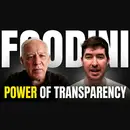
In this episode of Arthur’s Round Table, Dylan McDonnell explores why transparency in food safety is becoming a defining factor in the future of restaurants and hospitality. As regulation, consumer demand, and technology converge, what was once a back-of-house operational issue is rapidly becoming a strategic advantage. This conversation breaks down how allergen compliance, data visibility, and software are reshaping how food businesses operate—and why ignoring this shift carries real risk.
What You’ll Learn
Why food safety transparency is becoming essential in hospitality
How allergen compliance is evolving across states and regulations
Where most restaurants are exposed to risk today
How technology creates a “source of truth” for food data
Why consumer expectations are shifting rapidly
How transparency can increase revenue—not just reduce risk
In this episode of Arthur’s Round Table, Dylan McDonnell explores why transparency in food safety is becoming a defining factor in the future of restaurants and hospitality. As regulation, consumer demand, and technology converge, what was once a back-of-house operational issue is rapidly becoming a strategic advantage. This conversation breaks down how allergen compliance, data visibility, and software are reshaping how food businesses operate—and why ignoring this shift carries real risk.
🎯 What You’ll Learn
Why food safety transparency is becoming essential in hospitality
How allergen compliance is evolving across states and regulations
Where most restaurants are exposed to risk today
How technology creates a “source of truth” for food data
Why consumer expectations are shifting rapidly
How transparency can increase revenue—not just reduce risk
🧠 Key Insights from Dylan McDonnell
1. Transparency Is Becoming a Competitive Advantage
What was once considered a compliance burden is quickly becoming a differentiator.
👉 Restaurants that provide clear, accessible information win trust—and customers.
2. Regulation Is Forcing an Industry Shift
New laws are requiring restaurants to disclose allergen information across menus and platforms.
👉 Compliance is no longer optional—it’s becoming infrastructure.
3. Food Allergies Represent a Massive, Underserved Market
Tens of millions of consumers require dietary transparency to safely dine out.
👉 Ignoring this group means losing not just individuals—but entire networks.
4. Most Restaurants Operate Without a Reliable System
Current approaches rely on:
Staff knowledge
Manual processes
Incomplete documentation
👉 These gaps create operational inefficiencies and real risk.
5. Data Turns Risk Management Into Revenue
When consumers can quickly identify what they can eat:
👉 They are more likely to order, return, and become loyal customers
6. Small Operational Gaps Create Large Liability
A simple ingredient substitution or miscommunication can result in serious consequences.
👉 In many cases, restaurants are strictly liable.
7. Technology Enables a Single Source of Truth
By integrating:
menus
recipes
supplier data
Restaurants can deliver accurate, real-time information across all platforms.
8. Regulation Is Creating a New Category of Software
As compliance becomes mandatory:
👉 Food safety transparency is emerging as a new vertical SaaS opportunity
👤 About Dylan McDonnell
Dylan McDonnell is the founder of Fudini, a platform helping restaurants, stadiums, and food service operators manage food allergy compliance and dietary transparency. His work focuses on improving safety, reducing risk, and enabling better customer experiences through data and technology.
📊 Topics Covered
Food safety transparency
Allergen compliance
Restaurant technology
Regulatory trends
Risk management
Data and personalization
Hospitality operations
Want to learn more about Family Office Insights? Click Here.
Arthur (0:00): Welcome everybody to another episode of Arthur's Roundtable. Super grateful for everybody who's listening and sharing. So thank you for that. So we have Dylan McDonald with us today and we're we don't know each other, but we've had an opportunity to get acquainted via email and learn some interesting things about his business. And I think you'll all find it interesting.
Arthur (0:19): Feel free, like I said, to share it if you like. So Dylan, thanks for being here and doing this with us.
Unknown Speaker (0:26): Not at all. Thank you very much for having me.
Unknown Speaker (0:28): So let's start at the beginning if that's okay with you.
Unknown Speaker (0:30): Sure. So a quick background?
Unknown Speaker (0:32): Yeah.
Unknown Speaker (0:33): Let's do it. So you can probably detect a bit of an accent. I'm Irish, although I was born in Philly randomly. Moved back from from Philly to Ireland when I was five years old. Did all school, university, all that fun stuff back back there.
Dylan McDonald (0:46): A lawyer by trade. I worked in big law for a number of years. Corporate investment funds primarily. So wrapped a lot of the global tech companies, the Apples and Facebooks of the world, and then moved a little bit more into investment funds and and went in house. And that journey took me to Australia.
Dylan McDonald (1:01): So I lived in in Sydney for four years, initially still in my in my capacity as a lawyer. But while there, I started Foudini, which is obviously part of the reason we're talking here today. And my reason for that is pretty personal, diagnosed with celiac disease as a kid. So I've kinda lived, you know, the problem of having to dine out with a food allergy for most of my life. And I think just over time, I got more and more frustrated with just how challenging it was.
Dylan McDonald (1:28): And I think the big unlock for me happened when I realized how big the market was in terms of how many people have a food allergy or a dietary restriction. I think, for a long time, you know, you just assumed it was you and a few other people. But once I realized it was, you know, thirty three million Americans with a diagnosed food allergy and then layer on intolerances, that's another fifty million layer on preference diets, vegan and vegetarian and keto and low FODMAP and low carb and and everything else, it's another seventy million. So about half The US population that falls into the bracket of having some form of dietary restriction, yet the kind of transparency and communication from everything dining out wise was extraordinarily limited. And so, in essence, started the company initially in Australia, scaled a little bit there, identified that if this was gonna be big, it would need it to be in The US.
Unknown Speaker (2:18): And so I moved across to LA just over two years ago now, and raised a bit more funding here and obviously have been growing our roots in in the industry since. And, yeah, that's, I suppose, the the kind of quick
Arthur (2:30): shocking. The the thirty million by getting this right, thirty million people have celiac?
Unknown Speaker (2:35): Sorry. Thirty three million Americans have a food allergy.
Unknown Speaker (2:38): Okay.
Dylan McDonald (2:38): Diagnosed food allergy. Yeah. Yeah. So not necessarily celiac. It could be allergic to nuts or eggs or soy or seafood or or whatever.
Unknown Speaker (2:47): Shocking number. Right?
Dylan McDonald (2:48): It's math. I couldn't believe it either. One in ten essentially would have and that's just diagnosed. That's not including all of the people who have it and still don't know.
Arthur (2:57): Yeah. So I don't know anything about the science and I don't wanna presume that I do, But how much of this was a result of our bad food system with additives and dyes and all that business? Yeah. Does that does that catalyze the what otherwise would not be a dormant allergy? I'm just making stuff up here.
Unknown Speaker (3:21): I'm just but No.
Unknown Speaker (3:22): No. It's it's a very it's a phenomenal question, and it doesn't really have, like, an official answer. So short, I'm not a medical professional either. So I have my hypotheses, which I can share, but to be clear, this is just my opinion. I think it's a combination of factors.
Dylan McDonald (3:37): One is definitely genetic. So for example, Ireland has the highest rate of celiac disease per head of capita in the world. Italy is number two. The main hypothesis for why Ireland has such a high rate of celiac disease is the potato famine.
Unknown Speaker (3:52): I was gonna say that sort of connected the dots there immediately.
Dylan McDonald (3:56): Assumption is that when the potato crop was wiped out at that time, and that was obviously the main food the Irish people were dependent on, then we start started importing wheat, and gluten from from The UK and other countries and then introduced it into our diet. As a result, that has downstream created this genetic reaction to to gluten. That's one. Similar, like, I think it's over sixty percent of of the Asian population is lactose intolerant. Again, I think it's a similar hypothesis in terms of mainly rice based, not so much dairy based.
Dylan McDonald (4:26): And when that was introduced, it didn't necessarily agree with them. Melbourne is the food allergy capital of the world. It has the most, food allergies per head of capital of any city in the world. Why? I have absolutely no idea.
Unknown Speaker (4:38): Who knows? Right?
Dylan McDonald (4:39): But but to your point, I one thing, and I think you're on the money. There is no question in my mind that the food we are consuming is contributing to this in some way. The data shows year on year on year on year on year, diagnosis of food allergies continues to grow, people are getting more and more intolerant and getting more and more adverse reactions to all sorts of foods. And I can't really see any way world in which that isn't linked to the quality of the food that we're eating in general. If you were to listen to RFK, RFK has multiple kids with, severe peanut allergies.
Unknown Speaker (5:11): His hypothesis is that it's back to the vaccines. He he set it on a food allergy fund event a few months ago. Lots of different theories. Hard to know exactly what is, to pinpoint it, but a combination in my opinion.
Arthur (5:23): It just seems as if that it's a good baseline that if we're putting additives in our food that our body is not accustomed to, that that can't be a good thing. Right? I mean percent. Even if it's not tied
Dylan McDonald (5:39): into exacerbating the allergies, it's probably a good thing to avoid. 100%. And listen, whatever your politics, the one one thing that RFK and their team are doing, which I I really do agree on, is like, look at a lot the food dyes and stuff that they're now trying to ban. Like, you pick up a pack of Doritos in The UK, it's got 15 ingredients. You pick up that same bag of Doritos in The US, it's got 40.
Unknown Speaker (6:01): What's it saying?
Dylan McDonald (6:02): Yeah. And that is simply because regulatory from a regulatory perspective, it's not allowed in The UK. No such restriction here. They're gonna pump it full of not good ingredients.
Arthur (6:12): Yeah. I'm a I'm a big fan because I think he's gonna have some impact. And of course it's not only anecdotal, but when you go to Italy, which I recently was in Italy, you just feel better after eating the pasta, right. Or whatever. And the tomatoes taste better.
Arthur (6:28): And this is not uncommon knowledge, but it just for some reason, whether it's locally grown, no herbicides, pesticides, all that kind of stuff, it just seems to be better.
Dylan McDonald (6:39): 100%. It was the first time I had actually come across that anecdote was, I met a few moms when I first came across here with kids with, like, celiac or not celiac. They had gluten allergies and weed allergies. And they were saying when they'd eat pasta in The US, they'd come out with all these symptoms and flare up and everything. Go to Italy, eat the same pasta, zilch.
Unknown Speaker (7:00): No symptoms whatsoever. Again, that can only be the ingredients in the food.
Unknown Speaker (7:06): Yeah. Totally. So then then what happened? You brought it here. You raised a little bit of money.
Arthur (7:11): So give some structure to the model so people have an idea.
Dylan McDonald (7:15): Yeah. Well well, yeah, let me tell you what we actually do. So we essentially help bridge the communication gap between restaurants and food service and consumers. So we're a b to b company. So we work with restaurants, with stadiums, hotels, universities.
Dylan McDonald (7:30): We pull in their menu data, their recipe data, their product data, because we need to know it's no good to know it's ketchup, we need know it's a Heinz ketchup, or is it a different brand of ketchup, because those have different ingredients and allergens. We, we analyze all that and enrich it with the correct allergy and dietary information. We train LLMs on this for the last four years to be able to do that extremely accurately. We also have a team of dietitians who do QA over the top and ensure everything is a 100 correct. Once we have that source of truth in our kind of structured data format, we then power a consumer facing experience, whereby a consumer on a website can just click a button and then you scan a QR code, which brings up a personalized menu experience.
Dylan McDonald (8:12): So it's a web app, they don't have to download an app. So they scan the QR code in Venue, pops up, create your dietary profile, we have a 150 different allergens and diets they can choose from, not just the top nine. So they go gluten, vegan, keto, tomato, save. Then instantly, they'll be shown, here's what you can eat. Here's what you can eat with a modifier, and what that modifier is, I.
Dylan McDonald (8:34): E. They can take out this sauce or add in that gluten free bread, and here's what you can't eat and why, because these ingredients are baked in and can't be removed. So it's a completely personalized experience based on real accurate data, and obviously can choose as many different restrictions as they need to do.
Unknown Speaker (8:51): Nice.
Unknown Speaker (8:52): So that's- that's the product.
Arthur (8:54): And so it would seem to make sense that you would have to understand what Cisco's doing and purveyors, right?
Dylan McDonald (9:03): Yep. Part that's one one leg one of the three legs, I would say. It's the menu, it's the recipes, and it's the products, which are often coming from Sysco, US Foods, etcetera.
Arthur (9:14): That sounds like a big lift. Is there pushback from the restaurants?
Dylan McDonald (9:18): Well, there's a few components to this. Right? So it's like, I'll start with the why they absolutely have to do it now, and I'll I'll fall back on why they should have been doing it anyway. So in Europe, for the last decade, you can't open in most countries as much as a hot dog stand without labeling it for the major allergens, by law. That's just been standard practice in Europe to protect the consumer, but also to protect the restaurant from, like, making people sick and being sued as well.
Dylan McDonald (9:46): So that's a starting point. In The US, there's been no such requirement historically up until one was signed last October. There was nutrition requirements, and that's why you'll see every chain with 20 plus locations in the country must put calories on their menus and, you know, you've probably seen that and when you go into major into any chain, but not allergens. In California, last October, Gavin Newsom signed a bill called SB 68, which for the first time requires restaurant groups with 20 plus locations worldwide, where if they have even one location in California, so if they have 20 in The US and one of those in California, they must now label their menus for the top nine allergens effective one July, ten weeks time. So that now is completely changing the landscape in terms of pretty much every mid market and and national restaurant chain is now caught by this and must do this.
Dylan McDonald (10:37): Two ways they can do it. One, they can on the physical menu I'm sorry, to be clear, this is physical and digital menus. So it's not just their PDF menu, it's their website menu, it's their DoorDash menu, it's everywhere their menu exists. Two ways they can do it in venue. One, they can say chicken burger contains gluten, eggs, wheat, beef burger contains, and so on and so forth, or two, they can have a QR code that links out to digital allergen menu, which is obviously what we do.
Dylan McDonald (11:05): And most major brands, most old brands have kind of voiced a pretty strong preference to not destroy their their their menus with, a lot of the con you know, the allergen information when they can link out a different experience that, provides that for the people who need it. So that's kind of the first reason is that restaurants can no longer push back because they have to do it. There's also six more states now following in the footsteps of California, with the major difference between all of these bills and draft being that it applies to all restaurants, not just 20 plus. So this is coming like it did in Europe. One way or another, over the next six, twelve, eighteen, twenty four months, most states in this country are going to be required by law to tag their, restaurants in those states to tag their menus for food allergens.
Dylan McDonald (11:54): So it's coming anyway. As to your point on pushback, the bottom line is, I've spoke to the consumer numbers, consumers are demanding this information. Sure. As a restaurant, you can say, no. We don't know.
Dylan McDonald (12:07): We don't have it. Leave. But that isn't good hospitality practice, especially when you have a market that big that needs this information. And again, don't forget if you lose that Dylan the celiac, you lose my friends, my family, my coworkers. I'm the problem.
Dylan McDonald (12:27): If you don't cater for me, I can't my group can't come here.
Unknown Speaker (12:31): It's the network effect, right?
Dylan McDonald (12:32): It's the network effect of it, right? So there's the fact that if you do this properly, you attract more loyal customers like me, the operational efficiencies as well. Currently, the staff are having this conversation. In a lot of states you'll go to, you'll like Massachusetts, for example, they're required by law to ask any allergies or dietaries at the table. Great.
Dylan McDonald (12:51): I say, yeah, have a sesame allergy. Now all of a sudden, the onus is back on that server to know where in the menu is the sesame, and that could be hidden in any sauce, in any recipe, in menu any menu item. And if you get it wrong and I get sick, you're on the hook. I'm suing you now, and all of a sudden, you know, you're gonna have to settle or or or be put out of business probably. So there's the less questions for the staff.
Dylan McDonald (13:14): Operationally, everything is moving a lot quicker. We see about a 60% reduction in questions from staff, which is our solution. You have the reduction in risk, like I said, give them accurate information, less mistakes, less lawsuits, and then you've data. Right now, every one of these conversations is a lost data point. With our solution, you now know that Dylan is a celiac, you tie it to your consumer data profile, now you can market to me accordingly.
Dylan McDonald (13:40): Now you can personalize to me with that marketing accordingly. Now you, you know, you can, optimize your menu because we will tell you that, you know, last month you had a thousand celiacs, but you only have one gluten free option on your menu. You're missing the boat. You need to change your menu to bring more options for this segment who's already coming into your restaurant. So these are all just all the reasons, Arthur, why it's kind of a no brainer.
Dylan McDonald (14:02): But traditionally, unfortunately, most restaurants in America have been a little bit to your point, I think nervous around doing it.
Arthur (14:11): Yeah. Well, I think that's true. And I can't speak for the restaurants, but it seems to me that in an environment where we're trying to, especially in California where it's overregulated on everything is in an environment where we want less regulation to allow people to be in business without the friction of senseless regulations. These make sense Like, this this this sounds like something that makes sense.
Dylan McDonald (14:38): Totally. Just on that point, you're hot like California, I don't know how most businesses do business in California. I wanna be current. I think the overregulation is insane. It's so hard to do business in this state.
Dylan McDonald (14:48): And I have huge empathy for restaurateurs. Restaurants are also an incredibly tough business in any state, not a mind in California. Margins are razor thin. It is such a difficult thing to to to to manage and to actually be successful with. This is just one of those things where it just makes sense.
Dylan McDonald (15:07): And part of the reason we exist, to your point, if you're a small independent operator and you're trying to do this analysis, it it'll take you a little bit of time. Like, it's not as simple, you know, there's a lot and that's why we exist. We're already plugged into all of these systems. We already have all the data. We've onboarded hundreds and and maybe thousands of restaurants at this point.
Dylan McDonald (15:25): So we make it easy to do this analysis, and we're not that expensive. So, you know, the the barrier to doing this is is not what it was ten years ago.
Arthur (15:34): So if I was a two restaurant owner in California, I would look at this as a daunting task. And if you came and and I'm not promoting your business because you paid me to do so, I just think it makes sense. If you came to me and said, look, we've got all the Cisco information, we got the provider information. When you build your recipes, you'll have this already in here. And the friction associated with the bandwidth and lift that we would otherwise have to do manually, you've taken a lot of that off.
Arthur (16:05): And so what's that? Is it add 2% to the price of the product? What is it? Is there not really asking you to disclose your pricing. I'm just wondering, like, as a restaurant owner, okay, I have to do it now or I wanna do it.
Arthur (16:23): What's the friction?
Dylan McDonald (16:25): Yeah. I'll I'll tell you very simply. So traditionally, a consult for, say, a two restaurant operator like that, a consultant would have probably come in and charge them $25,000 to do minimum, to do an analysis because it's manual hours. Tens and fifties of hours probably to get that done. We charge a one time onboarding fee, which for a two restaurant, like would probably be 2 to $4,000 and then, a monthly reoccurring SaaS fee, which is probably for, again, there's variance here, but call it a $100 a month.
Dylan McDonald (16:57): That's our pricing.
Arthur (16:58): And it adjusts with the as the menu adjusts?
Dylan McDonald (17:01): So included in that is as your menu changes over the course of the year, we'll update it. So if you add a new menu item or two new menu items in June, we will, as part of our our service, add them to your allergy menu as well so that everything is consistent. So we're again, that's for SMB. Our pricing obviously at enterprise is very different. Another point as well, we integrate with online ordering.
Dylan McDonald (17:27): So, like, currently, let's say you you're a bigger group, you're a mid market group, and you have a PDF somewhere buried on your website. It's a dead end. Consumers trying to get the allergen information to hit this PDF, which they can't even understand. And what now? Our solution, they have the information personalized to them and that there's an order button.
Dylan McDonald (17:45): So now they can literally link directly to your online ordering solution Yeah. So that now the cart is actually being populated with one click from the allergy place as opposed to, again, being in a dead end PDF. So we have the maths to prove to restaurants that are not only does it solve the compliance issue, the risk issue, blah blah blah, but we actually make you money.
Unknown Speaker (18:06): Because people are gonna move forward with an order.
Dylan McDonald (18:08): Exactly. Yeah. The whole reason they're looking is to understand what they can eat. That's why they're at the allergen matrix in the first place. They're trying to ascertain, is there something here I can order?
Dylan McDonald (18:17): And we make it super simple for them to understand that, and we make it super simple for them to order that.
Unknown Speaker (18:22): Have you talked to Wonder?
Dylan McDonald (18:24): We we've spoken to a few more junior people there. They, more so the Grubhub team. To be honest, so Wonder owns Grubhub Blue Apron.
Unknown Speaker (18:34): Last year.
Dylan McDonald (18:35): Yeah. Yeah. Exactly. So we we've been probably more focused on first and third party online ordering because there we're partners with many of them because, again, just the integration and it makes sense for all of us. Wonder, more at the junior level, not so much at the at the exact level as yet.
Dylan McDonald (18:51): They make sense for us, as a partner. Just hasn't been a kind of a top priority as yet. What why do you ask? Is that one you think makes sense?
Unknown Speaker (18:58): We know them. Yeah. Being that they're focused in New York City presently Yeah. And they've raised a lot of money and their aspirations are big. Yeah.
Unknown Speaker (19:09): And the product is awesome.
Dylan McDonald (19:11): Yeah. Mark Laurrie cares about food allergies as well. We know that. And we they already do better than the median, I would say, when it comes to food allergies. Like, they do it is something they try to identify.
Dylan McDonald (19:22): They again, I like to give credit to organizations who try and make best efforts, so they definitely do that. I think if we worked with them, we could dramatically enhance that offering, but no, I agree. It's a great product and they're a impressive company and he's an impressive entrepreneur.
Arthur (19:38): Yeah. He's his aspirations are big.
Unknown Speaker (19:42): Absolutely. Yeah.
Arthur (19:44): What's the, you know, what's interesting is we've, I can't remember the name of it, but in grocery shopping, we use the app that reads the UPC or whatever it is. Yucca. Gives it a rating.
Unknown Speaker (19:56): Yucca?
Arthur (19:57): Yeah. Yucca. Yeah. It's indispensable. Right?
Arthur (20:00): We don't we don't shop without it. So it's it's the same idea.
Dylan McDonald (20:04): Yeah. And and the the reason Yucca works is because there's a nutritional label on CPG products. The problem with restaurants is there's no Yeah. CPG label on And that's kind of what we're doing indirectly is we're putting that label virtually on their products so that the consumer can essentially do the exact same analysis you do on Yuca, except for allergy and nutritional information.
Unknown Speaker (20:27): Yeah.
Unknown Speaker (20:28): And then make their own informed decision as to whether that is an item that's suitable for them or not. Is there another layer where we go to Yuka where we can actually recommend whether it's good for you or not? Sure. But I think that would be a more consumer facing play than a restaurant facing play right Well,
Unknown Speaker (20:42): it's dangerous too.
Dylan McDonald (20:43): Yeah, exactly. Frankly, we're not in the business of making recommendations to people. We're in the business of providing them transparent information so that they can make a decision for themselves based on their needs.
Arthur (20:55): And I would say even though, based on what you've described, even though there is some culpability of the restaurant, putting the right ingredients on the menu and in whatever the meal is that you've laid the responsibility back on the consumer largely by saying, if you scan this, then you eat something that you're allergic to. It's not our fault.
Unknown Speaker (21:19): Yeah. Like it's
Unknown Speaker (21:20): Does that make sense?
Dylan McDonald (21:21): There's there's definitely a component of that. I think it's it's for the restaurant. It's like, so lawyer hat on, strict liability applies to all food allergy incidences. If I walk into any restaurant in The United States Of America and say, hi, I have a nut allergy, and you end up serving me a nut, you're strictly liable. You're gonna lose whatever lawsuit I try.
Unknown Speaker (21:40): It's binary. Right?
Dylan McDonald (21:41): It's pretty, pretty binary. So that's just a fact if you're put on notice of the allergy. Now, again, the what our our just fundamental argument here is right now that is happening all of the time, and the staff member is the line of defense between that lawsuit and that consumer. And seventy something percent, I think it's seventy two percent of US wait staff are not properly trained on food allergies at the base level, Not a mind being trained on every menu item and every recipe and every product and every ingredient and every allergen on your you know, for that restaurant. They're just not And
Unknown Speaker (22:18): they're not getting paid to care.
Dylan McDonald (22:20): They're not. They're not. Maybe super high end fine dining. Like maybe, like, you know, the really expensive steak houses and, you know, high, high end. Sure.
Dylan McDonald (22:27): Staff are obviously a lot better trained there. Certainly on probably, you know, the major food allergens. But for the most part, that's not reflective of of the restaurant industry or the food service industry for that matter. So again, it just comes back to this fundamental piece of, do you want a source of truth that's been technically approved by your team, by our team, that the consumer is for the most part relying on further allergen information? Or do you want the staff member to have a go at answering the question?
Unknown Speaker (22:53): That's kinda what it comes down to.
Unknown Speaker (22:55): Yeah.
Dylan McDonald (22:56): Most consi like, I don't know about like, I I don't know if you know many people out there that have food allergies or dietary needs, but, like, some there are some people that I think restaurants are just annoying, or they're like, they're just causing hassle. They're probably not even allergic. They're just trying to look for attention. And sure, there are some people like that. Most of us like me, like, I don't even want, you know, any special treatment.
Unknown Speaker (23:17): I just wanna order my food, order my drink like everyone else and go home. Like, I'm not looking for anything special, but I find a lot of the time I I end up in this thing where I'm having like chefs are coming to the table and managers and it's this whole production because again, they don't know they don't know the information already. They're having to pull stuff out of the fridge and check the label on the fly. It's crazy. And, also, I'm in this awkward position.
Dylan McDonald (23:39): I'm with my friends. I'm just trying to have a beer and, you know, some food, and I can't because there's this whole production going on around me, I was like, oh, is it even worth it? Why did I you know? And that's the reality, I think, for for most people. They just wanna be like everyone else.
Unknown Speaker (23:53): Give them the information to allow them to make an informed decision.
Arthur (23:56): Totally makes sense. Has this impacted the purveyor, like the purveyors experiencing that they have to source stuff more diligently? If so, does it cost more? And then at the end of the day, does the consumer pay more because the purveyor has to buy a higher priced item because they've been able to decide or determine that it is there is there an additional cost associated with determining whether there's an allergen in the food or not?
Dylan McDonald (24:31): No, there shouldn't be. Like I said, one could try and tackle it themselves and just do and again, for me, and to be clear, if restaurants don't wanna use our service, that's totally their prerogative. What I would just say to all of them is even if you wanna sit down for a week and just do this try and do it all out yourself, having your allergens documented is critical to protect your restaurant from a liability standpoint, full stop. So do it on a piece of paper or on a spreadsheet if you so wish and you believe you have the ability to do that. That's totally your prerogative.
Dylan McDonald (25:02): In terms of the only cost to either the restaurant or to the consumer should be in the actual analysis, like doing the analysis initial analysis and then, you know, powering like for example, like a lot of restaurants who do this manually, every time let's say they have a menu board and it contains gluten, vegan, vegetarian, and dairy, you have a handful of them in the country. Every time something changes on the menu, they need to reprint the whole menu board.
Unknown Speaker (25:28): I know it's crazy.
Dylan McDonald (25:29): Reprint the whole thing. I would argue the printing cost of doing that once or twice a year would far outweigh our SaaS cost, which updates automatically in real time. You just have the QR code there once and you never have to touch any of the stuff again. So to your point, I think we're what you were kinda touching on there is one of the challenges, and it comes back to my empathy with restaurants on this, one of the challenges restaurants have is let's say, and you use Cisco as an example earlier, let's say Cisco has been for the last year delivering a certain brand of soy sauce to a restaurant. Now all of a sudden there's a shortage.
Unknown Speaker (26:03): Cisco runs out of it. So Cisco will substitute a different but similar soy sauce and deliver that to the restaurant. A lot of the time they won't notify the restaurant that that's happened, or it'll be missed somehow. Maybe they will, but it won't be clicked by the restaurant. Easy.
Dylan McDonald (26:18): Restaurants have a 101 things going on. The last thing a lot of the time they're thinking about is whether it's a different soy sauce. That different soy sauce can have different ingredients, and those different ingredients can have different allergens. And now all of a sudden you have a situation where, you know, your allergen information is incorrect and if something goes wrong. So these are all the kind of things that happen in reality every day in this country.
Dylan McDonald (26:39): And, again, it's part of the reason we exist is because we believe that most restaurants don't have the ability or the time or the wherewithal to actually track and manage this. And there weren't isn't systems in place currently to do it. We are that system. That's what
Unknown Speaker (26:55): How we your system solve that fact pattern? The Or substitute soy sauce.
Dylan McDonald (27:03): So we have a a process in place where when inventory because we're, connected to inventory management systems. So we'll analyze the invoices that, from the inventory orders, and we'll see that there's a different branded product than the one before, and that will create a a trigger for us to to to check and then to review the allergen ingredient information, and then if and confirm with the restaurant that a product swap has happened, and then update that product swap on our system. What the impact of that as well, which is the beauty of our system, is let's say that so that product swap has happened. We detected it from the invoice. We've confirmed with the restaurant that that's correct and that new product's been used.
Dylan McDonald (27:42): We then update that product in our system, and every menu item that is using that product automatically updates in tandem. We don't need to go back into every menu item and every recipe. We just update the product once, swap it, everything else updates automatically with that new product.
Unknown Speaker (27:56): That's cool. Yeah.
Dylan McDonald (27:58): And that just, again, listen, there's been three or four years of trial or an error here. Like, you wouldn't believe the amount of different things we've come across in, and the difference between a small local coffee shop and your major enterprise with a thousand locations and everything in between, like, I I've seen everything at this point, I think. And so, no, we figured out a pretty robust system to get this as as accurate and as streamlined with as little lift on the restaurant side as possible. But there's a culture point here as well. Like, one of the things that we say and we offer free training to all the restaurants, it's like a lot of, you know, the staff have to understand that this is a real thing, and you're gonna kill someone by accident if you don't take this seriously.
Dylan McDonald (28:43): And unfortunately, lot of people just don't know that, and they just need that training to understand the significance of this problem.
Arthur (28:49): So how does this affect my favorite bagel place in Brooklyn? That's got one shop, they sell out their bagels at 01:00, And the next day they go and make like, does how does that probably not a good example, because they're only making bagels. And that's pretty easy to discern what's in them. But the coffee shop, you know, my favorite coffee shop in the Lower East Side.
Unknown Speaker (29:18): How do they do the analysis?
Arthur (29:20): Well, no, how does it affect them? Is there is there an incentive besides not wanting to kill somebody for them to get on the bandwagon and take this seriously?
Unknown Speaker (29:32): Absolutely. All of the reasons I I outlined at the start. Yeah. If you said to me right now, let's go to that coffee shop. The first thing I'm gonna do, and, any of your listeners who have an allergy in the family or in the friend group will vote for this.
Unknown Speaker (29:44): I'm gonna go on your website and look at your menu. Because I can't say yes until I know if they have a gluten free bagel or not. Otherwise, I can't eat there. I'm just gonna be watching you eat.
Unknown Speaker (29:53): Right.
Dylan McDonald (29:54): Eating out of a tub of cream cheese or something. So the first thing I'm gonna do is check your menu. And if I can't see on your menu clearly that I can eat something, I'm gonna say, do you mind if we don't go there and go to this other place up the street that I know can cater for me instead? And bear in mind, because our system also lives on the website. So we beside the normal menu.
Dylan McDonald (30:15): So it's about attracting and helping consumers understand that you can cater for them. And so attracting loyal customers is a huge part of that.
Unknown Speaker (30:23): Yeah. It is.
Dylan McDonald (30:24): Yeah. And to actually to your example, by the way, and you mentioned that your New York bagel shop, a second law that's passing this year in New York, specifically, November 1, It's a bit of an outlier. It's a little different to the other six laws that are coming in the other states, but it applies to every restaurant, every restaurant in the state of New York that sells prepackaged foods. So for example, if you premake, if that bagel shop premakes bagels and cream cheese with salmon, and wraps it in foil and puts it in a grab and go fridge, that is impacted by the law. They must label that item for the major non food allergens.
Unknown Speaker (31:02): If instead, a consumer comes and said, hey, can I have a bagel and cream cheese? And they make it for them fresh in front of them, that does not have to be labeled.
Unknown Speaker (31:10): That's really interesting.
Dylan McDonald (31:11): That's a New York only law coming into effect January this year.
Arthur (31:15): What's the rationale by making the distinction?
Unknown Speaker (31:20): Honestly, I'm not totally sure.
Arthur (31:23): Because it doesn't also require the law also require for that bagel that's made that you're just going to eat at the restaurant that's not prepackaged require the restaurant to ask them an add the allergy question? Would, that would only be the thing that made sense to me.
Unknown Speaker (31:39): Say that once more. What was the question?
Arthur (31:41): If you're, if you're going in and you're gonna eat the bagel there, right, it's not prepackaged or take it with you, whatever, it would make sense that the distinction of having the one that's in the heater to grab and go to have the allergens on it because you're not interacting with the staff to ask the question that do you have any allergies? That would
Dylan McDonald (32:04): Yeah. That's more of that and that's what's in Massachusetts. Like, there are laws around, like, staff being required to ask people around allergies or dietaries, but I think the overarching messaging here is, like, so you have the SB 68 in California. You've that law I just mentioned in New York. You have six other states who are in the process of actioning laws similar to the California one, which is all items, not the prepackage carve out for New York.
Dylan McDonald (32:28): You have RFK at the federal level with three kids with food allergies. He's made food allergies a priority health issue for the White House as well. You have this just wave of momentum around this issue right now. You have another law that just passed in in in Washington where they are required to everything that's delivered that has a food allergen in it or that if someone tells the restaurant they have a food allergy and that item is delivered, is being sent out by delivery, the packaging for the item with the notified food allergy must have some form of marker on it to differentiate it from say other items. That just passed, and that's effective January as well, ten weeks time.
Dylan McDonald (33:11): So the point I'm trying to make is there is a raft, a wave of regulatory momentum around the issue of food allergies, mirroring what all happened in Europe a decade ago. And coming back to my earlier point, it is just a matter of time until the majority of states, if not all of them, will be required to document food allergies and label them on menus. And ultimately, I think as the industry, which it is now, is accepting this, it is a benefit for them and it's a benefit for the consumer. And once we kind of get over the teething issues and the little bit of, you know, uncomfort around it, it's gonna become standard before we know it.
Arthur (33:50): In the spirit of, you know, regulations bad, this is a good regulation. Exactly. Yeah. What is the in the absence of doing it yourself as a restaurant, disclosing it, you know, it's easy to put a a scan thing on your menu that you can do that for $4 a month. Right?
Arthur (34:14): But you have to do all the work to fill in the back. Right? In the absence of your doing it themselves or your program, what has been the how is it normally addressed?
Dylan McDonald (34:24): Yeah. So I would say two ways. Major enterprise groups sometimes will have like a team of dietitians or nutritionists in house. They might have a team of six or seven of them, and they'll have them do the exercise. That's kind of what's done in college campuses a bit as well.
Dylan McDonald (34:38): It'll be like an in house dietetics nutritional team. That's one for major enterprises only, or two, it's been white glove consultants. So they're don't and I know some of them. They're great people. They're extremely comprehensive.
Dylan McDonald (34:53): They'll get you exactly what you need. The output is typically a PDF or a spreadsheet. And for the most part, from what I have seen, it would just be dramatically more expensive and less tech forward just to to frame it that way. So, again, that that's what how it's been done traditionally, and nothing wrong with it. It just, I think, was probably a different era of technical ability versus probably the world we live in now.
Unknown Speaker (35:18): Yeah. The world we live in now is moving so fast. It's crazy.
Unknown Speaker (35:21): I can bear well, I can't keep Opus 4.7 with Claude comes out a day or two ago. I'm trying to figure out. I can't I can't barely keep on top of it.
Unknown Speaker (35:30): It is really, really impressive.
Dylan McDonald (35:32): Another thing just worth mentioning as well is we're not limited to restaurants. We work with stadiums. We work with a lot of other environments. With stadiums, for example, we're now working with Major League Baseball, so we're integrated into their ballpark app. We map stadiums.
Dylan McDonald (35:47): So the first one that we did is Baltimore Orioles at Camden Yards. They have a 100 cons approximately a 100 concession stands across the stadium. So what we've done for them is not just map all the allergens ingredients for all the concession stands, but we've actually created a discovery experience. So when a consumer goes into the Ballpark app, they can take gluten free and vegan
Unknown Speaker (36:07): Super cool.
Dylan McDonald (36:08): And now all 100 concession stands show, like, in order where and what. So instead of walking around the stadium, I'm a massive sports fan like I do, and be like, where the hell? It will literally say Dylan's hot dog stand Level 3 Exit 7 has these eight items for you. Go. So that's been a pretty cool thing as well, and we can do that in kinda any event or or bigger environment.
Unknown Speaker (36:35): Very cool. How about companies like Aramark?
Dylan McDonald (36:38): Yeah. So that's that's food so that's with for, Baltimore, the Baltimoreals, it's been, Compass, Levy, is who's been the the they're the food service provider there. We're talking to Aramark at the moment about a number of their stadiums, Sodexo, the same thing. So they have the exact same problem that the restaurants have and that a lot of these regulations are applied to them and to their units of operation, which are education, healthcare, events, corporate dining. All of these places are impacted as well.
Unknown Speaker (37:09): Yeah.
Arthur (37:11): Does like, it's really sad when you walk into a seven Eleven and there's nothing there you can eat, not because it's got food allergies, it's because it's all junk food, But is that are they addressing this? Do they have to address that with all the Doritos and the candy and the what? Not really.
Dylan McDonald (37:29): I'm not as sure. Like, I would imagine to the extent that, yeah, whatever RFK is doing federally around food dyes and stuff, and Texas actually is another state that's doing unilaterally stuff around that. To the extent that those regulations come in, that will obviously impact them. But outside of the like, just whatever is required by regulation, essentially.
Arthur (37:51): Regulations. Yeah. Super cool. So have you have people poke their head in and started to be competitors from a tech?
Dylan McDonald (38:02): We've one main competitor. They, they're they're solid as well. They, they've been doing this they were more nutrition based company that has been doing it for, like, fifteen years or so, and now they've kinda layered on allergen functionality as well. So they're they're solid, of course, I think self biased. I think our product is better in in a number of ways.
Dylan McDonald (38:21): But, like I said, my I do a lot of advocacy around this issue as well. I work with FARE, who are the main food allergy organization in The US. I I chair one of their boards around hospitality and whatnot. So, you know, for me, ultimately, this is, like, the mission of our company is to make sure that this, you know, transparency around what's in food emerges. And frankly, obviously, I hope people use our product, but if they use our competitors or, like I said, do themselves or use another white glove consultant, more power to them.
Dylan McDonald (38:53): Think I don't I don't dramatically care overall once as a industry and as a society, we now start taking the steps that we need to take to keep all these families safe. Because and I don't like to talk about the horror stories, but they happen every day, all the time. Every thirty seconds, someone in The United States goes to the emergency room with an anaphylactic, reaction. And most of them are saved, but some of them aren't. And that's just not good enough anymore.
Arthur (39:22): Yeah. It's not the EpiPen market is big, right, or whatever.
Dylan McDonald (39:25): And a lot of regs have come in around that now, actually, which is great. They're now New York, I think, is one of the first movers on that. They're now required to be at college campuses and in stadiums and and places like that, and that's amazing. So at least when when and if unfortunate things go wrong, at least there's something there to save the person.
Unknown Speaker (39:43): Is there a need for capital? Are you raising money?
Dylan McDonald (39:48): Yeah. So we're actually gonna be raising capital again in the in the next one to two months. We've we've raised about 3,000,000 so far, an initial kind of small round and then a a pre seed round about eighteen months ago. We're lucky we have a really great cap table, some great venture families and angels behind us. And so funnily enough, the, like, you could say good luck, like the regulations falling into our lap, like literally
Arthur (40:12): Like you got a regulatory, not headwind, but tailwind. Yeah.
Unknown Speaker (40:17): It went it met us compliance software overnight quite a
Unknown Speaker (40:20): lot. Yeah.
Dylan McDonald (40:22): And so we've kind of just been growing steadily off the back of that over the last few months and learn and, you know, doing the tweaks that we needed to do to make sure that we were fully making sure that our clients were compliant with with the the legal requirements. And now it's we're ready to, I think, take it to the next level. We have all the infrastructure in place. So, we'll be raising capital in the next four to eight.
Arthur (40:44): Nice. Yeah. Well, this has been awesome. But we we we're about out of time. Right?
Unknown Speaker (40:50): Yeah. Yeah. Yeah. Yeah. No, it has been great.
Unknown Speaker (40:52): I really enjoyed the conversation.
Arthur (40:53): Yeah. Thanks for doing this, Dylan. Really appreciate it. It's fascinating stuff. Like I said, that our app is indispensable when we go shopping.
Arthur (41:01): So I think this is going to be the same thing when you fortunately for me, I can eat everything. I don't have any issues, but there's I know dozens and dozens of people that do. Right. So, yeah, good luck with it.
Unknown Speaker (41:12): No, really appreciate that.
Unknown Speaker (41:13): Thanks for sharing the story. It's fascinating.
Unknown Speaker (41:15): Not at all. And if anyone listening on is on the restaurant side or the consumer side or the investor side and wants to reach out, feel free to get me on on LinkedIn or or my email, which I'm sure we'll we'll we'll share as part of this as well.
Unknown Speaker (41:26): Yeah. We'll we'll put it out for sure. Thanks, though. Really appreciate it. Thanks for being with us today.
CEO
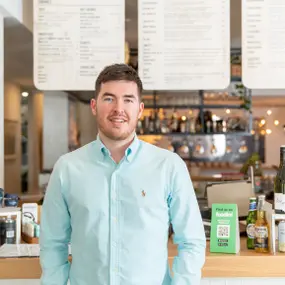
Dylan McDonnell is the Founder and CEO of Foodini, a dietary intelligence platform helping restaurants, hotels, and venues — including Major League Baseball, Bluestone Lane, Marriott, Compass Group, and the José Andrés Group — manage allergen compliance and serve guests with dietary restrictions. A former corporate lawyer who has lived with celiac disease since 2002, Dylan chairs the Guest Communication Board for the FARE Hospitality Alliance. He is also a mentor at the Founder Institute and LP at Mendoza Ventures.
