Apple Podcasts
 Spotify
 YouTube
 Family Office Networking & Deal Flow Strategy | Jon Bailey on Mastermind Groups.
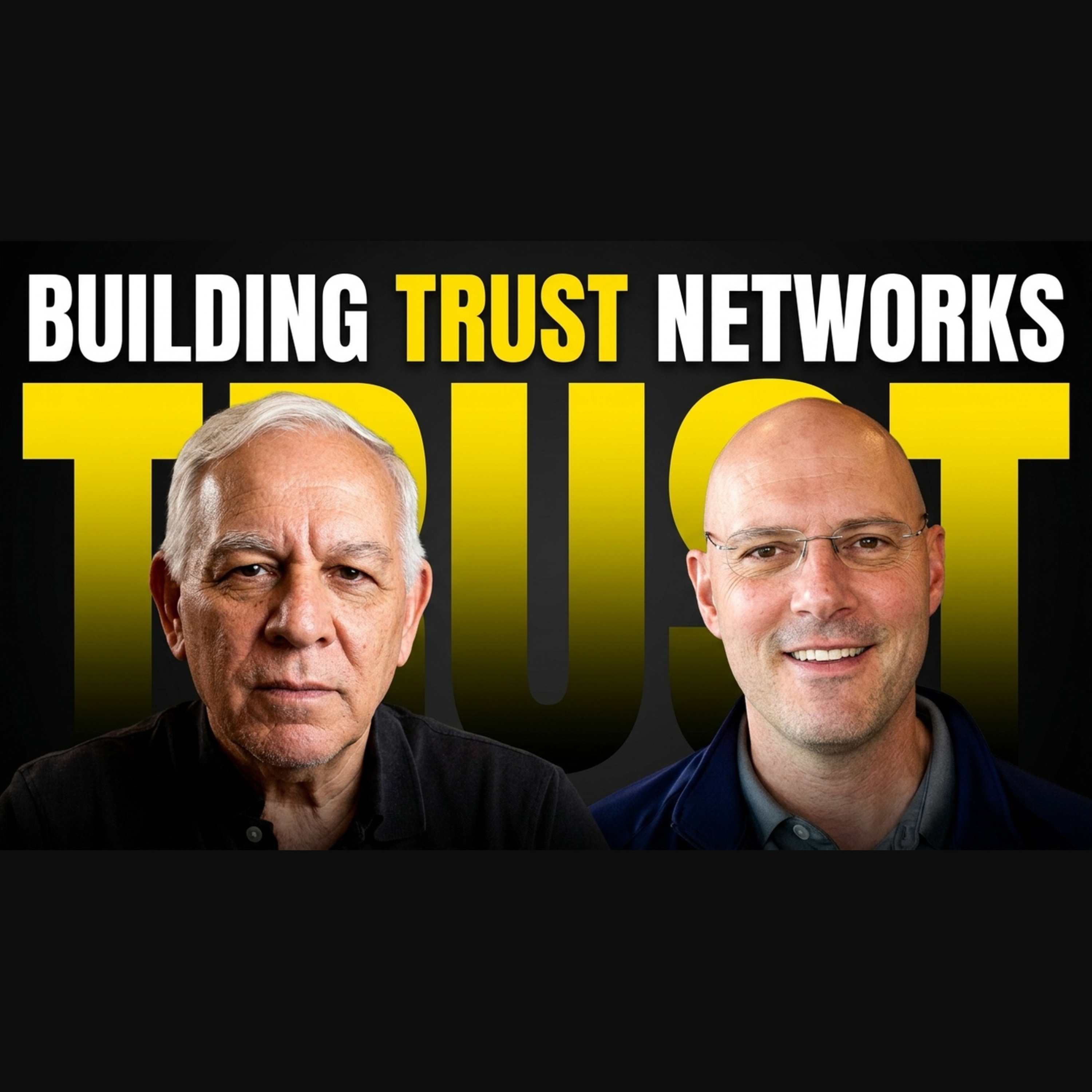
In this episode of Arthur’s Round Table, Jon Bailey shares how high-level networking and mastermind groups help family offices, CEOs, and investors improve decision-making, build trust, and generate better deal flow. The conversation explores how structured peer groups create a competitive edge through relationships, accountability, and shared experience.
- Why networking is critical for family offices and investors
- How mastermind groups improve decision-making
- The role of trust in high-level deal flow
- Why peer groups outperform traditional advisory relationships
- How CEOs solve complex problems through collaboration
- How to build meaningful, high-value relationships
Family offices and CEOs prefer to share opportunities with people they trust—not through open markets.
👉 This makes trusted peer networks a competitive advantage.
Many executives prefer feedback from peers who:
- Have faced similar challenges
- Have no agenda
- Understand their position
👉 This creates more actionable and trusted decision-making.
The biggest risks and opportunities are often invisible to the individual decision-maker.
Structured peer groups help:
- Identify blind spots
- Ask better questions
- Improve outcomes
Deal flow is not about volume—it’s about:
- Quality
- Trust
- Access
👉 The best opportunities come from relationship-driven ecosystems.
When high-level leaders are placed in:
- Safe environments
- Peer groups
- Trust-based settings
They are more likely to:
- Be vulnerable
- Share real challenges
- Make better decisions
In a world of increasing data and automation:
👉 Relationships, trust, and human insight remain the ultimate advantage
Jon Bailey is an entrepreneur and founder of executive mastermind groups that bring together CEOs and business leaders to solve complex challenges through collaboration. His work focuses on building high-trust environments where leaders can improve decision-making, accelerate growth, and develop meaningful relationships.
- Family office networking
- Deal flow strategy
- Mastermind groups and peer advisory
- CEO decision-making
- Trust-based investing
- Relationship-driven business
- Leadership and collaboration
🎯 What You’ll Learn🧠 Key Insights from Jon Bailey
1. Trust Drives High-Quality Deal Flow
2. The Best Insights Come from Peers, Not Advisors
3. Mastermind Groups Solve “Unknown Unknowns”
4. Relationships Outperform Cold Deal Sourcing
5. Environment Determines Outcomes
6. Human Connection Is the Real Edge
Want to learn more about Family Office Insights? Click Here.
Arthur (0:01): Hello. Welcome, everybody. Thanks for joining us for another episode of Arthur's Roundtable. So I have a new friend here on the program today, John Bailey, and I'm super glad and big high five to Kate who had referred us. And so, we've had a prior interesting conversation which caused us to have this one.
Arthur (0:23): So I hope you all enjoy it. So, John, thanks for doing this.
John Bailey (0:26): Oh, my pleasure. And it's such a privilege. Any friend of Kate's is a friend of mine. In fact, I just introduced her to somebody else yesterday. Another friend of mine that hopefully will invest into her fund.
John Bailey (0:40): And now I'm so grateful. She's a she's a great person, and and I love what she stands for and what she's trying to do. So it's my privilege, and I appreciate that. Thank you.
Unknown Speaker (0:52): Yeah. She's a good one for sure. Yeah. So let's start at the beginning, John, if that's okay. Tell us a little bit about your journey.
John Bailey (0:59): Yeah. Yeah. I the short version is I grew up really poor. Always thought I was going to be a veterinarian when I was younger. Was pretty fixed on that.
John Bailey (1:11): Worked at a clinic for three years, did my undergraduate degree in pre veterinary medicine. And it was about, you know, through a series of different events, one working during the summer to have enough to live off of while I was taking a heavy load for two, you know, the fall and the winter or spring semester, you know, I was usually doing like 22, 21 credits every semester. Was really like pushing hard to get lots done. And therefore I didn't have a lot of time to work while I was going to school. And I knew that I had to earn, you know, whatever I was going to make and for the year in the summer.
John Bailey (1:57): And, working at the vet clinic didn't cut it, as I told you. And so I went and knocked doors for a living, selling a pest control service for Orkin as a independent contractor and found that I was really good at it. And it took a minute. It took a while for me to realize how to sell because I grew up in a place where there wasn't a lot of bugs. And, so I really had to kind of convince myself that this was valuable and worthwhile.
John Bailey (2:32): But once that happened, it was like I just took off and did really well. I did that for a couple of years and then became kind of a regional VP type manager where I would travel all around the Western US to major cities and train and teach other people how to do what I figured out how to do. And by the fourth year of me doing that, I realized, I think I want to go do this on my own. That coincided with me figuring out that maybe I don't want to go, be a doctor and maybe I want to do my MBA. And so I started my own company and, and did that for a number of years and did really well.
John Bailey (3:15): Ended up getting married and, my wife committed me to live in Idaho. So, cause that's where she was from, you know, that's
Unknown Speaker (3:24): entirely a bad thing. Right?
John Bailey (3:26): Yeah. I I think I told you that joke. It's my own joke. Not everybody laughs, especially my wife, but, she wanted to live in Idaho, which was a two mile radius around her family farm. And honestly, it's a wonderful place.
John Bailey (3:42): I love being here now. Just didn't realize it, you know, when I first made the commitment that I was gonna live in this specific place. But I, I traveled a lot. We recruited, from colleges around the Western US. And then I ended up creating a, and doing a business out in Atlanta.
John Bailey (4:06): And we would, we contracted to be the marketing arm of a company out there. And then we would put on 2,000 accounts every summer and then age them for a year or longer. And then we would sell those aged accounts back to the original entity. And, you know, we get paid twice for that. It was a lot of fun.
John Bailey (4:31): I did that long enough to then realize that maybe I want to go do something else. And so I sold my business or my equity to somebody else and then jumped in and started, a scoreboard business. We did, we were putting in mini jumbotrons in high schools in seven of the Western United States. And that was really a really fun thing. That was back in like, 04/2005, when that, when we were really starting to invest and put in money into that, and it started to really take shape.
John Bailey (5:07): And we were getting national sponsors to put money into what we were doing and profit sharing that back with high schools. Some of the big behemoth scoreboard businesses learned from our model. They do what we, what we started doing back then. We, we learned it from, you know, the people putting in scoreboards in college and professional venues, but they weren't doing it at a high school level. We built our own scoreboards and put them in.
John Bailey (5:37): And, and that was, that was a fun opportunity. I really thought it was going to make me wealthy. And it would have, if 2007, 2008 hadn't come around.
Unknown Speaker (5:50): Like
Unknown Speaker (5:53): like so many others.
Unknown Speaker (5:54): Put the wind down of many people's sails.
John Bailey (5:56): Yes. Oh, absolutely. You know, it was one of those things where up until that point, I just thought whatever I touched turned to gold, and I was just young and dumb and didn't, you know, really naive, quite frankly. And so I learned a lot from the experience and super grateful for the hard lessons, but it's made me who I am, but I'm, it was pretty painful. I lost a million dollars in that venture and, you know, picked myself up, started a mobile marketing or a software as a service business and created my own company and realized that where I was living, needed to, I needed, I wasn't a very good online marketer.
John Bailey (6:43): So I didn't know that world, but I could sell. And so I realized I need to go and be around and plug into where all the business people are so I can build relationships and sell. And so I found myself traveling four hours, you know, away to plug into a bigger metro area. And that was a really good move. I, I looked back fondly on, on that because I plugged into a, an executive level networking group that really helped to accelerate my business and helped me have some good success.
John Bailey (7:23): And it also taught me the value of doing business differently than just hold hard sales, you know, like relationship building and nurturing relationships and that sort of thing. And so that's, I'm still in that space years later doing that kind of work, but in a different way. And, I, I continued to grow that business. In about 2010, I started going down to Utah, probably back in 2008, when I pivoted. And then I did, I was down there for about three years on a regular basis.
John Bailey (8:03): And then by 2010, I realized my little, my, my small children were starting to grow up and I didn't want to be away from them. I wanted to be a dad. I wanted to be a better husband, wanted to provide, but I also knew that I needed to, sell and make stuff happen. And so knowing all of those things, I had a pretty good customer base, but I knew that I wanted to bloom where I was planted and I was planted in Idaho. My, I still live here, keeping my commitment to my sweetheart.
John Bailey (8:36): So I basically said, got to plug into a group here. What I had been a part of the, the high level, executive networking group that I had joined that didn't exist in where I live. And at least back then it didn't. And so I decided I'm going to create that while I was running this other company. I just thought that needs to happen and that needs to be here.
John Bailey (9:06): So we started in 2010, reaching out to businesses that are, you know, 1,000,000 to three, four hundred million plus. And we would just go interact with all of these various CEOs and we would figure out the right people and who needed to be plugged in. And we would I call it ratcheting. We had to go get all the dominoes set up because when we first started, nobody trusted me. Nobody knew me.
John Bailey (9:34): They didn't know what I was actually doing. The irony of that is it took us a took us a few months to put that all together. But what was really interesting is that they all said to me, once we finally launched, we had enough people to come together for a first meeting. They all said to me, man, if I would have known it was going to be this good, we should have started a long time ago.
Unknown Speaker (9:54): Yeah. Right. Thanks for that.
Unknown Speaker (9:57): Yeah. Was like, but
Arthur (10:00): that Did you use the model of the prior executive group in some way, having learned from that?
John Bailey (10:08): Yeah, I had been a part of a couple at that point. And so we I actually, licensed the the brand, the name of one of them, initially, until that relationship didn't work out. But I tweaked it my own, made it my own in a lot of ways because the first model, there were some deficiencies in what they did, even though I loved it and loved the people. I just wanted it to be slightly different, more effective, more, not just focused on only about just relationships, because I felt like if somebody is going to join a group, nobody wanted to just pay money to get more friends, you know? Right.
John Bailey (10:56): They wanted to, they, they would come and be a part of something because they wanted to do more business. Wanted to, there was something that they were looking for besides just friendship. And so we, our focus was not just, let's not just talk about, you know, who you are and your hobbies and your interests, but let's also talk about your business background and what are your needs? What are your core needs and how can, how can we serve you as we get everybody together? How do we help facilitate people finding value in their spending time together?
John Bailey (11:34): Right? And that became really our focus was accelerating solutions and connections that would really be beneficial. So we would listen intently to everybody's need, and then we would find ways to matchmake and put them in the right teams. And every month they would get to know one another and that sort of thing. Anyway, yeah, it was a fun model.
John Bailey (11:58): And we grew in Eastern Idaho and over in the Boise market and probably at our high watermark, we were probably, you know, all members rolled into, you know, one number, about 170 to 200 people at one time.
Unknown Speaker (12:15): Sounds like a lot for that area.
John Bailey (12:17): It was all I could do to get to that point. So yeah, it felt like it was about the best we were going to do. And, and that was probably in, '17 is when we kind of reached that point. And then I found myself being pulled into some other directions. I was, I was put on a school board locally and I was, had some other responsibilities that, I was tasked to help out with.
John Bailey (12:51): And so I hired, I had several employees and I hired people to go help me. And little by little, it started to get a little bit diluted and not as good. And by '19, I was being pulled to go work for somebody else. Some old business partners, the scoreboard guys, they wanted me to come help them grow a new business that they had just sold to a big company. And I said, you know what?
John Bailey (13:20): I need a new flavor. I, my ADD is probably, taking control at this point in my life, but I was like, yeah, I'm looking for something else. And what do I want to do that's exciting and not just the same monotonous thing over and over again? And so my scoreboard or my, software company by that point, by '19, I had lost a couple of my biggest clients. And so that business kind of got put on the shelf as well.
John Bailey (13:52): And I found myself focused on doing some other things. And when I got recruited at 19, to go do something else, I ended up selling that business. Did well. It was great. I stepped away, went and joined this other outfit.
John Bailey (14:13): And I realized that I'm not having been an entrepreneur and working for myself for a lot of years. I realized
Arthur (14:22): Hard to go back and have take a job.
John Bailey (14:25): It was it was, I just never had played in that space as an adult of being an employee and having other people tell me what to do. I was always the rainmaker, always the one that would make everything work and happen and knew how to get stuff done. And I, I had such an ownership mindset that I couldn't, I couldn't shake it. So I brought that in, which is why my former partners wanted me to be a part of this company. What I didn't realize when I took the opportunity was I'm not very good dealing with a lot of bureaucracy and a lot of, you know, multibillion dollar publicly traded bureaucratic entity that had rules for every little thing.
John Bailey (15:14): And when you could go to the bathroom and whatever, like it was just, it felt really silly. That's a little bit of an exaggeration, but I was like, this is not a world that I just didn't feel like I could go do what was the most effective high value activity at the moment because I had to follow all of these other structured protocols. And, and I understood why some of those needed to be there for the people that didn't come from the world that I had lived in. But for me, was really stifling and hard to live in that space. And so after three years of being there, I said, I think I'm done.
John Bailey (15:55): And they actually, it was unfortunate. They had an exit to a venture capital firm out of New York and they tried to sell a lawsuit with their exit of of selling, you know, 75% of their equity and nobody wants to buy a lawsuit. That Right. That deal got squashed, and and the company that owned us said, well, we're not gonna put any more money in. And I found myself going, really?
John Bailey (16:26): You're gonna lay me off? I vowed at that moment back in the '21. Why would I ever want to be an employee?
Arthur (16:38): You know, John, the way I, I had a similar experience, although I had been an entrepreneur first like you did, and then had made, exit money and someone begged me. Unlike your case, you knew the people, someone I didn't know begged me to come in for a to take a job. And I was already free. Like, I had enough money to be free. Right?
Arthur (17:08): And, I ended up taking the job because the deal was too sweet. And within, just over a year, I was making more money than the president of the company, and it was a huge company. And then I got fired for making too much money. Right? So that was my only, experience of being and it was a it was a very bureaucratic, very stodgy old, company, but it was a great experience.
Arthur (17:45): I mean, but never to do it again. What I said then was I'm never going to take something that where somebody else can take my name off the door. Right.
John Bailey (17:57): Yeah. Yeah. That's, that was kind of my experience. Like I thought, you know, I, I had had a lot of people tell me, you know, there's a lot of security in being a W-two. And, you know, the irony of all of this was I started building my home before I sold my company.
John Bailey (18:15): I ended up selling my company and because of the transition and the fact that I was a W-two, the bank was like, oh, you're a W-two? Oh yeah. It's easy to get a mortgage. And I had a
Unknown Speaker (18:30): nice
John Bailey (18:33): home. I have a nice home. And so it was really interesting going through that whole process, realizing that banks love w two ed employees, that they don't love entrepreneurs that are starting up new companies that are
Arthur (18:52): No, they don't. They like a recurring income that they can attach if need be.
John Bailey (19:00): Yes. Yes. I, that was an interesting lesson for me too, because I'd always just done my own thing and I had never, I just had never purchased a home being an entrepreneur, up until this time. And then I built my dream house right in the middle of all this transition. And so I've just found myself going, oh, this is, this is an interesting game.
John Bailey (19:24): But I, what, what was really even more, kind of an for me was in '22, I was trying to figure out what I was going to do next. And, know, the housing market at the '22 was still really good. And I thought, well, I've got some money. I'll go build a spec house. And I did, with some new technology.
John Bailey (19:49): It was a steel foam concept, Great company out of, Provo, Utah. They were built some had some technology and had some
Arthur (20:00): I think I've seen that company. I think I saw it in tribe angels. He came and spoke about it. Yeah. Ryan Morrow.
Unknown Speaker (20:07): Yeah, think so. Yeah.
John Bailey (20:10): Guy. Just a, just a good, good guy. And I, I thought, okay, look, this is pretty cool. And lumber and prices and everything in '22 was really high. And, and the cost for me, I'd never been a builder.
John Bailey (20:26): I didn't know the first thing about construction, you know, I took some woodworking classes in high school. That was, that was my construction world. Right?
Unknown Speaker (20:35): And
John Bailey (20:36): I built my own home in about five months, with a screwdriver and, you know, was like a Lego set and you just put it together And it was really well insulated and it was great place. And I put a lot of money and energy and effort into having this thing be awesome. Only to have at the end of, you know, in the '22, like, oh, the market has gone completely South. Now, what do I do? Not going to get it out of it.
John Bailey (21:08): I was hoping, you know, what I'd even put into it. And, another really valuable hard lesson that I had to learn in the process. I just actually sold that home. I just Airbnb, I just said, what if it's not going to sell, then I'll just sit on it and use it as an investment property and have it be a short term rental. So we made some money that way, but I was excited to sell it to a buddy.
John Bailey (21:36): He had some kids that were going to college and needed a place to live. So it was, it was, it ended up working out and, and, I'm glad the way it ended, but I'm, I realized I'm not a builder along the way.
Arthur (21:52): Sometimes you have to stick with what you know, or at least know part of, right?
John Bailey (21:57): Oh, and I had done enough different things that I just felt like I can figure this out. You know, this is a new thing. I'll figure it out. What I realized was, you know, by then I'm starting to get up in age and, you know, I didn't have any hair even a few years ago. It's been gone for twenty.
John Bailey (22:14): So I'm like, yeah, I'm, shouldn't be trying too many more new things. I should probably just stick with what I'm really good at doing. And the irony was that I had a lot of my former members that were a part of my original group that I put together in Idaho. They started calling me because the company that I had sold to ended up kind of shutting things down and handing it over to somebody else that most people didn't love. And so they started calling me saying, John, when are you going put our group back together?
John Bailey (22:50): You know? And I told them all, I had 15 people chasing me saying, let's do this. Let's put it back together. And I was like, you don't need me. Go do it yourself.
John Bailey (23:04): But it was in that moment, of working through that process that I found that what I, what I love to do, what I'm good at doing, and where I can make a really decent income is at the crossroads of all of that. And so I decided, okay, let's let's, it was almost like, said, you're really good at this and, and you should do this, go lead the leaders. And I said, well, okay, we'll go give it another shot. So I put the group together. We had about 30 people the first time we, but we changed the model to more of like a Vistage EO, YPO, more of a mastermind concept where we were solving problems and not just networking.
John Bailey (23:55): And that almost all of my former, you know, members of my first group all said to me, this is way better. Why didn't we start with this? And my response was, well, I didn't know. I didn't know. I wait for me a minute to figure this out.
Arthur (24:13): Help us understand, give us an example, if you can, without revealing anything you don't want to reveal, solving problems. What's that mean? And let me also just throw in an editorial that I was a member of a group in New York City that was probably the best group, even though all those others existed in New York City that you just mentioned. And it was put together by a friend of mine who's a master networker. In fact, he wrote a book called One Phone Call Away.
Arthur (24:41): And, he it's really a great story because, the how I met him is I was a shareholder in a bank that was just getting started in it with a first shareholder meeting, 300 people in the room, and, this CEO had just finished and said questions. And the first guy that, late raised his hand was this guy that started this group and come to and then I the banker that I was with, I said, who was that guy? Because I wanted to know who asked the first question. Right? And so part of the chapter in this book, one phone call away, was the story about how we met because he asked the first question.
Arthur (25:26): And so one of his axioms was you always ask the first question. Right? So, anyway, part of the the magic of the group was what I think you referenced earlier is that the group would go around and everybody would introduce themselves and they were CEOs and rich people and, you know, it was, you had to qualify and be referred in all that kind of stuff. But when you when we had your in person meetings, people would, it was, here, here's who I am, and here's what I need. Like, they would actually say, here's what I'm looking for, here's the problem I need to solve.
Arthur (26:02): Or I'm looking for more business. There's could be just that. And here's the type of business. So is that the type of problem you're solving?
John Bailey (26:10): Yeah, we, and we typically don't say, hey, come and sell your business so that you can get more buyers. But some people have done it different strategies and it's really effective. We just try to say, look, don't be, don't lead with that. Right? It's okay if you guys do business together.
John Bailey (26:28): What we want you to lead with is what are you trying to solve for Over the, you know, the last fifteen years of doing this kind of work, one of the things that I found is when you get really good people coming together to collaborate with one another and you create an environment where they feel safe being in the room with everybody else, then all of a sudden they can start to open up and really be vulnerable and really kind of talk about the hard things that they're working on or working through. And that that's a really important component to this because we all have blind spots. We all have things that we can't see or can't solve on our own. That's why we're in the problem that we're in. And, and if you can be surrounded by other good humans that have been there and already done that and overcome that, that can counsel with you, not tell you or give you advice of what you should do, but to ask the right questions to your point and pull it out of you.
John Bailey (27:35): You'll see what you're doing. You'll see your blind spot from a different perspective that's been hidden. And typically when it's done in a, in the right kind of framework or the, a more appropriate way, as opposed to, Hey, you need glasses. You should wear my prescription. You know, it's like, let's figure out your own prescription, but you've got to be the one that figures that out.
John Bailey (28:00): Let's just ask the right questions. The person that's on the hot seat, as we call it, they're, the likelihood of them actually taking ownership of the solution and implementing it is significantly higher. And, and the outcomes are way better when people own what they're solving for, because they're answering questions surrounded by other experienced and smart business leaders. So it can be, we can solve for lots of things, business or personal, mostly business. Most of the time it's business.
John Bailey (28:44): It could be marketing. It could be legal. It could be accounting or investing. It could be capital and how to, you know, figure out banking better. It could be, hey, I'm gonna buy another business that's, you know, another $20,000,000 business.
John Bailey (29:00): And, because I think I have to grow, and I think I have to, just grow or die, basically. And we would ask questions like, why do you want to grow? And purify their motive and really purify things. And then they would look at it differently, and then they would be less emotionally attached and more logical and more analytical. And they'd go into it with less of a hair trigger and more of a, if, if all of these conditions are right, then I'll do a transaction, you know, as opposed to, I just, I think I have to just own this business at whatever cost.
John Bailey (29:42): That we just, I've just seen lots and lots of different conversations and challenges and they're, and they vary. One of the gentlemen that I just had a conversation with that I wrote about on my LinkedIn profile, he for years, probably the last five to ten years, he's had this, I don't remember exactly, but it's been somewhere in there. He's had the same business coach and his coach has been telling him things that he needed to do. And he's implemented a lot of the things that he had confidence or felt he had confidence in doing. But some of the things that he was being told he should do, he was very hesitant and he hadn't taken action.
John Bailey (30:25): And he finally consented to join this mastermind group that we had. And after six months of him being a part of that, I said to him, give me a feedback. Like what's your experience been like? And he said, John, I can't tell you what this has done for me. I wish I would have not taken so long to plug in.
John Bailey (30:48): He said, I've, all of these businesses that we're in here, we're doing more rev annual revenue than what I was doing. And in some cases, double or 10X. And he said, I didn't realize how valuable their voices would be to me, but I, I valued my relationship. I trusted all of them. As I walked through and they helped me see what I needed to do.
John Bailey (31:20): I told them here's kind of my options. This is what I'm planning to do. But I don't know if that's the right way. What do you guys think? And everybody said, well, we would do the same thing that you, propose that your coach said you should do and that you think you should do.
John Bailey (31:36): We absolutely would go do that. And here's why. And they gave him all this background and all the confidence. Right? And he went and implemented some of those things.
John Bailey (31:45): And then he started to have way more success and have smarter people to run his company for him than, you know, and he had paying a massive salary was really scary. And then all of a sudden he found that, wow, my life is easier and this is better and I'm growing and my company's improving. Why, why didn't I join a mastermind group before? So there's, I could tell you story after story, but, but it's things like that. The, the, the humanity part of what I do is that I love is that we all have our own set of challenges and struggles and obstacles.
John Bailey (32:29): But the beautiful part is when you get really good humans that are givers together, they just want to help and serve and, and bless. And for me, I've said this and I've heard it from others. So I'm parodying, but I'm also a big believer that we are the answers to one another's problems. And if we can just spend time in the room and have a lot in common and build trusted relationships, out of that comes some pretty amazing things.
Arthur (33:03): So so, John, this is super interesting because if you don't mind, I'll editorialize a little bit that the thing that I hear most often from our members, which are largely single family offices, and there's lots of them, is I want to meet other single family office principals. And the reason why is that there there's trust issues that need to be established. And then once that happens, they're more likely to take a, not necessarily advice, but suggestion from somebody like that, who's a peer and ask them, I have this fact pattern. Here's my problem. What did you do about it?
Arthur (34:03): And that is far more interesting to this group of people, that feedback loop, than going to a lawyer or an accountant or somebody else that has an agenda to sell something. Not that there's anything wrong with that, but it really resonates. And it's the number one thing that I see in terms of the desire to connect with people, especially if they're in the same, not necessarily all single family offices, but mostly, you know, ridiculously rich people. Right?
John Bailey (34:40): Yeah. I would, I would say it like this, Arthur, why do we, why are we really picky about one who we let in? They have to be within a certain revenue place, 20,000,000 to under a billion. If you're over a billion and running a company that's bigger than a billion, you probably need to be a part of a different group. But we still, even in that, that's a really big range, 20,000,000 to 999,000,000.
Unknown Speaker (35:10): Yeah.
John Bailey (35:11): We'll still silo and and put similar sized organizations together. Yeah. Why? Because when we people want to be able to trust. And if you're, if you're too big, you don't understand my problem.
John Bailey (35:28): And if you're too small, now all of that said, there's really good perspective that can be gained, but we'll do a lot of collaboration and mixing various industries and sizes. But we also know that we especially have to keep them similar in size, sometimes similar in industry, depending just so that they can get some really good strength in the in the relationship department so that they can have good initial outcomes. There's lots of reasons why CEOs don't want to go in and tell all of their subordinates what they're dealing with.
Unknown Speaker (36:10): Yeah, totally.
John Bailey (36:12): They also can't do that with their board. They can't do that with some of their friends or family because most people like, like here's a, here's a case in point. This may seem like a really trivial problem to somebody at one level versus another, but you have so much money that you've got to deploy or you've got to invest, or you've got to, or you're going to get taxed or you're going to whatever the case is. And people want to be able to bounce ideas, but they want to be able to talk to people they know they can trust and they can, that have, that have solved some of those problems that they're now dealing with. They can't always talk to just anybody because some people can't relate.
John Bailey (37:01): Some people are going to think, you know, bad of them. Like there's this whole mix. And so we have
Arthur (37:09): poor you, you have too much money and you have
Unknown Speaker (37:11): to go. Oh yeah. First world problems. Yeah.
Unknown Speaker (37:15): So
John Bailey (37:16): life is so hard. It's not that it's, they're trying to solve their where they're at. They're trying to solve for something, but they need a trusted peer that is an equal that's already been down the road before them. It's it doesn't matter. So case in point, let me back up for just thirty seconds.
John Bailey (37:42): While I've been on this journey, I got introduced to somebody who runs, I think it's in, the Carolinas. They're they go into prisons and they work with, inmates and they help facilitate a mastermind group in prison. And what he told me was these people finally can relate with one another and because where they're at and because of the structure of how they structure the meetings and the conversations, they're able to help each other out of the mental fog and the hard place that they're in to get to a better, healthier place to deal with what they're up against. And I thought, it doesn't matter if you're running a multimillion dollar or multi $100,000,000 company or a billion dollar company, or you're in prison or somewhere in between. We all need people to collaborate with to help us figure out how to get unstuck.
Arthur (38:50): Right. Well, you know, my first reaction to that is, is why did you choose that business to be in Or did it choose you? Right?
John Bailey (39:02): Well, some of it some of it was, I think, you know, ever since I was young, I've always had this weird, innate desire to be a leader of leaders. Right? I don't know. I don't know where that came from. I don't I don't know.
Unknown Speaker (39:20): By the way, John, it wasn't directed towards you. It was directed to your friend that is in the business of doing masterminds in prisons. It's like, okay, how did that come about? Like Well, I think he's good. I think he's doing right.
Unknown Speaker (39:32): Prison himself, and he got out, and he was
Unknown Speaker (39:34): There's the answer.
John Bailey (39:36): Wanted to get back. And then he realized, I don't, I can't speak for his story, but yeah, I absolutely could. It was an moment for me when he told me that. And I was like, it's just part of human nature that we want to be able to connect with other people.
Unknown Speaker (39:55): No doubt. No doubt.
John Bailey (39:57): And so for me, you know, part of my own journey was realizing that, Hey, you know what? I'm, I'm pretty good at this. And I love, I love people. I love really, really good human beings even better. It's so fun to be around people that are inspiring and motivating and, and doing great things.
John Bailey (40:22): And so a lot of our audience, they're, they're always the mentor, right? They're always the one that's the, the everybody else wants access to. And when we bring them together, doing what we do, they're just surrounded by a bunch of equals and they don't, they don't need their money and they don't need their influence because they have their own. And all of a sudden everybody can be really authentic and they can let their hair down and they can really talk about what it is that they're dealing with in a way that's meaningful and productive. And so we create, you know, we're, we figured out how to go and create really fun environments that will allow us to accelerate the trust building process.
John Bailey (41:11): And, you know, we'll spend three or four days together in person doing some really fun activity while we also curate different teams doing mastermind sessions or going on a hike or conversations at the dinner or breakfast or lunch table or whatever it is that we're doing. Competition, like almost every single executive that I know has a competitive bone in their body. So we'll do things like pickleball or what, like just various competitions. And they get into it and they're competing and they're laughing and having fun. And so they get to see the 360 degree, you know, personality of one another that also makes them realize that these guys are just human beings.
John Bailey (42:04): And it's in that, that they really bond and connect. And then from that, now I can really be open up and be vulnerable when I'm talking about, you know, this hard thing that I'm dealing with in my company that maybe I'm embarrassed by, or maybe I'm not really super proud of, but I have to deal with and I've got to solve, or it could be a family issue, whatever. Like there's just so many things that come up, but it's okay. It's a safe place. And we don't think less of one another.
John Bailey (42:36): We just rally around and say, how can we support and help you and get you through this?
Arthur (42:41): We all have the, these issues. Are you, do you find yourself, teaching, for example, the Socratic method to the members so it helps them with the other members and asking the right questions or just naturally comes about because of where they are in their lives and journey and business?
John Bailey (43:04): We still we still will help set up some some boundaries and try to create the the structure because you have seasoned people in there. And then you have some of these really young up and coming business leaders that are doing great things that don't have a lot of experience or tenure. So just as a basic practice, we just will still walk through like how to, how to tee it up. Like we will say, Hey, don't give advice, but it's okay to share your own personal experience, or it's okay to ask questions. Think of it in the, like, if you want to tell somebody something, treat it like jeopardy, right?
John Bailey (43:46): Ask it in the form of a question. But not necessarily a rhetorical question, like be sincere and really want to understand the situation. Ask just lots of questions and clarifying questions to dig, to get to the core issue. Yes, we, we absolutely find value in that because then everybody understands kind of the rules of the game and it helps us avoid some real awkward moments. And it allows things to just kind of smoothly flow and, and go faster because we put a few boundaries in place at the beginning of when we know
Arthur (44:27): Totally makes sense. Yeah. So I I happen to know because we talked about it, thanks to Kate, is that there's been at least two I know about. I'm sure there's more interesting get togethers with your members. One was a trip to Deer Valley, which was just a little while ago, I guess.
Arthur (44:52): And one coming up, which is, you know, dear to me, which is, you know, I've been riding motorcycles almost my entire life. That sounds like a lot of fun. Can you talk a little bit about the events?
John Bailey (45:04): Yeah. Yeah. So, and then the one that we did last fall really was kind of our kickoff event. We went down to Daytona and went to a NASCAR race and had, almost 20 people go with us. And that was a, that was a really fun event.
John Bailey (45:23): Our most expensive one so far, but it was, I'd never driven a race car around, you know, official international speedway before. And I realized that being six'four and way taller than most, I don't fit in a race car, but
Unknown Speaker (45:42): we we
John Bailey (45:44): put these events. They're typically, three to four days long. We usually are about half half a day, the first day, half a day on the last day. And in the middle, you know, it's the full day, obviously, plus some sleep. And those events, like the one that we just did down, near you, was supposed to be a snowmobiling event, a month ago.
John Bailey (46:11): There was no snow, anywhere in the Western US. And so, we had to call an audible and do some other fun things, but we had enough people that it was a lot of people canceled on us just because they're, they wanted to come snowmobile. But we still had 10 people come do this event with us. And, and we did, we had a lot of fun. It was a really, really good thing.
John Bailey (46:40): Guys that had had eight, nine figure exits, running $8.09 figure businesses. It was really good. The one that we have coming up that you hinted at, we're going to take, and I've got about 10 spots left, about 25 people. So I still have, you know, we've got 15 people committed and we're going to take them on a, on a adventure bike, which is a cross between a road bike and a dirt bike motorcycle. And we're going to take them on a seven hour, well, six hour ride with a one hour lunch in the middle and go over the mountains and through the woods and, and on pavement and off pavement and, right near the river and all of this stuff.
John Bailey (47:26): And it'll be a really fun time. The part that I'm most excited about is that we'll all have the ability to radio and have our headset and ear earphone so we can have conversations while we're driving these bikes, riding these bikes to really get to know each other for the first part. And then, we'll go up there and we park our bikes at this little parking lot next to the Salmon River, and we jump on a jet boat and we and the jet boat takes us to the lodge. We'll stay at the lodge for three nights. Great food, home cooking, you know, got some great people that are going to provide all that.
John Bailey (48:10): It's a really amazing facility. And we'll take jet boat rides and other fun things that we'll do. We've got some speakers coming in. We've got some trainers that are going to come in and teach some business principles, a gentleman that has been a fortune 500, consultant for the last twenty four years. He told me he worked with the 188 of the, of the 500 on the list.
John Bailey (48:37): So he is absolutely qualified to teach us stuff. So we're super excited about that. And then on last day, it's a four day event. The last day we'll actually ride back a different way to come back to, Idaho Falls. So it'll be a really fun, high adventure type event with the people that I know that are committed right now.
John Bailey (49:04): Just phenomenal people running 8 and 9 figure businesses. And that's the part that's fun is really building meaningful relationships with these guys. We use this, you know, a side note, we use this experience while, while our participants are vetting us.
Unknown Speaker (49:24): You're vetting them. No, I get it. See interaction, how they play with others, the whole thing, right?
John Bailey (49:30): Yeah. We're also reciprocating the vetting process to see if there's a mutual fit. When there is, then we'll give, you know, personally invite them to be a part of our inner mastermind group, our inner circle. And that's a different model, a different track that we do because we're pulling people in from all across The U. S.
John Bailey (49:52): We have some in person meetings, you know, week long retreats. But then we also do a lot of monthly like follow ups and, and, coaching and, and accountability sessions and different things just to make sure that people are solving and pushing and growing and improving and becoming better, better business leaders, better humans, better family members, all of the things that are our values. We joke about the seven F's. I don't know if I told you those, but the seven, our values are these, we call them the seven F's, family, faith, friends, financial freedom, fitness, fun, and philanthropy.
Unknown Speaker (50:40): Good for you. So
Unknown Speaker (50:42): we've we we hit on a lot of those.
Unknown Speaker (50:45): I thought you were gonna say philandering, but that's not where we are going. Right?
Unknown Speaker (50:49): No.
Unknown Speaker (50:49): No. That was the only epileptic left.
Unknown Speaker (50:55): Yeah. It's just enough of a, like, a second. Philanthropy is not spelled with an F. I know that's something funny.
Unknown Speaker (51:01): Yeah. It's clever. I like it.
John Bailey (51:03): That's what makes it so that you won't forget it. Right?
Unknown Speaker (51:05): Yeah, exactly. Yeah.
John Bailey (51:06): One of the reasons why that's so important to our people is that at the end of the day, we're all everything we do. I always drill it down. Everything that we do as humans is to, we do it because we think it's going to make us happy. Right? And sometimes we choose wrong.
John Bailey (51:26): Sometimes we, we think it's going to make us happy. It's only temporary. It's not long term joy or fulfillment. And so I'll, as I get to know people, I'll always ask them, why do you do that? And I'll just keep drilling.
John Bailey (51:40): Why, why, why, why, why? And they eventually they're like, because it makes me happy. Okay. Well, that's where I was trying to get to. And one of the things that we know is that when you serve other people, you have a lot of joy from doing those kind acts.
John Bailey (52:00): And so we value philanthropy in a way of real structured giving. When you have purpose and meaning, your life is more fulfilled and you're just more at peace and happier. And so being surrounded by other people that that's important to as well, It it's inspiring. It's really motivating and the insights and the recommendations that other people like you, or like that can have the collaboration, the projects that you work on, the good things that are getting done. We often say our, our whole hope, our whole purpose in this organization, it's, it's not about the money.
John Bailey (52:48): It's about doing more good and making a difference, having greater impact in what we're wanting to see in the world. Right? Build it, go make it happen, but do it with really good people that become your best friends.
Arthur (53:03): Yeah. And, I didn't make this up, but what is it? Kind has no cost, but is priceless, right?
Unknown Speaker (53:13): Yeah. That's so true. So true. We could we could we could sure see a lot more of that in the world and be be glad about it.
Arthur (53:22): Yeah, there's a there's a lot to be said for having a mindset. And it's consistent with being in service, right? It's not, it's not hard to do that. You just have to sort of change your lens. And sometimes
John Bailey (53:41): for a lot of the people that we're looking for, it comes naturally most of the time, not always. Yeah. You know, the people that we wanna interact with and build relationships with and and and invite to come get to know us are, that's part of their mindset. If it's 51%, we're excited to see what we can do, you know, that we just say, look, you do, we want people to care as much about others than they care about themselves or their own projects that they're working on. And, you know, some of it is subjective.
John Bailey (54:25): We go through an application process and some rigor, and we try to get the referrals. Like we try to go do all the due diligence on those that come. But at the end of the day, that's the reason we require people to come to an in person event is just so that we can get to know them.
Unknown Speaker (54:40): Feel the vibe. Yeah.
John Bailey (54:42): Yeah, that's right. And ultimately we're gatekeeping on a really, really special core group of executives and we have to protect that. And so being responsible for that, I, I feel like being around people, I can get their vibe and see if they're a fit for the culture I'm trying to create.
Arthur (55:05): So, totally makes sense. This has been as expected, super fascinating, and I'm so glad that we got a chance to meet and talk and do this, John. And, Well,
Unknown Speaker (55:18): yes. And I need you to tell me how I can serve you.
Arthur (55:22): You already have just by doing this and then us having a prior conversation and the few people that you've kindly introduced. But, I appreciate you offering once again.
John Bailey (55:34): Well, and I am serious about having you come on to our podcast. We'd love to explore that with you as well at another time. So
Arthur (55:43): I think I told you Kate was she's so kind. She was clever and said, well, wait a minute, you're interviewing all these cool people. How about if I jump on your podcast and interview you? And I said, sure, let's do it. So we did it.
Unknown Speaker (55:56): It was a lot of fun. Yeah.
John Bailey (55:58): Yeah. That, we would welcome that because we, you know, exposure to our audience with other really good people is something that we love to do. And, and, I'm not great at it, But we've been trying to do that little by little and need to keep up the good work. So Yeah. That part
Unknown Speaker (56:16): of what you said, I don't believe, but that's okay.
Unknown Speaker (56:22): We're getting there. We're
Unknown Speaker (56:24): getting there.
Unknown Speaker (56:25): It's been my pleasure.
Unknown Speaker (56:26): Thank you so
John Bailey (56:28): grateful for the consideration and and the the new relationship with you and excited to stay in touch and see where this can go.
Arthur (56:36): Yeah, for sure. Looking forward to it. And, I I might change my mind about moving things around and coming on your motorcycle trip. So we'll see.
John Bailey (56:45): We'd love to have you if you can make it. If you would All the gear and everything? We'll provide the gear, and the bike and the helmet and all of the stuff. You just have to show up with your suitcase of, you know, whatever, four days of clothes. And then as soon as you show up, then we got, we got you covered completely.
John Bailey (57:06): There, there are some that say, I'm going to bring my own bike, but almost everybody's gonna, we're renting bikes from a local
Arthur (57:15): You're renting the right kind of bike for the terrain that you're going on.
John Bailey (57:18): Oh yeah. Yeah, absolutely. Yep. So yeah. And if you know of any great people that want to join us that you think would be a fit for what we're looking for, absolutely.
Arthur (57:27): Have a couple in mind. Yeah. That not only would enjoy this, but would be a good fit for, yeah. That could be fun.
Unknown Speaker (57:34): Yeah. Yeah. Okay. Well, keep me posted. I'm not gonna hunt you down.
John Bailey (57:38): There's no high pressure here. Just know that there's an invitation, and I happen to know a lot of the really good people that are already committed and you would fall in love with them. They're just great humans.
Unknown Speaker (57:49): So Okay. Sounds great. Yeah. All right, Sean. Thanks for doing this.
Unknown Speaker (57:54): All right. Welcome. Thank you
Unknown Speaker (57:55): for joining us today.
Unknown Speaker (57:57): Yeah. My pleasure. Thank you.
Unknown Speaker (57:59): Okay.
Unknown Speaker (58:00): Okay. See you. Bye.
Unknown Speaker (58:01): Until next time, everybody.

Jon Bailey brings a seasoned perspective as an entrepreneur for the last 25 yrs. He’s facilitated various executive level networking groups for 15 years. He leverages his connections, his love of serving others, and his propensity to make things happen to facilitate meaningful actionable outcomes for those around him. Currently the owner of Fluence Circle, Jon has established himself as a respected advisor and connector who has the gift of accelerating the trust-building process between strangers, as well as speeding up the solutions that come in the form of other people.
He, with his wife and four children are privileged to live centrally located between a small town university and three world-famous vacation spots (they enjoy a spectacular view of the Grand Tetons). His family enjoys the outdoors, from hiking, to snowmobiling, to riding horses and kayaking. If there’s one sport they’re involved in as a family – whether winter, spring, summer, or fall – it’s basketball.