Apple Podcasts
 Spotify
 YouTube
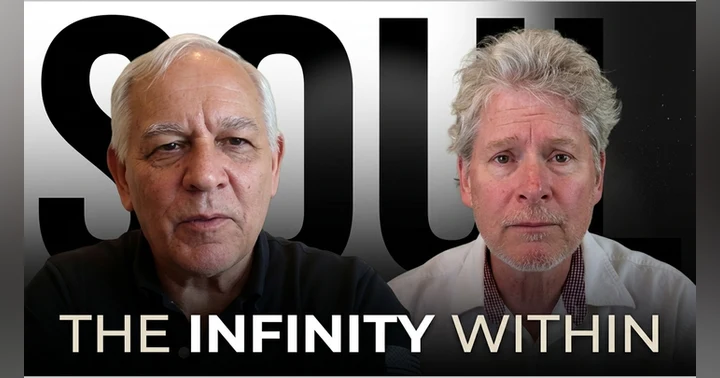
 Purpose, Mindset & Human Potential | Kris Land on The Infinity Within
In this episode of Arthur’s Round Table, Kris Land explores purpose, mindset, and human potential through the lens of philosophy, personal experience, and his book The Infinity Within. From early entrepreneurial success to deep questions about meaning, belief systems, and consciousness, this conversation challenges conventional thinking and invites listeners to rethink how they approach life, goals, and personal growth.
🎯 What You’ll Learn
Why achieving goals doesn’t always lead to fulfillment
How belief systems shape perception and behavior
The role of purpose in long-term motivation
How mindset impacts outcomes and decision-making
Why questioning assumptions can unlock growth
How different philosophies converge on similar ideas
🧠 Key Insights from Kris Land
1. Achieving Goals Doesn’t Guarantee Fulfillment
After early success, Kris found himself without direction.
👉 Without meaningful goals, people can feel lost—even after “winning.”
2. Purpose Must Be Ongoing, Not Finite
Kris reframed his life around three continuous goals:
Have fun
Learn
Do neither at the expense of others
👉 Goals that can’t be “completed” create sustainable momentum
3. Belief Systems Shape Experience
Whether discussing religion, science, or philosophy:
👉 What we believe determines how we interpret reality
4. Many Philosophies Point to the Same Core Ideas
Across:
Christianity
Buddhism
Ancient traditions
👉 The underlying messages are often more similar than different
5. Questioning Assumptions Creates Insight
Kris developed a framework of questions to explore beliefs about:
identity
purpose
existence
👉 The goal isn’t to prove answers—but to expand thinking
6. Life Can Be Viewed as a Game of Growth
Through his “game construct” idea:
Individuals operate within rules, constraints, and cycles
Challenges are part of the design
Growth comes through navigating difficulty
7. Early Conditioning Shapes Perception
From childhood, people are taught:
what is “real”
what to believe
what to ignore
👉 These patterns influence how we think for life
8. Expanding Perspective Unlocks Potential
Exposure to new ideas, experiences, and environments:
👉 Expands how individuals think, decide, and act
👤 About Kris Land
Kris Land is an entrepreneur, author, and founder of multiple companies, including ventures that resulted in mergers, acquisitions, and an IPO. His work explores human potential, belief systems, and the nature of purpose, culminating in his book The Infinity Within.
📊 Topics Covered
Purpose and meaning
Mindset and belief systems
Human potential
Philosophy and theology
Personal growth
Consciousness and perception
Entrepreneurship and life lessons
Want to learn more about Family Office Insights? Click Here.
Arthur Andrew Bavelas (00:01.518)
Hello, welcome everybody to another episode of Arthur's Roundtable. Super grateful for everybody that's paying attention and sharing, et cetera. Thank you for all that. We're grateful to have Chris Land with us today. He's written a bunch of books. That's lots of experience in tech, in Melno Park and other parts of California and now in Texas. And we're really interested in hearing his conversations. Hey, I'm sure you'll enjoy it. So Chris, we don't know each other, but we just...
got to know each other a little bit before this call. And so I appreciate your thoughts. And if you don't mind starting at the beginning for the group, that would be great. Thanks for being here.
Kris Land (00:40.59)
Absolutely Arthur, thank you for having me on your show. So where I started, I started in North Dakota. I was very much considered a computer geek. I started working with electronics when I was 10 and 11 and buying things at Radio Shack. And then I started selling Apple II computers, which will age me a bit, at a place called Team Electronics when I was in junior high. One of my customers that came in,
Arthur Andrew Bavelas (00:55.916)
Nice.
Kris Land (01:09.416)
was a third generation family farm owner, very large acreage, and wanted to use the computer to do accounting. And he knew what needed to be written and I knew how to code. And so we created a little company around it and ended up doing a pretty good job. The floppy drive had just come out and I'd done some work on the, 6502 assembly for the floppy drive. And that's a whole
Arthur Andrew Bavelas (01:36.888)
CD backslash.
Kris Land (01:38.99)
This is a long time ago. And then ended up selling the company for a bunch of money. And within about six months, I found myself in a deep depression. And the reason for that was, as I've analyzed it now, is kind of the question that we where you have seen people that win the lottery and they destroy their lives. And it's like, well, why does this happen? Well, for me, I have at least an understanding of one reason it happens.
And that is that I'd blown every single goal, I'd blown through every goal I thought I was supposed to achieve. And I was sitting there basically going, now what? I had no idea of what direction to go next. And what I found from that at age 17, which is a pretty young age to blow all your goals, is that without goals, humans have a difficult time moving forward and they can really get stuck, at least I did.
So from there, I kind of created three basic goals that I will never achieve, but I can always work towards daily. And that was to have fun, learn, and do neither at the harm or impedance of others. And with those three goals, I was able to kind of work my way out. I got hired at a bank in San Diego, and my boss's name was Chris as well. And in one of our discussions, just
Arthur Andrew Bavelas (02:53.068)
Yeah, love it.
Kris Land (03:06.858)
offhand and he said, yeah, I'm an atheist. And even though I have no problem with anybody wanting to believe anything they believe, it didn't sit right for me for him. And so I got very curious and kind of dug into what that meant. And through that, I came up with four questions that when you ask the questions, it doesn't prove that you have a soul or not. But what it does do is it proves that all the benefit is in believing you have a soul and all the downside.
is in believing you don't. And so when I asked Chris those four questions, it shifted the way he looked at things significant enough that it left me with a question, which is, great, we have a soul. What is it? What is it doing here?
What's the purpose? And so that, along with, that's the first leg on what I call the three-legged stool that got me on the path of writing the infinity within, which is part of what we're gonna talk about. The other two things that I wanna mention, and then I'll fast forward, is that as I was growing up, I was very interested and curious about theologies, all of them. Anything I could get my hands on. Sanskrit, Egyptianology,
Catholicism, Christianity, Buddhism, I could go through the list. And what I found is that even though the semantics were very different throughout all of them, where they ended up was pretty much in the same place. So that I found. Yeah, exactly. So that was the second leg on the stool. And the third leg on the stool is that from a young age growing up,
Arthur Andrew Bavelas (04:40.482)
Like Joseph Campbell, the hero's journey, right? Same thing.
Kris Land (04:52.994)
I had a lot of things happen that are not normal to me. I had a number of out of body experiences, near death experiences, one particular near death experience that could have been a full on death experience. And those things fundamentally shifted the way I look at how, what we're told and how I believe things actually operate versus what we're told, how it operates.
And so with those three things, I started down the idea of writing what became the infinity within. I wrote the book, I hired a ghostwriter because I was not an author, fired the ghostwriter because she kept trying to make it her own story, and put all my notes in a filing cabinet. Fast forward to where we are today, or almost today, is I founded 11 other companies. 10 of those were either mergers or acquisitions, and one of them was an IPO.
And through all of that work and creation, I was always operating from the construct that I first put together in that time of writing the ideas and putting it in the filing cabinet. My wife had a fairly difficult childhood. She would ask me life questions. I would answer them from the perspective of the book, which had not been written. still in the filing cabinet. But at this point,
She knew I'd been an author, which I started about four or five years ago, started writing other books, and she said, you need to go finish this book. So I sat down in the beginning of 25, spent about three solid months taking my notes and getting the book published, then published the middle of last year, and then since then I've won 10 different awards for the book on a worldwide basis. I've had a number of top reviewers review it.
People like Kirkus Reviews, US Book Reviews, and I've just had a phenomenal response to the book. And so here we are today.
Arthur Andrew Bavelas (06:54.932)
Nice. If you don't mind, can we just go back? I'm curious about two things. One, were you brought up in a religious family?
Kris Land (07:05.71)
Kind of, I mean not really, I yes and no. My dad was a Baptist, my mom United Methodist. We ended up going to United Methodist Church in Sundays and I helped my mom teach Sunday School during a couple of years. But a lot of what was taught at the church didn't resonate fully with me.
which got me to continue to really dig deep into all the different theologies because there's a couple things that we can talk about, but basically there are chapters and verses and I spent a lot of time in the Old Testament because the Old Testament's got a lot of things, well, the New Testament has a lot of things stripped out that are in the Old Testament. And when you start looking at what got stripped out,
It felt like to me that it had to do more with positioning of power and making us feel small and unconnected versus what I think the Bible was really meant to say, which is things like we are the children of God. And where Jesus tells his disciples, you'll do everything I have done and much more. And so what I got from that, even as a child, and then when I actually put pen to paper in 25,
crystallized for me like a bell is that maybe and and again, I don't want to offend anybody because everybody has their own beliefs on on different theologies as well as what the Bible represents But what reigned for me? Was that maybe Jesus didn't want to be on a pedestal Maybe he was coming out here and saying folks Remember what you are who you are
remember and let me show you what you're capable of doing when you remember what and who you are. And I think he was really trying to point out very clearly what we're all capable of and not necessarily wanting to be on a pedestal.
Arthur Andrew Bavelas (09:09.262)
That makes sense to me. I have lots of thoughts about that, but hang on one second. And just to be clear, I come from a place where I think that there is a divinity that's inexplicable because it's evidence in every day of our life, right? And I mean, you just look at a flower or a tree. mean, it's just nature. mean, wow. But the second question I had was what
Kris Land (09:17.388)
and question.
Kris Land (09:33.838)
It's amazing.
Arthur Andrew Bavelas (09:38.936)
compelled you to talk to your friend that was an atheist, and then feel like you needed to do something about it, or whatever. What was that? What was that trigger? I using that, that current age term, because it suggests other things. But go ahead.
Kris Land (09:53.806)
Yeah, that's fine. Yeah.
Kris Land (09:59.47)
But it's perfectly fair for this case because of all my theology studies, it probably was a trigger. But in an interesting way, I try to look at things always from a point of curiosity and creativity. So when he told me that, one of the things I didn't mention but that has also been with me since a very young age, and you can take this with a grain of salt, I some people believe it, some people do it, and some people say, yeah, this is BS.
Arthur Andrew Bavelas (10:05.452)
Yeah.
Kris Land (10:28.43)
But I've always seen auras around everybody. I've gone through life, in fact, for many years up until probably about age 17 or 18, I thought it was normal that everybody saw auras around everybody. So his aura and when he was saying the words, it felt so out of frequency what he was saying and what he was.
Arthur Andrew Bavelas (10:31.884)
Mm-hmm.
Kris Land (10:57.856)
emitting to me that it got me down the path of why is he saying these things when his aura, his emissions are saying the opposite? It was almost like he was struggling between his idea of pure science, which is a soul is not easily provable using the scientific method.
And he wanted to be, because he was an investment person and he was the senior VP, I got brought in as a VP, but he was the senior VP of all the research and development for all the investment strategies of the bank. He really liked to think of himself as a pure thinker. But when he said it, he was so out of resonance that it got me down that question of.
Why is he saying this and why does it feel not right?
Arthur Andrew Bavelas (11:58.102)
Yeah, super interesting. So the four questions, can you share those? Sure.
Kris Land (12:05.378)
me to ask you them? Right, that's the easiest way is for you to experience it. So to do this you have to, whatever your belief is, you kind of have to put it on pause for a minute and follow what I'm asking you to do. Okay, so if you believe in souls and spirits, awesome. If you don't, that's also okay.
But when I'm asking these questions, I'm gonna first put you in a place of kind of thinking and then answering the question from that place. Okay, so the first part is you're a piece of clay, you have no soul. Soul doesn't exist. And you believe you don't have a soul. Or let me now change that to a question. How do you feel if you believe you have no soul and you have no soul?
Arthur Andrew Bavelas (13:03.882)
a piece of clay and you have no soul and you believe you have no soul.
Kris Land (13:11.342)
How do you feel?
Arthur Andrew Bavelas (13:13.42)
soulless.
Kris Land (13:15.614)
Okay, next step, you're a piece of clay.
Arthur Andrew Bavelas (13:19.205)
I don't think it's possible, by the way, but go ahead.
Kris Land (13:22.07)
But again, you have to, in order for the questions to kind of resonate, you have to step out of what you really believe and take on each of these four personas. Okay? So the second question is based on your piece of clay, you have no soul. What happens and how do you feel if you believe you have a soul anyway?
Arthur Andrew Bavelas (13:25.88)
Yeah. Right.
Yeah. Gotcha.
Arthur Andrew Bavelas (13:51.02)
Yeah, I have to think about that one.
you create something out of the clay.
Kris Land (14:00.63)
Or at least you have hope and belief, right? Right? Okay, third question. You're a soul being. Under the definitions we've already given, you're a God-like being. You have a soul that exists outside of space and time. A part of you is here in this construct. But what happens and how do you feel if you choose to believe you have no soul in that situation?
Arthur Andrew Bavelas (14:02.839)
Faith, faith,
Arthur Andrew Bavelas (14:32.429)
So you have a soul.
And what happens if you choose to believe that there is no soul?
Kris Land (14:41.624)
How do you feel? How does it make you feel if you say, you kind of underneath understand there's a soul, but you choose to believe it doesn't exist. There is no soul. Okay. And stop. Now you are a soul being and you believe you have a soul. How does that make you feel?
Arthur Andrew Bavelas (14:50.177)
Hopeless. Hopeless.
Arthur Andrew Bavelas (15:04.188)
hopeful.
Kris Land (15:07.124)
expansive. So can you kind of feel where all the win in both situations, whether you have a soul or don't, all the win is actually there. And there is no downside.
Arthur Andrew Bavelas (15:07.927)
Yeah. Yeah.
Arthur Andrew Bavelas (15:18.551)
There's no downside. It's kind of like, there's no downside. It's kind of like, Elon Musk had made a quote and he said, it's, there's no downside to being optimistic. More or less. He made a more actual quote, but there's no downside to being optimistic. Yeah. My, my, my position is really simple and I spent a lot of time and this isn't about me, Chris, but I'll share it with you.
Kris Land (15:34.454)
Yeah, I get it. Yep.
Arthur Andrew Bavelas (15:48.308)
I'm Greek. I was brought up in the Greek Orthodox Church. It might as well be Catholicism. I was born here. I've always noticed the hypocrisy in religion and if viewing it as an outsider, was largely control. It was a method of control. But it gave people solace and rules to live by. And if you had, you didn't...
Kris Land (15:54.51)
Just do it.
Arthur Andrew Bavelas (16:13.919)
As soon as a priest would say, way is the only way, or a rabbi would say, my way is the only way, I'm heading for the doors. But if they said to me, I think it's the way because I have faith that it is, but I'm not sure. Right? And I just always felt like if it serves you to have faith, to believe in Jesus, to believe the Bible, to believe in the Koran, to believe in the Torah.
Kris Land (16:28.93)
which is perfectly okay.
Arthur Andrew Bavelas (16:43.199)
and it helps you live your life, go for it. It's kind of like going to an ashram and not giving them all your money. Just take, glean what's important to you and keep moving if it helps you, right? And so I came to the conclusion that it's all about loving kindness after reading 150 books one year. And I came also to the conclusion that I didn't need to know exactly what it was.
Kris Land (17:04.046)
you
Arthur Andrew Bavelas (17:12.833)
Right? I didn't need to know what life is all about, right? Or how this all came about. Totally cool with not knowing. Right? So that's where I ended up.
Kris Land (17:25.42)
Awesome. Yeah, to give you an idea, just to put a fine pin in the idea of Greek Orthodox, my mom studied Latin with a guy named Reggie, who was one of the Pope's secretaries at the Vatican. And I visited her a couple of times at the Vatican and got to meet a number of very interesting people while I was there.
Arthur Andrew Bavelas (17:51.892)
Awesome. Yeah. Yeah. I've had an opportunity to go to the Vatican, but I never took it up. I went to St. Paul's Basilica this year was nice. Yeah. So thanks for sharing the four questions. so how's the book going? Tell us more about the book. Tell us if you don't mind, whatever you want, of course. But what would be
Kris Land (18:02.604)
Yep. Nice.
Arthur Andrew Bavelas (18:19.115)
the reason somebody would want to pick up the book and read it.
Kris Land (18:24.78)
So I wrote the book.
not to tell people anything, not to preach, not to insist on anything. The book is written around a fictional character named Gabriel, and I chose that intentionally. It goes by Gabe, and you get to follow him along through his life story. And in his 20s, he's at a coffee shop and meets his mentor, Elias.
Arthur Andrew Bavelas (18:45.357)
Yeah, I I've had...
Kris Land (19:00.866)
who has any good mentor will tell you, does not tell anything, but likes to ask lots of questions. And the very first question Elias asks Gabriel when he sits down and meets, they meet for the first time, the opening thing he says is, do you believe you have a soul?
Kris Land (19:25.344)
So it's designed to get people to see things in a different way but not forced, kind of to act as a soft mirror and to take away things that resonate from the book and leave behind things that don't. One of the reasons I wrote the book in the way I did is I very much enjoyed Eckhart Tolle's The New Earth.
And one of the things that I found fascinating about that book is I read it the first time, I put it on my bookshelf and I swear nobody took it out and reprinted it. But the next time I read it two years later, it was like a completely different book.
Arthur Andrew Bavelas (20:09.729)
Completely. I've done that so many times, Chris, I can tell you.
Kris Land (20:13.868)
And the next time it's like, wait a minute, somebody really did reprint this thing because I don't remember any of this. And so when a book can expand with you, that's a book that has the power to change people, to help them change themselves is the better way of saying that because a book doesn't change anybody, especially if they're not ready or they don't resonate with what's being said.
But if a book can speak and resonate with things that are under the radar and bring them out and get me to look at them and change my life based on my decision to change, then that's a powerful.
Arthur Andrew Bavelas (21:00.17)
I think so.
Kris Land (21:01.792)
And so that's my intent. I've been very blessed in all the reviews and all of the different things that people have said is one of my favorite reviews was somebody had said, it's like sitting down with my best friend and talking about life.
So the book is, it's designed to try to answer the question about what is a soul? What is it doing here? What's our purpose? Why would a soul like being, if the Bible is true and all the different theologies are true and we are truly God like beings, what are we doing in a fourth dimensional construct? What would be interesting here?
And so by using, as you get to know me better, I tend to take complex subjects and boil them down into simpler and simpler questions and then try to answer the questions. And by doing that, I came up with this construct that seems to resonate with a lot of people when they start listening or reading it. And what it does do is it starts feeling like it gives people their power back.
You know, you were talking earlier in our conversation about you believe in a spiritual being or something that created this reality. And I agree 100%. I would just change the wording slightly and say that maybe you and I and everybody else are actually the co-creators creating everything that's going on right now.
Arthur Andrew Bavelas (22:42.145)
think that's a good representation of it, yeah. It's hard to imagine that there isn't some sort of divinity, even if it's a co-creation divinity, right? As opposed to a being. It's just hard to imagine that there isn't something like that.
Kris Land (23:06.434)
Yeah, there's two schools of thought, but I've had a lot of discussions with many, many different folks, especially professors in the theology space love this discussion. And that is, we, so if we're souls in this game, I can guarantee you that when we choose to play in this game, that we're not bringing all of our God-like abilities in here, because that would be the equivalent of you and I sitting down for monopoly and me taking all the property and money.
you wouldn't want to play with me again because it'd a pretty boring game. assuming we leave all of our godlike abilities out and we are a splinter that are playing in this game, there immediately becomes two possibilities. There's probably many more, but the two possibilities are it's one godlike entity entity that it has multiple splinters or we are each our own godlike entity that puts a splinter in.
Either one is completely 100 % doable because if we're infinite beings existing outside of space and time, even if we're all infinite beings, we're going to be by nature all connected. So it's kind of the same either way, but it does give itself some interesting ways of looking at
Arthur Andrew Bavelas (24:27.031)
So what do you make of?
There's so many people, especially now there's a big trend for young people to attach themselves to religion in some fashion. And I think faith is great and hope is great and all that. I think that it causes people to be better people in many cases, meaning better people to to society and to themselves, to their families, you just go down the list. What do you make of the
people that I mentioned, for example, that say, Nope, ours is the only way. And if you're not buying into this one, then you're probably not going to have it kind of like the Muslim face. And I'm not an expert, but if you're, you know, you don't, you don't dial into what we say that is we believe to be true. Then, you know, the, the virgins and the everlasting life ain't gonna happen.
Kris Land (25:28.352)
or you're gonna burn or whatever. mean, there's a Catholic Orthodox tends to go down the route is that there is one God and you have to pray to the one God and thinking that you're a co-creator is not such a cool idea, which is perfectly fine. I would say to you that each one of those people in the construct that I have an idea or at least an idea of how things are operating is on their own soul path.
They're on their own path and the game is designed to be difficult and hard. In other words, we'll have to dig deeper if you want to, but if we're a piece of a soul inside this game and we're standing here playing and we still have to answer the question why and all those different things, but I can guarantee you that a soul is not going to pick a simple game to play. It's going to pick something that's really, truly challenging and hard.
And so one of the rules that I discuss in the book is rule number three, which is we have turns. Now I'm going to step back and say, why do we have turns? When I started looking at what a game is, a game consists of three things, playing pieces, turns, and rules. Once you have these three, you're off and running. Great. So.
Arthur Andrew Bavelas (26:50.157)
Yep.
Kris Land (26:56.002)
We've already kind of touched on the idea of what the playing piece is, right? It's a splinter. It's a part of our soul-like being inside this construct. Rule three talks about turns. Well, what do turns look like? Turns are lifetimes, which talks directly to the concepts that started in Sanskrit, Egyptianology, which is reincarnation and so on and so forth. I feel like, and I've had personal experience with,
where reincarnation is pretty real. And the idea behind that would be that makes sense for turns. In other words, we have a turn, we come in, we play a lifetime. And before we entered the game, we kind of had some rough ideas of what we wanted to do and accomplish in a turn. And nothing's set in stone, but before we enter into the turn, we actually, I would argue, pick the family and the location on the planet.
that we're going to enter in as a baby. We actually pick all that. And then when we come in, life starts throwing stuff at us day one, and we can talk about that as well. But the whole game is designed to keep us off track in order to be difficult. And then we send ourselves cheat codes, and then to the extent that we listen, we move through our turn. Now, if we get caught,
in the game and we die without accomplishing whatever it is we wanted to, we get to do the turn over and over and over again.
Arthur Andrew Bavelas (28:39.501)
It's kind like what the Buddhists think. If you keep on doing it till you get it right and then you have a choice to ascend or you come back as a Buddhist and try to do good in the world, right? That's kind of their construct, isn't it?
Kris Land (28:52.27)
very, very similar with one slight change is that when we entered the game as a game construct, that one experience is within one turn. We might have come in and decided we want to play 20 turns that we have to succeed at before we win or leave. And so we can get trapped. And then to the extent that we listen to the cheat codes and accomplish it, we move to the next turn.
the next turn and the next turn and then that splinter leaves.
So it's similar and different at the same time, but it does explain a lot of the conversations and things that I've seen with other people, especially people that have gone through near-death experiences, where the way they look at how life works is not what we're told.
Arthur Andrew Bavelas (29:50.669)
For example, they look at it in what's the difference. How do they look at
Kris Land (29:58.03)
Well, let's start with, remember how I was saying that the turn starts getting in our way from the day we're born? How many stories in times have you heard of children coming to their parents and seeing ghosts?
Arthur Andrew Bavelas (30:03.287)
Yeah. Yeah.
Arthur Andrew Bavelas (30:12.927)
Endless.
Kris Land (30:13.582)
What's the first thing the parent typically says and does?
Arthur Andrew Bavelas (30:20.993)
just basically says ghosts aren't real. Yeah. Yeah.
Kris Land (30:24.588)
You've imagined it. You had a bad dream. It didn't happen. So our trusted parents, now they're not doing this because they don't love us. They are doing it because they love us. And their parents did the same thing. And their parents before. And they're doing it because what they've learned is, well, if I tell the child it doesn't exist, well, they're not gonna be scared anymore because it doesn't exist. Now, in today's technology, kind of like you said, Trigger, it's gas lighting.
Arthur Andrew Bavelas (30:33.761)
They just don't know any better. Yeah. Yeah.
Kris Land (30:55.394)
What we're doing is we're telling the child that their experience is not real. And what that's doing is it's telling us from the day one that we shouldn't trust our instincts. We shouldn't trust what we're seeing because it's imaginary. We should believe that the world is very small and finite and we're disconnected beings and that other powers control our lives and that we don't have control because we can't believe in what we're seeing.
Arthur Andrew Bavelas (30:58.443)
Not real. Yeah.
Kris Land (31:25.152)
And this happens day one.
Arthur Andrew Bavelas (31:27.233)
They want imagine if that wasn't true and you develop that muscle and you could see things that you were told were not true. But it's denying the experience, which is the troubling part. And I agree with you. It's not the parents' fault. That's what they were taught, right? Yeah.
Kris Land (31:42.254)
It's what we're all taught. It's part of the game. Now in India, they're doing something really cool right now. They have a classroom where they have a board and a needle and a piece of paper and a glass dome. And the kids sit in front of this and spin the paper without touching it.
Arthur Andrew Bavelas (32:04.237)
Mm-hmm.
Yeah, it's like the bended spoon, right? Yeah. Yeah.
Kris Land (32:09.664)
So it's very much like the matrix and taking this and turning it into an active loop to loop, very much like the boy did with Neo. And do you remember the answer when Neo asked, how are you doing that?
Arthur Andrew Bavelas (32:26.701)
I forget, but I just read something recently about it. Go ahead, share it.
Kris Land (32:32.042)
It's not that I'm bending the spoon. It's realizing the spoon doesn't exist anyway.
Kris Land (32:44.652)
And so what happens is, as humankind starts remembering that we're actually co-creators in this universe, which by the way, I'm sure you have, because based on our earlier discussion, you're deep in a lot of this. If you look at what quantum physics is actually bringing up and manifestation through quantum physics and entanglement is going on,
Arthur Andrew Bavelas (33:04.717)
basic.
Kris Land (33:09.696)
And now the research and things that are going into the penal gland and calcification and decalcification and a whole bunch of really fascinating ideas that a few years ago was woo woo. You and I wouldn't have this conversation with business people because we'd be booted out in about two seconds. So what's happening is we're slowly getting this group consciousness of understanding that maybe what we were told was a
Arthur Andrew Bavelas (33:14.925)
Amazing.
Arthur Andrew Bavelas (33:26.485)
Yeah, we've shown the door real fast.
Kris Land (33:39.956)
is actually the illusion and what's really going on is behind the curtain.
Arthur Andrew Bavelas (33:45.706)
Exactly. So this is all too good. We need to continue this on and offline. I do need to run. I apologize. I apologize to the audience. My fault. We started a conversation before we hit the record button that got out of control. So we'll continue. Thank you for doing this, Chris. Sorry to cut it short, but fascinating. Love it. Can we talk again soon? Okay, great. Thank you, everybody. Thanks for joining.
Kris Land (34:05.24)
Thank you.
Absolutely, anytime.
Kris Land (34:14.104)
Thank you.
Kris Land is the award-winning author of The Infinity Within: Break Through Fear, Trust Your Inner Power, and Create a Life That Reflects Who You Truly Are, a genre-defying work that blends spiritual philosophy, storytelling, and personal transformation. Drawing from decades of life experience as an entrepreneur, seeker, and teacher, Land writes with a rare combination of grounded realism and mystical insight.
The Infinity Within follows the journey of a man named Gabe who encounters a mysterious mentor and begins questioning the nature of reality, fear, and human potential. Through dialogue-driven storytelling, the book explores timeless questions about consciousness, purpose, and the hidden power within every individual. Critics have praised the book’s unique approach to spiritual awakening. Kirkus Reviews described the work as “an intriguing and informative dialogue that persuasively makes the case that we’re infinite beings.”
The book has also received praise from multiple independent literary outlets and awards programs. Reviewers have noted that Land’s writing is both poetic and grounded, weaving mystical ideas with lived experience in a way that invites readers into deeper self-reflection. Literary Titan highlighted the story’s ability to combine ancient spiritual wisdom with modern insights while encouraging readers to rediscover their own inner potential.
Land’s work stands apart because it does not present spiritual growth as a rigid system or formula. Instead, he uses narrative and philosophical dialogue to invite readers into a proces… Read More