Apple Podcasts
 Spotify
 YouTube
 Entrepreneurship Mindset & Value Creation Strategy | Jeff Hoffman (Priceline Founder)
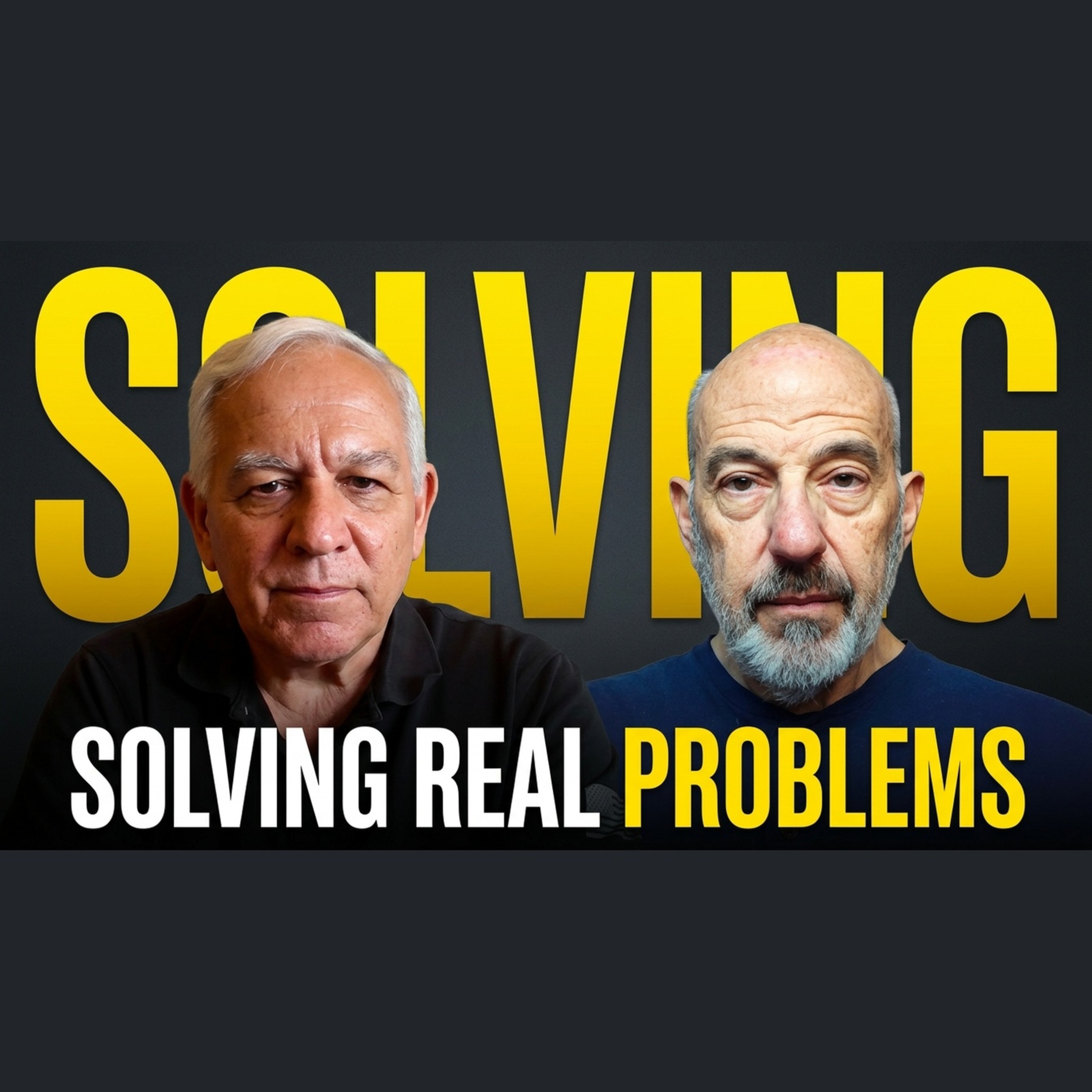
In this episode of Arthur’s Round Table, Jeff Hoffman—co-founder of Priceline—shares insights on entrepreneurship, value creation, and what it really takes to build successful companies. From starting businesses out of necessity to scaling global platforms, Jeff explains why solving real problems—not chasing ideas—is the foundation of every successful startup.
🎯 What You’ll Learn
Why entrepreneurship is a mindset—not a job
How to identify real problems worth solving
Why value creation is the foundation of every business
How founders should validate ideas before building
Why most startups fail due to poor positioning and messaging
How to think about scaling, customers, and growth
🧠 Key Insights from Jeff Hoffman
1. Entrepreneurship Is About Solving Problems
Jeff didn’t start with the goal of “being an entrepreneur.”
👉 He focused on solving problems—and business followed.
2. Value Creation Determines Success
People only pay for things that create value for them.
👉 If your product doesn’t solve a real problem, it won’t generate revenue.
3. Start with the Customer—Not the Idea
Most founders build from the inside out.
Jeff’s approach:
👉 Go to the market first and validate demand before building anything.
4. “Cool Ideas” Are Not Businesses
Many startups fail because they build something interesting—not something necessary.
👉 Demand and willingness to pay define a real business
5. Focus on the Problem, Not the Company
Jeff built early companies without even forming a company first.
👉 The priority was solving the problem—not building infrastructure
6. Most Startups Fail Due to Poor Positioning
Companies don’t “run out of money”—
👉 They run out of sales due to weak messaging and targeting
7. Messaging Must Reach the Right Audience
Success depends on:
saying the right thing
to the right people
at the right time
👉 Most companies get all three wrong
8. Customer Insight Is the Ultimate Advantage
The best founders spend time:
talking to customers
understanding real needs
adapting quickly
👉 Assumptions kill businesses
9. Diverse Thinking Drives Better Outcomes
Successful companies:
listen to different perspectives
empower teams
avoid top-down blind spots
👉 Innovation comes from collaboration
👤 About Jeff Hoffman
Jeff Hoffman is a successful entrepreneur, investor, and co-founder of Priceline.com. He has been involved in multiple startups across technology, entertainment, and global ventures, and now focuses on mentoring entrepreneurs, advising companies, and supporting innovation worldwide.
📊 Topics Covered
Entrepreneurship mindset
Value creation
Startup strategy
Product-market fit
Customer validation
Business positioning
Scaling companies
Want to learn more about Family Office Insights? Click Here.
Arthur Andrew Bavelas (00:01.758)
Hello everybody, welcome and thanks for tuning into another episode of Arthur's Roundtable. Big shout out to Meghanna for introducing us to Jeff and Jeff Hoffman is with us today and I'm looking forward to our discussion. Grateful for you to be here, Jeff.
Jeff Hoffman (00:19.382)
Now, thank you so much for the invite.
Arthur Andrew Bavelas (00:21.106)
You're very welcome. Can we start at the beginning? Tell us about your journey and then we can go from there.
Jeff Hoffman (00:24.366)
Sure. you know, my quote entrepreneurial journey, I say that with the air quotes because I never even knew that word and never thought of myself as an entrepreneur. What I thought of myself was it was a problem solver. There's always a problem, right? But I was always pretty determined to figure out a solution. I just didn't know that that was the definition of entrepreneurship. And for me,
Arthur Andrew Bavelas (00:34.088)
Right?
Jeff Hoffman (00:52.322)
The attitude of entrepreneurship, and I always tell people it's not a job, it's more of a mindset of solving problems and making things better. But it didn't start with business. started, I grew up in the Arizona desert. We had a single mom who had, you know, four kids, three jobs. And I played every sport. And when the season changes, you need new equipment. And when your mom's already busting her butt, you don't want to ask her for more money for stuff that's not really a necessity. Football cleats, right?
So I would go out and find any job I could do for anyone to make money. Anything that was, was somebody be willing to pay me for and, and so that I could just buy stuff I needed without bothering my mom. But I also started to realize, that people only pay you if you're creating value for them. And I say that because even now, Arthur, people pitch me products.
And I was like, who's going to buy this and why would anyone pay for it? And they're like, well, we'll see. And I sit there and think, you're not doing something that has value to other people that they would pay you to do. You're doing something you think is a good idea or cool. But so I understood that if I'm not creating value, I'm not getting paid in the world, but that's what started it. And then when I went off to college, I went to a school that we couldn't afford. and when I got there, they sent me home only had no money to get home.
Arthur Andrew Bavelas (01:53.416)
Yeah.
Jeff Hoffman (02:17.518)
Uh, because they said, you haven't paid. said, well, we've paid everything we have. they said, well, there's a gap. You can't go to class without paying the rest of the bill. so once. Yeah, that's where I was. Yeah. And he's like, sorry. And I'm not really mad at him because it's not like I can go to steak house, eat, and then tell them I have no money. I think. Right. And so he's like, you have to pay the rest of your bill to be a student here. And so I started, I didn't go home.
Arthur Andrew Bavelas (02:26.237)
at Berkshire's office, right? Yeah.
Arthur Andrew Bavelas (02:37.117)
Right, Zach.
Jeff Hoffman (02:46.146)
I went to the basement under the college because I wasn't sure it was legal and started a little company and just funded my entire college running a company in the basement. So that's sort of always been the attitude. If you want something, there's a way to get there, but you're not going to, if it's money that you need, the only way to get paid for things is to create value for other people. Something they'd say, yeah, I'd pay you to do that.
Anyway, so that was the start. I got a software engineering degree. got a corporate job right out of college, hated it, quit, and I've been doing startups ever since then.
Arthur Andrew Bavelas (03:25.405)
Do you think that the people who are, as you described them, people that create something and say they will come are the ones that are trying to jump on the coattails of like the dot com boom and just do something because they think somebody is going to throw money at them independent of them creating value?
Jeff Hoffman (03:46.094)
Okay, so here's the problem. There's way too much of that. So the answer is yes. I see so many people, like you said, that are the coattails of the bandwagon. There were so many things that people just jumped in and gave it a shot. And, you know, let me put it to you this way, because this is a big learning and something I share with entrepreneurs all the time. Most people just, well, let me put it to you even back up. I was doing a TV show.
with some founders and CEOs and the host said, it was like a panel. She said, what's the first thing you do when you have a new idea? And all of them said, I get my team and I go to the whiteboard. They go in their conference room. And I said, I get my keys and I go to the parking lot. Now I'm going to explain why. And they're like, wait, what? Most people design their business from the conference room out. Where do you work in your office? Where do you design stuff on the whiteboard in my office? Then what?
I push a product or an MVP out into the world and hope people like it. But I never did it that way. I learned a lesson the hard way with my first startup that I'm out of the office way more than in it. When you're out in the world, that's where all the problems are. So you should design your business from the customer in, not from the office out. And so it's soon. The reason I gave that answer was as soon as I have an idea, I try to figure out who do you think is going to be the customer?
Who would pay for that? And I immediately go to them and spend a ton of time talking about it before I ever build an MVP, create a company or anything. And if nobody but me thinks it's an idea worth paying for, that idea is done. And if I'm out there and people will say, by the way, the mistake a lot of people make is, I love your idea. I'd do that just until they see the price. have to tell people it's not a business until
Arthur Andrew Bavelas (05:37.885)
Right.
Jeff Hoffman (05:42.476)
You find out if they're willing to pay you what it takes to make it a business, not just till they like it. anyway, that's what I always do. I go straight out to the market and say, help me design this because it's for you. And so many people are not doing that. We're seeing it again in AI, right? Before it was internet companies. Now it's AI companies. Everyone's just launching something. And I asked them, what business owner is this for?
problem does that business have? How are you solving it? And how much is it worth paying? And they're like, I don't know, I just got this really cool AI. So I think we're going to see a lot of AI companies go nowhere because... Yep. Yep.
Arthur Andrew Bavelas (06:24.253)
Yeah, there's gonna be carnage on the side of the road. For sure. Yeah, I can't tell you how many times that people don't start with the end in mind. You know, the whole idea. And it's true, like in life, if you don't go out and mix into the populace, you're just making speculation based on your life experience, which could be right. Yeah, but it's more likely that things change and evolve.
Jeff Hoffman (06:38.454)
Yeah.
Jeff Hoffman (06:46.87)
It could be.
Arthur Andrew Bavelas (06:52.231)
faster than what you've experienced them to be, right? So it's really, yeah, it's really interesting. So what happened after you quit your job and then decided to do what?
Jeff Hoffman (06:55.214)
Exactly.
Jeff Hoffman (07:05.477)
Well, so the thing that got me into entrepreneurship again was never now, you know what I get now, Arthur, people call me and I say, they say, hey, Jeff, I wanted to talk to you. I'm an entrepreneur now. And was like, what does that mean? And they say, well, I quit my job and say, okay, go on. And they're like, I got a little office. I got a website, right? I registered a name and I got, you know, new business cards, whatever. And I'm like, you have everything but like a purpose.
Arthur Andrew Bavelas (07:32.57)
Red.
Jeff Hoffman (07:32.718)
Right? A problem to solve. And so they think that being an entrepreneur and having a startup is the point. The point is not, it should be starting for the problem. So I'm going to give you my example of how I learned that. So now I quit that job. I'm unemployed with no income, right? 20 something years old. But I just couldn't do the, for me, it was a DNA thing. I couldn't work in that environment anymore. I went to an airport.
with what little money I had to buy a ticket to go talk to a potential mentor. And back then you had to wait in line to a ticket agent to get your boarding pass. And the lines, was a Friday afternoon, were more than an hour long and I missed my flight. And I was standing there very frustrated. And because when you get to the front, the person looks at your ID, verifies
Arthur Andrew Bavelas (08:10.717)
Mm-hmm.
Jeff Hoffman (08:26.478)
that it's you and then just hits print on the boarding pass and hand you a piece of paper, which is a boarding card. Comes out of a printer. And I was like, oh my God, I've been in this line almost an hour and a half for you to print something. And she's like, next customer. I'm like, well, why can't I just print it myself? It's a printer. And she said, it doesn't work that way. And people in line behind me, travelers were saying, yeah, move on. It doesn't work that way. And I'm standing there and said, well, it doesn't work that way because you're all just accepting this.
excuse me, sorry. so I, went home and I said, like, I'm never going to miss a flight again. There has to be a better way. And took out a pencil and started sketching a kiosk, you know, in the same way I don't have to go in the bank anymore because they have an ATM. Why can't that work here? So, you know, when you go to the airport now, all those self-service check-in kiosks, that was our first invention, our first product. So.
Arthur Andrew Bavelas (09:00.061)
All right, no problem.
Jeff Hoffman (09:25.164)
we created a kiosk that you could walk up to in the airport and check yourself in. And that business was successful. Kiosks are, know, pretty much every airport in the world these days. But the interesting thing lesson learned was here I am trying to build this kiosk and make it work. And a friend of mine comes by and he goes, Hey, he said, I told a friend what you're building.
And he wants to give you some funding because you're going to need manufacturing. And I said, that's great. I'm really focused because the kiosk doesn't work yet. And I said, you know what, take the money. And he said, okay, well, I would, but there's a problem. And I said, what? And I'm like busy. Right. And he said, Jeff, you don't have a bank account. And I said, well, just go get me a bank account and take the money. But do you mind? I'm trying to build this kiosk. And he goes, I would, but there's another problem. And I said, what? And he goes, you don't even have a company.
Arthur Andrew Bavelas (10:21.245)
Mm.
Jeff Hoffman (10:21.794)
And I said, okay, fine, go create a company, get a bank account, whatever, but just leave me alone. I'm trying to build a kiosk. The focus, I think the reason we were successful is all our focus was on solving the problem. Having a startup and being an entrepreneur, that's a layer of stuff you need wrapped around you. I do need a company. I do have to hire people. I do need a bank account where I can take funding, but none of that stuff, you know,
All that to me was noise compared to fixing, solving the problem. And so that's what I look at when I look up startups and founders today. When people come in and they're more focused on their logo and their website and the fact that they're entrepreneurs, everything should be about the problem I'm solving and the way I'm solving it. And a company is just a thing you need to have to deliver your solution to the world. I learned that the hard way while I was out there, because I didn't have a company and I didn't care. I had to have that.
So focus all in on the problem itself, not all the trimmings.
Arthur Andrew Bavelas (11:25.883)
Yeah, and all the trimmings are easy now too. I mean, it's just super easy. Yeah. Yeah.
Jeff Hoffman (11:28.236)
Yeah, real easy now. Even writing the code, which we had to do it all by hand back then. And now you got all these code generators and stuff.
Arthur Andrew Bavelas (11:40.007)
So what do you think, how did this evolve into a business for you? Is it being an angel investor? Is it advising people? Is it both?
Jeff Hoffman (11:53.294)
You mean what we do now? Yeah, I mean, because, you know, continuing on to build startups and some work, some didn't. But, you know, I was part of a couple of teams that we built very successful startups, priceline.com, booking.com, ubid.com. And then I left tech for a little bit and created some startups in the entertainment space and music, film and television.
Arthur Andrew Bavelas (11:54.598)
Yes.
Jeff Hoffman (12:23.158)
And we were blessed that way more of our startup, our companies that we launched worked than didn't work. so I had kind of made the commitment, kind of a giving back thing where I said, you know, all the things we learned again, I'm not a, educator, a teacher, a consultant, any of those things, right? I'm an operator. and I'm not a finance guy per se. I'm a marketing person really is the part that I'm best at, but I was like, we were successful.
because we learned a set of specific skills called entrepreneurship, right? We learned the fundamental blocking and tackling of being a good entrepreneur and founder. And so I had said at that point, I want to share that with as many people as I can. The times I was frustrated, Arthur, and when I was failing and I would say, come on, man, somebody has already done this and could have told me the decision I just made was stupid. Don't turn left here. The bridge is out. Right.
Why can't someone tell me that? So later I said, I'm going to try to give back by advising and telling people everything that I've learned. And when you start advising companies, so I was mentoring entrepreneurs and advising companies being on boards and stuff. And when you start to do that, that is where you see the deal flow. Right. And some of them you come across and you're like, my gosh, not only going to advise these people, but I need a piece of this. So.
The advising and mentoring led to a lot of the investment opportunities when we saw something amazing out there.
Jeff Hoffman (14:05.356)
having a bad allergy day, I guess.
Arthur Andrew Bavelas (14:06.779)
Take your time. worries. So the putting yourself out there as an advisor or a mentor naturally morphed into some companies that you would just say, forget it or help or say, I need part of this.
Jeff Hoffman (14:27.318)
Yes, exactly. I started to get a lot of deal flow. They typically weren't calling me, maybe half. Half were calling for looking for funding. But a lot of times they weren't even intending to ask me. They called and said, I don't know, like me, I was an engineer. And so they would say, I have no idea how to package this company properly for an investor. What do investors want to see? What do they care about? What are their triggers? How do I get them to say yes?
So because I was prepping companies to do that, like I said, I'm like, wait a minute, I would say yes to this one while I'm helping them. So yes, advising and mentoring companies and preparing them to be investment ready created a great deal flow because all these people were calling me and I was seeing all these opportunities kind of before the rest of the market did.
Arthur Andrew Bavelas (15:02.055)
Right.
Arthur Andrew Bavelas (15:18.499)
Yeah. You know, I found that, you know, we, see a lot of deal flow and it's part of the business construct for one of my companies. And I'm just for 30 years have been a private investor more or less. And we still see tons of deal flow, but it's been my experience that by the time I see it.
And I will say I've seen some stuff that at the very beginning that I've invested in also that I think are winners, but more of it's not so interesting to me.
Jeff Hoffman (15:56.572)
I totally agree. A large percentage of it.
Arthur Andrew Bavelas (16:00.541)
Yeah, mean, just metrics like we get 200 applicants a month, and half of them go away because it's just a dumb idea, right? I mean, it's pretty obviously not a good idea. And we do have some experience in looking at these things, so it's not without some sort of learnings along the way. But I haven't found that most people
even though they need it badly, are willing to engage someone to help them write the deck and do the models. they just think they can limp along and do it themselves. And it's usually a disaster.
Jeff Hoffman (16:42.83)
Completely agree. They don't know what they need, then they don't know they need the help or they think they're doing it fine. I think that's much more the norm than the exception. So I agree with you. And I see a lot of stuff that either, like I said, isn't solving a real problem with a value equation, meaning that even if people like it, I don't know how they're going to make money. Or, you know, they might have good ideas, but
Arthur Andrew Bavelas (16:50.717)
Yeah.
Jeff Hoffman (17:12.59)
you know, it's a mess. It's not packaged in a way the world can understand what the business model is, and, and how they're going to go to market. So yeah, I see that all the time. Luckily we have, I happen to be the chairman of a nonprofit called the global entrepreneurship network, which has a mission statement to help anyone anywhere launch and scale a company. So we created this to teach entrepreneurship and to build entrepreneurial ecosystems and.
We're currently on the ground in 200 countries, but the reason I still get an abnormal deal flow Arthur is that we created something called the Entrepreneurship World Cup. I just posted on my social media about it. It's a shark tank, it's pitch competition, but because we're in 200 countries, this pitch competition is across all 200 countries. And so like last year, I think we had 36,000 startups.
in 191 countries enter our competition. So we held pitch competitions because we're on the ground in 100 countries. And at the end of the year, 36,000 startups wound up with 100 winners and we took the 100 best companies. We flew them all to one country and then I always judge the finals. So we've been doing this six years in six years.
We've had a total, this is crazy, 420,000 startups around the world have entered our competition. So Deal Flow is one thing I never run out of. It's because we run this Entrepreneurship World Cup and I see startups all over the planet. So while you're right, the few, it's a low percentage of companies that know what they need and will engage, but because our universe is so big,
Arthur Andrew Bavelas (18:50.671)
Yeah.
Jeff Hoffman (19:09.378)
That small percentage is still a hell of a lot of companies for us. I never don't have a full plate.
Arthur Andrew Bavelas (19:13.371)
Yeah, exactly.
Arthur Andrew Bavelas (19:17.213)
So we don't need to talk about it now, but I'd be curious. I think I get emails from your organization, but I could be wrong. Like I get a lot.
Jeff Hoffman (19:25.304)
Probably. It would make sense that you would, you have someone like you would be on our list. We have a, we built something called the global business angels network. And so we include in our network, business angels, investors all over the planet.
Arthur Andrew Bavelas (19:29.903)
Yeah.
Arthur Andrew Bavelas (19:41.797)
And so, like I said, we don't have to get into this, but how does an enterprise like that stay alive? Like, where's the funding come from?
Jeff Hoffman (19:50.85)
we have unbelievable donors. If you look, I won't go through and bore you now, but it's all on the website. our primary donor for many years has been the Kauffman Foundation, which is the world's largest foundation. It's the world's largest foundation for entrepreneurship. So they're one of our primary donors. But we have a lot of unbelievable partners now from people like DoorDash to Amazon to
Arthur Andrew Bavelas (20:03.446)
out of New York. Yeah.
Jeff Hoffman (20:20.126)
KKR even to Wells Fargo. All these are companies that love the work we do and they all put money into this nonprofit. So we have a strong list of partners. Now we have a deal with Alibaba. we've been very blessed in that because we have delivered impact, we have a lot of donors that are happy to keep funding what we're doing.
Arthur Andrew Bavelas (20:29.105)
mess.
Arthur Andrew Bavelas (20:39.623)
Yeah.
Arthur Andrew Bavelas (20:46.715)
Nice. Yeah, I'd like to know more about that at some point. Super interesting. Yeah. So what's the, if it was, if you were to be asked what's important to you right now, is it primarily mentoring companies to help them get squared away, focused outside of that organization, for example?
Jeff Hoffman (20:49.963)
Absolutely.
Jeff Hoffman (21:12.044)
Yeah, it's obviously the organization as chairman is a big piece of my life, especially again, since we're in 200 countries. So that takes a big chunk of my time. But yeah, that's kind of split, like I said before, into the two pieces, advising and mentoring. So advising is literally companies that will call and say, please join our board and help us scale this thing. So I do a lot of advising.
Arthur Andrew Bavelas (21:16.711)
Yeah.
Jeff Hoffman (21:40.408)
But the mentoring part tends to be much more to the individual. So when I'm mentoring, if it's you, Arthur, I don't really care what company, you might switch companies halfway through our relationship and start something else. So I'm mentoring you, helping you become a better leader, better CEO, and a better entrepreneur. So it's teaching you the skillsets you need, whereas advising is much more company oriented. But I'm splitting my time between those two things.
advising companies and mentoring entrepreneurs and they're equally important to me. And it's also the way that I keep learning. The more I'm out there in all these companies, the more I know what's working in the business world, what's not. got to keep, you know, I got to get my hands dirty to stay informed. Otherwise I would just fall behind too fast.
Arthur Andrew Bavelas (22:31.581)
You know, do you think, by the way, when we did these things in person, our pitch things for Family Office Insights, you know, we would do two or three a week in New York City at a midtown conference room at a law firm, put 30 family offices in the room, and someone would pitch one company or fund. And what invariably happened, whatever they, we charged to do that, we don't get any,
Jeff Hoffman (22:39.629)
Huh?
Arthur Andrew Bavelas (23:00.369)
participation on a success fee or shares or anything like that. We just never went down that road. But whatever they paid us was exponentially returned first if they got money, but even if they didn't, which sometimes they didn't, they would learn more from the rich, smart people in the room. It was worth every penny they paid for us, right?
Jeff Hoffman (23:26.766)
for sure. Absolutely.
Arthur Andrew Bavelas (23:29.495)
And what you just said is, and I got to sit in that room every day and learn from that. I mean, it was an unbelievable lessons, you know, a bleeding edge stuff, let's just say. Yeah, it was.
Jeff Hoffman (23:42.666)
Yep, that is exactly why I love doing this. And I like like you were talking about, get we get to hear it from both sides. I'm hearing from founders and learning from them building their companies. And then on the investor side and the family office side, right, I'm listening to them. So I agree with you. There's you just never sometimes people say to me, how come you haven't just retired? And I'm like, because every day there's still something more to learn. So
Arthur Andrew Bavelas (24:11.279)
yeah, I've gotten that.
Jeff Hoffman (24:12.482)
There's so much out there that I don't know and I love the learning.
Arthur Andrew Bavelas (24:16.475)
I've been retired for 30 years. I mean, it's just, I've been, I don't know why I would stop doing this, right? This, what's the point, right? What am I going to do? can't, I've got to golf six times a week, right? Whatever. Yeah. so I have a question about how things have changed. So for example, you have to have your thing packaged up in a way so somebody can recognize its value. Let's just say that, right?
Jeff Hoffman (24:18.346)
I love that.
Jeff Hoffman (24:24.046)
Yep
Jeff Hoffman (24:31.086)
We
Arthur Andrew Bavelas (24:48.521)
It's exponentially harder, I think, I'd love to hear what you think, to get people's attention, even though the internet and reach is ubiquitous in some ways, but there's more noise than signal. And so people have a really hard time, you know, we're every day trying to figure out how to deliver signal rather than noise and get to the people, but
Jeff Hoffman (25:01.197)
Yeah.
Jeff Hoffman (25:05.389)
Absolutely.
Arthur Andrew Bavelas (25:17.085)
There is, you know, and there's lots of crap and there's lots of fake stuff and you know, just go down the list. How do you advise people to do their best to make sure their message gets across? Aside from being packaged up properly.
Jeff Hoffman (25:30.604)
Are you talking about like the company side, the founders? Yeah. So, you and I completely agree on this. Most of them actually suck at it. I look at so much messaging. They're like, we're not hitting our sales goals. And I'm like, first of all, you have the wrong message. And second, you're telling it to the wrong people. So not shocking that you're not getting there because your message isn't doing what you thought. And a lot of, you know, and, those aren't that.
Arthur Andrew Bavelas (25:33.916)
Yes.
Arthur Andrew Bavelas (25:51.513)
Yeah, right.
Yeah.
Jeff Hoffman (26:00.11)
person you deliver that message to, that marketing channel was never going to buy your product. So yeah, so that is way more the rule, right, than the exception. So part of in this advising and you know, we, more of it might be bleed over into strategic consulting. We frequently have to start with companies. In fact, it's interesting that family offices and you know, just, it just funds.
Arthur Andrew Bavelas (26:04.741)
And they didn't care. Yeah.
Jeff Hoffman (26:28.27)
A lot of time it's the fund or a PE firm will call me and say, we've invested in this company and we're not convinced that they know how to scale it. So will you go get them positioned? So the strategic positioning is the part where we really sit down and say, what is it we're trying to sell here? And so therefore what message do we have to deliver? How do we create that message? How do we deliver it? And who do we deliver it to? So the front end of repositioning companies,
so that they are delivering the direct, the correct message that for that, that winds up happening so often for us. And by the way, that's one of me personally, that's kind of one of my favorite parts is that strategic positioning. Where are you going to fit in the market and how are you going to deliver that message and who's going to hear it? But yeah, people are bad at it. lot of it's it's you know, it's funny.
I always tell people this, when you ask a startup that failed, what happened? You know what they say? Well, we ran out of money. And I always tell them, no, you didn't run out of money, right? You ran out of sales because if you had marketed and messaged your product right, money would be coming in. when they say we ran out of money, I was like, now you ran out of good positioning, good marketing, good messaging.
Arthur Andrew Bavelas (27:40.029)
Mm-hmm.
Arthur Andrew Bavelas (27:44.615)
Yeah, your sales would fund your growth. Yeah, totally.
Jeff Hoffman (27:54.318)
Because if you got all that right, you'd be making money right now. Unless, of course, your product is just not a winner. But they always blame it on that. The reason that they ran out of money is because no investors will give them anymore because they have no sales. And I was like, right, so the problem isn't that you ran out of money and the investors won't give you more. It's that you're not selling your product. So you need to be looking at why that is happening. And like I said, like we said at the beginning, it's frequently because you said the wrong thing to the wrong people at the wrong time.
Arthur Andrew Bavelas (28:07.943)
Right.
Arthur Andrew Bavelas (28:17.893)
Is it back?
Arthur Andrew Bavelas (28:24.558)
And what you said at the beginning was get in your car and drive to the customer and say, will you eat this dog food? Right.
Jeff Hoffman (28:24.686)
you were never gonna get.
Jeff Hoffman (28:31.564)
Yeah, exactly. Yeah, that's what we always do. I can't tell you how many times we've, you know, when we've taken on that advisory thing, I've gone to their customer and I'm like, they're like, who are you? You're talking to me more than the actual company, right? And I'll go out there and say, why'd you even call them? Right. Why'd you sign up for this in the first space? What did you need? What were you hoping to get? What other companies do you look at? So a lot of times we'll come back and say, the reason you think
Your customer bought your product isn't even the reason they bought it. You're solving for the wrong variable. They don't even care about that. So again, I shouldn't be the one if you should have known that, but that's the reality. Most of the time they don't. they, I have to say this a lot, Arthur, I have to tell, you know, proud management and CEOs and founders have to tell them, quit being blinded by your own brilliance. Cause you think your idea is great and you think you're really smart and
You're actually never as smart as you thought you were. And by definition, you're never smarter than the customer. If they don't buy your product, you got nothing anyway.
Arthur Andrew Bavelas (29:35.505)
That's true.
Arthur Andrew Bavelas (29:39.548)
Yeah, it's look there's. I give some people a pass. If they're overwhelmed and understaffed. But then what's your priority, right? We're not talking to the customer, then you're. It's just like. If you have a big company and you're not talking to the guy that's drilling the oil well and having him let you know that that thing you just bought is not working.
Jeff Hoffman (29:52.993)
Yeah.
Jeff Hoffman (30:03.372)
Right.
Jeff Hoffman (30:09.16)
Exactly. person actually doing the work.
Arthur Andrew Bavelas (30:10.041)
and it's causing you to work, then you're missing the whole thing, which is why, you know, a lot of these bigger companies have flatter management organizations now because the bad news gets to the top, right? It's not the U.S. military. You got to talk to people, right? Find out what's really going on. mean, it's a different at a whole different level, but arguably one of the reasons why Elon can do so much
Jeff Hoffman (30:21.23)
Yep.
Jeff Hoffman (30:28.566)
Absolutely.
Arthur Andrew Bavelas (30:39.557)
or seemingly does so much is because, yeah, they can pick up the phone and call them say, this isn't gonna work, right?
Jeff Hoffman (30:45.966)
Yep, absolutely agree. By the way, that was a really interesting part about Bezos too. Jeff really allowed his teams to have autonomy and empowerment. So all the different departmental and functional teams of building Amazon, Bezos let them go. And the too tightly controlled CEO
that is calling all the shots and not listening to their team doesn't get there. I can tell you that one of my favorite parts about Priceline and that made it work is we even have, you know, we had people that were 24 years old without a lot of business experience, but they were just brilliant. And so we would go to the 24 year olds at our company and we would say, what do you think of this? What are we missing? You with a totally different upbringing and perspective than us.
Arthur Andrew Bavelas (31:17.661)
Yeah.
Jeff Hoffman (31:43.854)
How would you approach this problem? So I liked that we engaged a lot of different people in our own company to gain as much diversity in decision making as possible. And I don't think we would have succeeded without all those people combining ideas and then synthesizing that into a final solution.
Arthur Andrew Bavelas (32:07.453)
Well, Priceline was one of the early.
Arthur Andrew Bavelas (32:15.847)
companies that demonstrated that you could actually sell shit on the internet.
Jeff Hoffman (32:19.948)
Yeah, that's exactly right. was the hard part, by the way, because people never bought something from their computer. They'd always bought from a person. So our big challenge was way less technology and way more marketing to gain consumer trust. Yeah, hard problem, but it was a fun challenge.
Arthur Andrew Bavelas (32:36.029)
Trust,
Arthur Andrew Bavelas (32:41.725)
Yeah, I bet. How long were you there?
Jeff Hoffman (32:46.006)
I don't know, I think from the beginning, probably five years total. Remember back then things happened at internet speed. We started designing that company in 97, launched it in 98 and went public in 99. So the bulk of the important part all happened in three years. And then a couple of years later, we had a
Arthur Andrew Bavelas (32:49.467)
Yeah.
Arthur Andrew Bavelas (33:08.125)
Yeah, that's what I'm
Jeff Hoffman (33:13.312)
solid business model in a public company and it was cruising along.
Arthur Andrew Bavelas (33:17.809)
Yeah. Who ultimately acquired that?
Jeff Hoffman (33:22.144)
Nobody. just it just the IPO became a public company and still is. Yeah, so Priceline acquired over the years a bunch of other companies, but but no one ever acquired Priceline. So now it's about five companies, six companies, I think all under one parent company. But Priceline was the acquirer, not not the acquired.
Arthur Andrew Bavelas (33:26.246)
Yeah.
Arthur Andrew Bavelas (33:47.101)
Got it. So, if it's interesting to you, are you interested in speaking to more people and helping them out? Yeah.
Jeff Hoffman (33:57.684)
Absolutely. That's how I learn and that's how you keep engaged in the world so your business brain doesn't atrophy. So very much so.
Arthur Andrew Bavelas (34:06.663)
Yeah. Yeah. So is the best way for people on the call to reach out to you is LinkedIn.
Jeff Hoffman (34:15.04)
LinkedIn is. Yeah, but my email also is super easy. It's jeff at jeffhoffman.com. Spelled the way you see it in the window. So jeff at jeffhoffman.com, but the place I am the most online is LinkedIn. However, there's a million Jeff Hoffmans. So if you type Jeff Hoffman Priceline, it goes right to mine.
Arthur Andrew Bavelas (34:20.655)
Yeah, it couldn't be easier.
Arthur Andrew Bavelas (34:37.641)
that's a good hint. So, let, let's, wrap up and let's have you back with Mgenna. You want to do that? Yeah. Yeah. And, we've done two with her because she's got a great story as you know. Yeah. And, yeah, me too. And so I'm Greek. She's Albanian. We might as well be the same.
Jeff Hoffman (34:47.884)
Okay, yeah, let's do that. I would enjoy that.
Jeff Hoffman (34:54.712)
She does, yes. I obviously am a big fan.
Jeff Hoffman (35:03.502)
Yeah, I see your bevelas. So, love it.
Arthur Andrew Bavelas (35:08.283)
Yeah. So super grateful for her making this introduction. know you need the rug. Yeah. Jeff, thank you. Really appreciate it. Yeah. And thank you everybody for joining today.
Jeff Hoffman (35:11.49)
Yes, thank you. All right, my friend, let's do it again.