Beyond the Idea: Why Solving Real Problems is the True Entrepreneurial Spark

Welcome back to the podcast blog, where we dive deeper into the conversations that spark our curiosity and ignite our entrepreneurial spirit. In our latest episode, we had the immense privilege of sitting down with the legendary Jeff Hoffman, a co-founder of Priceline.com, to discuss the true essence of entrepreneurship. It was a masterclass in mindset, value creation, and the often-overlooked foundation of successful ventures. This blog post expands on Jeff's core message: entrepreneurship isn't about having a 'cool idea,' but about identifying and solving genuine problems. We'll explore how to shift your focus from ideation to problem-validation, drawing parallels to Jeff's own journey and offering actionable insights for aspiring and seasoned entrepreneurs alike. If you haven't already, I highly recommend listening to the full episode here; it's packed with wisdom that can fundamentally change how you approach building a business.
The Myth of the 'Brilliant Idea'
We've all heard the stories, haven't we? The lone genius, hunched over in their garage, has a lightning-strike moment, an idea so brilliant, so revolutionary, that it’s destined to change the world. This narrative, fueled by Hollywood and popular culture, has created a pervasive myth in the entrepreneurial landscape: that the primary, if not the sole, ingredient for success is a "brilliant idea." We see entrepreneurs frantically brainstorming, seeking that one elusive concept that will make them the next overnight sensation. But what if this relentless pursuit of the "perfect idea" is actually a distraction, a red herring that leads many down a path of wasted effort and eventual disappointment?
The reality, as Jeff Hoffman so eloquently articulated in our discussion, is far more grounded and, dare I say, more accessible. It’s not about the sparkle of the idea itself, but about the substance behind it. It's about identifying a genuine pain point, a real unmet need, a problem that people are actively struggling with and are willing to pay to have solved. This fundamental shift in perspective is crucial. Instead of asking, "What's a cool idea I can build?" the question should be, "What problem exists that I can effectively solve?" This isn't just semantics; it's a strategic pivot that dramatically increases the odds of building a sustainable and impactful business.
Jeff Hoffman's Core Philosophy: Entrepreneurship as Problem-Solving
Jeff Hoffman’s journey, from co-founding Priceline to his extensive work with numerous startups, is a testament to this philosophy. He didn't start with a grand vision for a disruptive online travel agency. Instead, he, like many truly successful entrepreneurs, was driven by the desire to fix something that was broken, to make something better, or to provide something that was missing. His approach underscores the idea that entrepreneurship is less about a specific skillset or a personality type and more about a fundamental mindset: a problem-solving orientation.
This isn't to say creativity and innovation aren't important. They absolutely are. But innovation is most potent when it's directed towards solving a problem. Think about it: the invention of the wheel wasn't a whimsical pursuit; it was a solution to the problem of transporting heavy objects. The printing press addressed the problem of inefficient information dissemination. In the digital age, countless innovations have arisen from the need to connect people, streamline processes, or entertain us. The "coolness" of the idea is often a byproduct of its effectiveness in addressing a real-world need.
Jeff's emphasis on this point is critical for anyone looking to embark on an entrepreneurial path. It shifts the focus from the abstract realm of ideas to the tangible world of human needs and desires. It encourages entrepreneurs to be observers, listeners, and empathetic thinkers who are attuned to the frustrations and inefficiencies that permeate our daily lives and industries. When you approach entrepreneurship as a problem-solver, you are inherently building something that has a purpose, a reason for existing beyond its own novelty.
From Idea to Impact: Validating Problems Before Building Solutions
One of the most significant pitfalls for aspiring entrepreneurs is falling in love with their own ideas before rigorously validating them in the marketplace. This "build it and they will come" mentality is a recipe for disaster. Jeff Hoffman’s advice, deeply ingrained in his experience, is to flip this script. Validate the problem, and the demand for a solution, *before* you invest significant time, money, and resources into building a product or service.
How do you validate a problem? It starts with deep customer research. This means getting out there and talking to potential customers. It means asking probing questions not just about whether they like your idea, but about their current challenges, their frustrations, and how they are currently trying to solve the problem you've identified. Are they cobbling together existing solutions? Are they accepting the status quo with a sigh? Are they actively seeking alternatives?
Validation isn't just about confirming the existence of a problem; it's also about understanding its severity and the customer's willingness to pay for a solution. A problem might exist, but if it’s a minor inconvenience that people can easily live with, it's unlikely to form the basis of a viable business. Conversely, if the problem causes significant pain, financial loss, or emotional distress, then the potential for a valuable solution is much higher.
This validation process involves more than just surveys. It includes interviews, focus groups, and even early-stage prototyping or landing page tests to gauge interest. It’s about gathering evidence, not just anecdotes. Jeff's philosophy here is about de-risking the entrepreneurial journey by building a strong foundation of market understanding before committing to a specific solution. This iterative process of understanding the problem, validating demand, and then developing a solution ensures that you are creating something that people actually want and need, rather than something you simply wish they would want.
The Role of Value Creation in Business Success
At the heart of every successful business is the principle of value creation. People don't pay for products or services; they pay for the value those offerings deliver. Jeff Hoffman reiterates this fundamental truth: if your solution doesn't genuinely solve a problem or fulfill a need in a way that is valuable to the customer, it simply won't generate revenue. The "value" can manifest in many forms: saving time, saving money, increasing efficiency, providing entertainment, fostering connection, or reducing risk. The key is that it must be perceived as valuable by the target audience.
When entrepreneurs focus solely on the "idea" or the technology, they often lose sight of this core principle. They might build a technically impressive product that is, in reality, a solution looking for a problem. Value creation forces a customer-centric perspective. It demands that entrepreneurs understand the customer's world, their priorities, and their definition of value. This understanding then informs the development of the product or service, ensuring that its features and benefits directly contribute to delivering that perceived value.
Jeff’s insights here are particularly powerful because they cut through the noise of buzzwords and trends. In a world saturated with options, the businesses that thrive are those that consistently deliver demonstrable value. This isn't a one-time achievement; it's an ongoing commitment. As customer needs evolve and the market landscape changes, businesses must continually adapt and innovate to maintain and enhance the value they provide. Failure to do so means losing relevance and, ultimately, losing customers.
Why 'Cool Ideas' Aren't Enough: The Importance of Demand and Willingness to Pay
This leads us to a crucial distinction that Jeff Hoffman highlights: the difference between an interesting concept and a viable business. Many startups fail precisely because they have a "cool idea" but lack genuine market demand and, critically, the willingness of customers to pay for it. An idea might be innovative, exciting, or even technically groundbreaking, but if it doesn't address a significant enough problem or offer compelling enough value to warrant a purchase, it will languish.
Demand is the lifeblood of any business. It’s the indication that people actually want what you are offering. But demand alone isn't sufficient. A business needs paying customers. This means customers must not only desire your product or service but also be willing to exchange their hard-earned money for it. This willingness to pay is often a direct indicator of the problem's severity and the perceived value of your solution. If people are hesitant to pay, it suggests that the problem isn't as pressing as you thought, or that your solution isn't delivering enough value to justify the cost.
Jeff’s advice is to scrutinize these aspects relentlessly during the early stages. Are you seeing genuine interest, or just polite nods of approval? Are people expressing a desire to purchase, or just acknowledging the concept's merit? This pragmatic approach, grounded in economic reality, is what separates a hobby or a passion project from a sustainable enterprise. It’s about building a business that serves a need and, in doing so, creates a pathway to revenue and growth.
Customer-Centricity: The Foundation of Successful Startups
The consistent theme woven throughout Jeff Hoffman's wisdom is the paramount importance of the customer. In our conversation, he stressed that most founders build from the "inside out" – developing a product based on their own assumptions and then trying to find a market for it. The more successful approach, he advocates, is to build from the "outside in," starting with the market and the customer.
This customer-centric approach means making the customer the absolute center of your universe. It involves actively seeking to understand their needs, their pain points, their behaviors, and their aspirations. This isn't a one-time activity; it's an ongoing commitment. Successful entrepreneurs are perpetual students of their customers. They spend time talking to them, observing them, and empathizing with their experiences. This deep understanding allows them to identify problems that might not be immediately obvious and to develop solutions that resonate deeply.
As Jeff mentioned, assumptions kill businesses. By adopting a customer-centric mindset, you minimize the reliance on assumptions and replace them with data and direct feedback. This validation loop, where customer insights inform product development and marketing strategies, is what builds a strong product-market fit. It’s the bedrock upon which sustainable growth is built. When customers feel understood and valued, they become loyal advocates, driving word-of-mouth marketing and contributing to the long-term success of the venture.
Beyond the Product: The Critical Impact of Positioning and Messaging
Even with a fantastic product that solves a real problem, businesses can still falter. Jeff Hoffman pointed out a critical reason for failure: poor positioning and ineffective messaging. It’s not enough to simply have a great solution; you need to communicate its value effectively to the right audience at the right time.
Positioning is about how you define your offering in the minds of your target customers. It’s about carving out a unique space in the market that clearly articulates what you do, who you do it for, and why you are different and better than the alternatives. Weak positioning can lead to confusion, making it difficult for potential customers to understand the benefit of your product or service. This is particularly true when there are many similar offerings in the market.
Messaging, on the other hand, is the language you use to communicate your positioning. It's about crafting compelling narratives that resonate with your audience's needs, desires, and pain points. Jeff's insight that "most companies get all three wrong" – saying the right thing, to the right people, at the right time – is a powerful reminder of the complexity involved. A message might be perfectly crafted but delivered to the wrong audience, or delivered at the wrong moment, rendering it ineffective. Conversely, even if you reach the right audience, if your message doesn't accurately reflect the value you provide, you'll fail to convert interest into sales.
This highlights that entrepreneurship is not just about product development; it's also about effective marketing and communication. It requires a deep understanding of not only your product and your customer but also the competitive landscape and the most effective channels for reaching your audience. Strong positioning and messaging ensure that your valuable solution gets noticed, understood, and ultimately, purchased.
Key Takeaways from Jeff Hoffman's Journey
Reflecting on Jeff Hoffman's insights from our episode, several key takeaways emerge that can serve as guiding principles for any aspiring entrepreneur:
- Problem First, Idea Second: Shift your focus from generating novel ideas to identifying and deeply understanding genuine problems that people face.
- Validate Ruthlessly: Before investing heavily in building a solution, rigorously validate the existence and severity of the problem, and confirm the willingness of customers to pay for a solution.
- Value is King: Understand that customers pay for the value you deliver, not just for your product. Continuously strive to create and enhance that value.
- Demand and Willingness to Pay Define a Business: A "cool idea" is not a business. A business is defined by demonstrable market demand and customers who are willing to exchange money for your offering.
- Customer-Centricity is Non-Negotiable: Build your venture from the outside in, with a deep and ongoing understanding of your customer's needs and pain points.
- Positioning and Messaging Matter Immensely: A great solution needs to be effectively communicated. Invest time in defining your unique position in the market and crafting compelling messages that reach the right people at the right time.
- Entrepreneurship is a Mindset: It's about resilience, adaptability, and a relentless drive to solve problems and create value.
Conclusion: Cultivating the Entrepreneurial Spark Through Problem Identification
The entrepreneurial journey is often romanticized, painted as a path paved with "brilliant ideas" and instant success. However, as our insightful conversation with Jeff Hoffman revealed, the true engine of entrepreneurial achievement lies not in the spark of an idea, but in the persistent flame of problem-solving. The notion of entrepreneurship as a mindset, centered around identifying and addressing genuine needs, is a powerful reframing that empowers individuals to embark on their ventures with a more grounded and effective strategy.
By shifting our focus from the abstract pursuit of novelty to the tangible reality of customer challenges, we can build businesses that are not only innovative but also deeply relevant and sustainable. Validating problems, understanding value creation, and mastering the art of positioning and messaging are not mere steps in a process; they are the fundamental pillars upon which successful ventures are built. As you reflect on your own entrepreneurial aspirations, remember Jeff Hoffman's core message: the most exciting sparks often come not from a sudden flash of inspiration, but from the steady, determined effort to make the world a little bit better, one solved problem at a time. Don't just chase ideas; hunt for problems worth solving.
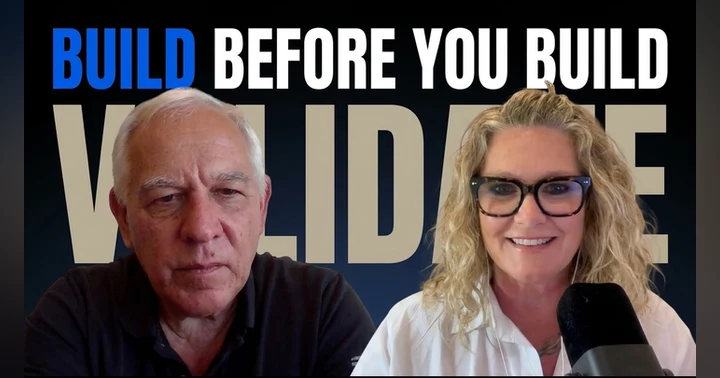
The True Cost of Startup Pivots: Why Early Commercial Validation Saves Founders Up to $500K