Apple Podcasts
 Spotify
 YouTube
 Corporate Communications Strategy & Brand Storytelling | Joshua Altman Interview
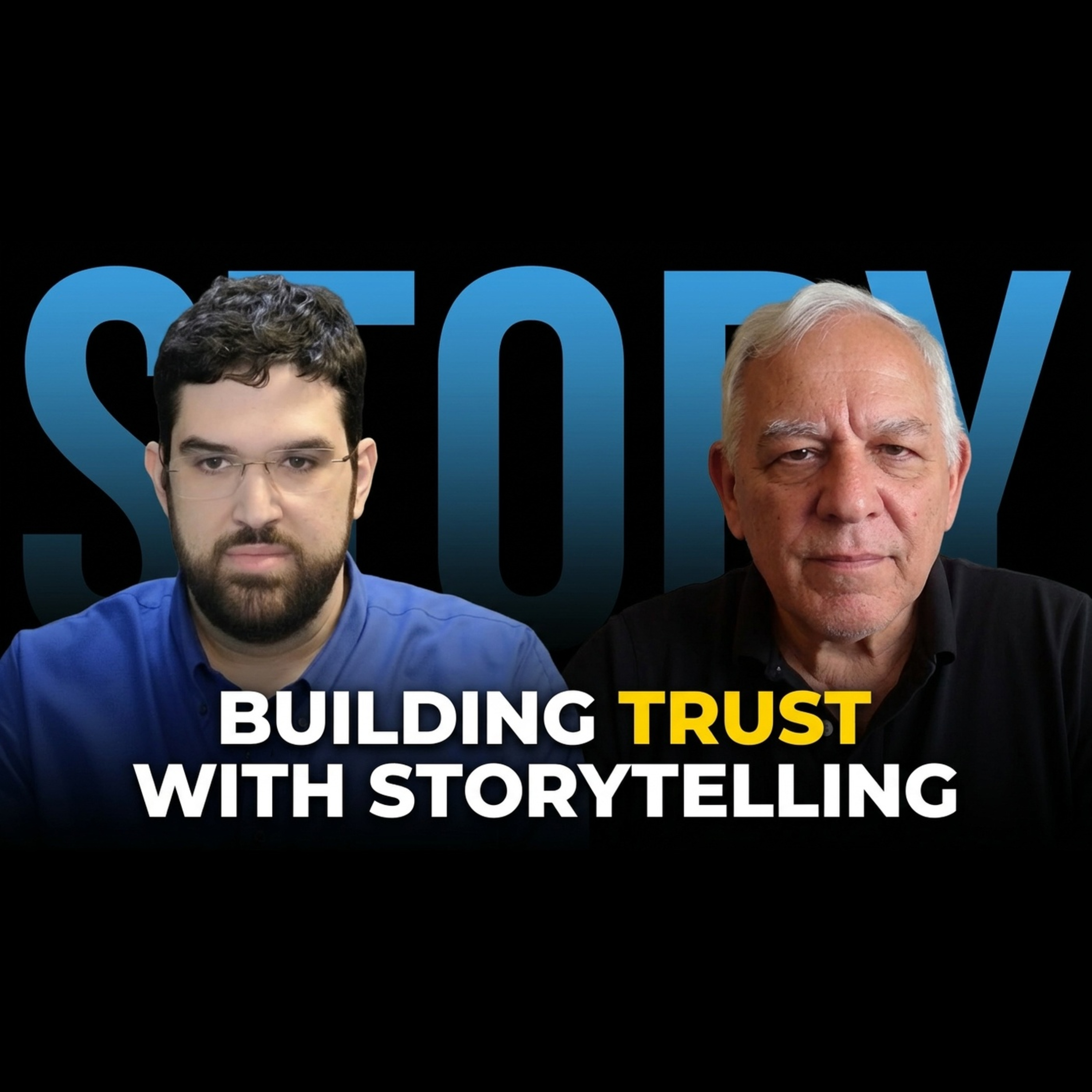
In this episode of Arthur’s Round Table, Joshua Altman, Managing Director of Beltway.media, explains how corporate communications strategy and brand storytelling shape perception, build trust, and ultimately drive business growth. From his background in journalism to advising companies as a fractional Chief Communications Officer, Joshua breaks down why storytelling—not just product—is what captures attention and converts audiences
In this episode of Arthur’s Round Table, Joshua Altman, Managing Director of Beltway.media, explains how corporate communications strategy and brand storytelling shape perception, build trust, and ultimately drive business growth. From his background in journalism to advising companies as a fractional Chief Communications Officer, Joshua breaks down why storytelling—not just product—is what captures attention and converts audiences.
🎯 What You’ll Learn
Why corporate communications is more than marketing
How storytelling drives investor and customer decisions
The difference between story, narrative, and brand
Why authenticity is critical in a world of AI-generated content
How companies should think about content across platforms
How AI is changing discovery, SEO, and visibility
🧠 Key Insights from Joshua Altman
1. Perception and Trust Drive Business Outcomes
Corporate communications is ultimately about:
👉 how companies shape perception and build trust with stakeholders
2. Story Comes Before Brand
Most companies start with branding—but:
Story = what happened
Narrative = how it connects
Brand = how people experience it
👉 Without story, brand lacks depth and connection
3. Authenticity Is the New Competitive Advantage
In a world flooded with AI-generated content:
👉 People are actively seeking real, human, authentic communication
4. Investors Buy the Story First
Before analyzing data:
Investors assess credibility
They evaluate trust
They judge authenticity
👉 The story is what gets attention—the numbers validate it
5. Content Must Work Across Multiple “Languages”
High-performing communication spans:
Read (articles, emails)
See (visuals, UI)
Hear (podcasts, presentations)
Experience (UX, interaction)
👉 Great companies optimize across all four
6. Timing Matters—Start Early
Most startups wait too long:
👉 Communications should begin at the start—not at launch
7. AI Is Reshaping Discovery
Search is shifting from:
👉 keywords → questions and answers
Companies must:
structure content differently
optimize for AI-driven discovery
ensure accuracy and clarity
8. Value-Driven Content Wins
Audiences are fatigued by:
ads
pop-ups
generic messaging
👉 Content must provide real value to earn attention
👤 About Joshua Altman
Joshua Altman is the Managing Director of Beltway.media, where he serves as a fractional Chief Communications Officer for companies looking to shape perception, build trust, and scale effectively. With a background in journalism and media, he helps organizations develop storytelling, brand, and communications strategies that drive engagement and growth.
📊 Topics Covered
Corporate communications strategy
Brand storytelling
Investor communication
Content strategy
AI and search evolution
Authenticity and trust
Marketing and perception
Want to learn more about Family Office Insights? Click Here.
Arthur (0:02): Hello. Welcome everybody for joining another episode of Arthur's Roundtable. We're super happy to have Joshua with us today, and he'll give you an idea of what he's up to and start at the beginning here in a minute. But I also want to give a big shout out to our friends in the community and those that are starting to watch the podcast and share it with others. We super appreciate it.
Arthur (0:22): And it's been a lot of fun to do this. So thank you for that. So Joshua, let's start at the beginning. Thanks for doing this.
Joshua (0:29): Thank you for having me. A little bit about me. I am the managing director of Delray. Media. We are fractional chief communications officers.
Joshua (0:39): What that means is we focus on shaping perception and building and maintaining trust. I came to this sort of accidentally. There was no plan that this would be what we were doing. I started my career as a journalist, I went to journalism school, I did a graduate degree where I focused on American news media, I thought I would spend my career in newsrooms as a reporter, as a multimedia producer, which is what I was doing. Things like video, things like web content, interactivity.
Joshua (1:08): I left my newsroom, the Hill newspaper to go be a freelance reporter for a few years, and then go back to a newsroom full time. I never went back to a newsroom full time. That wasn't where things took me. Working as a freelance reporter, I also was trying to, I was taking jobs because I needed work, and I took corporate jobs as well, and they were looking for someone who had a combination of skills, who had tech skills, who could do web programming, who understood that tech side, who had the content creation skills, the writing, and also video and visual production. And I brought all of that.
Joshua (1:48): And like
Unknown Speaker (1:48): public Public relations is part of that too,
Joshua (1:52): relations is very interesting. Public relations, and there are a lot of definitions of it. The most kind of broad one, which is the one I kind of use the most is, it's anything that you as a company do to interact with your public, how you relate to publics. Publics, broadly speaking, equal stakeholders. So what people think of public relations is media relations, when you're talking to the news and journalists, that's part of it.
Joshua (2:21): But a lot of things fall under public relations. And part of that was what I started doing for these small businesses. We're really looking for that combined skill set. Over time, seeing that need and how people like the fractional model and like that this wasn't a giant agency. That's where we landed for what we do.
Joshua (2:49): And it's very hands on with the company. We are just like a w two, but we're not a w two employee. We're there on a fractional basis. So we're fully integrated. It's not project based.
Joshua (3:03): We're not launching your widget. It's not goal based. We're not email marketing. We are just like if you had a full time chief communications officer, only fractionally.
Arthur (3:16): And would, would you get involved with selecting the email client platform and instantly to do it better and the ad agency to do social media pull up? Would you get involved in all that?
Joshua (3:31): We get involved in that, like we were your full time chief communications officer. Sometimes we come in and they already have a marketing manager, they have a social media specialist, they've been working with a Google ads agency, and they like those relationships. They like who they have full time, they like their agencies, but managing all of that tends to fall to, especially with smaller businesses, a president, a CEO, a founder, a director of operations, a COO, all people whose job it is not, that's not managing your corporate communications. You have a chief technical officer who gets this duty because they built the website. So they've kind of been the person updating it back when it was, you know, a two person company, it was built, but now it doesn't make sense for them to keep doing it.
Joshua (4:22): And they're seeing it's not a forty hour week role for their company, which is why they don't hire someone full time, and we come in and we fill that gap. So if you need us to either do it or find someone for a specific function, we can do that. But if you have that already, we come in and we
Arthur (4:41): work with them. You know, it's interesting, just to go back in your history a little bit, I mentioned this before we jumped on the recording, that in what administrations were you on the Hill? The Hill being the publication that talks about what's going on on the Hill. Right? Yeah.
Arthur (5:01): We always called
Joshua (5:01): the Hill newspaper to clarify that. Right. Which is now also thehill.com. I was there during the Obama years. And while I was there, cause I recovered Congress, the hill, it was power flip, both between the house and the Senate between parties a couple of times.
Joshua (5:19): Yeah.
Arthur (5:21): What a wild time that had to be, because it's so for the most part, it's pretty confusing to people in general, because it's hard to understand. You understand why politicians do what they do. They want to get elected for the next thing. I mean, that's their primary objective, even though they're being paid to represent the people, and I'm being incendiary on purpose. The is is in that you went and then went outside as a reporter and then back in, did you feel, you said you had a great time at thehill.com.
Arthur (5:58): It had to just be awesome to build your chops there around those people, right?
Joshua (6:03): It was, I learned a lot on the technical side, on the general working in an office business type relationship side. And from the marketing communications content side, I learned a lot as well because, yes, I was a journalist, I was producing multiple news videos a day, but also seeing the whole industry and how it works, and what people are really looking for in their content. Because we knew what did well. Any reporter knows they could see what does well, how videos are doing, what got engagement that's not hidden from the people who are creating. So we knew what works.
Joshua (6:50): And even as platforms change, because while I was there, I did a lot of their social media for a while, did all of it for a good chunk of time. And we knew what got links, what platforms to use. But some of those platforms don't exist anymore.
Unknown Speaker (7:09): Right. Yeah.
Joshua (7:11): But the principles of how you engage, of creating content, there's more content out now than ever before. We have more independent content creators than ever before. The core principles of what you do and how you create and distribute don't change. Really do stay universal.
Arthur (7:33): The mechanism and the algos change and that's a, but the, the whole idea of getting people's attention hasn't changed much.
Joshua (7:40): What you're competing with for their attention could change how you do it. The devices you're doing it on all changes, but what people crave, you know, they crave connection, they crave authenticity, they've always done that. But now more than ever, we talk about this a lot in our newsletters, with AI, and so much content being AI. People want authenticity. They, and you see this at every level from people on TikTok, just consuming to people taking investor pitches, they want authenticity.
Joshua (8:16): They want to know you're real and what you're believable, and that this is really coming from you. That goes back much longer than radio. Totally. That's a core thing that we look for as people. I talked with one investor, you and she said, when she gets a first pitch, that first meeting, that presentation, what she's looking for is to look you in the eye.
Joshua (8:40): Are you believable? Are you trustworthy? Are you authentic? She's not looking at your slides for the content. She's not looking at your addressable market.
Joshua (8:50): It's are you trustworthy? Are you really coming off as you? And everyone looks at their own thing. I'm not saying don't ignore all the other stuff you're doing for the investors, but it's a very specific thing because core authenticity is just what we as people want.
Arthur (9:09): It's true, isn't it? It's, it's about being authentic and whether you're looking you in the eye, it's seemingly the vibration of whether you're trustworthy. And it's also investors buy stories. And then they look at the deck and see, okay, does it make sense? How'd your story come about?
Arthur (9:28): What's your story? Why are doing this? And then they look at the rest of the stuff.
Joshua (9:34): The story is the hook. Yeah. It's what gets you in. And I'm sure, you know, the investors listening to this will see all the time, people with their market size as $8,000,000,000,000 or something like that. It's like a red
Unknown Speaker (9:49): flag with Tamil. Yeah. Right.
Joshua (9:51): Yeah. That was about to say that. Another investor said to me, always make the numbers believable. If you see that, we know you're inauthentic, we know you're not trustworthy. Give us believable real numbers.
Joshua (10:04): Don't try and sell us on something that isn't real, that you couldn't hit if you tried. You're trying to see it all the time. Yeah. People think that bigger number makes them more attractive. It's not.
Joshua (10:19): It's showing that you're inauthentic, that you have completely different perception of what's addressable. Totally. What's real versus what the investor knows. You're not having a trillion dollar market on this iteration of your first product. It's not there.
Arthur (10:37): Yeah. So what, what part of the, you explained that it's your, your company as can have multiple roles aside from the obvious ones. Where do you feel you are most comfortable or shine or like to do? What do you love doing in those roles? When you engage with a company, what's the profile of you know, your, your, the way you operate in a company that you prefer to do?
Joshua (11:11): We come in, and we have two frameworks that we use to work with companies. And they're based on kind of different parts of where you are. You mentioned story, that's really our first one is called the story narrative and brand framework. We come in a lot when people are at brand, or at that tip of the pyramid. And that's good.
Joshua (11:34): You need that. But the foundation of that is your story. That's what's really going to connect with people. But when you come in at branding, you don't have that strong foundation. What is that brand doing?
Joshua (11:51): How is it connecting with people? You tend to say, you know, story is facts. It's stuff that happened. It's how you would tell it at the bar. Went to your friends.
Joshua (12:02): Narrative has more information. It answers questions. It connects the dots in the story. And then brand, I call the swag. It's anything people interact with.
Joshua (12:13): That's your website, it's your products, it's your packaging, it's pens, it's your decks, it's your emails to your investors, however often you're doing it monthly, quarterly. That's all part of the brand. It's a lot more than a logo. Then the other one we use, once we kind of know where you're going, that story now and the brand is with what you're creating. And that's really the heart of what the chief communications officer is, what your communications department is.
Joshua (12:44): It is creating stuff that people consume both internally and externally. We look at four main things, read, see, hear and experience. We call it the four languages model. What people read is pretty much the most intuitive one of the four, is stuff you read. And that's a lot of stuff.
Joshua (13:05): That could be your invest, that could be the emails going out to investors. It could be a news article, and a trade publication, it could be your Instagram feed. That's all set people read. What people see is next, and what you're reading most of the time you're seeing. How you engage with it.
Joshua (13:23): An email, are you printing it out? You're seeing it one way, it's on your phone, that's another, what you hear, that's presentations, it's things like this, it's podcasts. It's all hands meetings. It's everything that people engage with through their ears and experience is the one that gets the most tripped up. People think of it as experiential events.
Joshua (13:48): They think of it like a conference, the pop up, which are true. Those are experiences, but it's also how you experience what you read, see, and hear. We're always looking for all four of these to amplify each other. So if people watch this podcast on YouTube versus listening to it while they're driving or walking the dog, like how I engage with podcasts, we'll have a very different experience with those two different things. If you read on desktop versus mobile, which we all do every day, those are two different experiences.
Joshua (14:22): And now thankfully, most web architectures, most platforms, most templates that you get are going to account for that natively. Not some better than others, but that's something we all experience differently every day.
Arthur (14:39): Is that, is that a good example of that? And I'll let you offer one, but allow me. Like we're consumers just like everybody else in our household, in our business. And we experience the interaction in the user interface of watching or listening to something on YouTube and then watching or listening to something on Spotify, for example. And we're, we don't necessarily know how the plumbing works behind that, but we can like one experience over the other, depending on where we're seeing it.
Arthur (15:19): Right? Isn't that the sort of thing you're talking about?
Joshua (15:23): That's exactly it. Because if someone sits and watches this on YouTube using their app on their 70 plus inch screen in their living room, It's great that you want us on your 70 plus inch screen. Please watch it, watch it again and again. But that's gonna be very different than if you're like me and you listen when you're walking the dog. Yeah.
Joshua (15:45): Those are two very different experiences that someone's having with them. They're going to take away different things.
Arthur (15:55): And can you make that, for example, let's talk about podcasts, you know, can you make that experience
Joshua (16:05): good across all delivery methods? You can. That's the goal. That's why when we sit down for this, we make sure to have good audio. I'm wearing a lavalier microphone, I'm wearing earbuds, so we don't have an echo.
Joshua (16:20): But also I make sure I have good video. Have, I started my background is in production. I have three lights on me. I have a back, a key and a fill. This is very well lit for a podcast.
Joshua (16:30): I have a remote operated PTZ, pan tilt zoom camera that can go up to four k. I make sure that if you're having the visual experience with the sound, it's gonna look good. If you only get us via audio, it's gonna sound good. Because we want the whole experience to work. We don't want if you're watching it for me to be sitting in a shadow and not to be visible.
Joshua (16:58): If you're just listening, we don't want you to not be able to hear me clearly. We don't want you not to hear the host clearly. So we always make sure that that works. If you're doing something, you know, web verse, you know, desktop versus mobile, make sure the font scales. Worked on a project where we did a lot of these graphics that had different panels.
Joshua (17:23): And on desktop, it was one image that went across the whole screen. When we went to mobile, it just got very compressed. We had to totally re engineer their graphics to work on mobile devices. And had to be, if it was a four panel, four graphics, six panel, six graphics that loaded only on mobile. The other one was told not to load on mobile and then had to scale properly and then go in the right order.
Joshua (17:55): And then they had to have all the click functions added back to it. So the whole experience had to be re engineered it for a mobile device.
Arthur (18:02): Gotten easier with the way, like Riverside, for example, with the tools and other delivery methods where they account for this stuff, not that production quality isn't important, clearly it is. But is AI help novices address some of that stuff without having to do the heavy lifting like you did for that project?
Joshua (18:26): It helps somewhat, but you still have to know what to prompt AI. You still have to know what to tell it because it might say this doesn't load right. Here are ways to fix it. And that's great and it'll help you. But you also have to know your client's back end and their architecture, because if it doesn't work, if it tells you how to fix it, but your client is using a WordPress plugin to manage their content that doesn't allow for that option, and you don't really understand how it works and what they're using and what AI is telling you to use.
Joshua (19:02): Right. You're just going to sit there very frustrated.
Arthur (19:05): And it makes let's just face it, AI still makes lots of mistakes, but, it requires human. I mean, use it every day. We use them all for a variety of things. But for a very pedestrian example, rather than like, I don't even know how to do it and I don't want to know, but we have to take a thumbnail and change the size of the thumbnail so we can post it on Spotify because it only accepts a certain size. And whereas we would, you know, a year ago, we have to have somebody that knew how to do that, which sounds very pedestrian.
Arthur (19:43): Don't have But a now they just drop it into perplexity or something like that and then instantly just does the work and produces the right size and it's done. Like rather than having to have a technology person that, like I said, that's probably not a good example because if you know something, you probably know how to do that. But instantly the AI does it. It's crazy.
Joshua (20:10): It is. And what you described is something I've done many, many times. I'm sure you have. To resize an image like that. It's not the hardest thing in the world in terms of Photoshop or GIMP or one of the other platforms, but it does take time.
Unknown Speaker (20:26): And you have to scale it and make sure that it's still clear.
Unknown Speaker (20:29): Yeah. Right.
Joshua (20:30): And you could watch a pretty fast YouTube tutorial on how to do it. Yeah. But it's still a lot faster to put it into a perplexity and get it to scale and hope it scales in a way that isn't completely pixelated and unusable. Right. And that's really where with scaling images, if you want to stick on that example, some of these AI tools and algorithms have really improved is enlarging images.
Joshua (21:01): If you get those thumbnails before all you could do is stretch it and it could make estimates and it was good, but not great. And it was what you had to work with. That was what the tool allowed. Yeah. But with some of these AI tools, it's really getting a lot easier to enlarge an image and have it still be a usable
Arthur (21:24): image. Yeah, it's pretty amazing. You know, having done it on perplexity myself, because I don't know how to do the old school message. And furthermore, I don't want to know. Like that's not something I want to put in my brain.
Arthur (21:40): And it is just like instantly it produces and it actually says, and we honed in so the transparency is there and the background, it actually perfected it as if you were going to tell somebody on your team, okay, go back and do it again, go back and do it again, it just does
Joshua (22:01): an instance, like amazing. Yeah. And that can help for, that's a fairly simple task it's being given. I've given it tasks to, you know, just to really test their capabilities. I use AI, we use it here.
Joshua (22:16): We use it all the time for certain things that it's very good at. It doesn't do a good job making graphics because the way many of these models recognize text is not as typeable characters, there is symbols and shapes. So it oftentimes will create something that looks like text, but is sort of nonsense characters that are almost letters. Yeah. And that's what it creates because it doesn't note, it doesn't type in the way that we type on a page that, you know, Photoshop or Illustrator or Word or, you know, Canva type.
Joshua (22:56): It's a very different, and that's changing. And some have implemented actual typing in that, in that way, but not all of them. And it's a difficult thing for it to do, which is why they don't implement it very easily because it's also much more expensive in terms of tokens to run that type of algorithm and that type of creation. So that is something that is much easier to do and effective with, we'll call it the hand way, the old way.
Arthur (23:32): Or Canvas, like who made that easier for a
Joshua (23:35): lot of people, right? Canvas made that much more accessible for a lot of people. Things like Figma make it more accessible, but they're still typing in and building it and doing layout by a person because AI still doesn't do that particularly well.
Arthur (23:56): So what, what, help the audience understand where your business and your firm would be a good entry, like the profile of a good customer. I understand the four different things and you start in two different places, but is it like you said, somebody's already got a brand and needs to be more authentic about its communication and not fall in the trap of just having, I mean AI spits out some amazing stuff. I mean, writes better than I could ever write, but I'm not a writer. What's a good profile as a customer for you?
Joshua (24:37): We come in, like I said, when people are at the brand stage, that's probably the most common, because that's when a lot of startups or younger companies start to think about this, or they have the budget for it, or they think they don't have the budget beforehand. And that's where it comes in. It's a lot easier for them and for us. If you bring us in at the very beginning, if communications is integrated from day one, or as close to it as possible, because then we can work with you all the way through. We hear a lot, you know, from companies like, well, we've been working on this product, we're ready to launch, we want to market it.
Joshua (25:20): And these are younger startup style companies. And it's like, how long have been working on this? And they say two years. Well, that's when we should have started on the communications for it. Yeah.
Joshua (25:31): Two years ago, not now. We'll put something together in this month before launch. Yeah. And it'll be good, but it won't be like you had two years of work on it and people think we can't afford it. That's why we do the fractional model.
Joshua (25:48): It lets you grow and scale. Some companies need five hours a month, Some need twenty hours a week. But if you're coming in and you know, you're looking to launch in twenty four months to two and a half years, you're at that five hour a month stage at the beginning. Yeah. And we grow.
Joshua (26:06): The other place where we come in is working with investment firms, working with family or working with whoever does the investing. And of course, there are lots of networks and people and types of investors who provide support to the companies they invest in, either directly where we're working for one investment firm, and they send us to their different companies, and we're just working for that one firm, or they say, hey, we need you to hire a chief communications officer, call Beltway. Media. It can work both ways. But when your investors are saying this is something you should be doing, and they're providing you the support, There's a reason they're telling you this is something you should be doing, and providing you those resources, because they know that the story is what's going to connect with people.
Joshua (26:58): That narrative is what's going to bring people to the product and to the purchase, even if they come for the free trial and stay, because the product is what got them to stay. Using it got them to stay. But that story and that narrative is what got them to sign up, enter their email and try it. And if they don't do that, they're not staying because they've never tried it.
Arthur (27:24): So is that it seems as if the
Joshua (27:30): freemium to premium thing still works. It does. It absolutely does. People are getting a little and by people, I mean consumer are getting a little wiser about it, which is why you're seeing a lot more of the no credit card details today. Yeah.
Joshua (27:48): Freemium. Because people would sign up, forget they did the sign up and then get charged. Right. And maybe they don't want to stick around or they wanted to talk to someone in sales or a product expert, and before they could book that call, and this has happened to me. It flipped.
Joshua (28:06): Before Yeah. The trial flipped. And I'm like, I have a call scheduled with you for next week. Why did you flip me to the paid subscription when the calls actually already on, I'm not even trying to book, it's actually on the calendar.
Unknown Speaker (28:22): Right. Because it's not Like we've scheduled It's not in the automation. Yeah.
Joshua (28:26): Yeah. That's just not part of how that's programmed yet. And consumers are getting wise to that, which is why you're seeing more of the no credit card today until you're done with the trial part of it. But it does work. I've seen freemium models that are completely free.
Joshua (28:47): They have a fully featured free tier, but, you know, you only might get 2,000 AI tokens a month. But we, and to really use it, you're gonna need 200,000.
Arthur (28:59): Or the thing you really want it for is in the next tier. Yeah. The thing that really makes it robust and you go, all right, $30, I'll just do it. Right?
Joshua (29:11): Yeah. Right. But people are getting again wise too, and they're, they see us a lot with pricing, getting nickel and dime. They are see, they're seeing that there's always another fee, there's always another tier, or this is the all inclusive, you know, grow a business growth tier. But if you wanna have this feature, it's an add on for every tier.
Joshua (29:35): Yeah. We don't include it, and that's an extra $50 a month. That people are also getting a little tired of. Because we work with companies when they're pricing things.
Arthur (29:45): Yeah.
Joshua (29:45): And even, you know, what they call their different tiers, you know, gold, silver, bronze, elite, platinum, superstar, whatever you're trying to call it, growth, scale, build, and the numbers. People are catching on and they've been on to this for a while. So that has to fit with the story and how you communicate it, but also if it's gonna be an add on, why is this thing a completely separate feature that we're just adding on? You got to explain that because people want a flat rate. They want to know what they're paying.
Arthur (30:21): And people are sick of getting, Microsoft, for example, Outlook has done a really good job of sequestering nuisance emails. So you don't even see some of that crap. Right? And I say crap that meaning that some of us probably is super valuable. But the other thing that I'm wondering what you think of is that I can't remember the name of the company that, but there used to be a company that if you were looking to buy a software like HubSpot or something like that, you would go on their website and they would do a comparison, you know, based on your inputs of what was good for you.
Arthur (31:03): Now, you just type it into Perplexity or ChatGTP or Anthropic or Claude and it just spins it all out for you and it's seemingly more valuable than Google or DuckDuckGo or whatever you're using as a method of discerning what path you should consider.
Joshua (31:29): Yeah, we do a lot with trying to get people on those AI results and making sure the information is accurate. Because remember, AI, it's there to give, these are called answer optimization engines for a reason. Yeah. It's there to give you an answer. And if it doesn't have one, it often hallucinates an answer.
Unknown Speaker (31:49): Yeah, makes it
Joshua (31:49): up. Which is not what you want it to do. Yeah. So we're there, we work a lot to make sure that the information, A, is available and structured the way they want it. And we've gone back on websites and, you know, restructured things that are much older to make sure that they are compliant with how not as accurate, making sure they're accurate in terms of information, but also that they are structured in a way that these products are going to read and prioritize.
Joshua (32:18): Yeah. But also that it is going to create the result. So when you want someone to say, my company is, we're a 10 person company, we are, you know, pre series A, whatever it is, we're looking to do this. It knows what that is and you have those right answers for them. And there is absolutely no possible way you could provide the content and the answer that everyone needs for every situation.
Unknown Speaker (32:51): Totally. Yeah.
Joshua (32:52): It's too much. You can't, you can do the best job for as many different people and many different types of customers as you can. But if you try to hit everyone and you try to get every possible scenario,
Arthur (33:09): you're just diluting what the value you really need. And even if you limit it to every scenario for your ideal customer, you're still diluting the most valuable and the most common. So not to make, cause you to, to reveal the secret sauce of how that works, but Google Analytics and all their SEO tags and all that stuff that is, you know, you have to do to get your website to register or your podcast to register properly with Google. Is there a parallel with the LLMs? I like a
Joshua (33:49): The good news is it's fairly similar. It likes structured data. You used to probably have a little more flexibility when it was just search results. I've noticed this myself. You go back to earlier days of Google and search, and I'm gonna use this example, which is really gonna date the internet, ask Jeeves.
Joshua (34:09): We were basically prompted to type questions into Google. Then it became keywords. Now we're back to detailed questions with personas. We've gone back almost to Isn't that interesting? This Ask Jeeves model of really specific question.
Joshua (34:26): Yeah. Because you used to see jokes online. Oh, my aunt entered this question into Google as a whole three sentence question when all it needed was these three keywords. Yeah. Now that extended question is what we are expecting and optimizing for very long detailed keywords, even to the point where the experts in answer engines, as much as there are yet, are say, put the questions in the titles, in your subheadings, include them, have FAQ sections on, you know, article pages, start really doing that because that's how people are prompting it.
Joshua (35:08): That's how people are getting the information. And if you have the exact question someone's asking or really, really close, that could give you a better shot at being the answer. Key is a better shot, not a guarantee, Yeah. Not you're gonna again, ranking number one, which was, you know, you want to be the number one Google result, or at least on the first page, harder to measure with answer engines, with LLMs because there are so many possibilities in how it structures it. And it could decide, it's gonna also show comparisons.
Joshua (35:45): It's going to also give you all this information because it thinks you're absolutely right. Because it's going to tell you this.
Unknown Speaker (35:53): Yeah. Which makes it hard
Joshua (35:55): to say we're number one.
Arthur (35:57): Yeah. So one of the things that made you on the first page of Google was, you know, what was it called? AdSense, right?
Unknown Speaker (36:10): Remember AdSense? Paying. Paying.
Unknown Speaker (36:12): Paying. Yeah.
Unknown Speaker (36:13): So You paid them and you got on the front.
Arthur (36:15): Right. Nothing wrong with that. I get it. No. And so how does that, is that eliminated essentially on LLMs?
Joshua (36:26): Well, Google also has given you Gemini results and it's prioritizing those. So it has, and I really was having this conversation with a project last week, maybe the week before, that we're bumped down to halfway through the page on Google, because we enter even, you know, company industry in our city. And well, the first thing is a bunch of Gemini, we have a bunch of Gemini results. We have a bunch of ads, and if someone clicks the Gemini that expands automatically. We're down halfway through the page and no one's reaching us.
Joshua (37:03): So ads do make a difference because it's above the organic results. I know OpenAI has said they're gonna start incorporating ads, but right now, at least those rates as they're published, makes it accessible only to companies with very large budgets. It's not like a local service provider or a startup SaaS can buy those ads. Yeah. Because the rates, at least as they were published before recording this, were not anywhere close.
Joshua (37:39): I looked up the rates for a client, not anywhere close to within the budget of a small or medium business or a startup, because it's, it's new for these models, of course, to be putting ads in, and they're starting with the companies that are going to pay the most, but that's also going to push down other probably good answers. I wonder if you
Arthur (38:04): could tell it. Well, of course you can tell it this. The question is once they start doing that, whether you could tell it to, to not weigh heavily the advertisers, just do the comparison authentically. Yeah. Fascinating.
Joshua (38:23): Yeah. I don't know how they're going to build that stuff in and if people start ignoring it because we've seen it too much. If it shows up eventually as you know, a sponsored column in a chart, they do have comparisons.
Unknown Speaker (38:34): Yeah.
Joshua (38:35): If it's a standalone thing at the bottom, there are still a lot of things to work out about this.
Arthur (38:42): Yeah. Yeah. They're they'll have to justify their valuation somehow, even though they're printing money to keep people continue to invest in them. It's fascinating what's going on with the lawsuit between Elon and Sam Altman. Do you see that?
Joshua (38:59): I know there is a lawsuit, but there are a lot of OpenAI lawsuits. A lot of people have sued OpenAI for a lot of different things, including how they built the models that we all use.
Arthur (39:11): Yeah. Yeah. The thing that's interesting to me is that Elon's suing them, saying, wait a minute, I invested $50,000,000, and you guys were going to stay a nonprofit for the good of the world, and then you flipped it and made it for profit. And so on the nineteenth, actually it was yesterday, I don't know what happened to the lawsuit, maybe it got pushed, not yesterday, maybe it's May 19. Friday probably.
Arthur (39:33): Yeah. And so the lawsuit is essentially that, that, you know, Elon's trying to force them to go back to a nonprofit structure, And he smartly came in at the tail end recently and said, and by the way, if I win the $150,000,000,000 lawsuit, I'm giving the money to the nonprofit. Like I'm not taking it. Yeah. Which could easily
Joshua (40:00): Which is again, from a PR standpoint is quite good. It's brilliant. Because he has more than enough, you know, billions. The extra 150 isn't going to make a difference, but that from the PR standpoint makes a rich company and a billionaire suing another super rich company far more palatable to the average user. Yeah.
Arthur (40:25): Are you finding you or your customers using Grok over anything else or just idiosyncratic towards good?
Joshua (40:33): Idiosyncratic to where it's good. I mean, a lot of people use perplexity. I use two different products primarily. I use, something called GumLoop for automations, which I found to be excellent at it. It gives you a really good visualization of the flow of your automation that a lot of other platforms are just text input.
Joshua (40:57): And I found having this flow option works really well, and I'm not paid by them at all. I think they have one other feature I found very helpful, which is an ask mode, where it cannot start building things. You can have that conversation with it, which is what it likes, or how you'll build it and what's optimized. And a lot of times I found it says, do these five steps, and some of them are contradictory, or will break something and say, well, won't this conflict with that? Like, you're absolutely right.
Joshua (41:29): Cause they're all programmed to tell you you're always right. Right. And have that
Unknown Speaker (41:32): conversation That's with such a smart idea. Thank you. Yeah.
Joshua (41:36): That, and, but you figured that out and identify it before it starts building. Then you could switch it to the build mode and build. Whereas with some of the other ones I've used, it's just, you're only interfacing via the text. You don't have that workflow that you can see. And I always had to say, and it only worked about half the time, answer my question only do not build anything.
Unknown Speaker (42:00): Yeah. Don't use up my tokens. Yeah.
Joshua (42:02): Even being explicitly told not to build. Yeah. It would just start operating. So this ask mode where, you know, it's not going to use those tokens and you can solve the problem at least as best as you can with anything before you build before it starts building.
Unknown Speaker (42:18): Smart.
Joshua (42:19): It's really helpful. The other one I use is Abacus, which gives you access to a
Unknown Speaker (42:25): lot
Unknown Speaker (42:25): of different models. It has Grock, it has Gemini, it has Claude. Like Perplexity does? It's very similar. I looked at Perplexity.
Joshua (42:33): I, Abacus, at least again, at the time of this recording when I, and the time I most recently looked, gave more access to more models at not the highest tier that you had to pick.
Unknown Speaker (42:48): Ah, got it. Yeah.
Joshua (42:49): Now, whether Abacus is going to change that and make it only available to the highest tier, Perplex is going change and make it available to lower tiers, probably something like that's gonna happen relatively soon. But the reason I stuck with Abacus was that it gave me access to some of the higher end models, which I don't use that often, because the cost, as we all know of using the higher end models, and they're not really necessary for most tasks. Yeah. But having them there for the few times that it's needed has proven very helpful. And that was worth, you know, keeping with what I also, then you have to try and migrate your stuff because you really do get locked in once you have projects for yourself.
Joshua (43:38): Yeah, can't spy
Unknown Speaker (43:39): it out.
Joshua (43:42): So I used to have a direct Jack Chat GPT subscription. I got canceled. I canceled that, moved over to only using some, you know, perplexity type things, but I lost a lot of what I had trained. And I was able to export instructions, but it still had to be rebuilt somewhat. And sometimes, because it shows you the model that it picks for whatever your prompt is.
Joshua (44:06): Right. It does pick Grok Grock. I've noticed it's picking it more for images. Yeah. Or very short text than anything else.
Joshua (44:19): That's interesting. But that could be because it's, you know, from X and that platform is optimized for shorter texts and images.
Arthur (44:29): Right.
Joshua (44:30): So it would make sense that this is what it's pulling as the model where it's best used. Sometimes it pulls Gemini, generally found that for anything a little longer, the Claude models give me the best result, that's far from universal.
Arthur (44:50): Yeah. What's, what's your opinion on the consensus that SaaS is dead and everything's going to be an app and companies like Salesforce independent of them adapting properly, which is, you know, they're huge and they have so many customers. What do you think about the argument about software is going by the wayside?
Joshua (45:18): Think it was my newsletter last week or maybe the week before that said, you know, AI didn't kill the radio star was our subject line because people are still listening to radio. It's crazy. It's crazy. But where they listen, they listen to in the car, listen to it at home, just like they're listening to podcasts. Radio companies have podcasting networks.
Joshua (45:41): So is there, I'm sure someone will say there's a huge difference between SAS and an app and how you approach it. From the building, from the delivery side, if your SAS is something you download versus something that's only web accessible via an app, is that really as huge a difference when AI didn't kill the radio star, you're still gonna be adapting to what you have and what people are willing to use it, and the platform how they're willing to use it. And that's again, that read, see, hear and experience, that experience of the app versus something I download and have is different, but it's still, we're interfacing with the product. And you'll remember that, you know, when SAS became a thing, we used to go and buy copies of programs like, you know, I worked in production, we had Adobe programs. Right.
Joshua (46:36): It came in a giant box. You needed five disks to install it. Yeah. But you paid once and you might not upgrade for three years. Right.
Joshua (46:46): And then you only had to buy the upgrade pack. And this happened with Microsoft office. It happened with their operating systems. This is how software worked. And then everything switched to the subscription model.
Joshua (46:57): It's still software. It's just how we access it. And now some of these tools are going to be all, are all web based. Yes. And again, it's still just a software tool that people are buying.
Joshua (47:15): If it's on your web, on the web or downloaded and installed on a disk, there's still developers doing it, it's still going to be not when you had on disk, but compared to what we use now, still gonna be a subscription model. It's going to be probably more similar than different, but in terms of, you know, people write content, we do it all the time. Saying something is dead gets a lot more clicks than the software industry is going to see a minor shift in how people engage with products on desktop versus mobile.
Unknown Speaker (47:48): Yeah.
Joshua (47:48): Like that's not a great catchy headline.
Unknown Speaker (47:50): Right.
Unknown Speaker (47:51): SaaS is dead. Yeah. Is. Is a lot catchier.
Arthur (47:55): Yeah, it's still about getting people's attention. For example, does, again, you don't have to give away any secrets here, but people are sick of, you know, sign up here for my newsletter, you know, getting the pop up window, the whole Don't even have to put your last name, just put your first name and your email address.
Unknown Speaker (48:15): Sometimes you don't even need a first name.
Unknown Speaker (48:17): Yeah.
Joshua (48:20): People have got tired of pop ups. Even the guy who invented the pop up has said, he's he's sorry, he invented the pop up, but if he didn't, someone else was gonna do it.
Unknown Speaker (48:28): Yeah. Right.
Joshua (48:28): So we were gonna get him anyway, even if he wasn't the guy to bring this on the world. I was just working on making a sign up for a project. And we talked about doing it as a pop up. And I said, you don't wanna do the pop up. It's there.
Joshua (48:44): It's actually the easiest to build and the easiest to integrate with your newsletter product, but you don't necessarily want to do it because a, pop ups get blocked. We all have pop up blockers, like, there are, you know, wait, some routers and some software, especially enterprise software that manages networks has them built, has ad blockers and pop up blockers built right in. Yeah. Are people even gonna see it if we choose to build it as a pop up? But if it's integrated, if it's part of the website, that's different.
Joshua (49:23): One thing we focus on with every project that we do big or small, is that every piece of content, everything you create needs to be useful and provide value. An ad for the sake of an ad, you know, a digital billboard isn't providing value most of the time. It's saying, Hey, buy our stuff. Yeah. Just like that pop up is, Hey, subscribe to our newsletter.
Joshua (49:46): Right. If you have it in an article or on the homepage where you have information about what you do and why, what you will get out of the newsletter and why it's valuable, then there is a reason to keep it. If it's sign up for a newsletter so we can charge advertisers more because now we have more subscribers. That's just gonna annoy people if they even see your pop up.
Arthur (50:14): Right. I hadn't thought about that. The pop ups get blocked all the time, especially if it's corporate email.
Joshua (50:21): Yeah. I I have pop up blockers. Most people I work with have pop up blockers. We have ad blockers, which means incorporating it to your native content that you're doing. If you put, you know, a clip, a clip, clipping closer to well, we had a newspaper clipping, now we have newsletter clippings.
Joshua (50:42): You put that on your Instagram, on what your ex, whatever you're using with a subscribe for more. If this was helpful, get more tips sort of thing that people are getting that value from that people find it's something they found useful. They want more versus a pop up on a website where they're just looking for a core piece of information. And this just got in their way, and maybe it got in their way and it caused them to navigate away. They closed Yeah.
Unknown Speaker (51:11): The Because they're tied to pop ups.
Unknown Speaker (51:15): Yeah.
Joshua (51:16): And there is always that cat and mouse game between the people who create this stuff and the people watching it and consuming it. People get sick of pop ups. We move to, they move to inline, they move to the stuff on the social media feeds. Well, eventually people get tired of that. So you go back to something more like a pop up, you have ads in games, you, there's always finding what people aren't as accustomed to, to get their attention.
Joshua (51:44): But once you have their attention, you need to give them something. That's why we focus on provide value, be useful. So,
Arthur (51:54): I mentioned to you that I have to have conversations with entrepreneurs all the time, that, and it's totally fine, I'm not trying to be disparaging that you suck at telling your story. So how do you get somebody who has a good story to be convinced that they need to, it's, I imagine it's kind of like when you have to, where you do an email campaign just to promote whatever you're, you have to use the warm up emails so you don't get blocked out of the Is it the same idea? You know, start with the story that, the real story that has, you know, that's interesting to people. Do you like warm up the audience that way?
Joshua (52:47): Depends on what the story is. A lot of times these founders, they have great stories. They come to whatever they're making because they genuinely want to fix a problem. If your story is, I'm building another B2B accounting SaaS,
Unknown Speaker (53:02): Right.
Joshua (53:02): That might not be the most compelling unless you're a differentiator, unless you have something that really sets it apart. Yeah. A lot of times, you know, people come to the healthcare industry and those healthcare startups, medical device, drug, whatever, because they were personally affected. Right. They come to energy because, or green tech because something specific happened that made them solve a problem that they need to address.
Joshua (53:33): Those are great. And of course, you don't have to be solving, you know, the world's energy crisis to have a story. You can do have an online platform. You could have just a tool that we use every day. You have a better video chat software and your story behind that is Zoom wasn't working for me, Teams wasn't working for me, Meet wasn't working for me.
Joshua (53:55): They all had, they, you know, add features, they become clunky. They were all whatever your reason is. We built this. It's simple. It does the one thing we needed to do.
Joshua (54:06): And now we can connect and talk to our business partners, grandmas, whatever it is that you're targeting, business or consumer markets. So you don't have to be solving the world's energy crisis. You don't have to be creating the new cancer drug. It can be something that people are gonna use pretty much every day. And that works.
Joshua (54:25): I was working with someone, they had a pretty simple consumer products, like you got a great story behind this, because it came from your personal need. And it was a fairly mundane- it's coming to the market soon. Fairly mundane consumer product. And people- it's kind things people will use every single day. And just talk about why you did it.
Joshua (54:50): And we'll refine it. We'll get you better at telling the story. We'll get you connecting those answers into those questions into your answers for the narrative. We'll connect it to a brand. But we're going to work with what was true and why you did it.
Unknown Speaker (55:06): Yeah.
Joshua (55:08): But a lot of people, their founders, they come from engineering backgrounds, not storytelling backgrounds. They come from a technical background. They come from business or sales. That's not creating that story from the pieces and putting it together. Yeah.
Unknown Speaker (55:25): It's seen as so many,
Arthur (55:26): where they build it and nobody comes. Right?
Joshua (55:29): Yeah. So, you know, just like you wouldn't have me build your quantum computing system or design your new cancer drug or build more efficient solar panels, or even develop, you know, a new website from scratch. I can do web development, but I have someone who does it for me and my projects. Yeah. Someone else is doing it.
Joshua (55:51): I could, it would be slow and inefficient.
Unknown Speaker (55:53): Right.
Joshua (55:53): You have our communications team, our storytellers, our writers, do that writing for you, and take it off your plate. So we can do what we're good at, and you can build and code and develop and do drug tests, whatever it is that is going to solve that problem.
Arthur (56:14): Yeah. Better use of resources.
Unknown Speaker (56:16): And, which
Arthur (56:18): is of course that. Super smart, Josh. I really appreciate you being here. Lots of really good content. Am grateful that you shared it with us.
Arthur (56:30): Tell everybody where they can get ahold of you. Is it LinkedIn? Is that a good spot?
Joshua (56:34): LinkedIn is great. Linkedin.com/in/joshuaialtman. You could also visit our website beltway.mediano.com. Emails, one of the best ways to reach me jaltmanbeltway.media. You can find us on social channels.
Joshua (56:53): We're theconschief on pretty much all the social channels. Some, like for everyone, we do better than others, our focus, but you can find us there if you want to direct message us. The best way though, email or LinkedIn.
Arthur (57:08): Yeah, awesome. We'll make sure we put it in the show notes too. So, Joshua. Thanks for doing this. And thank you everybody for
Unknown Speaker (57:17): being Thanks for having me. Here
Arthur (57:18): Awesome. Till next time.

Managing Director
Joshua is an experienced storyteller, strategist and creative force with more than two decades of experience shaping how people see, hear and connect with big ideas. Today, he leads beltway.media, a bold D.C.-based communications firm that helps brands and organizations cut through the noise.
Before founding the firm, Joshua was a multimedia journalist at The Hill newspaper, diving deep into federal policy and covering high-stakes election cycles right from the front lines.
Now he works with everyone from scrappy startups to federal agencies, helping them refine their message, elevate their brand and truly connect with their audience, whether that’s customers, investors or the public at large. From reimagining agency websites to crafting magnetic stories, Joshua’s work has one goal: to make communications clear, compelling, and impossible to ignore.