Apple Podcasts
 Spotify
 YouTube
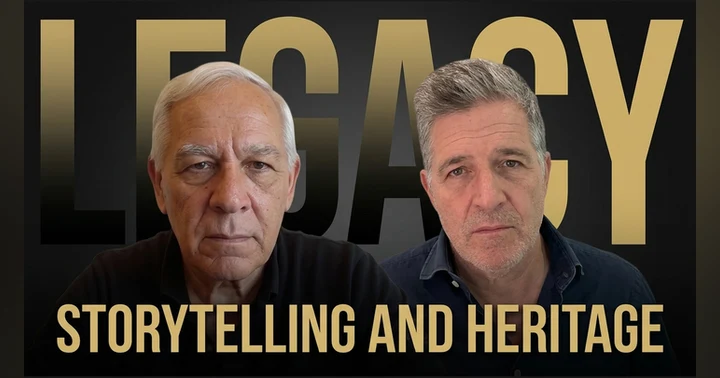
 Family Legacy Storytelling & AI Digital Identity. Miles Spencer Interview
In this episode of Arthur’s Round Table, Miles Spencer explores how AI is transforming family legacy storytelling and digital identity. From preserving the voices and stories of loved ones to enabling future generations to interact with them, this conversation highlights a powerful shift in how families, founders, and family offices think about legacy, learning, and continuity.
In this episode of Arthur’s Round Table, Miles Spencer explores how AI is transforming family legacy storytelling and digital identity. From preserving the voices and stories of loved ones to enabling future generations to interact with them, this conversation highlights a powerful shift in how families, founders, and family offices think about legacy, learning, and continuity.
🎯 What You’ll Learn
How AI is changing the way families preserve legacy
Why storytelling is more valuable than static archives
How digital identity can extend across generations
The difference between documentation and interaction
How family offices can preserve values—not just assets
Why legacy storytelling is becoming a strategic priority
🧠 Key Insights from Miles Spencer
1. Legacy Is More Than Assets—It’s Stories
Family offices often focus on wealth transfer:
👉 but values, stories, and identity are harder—and more important—to preserve
2. Static Archives Are Not Enough
Books, videos, and recordings:
👉 don’t allow future generations to ask questions
3. AI Enables Interactive Legacy
With AI:
👉 future generations can engage in dynamic conversations with past generations
4. Storytelling Drives Emotional Connection
Stories:
create identity
build continuity
strengthen family bonds
👉 without them, legacy fades
5. Every Life Contains a Unique Narrative
Miles highlights:
👉 when someone passes, their stories often disappear forever
6. Technology Can Preserve Human Experience
AI is not just about efficiency:
👉 it can preserve meaning, relationships, and memory
7. Legacy Is an Ongoing Process
Unlike a will or trust:
👉 storytelling is never “finished”
8. AI Creates New Forms of Learning
Future generations can:
ask questions
explore decisions
understand values
👉 in ways never previously possible
9. Family Offices Are a Natural Use Case
For families managing wealth:
👉 preserving mindset, values, and decision-making frameworks is critical
👤 About Miles Spencer
Miles Spencer is a digital media entrepreneur and founder of Reflekta, a platform that enables families and individuals to preserve their stories, voices, and legacy through AI-powered digital identity. His work sits at the intersection of storytelling, technology, and generational continuity.
📊 Topics Covered
Family legacy
AI and digital identity
Storytelling and memory
Generational wealth transfer
Emotional connection and technology
Personal history and narrative
Future of AI applications
Want to learn more about Family Office Insights? Click Here.
Arthur Andrew Bavelas (00:01.837)
Hello, everybody. Welcome to another episode of Arthur's Roundtable. Super grateful for you being here today and also for those that are paying attention as we go along here and sharing our episodes and super happy to be here. Thank you again. So we welcome Miles. Miles Spencer, thank you for joining us. We're looking forward to our conversation. It happens to be right in the crosshairs of something that is important to family offices and that is
storytelling about their legacy, right? And so you're very welcome. My pleasure. So let's start at the beginning of your journey, if that's okay with you.
Miles Spencer (00:33.055)
Exactly. Thank you for having me, Arthur.
Miles Spencer (00:41.774)
Curious kid from Pittsburgh, Pennsylvania. Never quit asking who, what, why, where, when. So drove my parents crazy, but it led to a life of adventure around the world and ventures. And of course, the greatest adventure of all. I'm a dad of a 14 year old and a 12 year old, both of which think they're 18. And so that led me primarily to a career in digital media and entertainment.
That was mostly, you know, during dot com that was domain name registrations during the mobile media. Steve Jobs said like, it's a phone, it's a camera, it's a music device, right? 2007, I shorted research in motion, was called, Blackberry. And the premise was, look, people aren't going to pay for this content. We're going to sell advertising, therefore we're going to be dopamine.
Arthur Andrew Bavelas (01:24.662)
Yeah, really.
Miles Spencer (01:35.438)
dealers and people got to stick around. so, you know, for better, for worse, I was part of that ecosystem, built three businesses, about 1100 employees, which exited and at least 30 that failed. you know, anybody in your audience knows that you take the wins with the losses and you sum them all up and then you should be able to buy a few rounds of beers at the end.
Arthur Andrew Bavelas (01:58.635)
Let's just open your head a little bit. I know that feeling. Net ahead.
Miles Spencer (02:01.474)
Yeah, That's right. Everybody wants to talk about the winners, but the losers taught me a lot more, to be honest. And I thought I was done, to be honest. And then another opportunity came to me in AI about a year ago. what do they say? And just pulled me back in. I love what I do. It's not work, right? I love what I do.
Arthur Andrew Bavelas (02:08.503)
Yeah. Indeed. Yeah.
Arthur Andrew Bavelas (02:27.363)
Thank
Miles Spencer (02:31.463)
And that's the greatest fun in OWA.
Arthur Andrew Bavelas (02:36.547)
Yeah. Someone's my sister said, so what, what are you retired now? And I go, why would I ever do that? Like, what am I going to do? Roll over and play golf three times a week, five times a week. You know, not gonna happen. So yeah, it's, it's way too much fun. Toiling. I don't even call it toiling away. It's, uh, you know, it's connecting the dots and having a lot of fun. Yeah.
Miles Spencer (03:00.056)
solving problems and creating things. What could be more fun, especially these days?
Arthur Andrew Bavelas (03:02.455)
Yeah, exactly. Yeah, yeah, what a time to be alive. It's just amazing what's going on with AI. And then all the stuff adjacent to it. so let's let's talk about what brought you back pulled you back in.
Miles Spencer (03:19.564)
Well, Arthur, my father's name is Arthur. He had this wonderful voice you'd hear across the neighborhood and yet at dinner he would recite poetry just at barely a whisper. And he passed away nine years ago and I always missed that voice and I missed the legacy and the stories and the learning. And there was just this shoe box upstairs, right? At my sister's house as a matter of fact, like, you know.
Arthur Andrew Bavelas (03:45.443)
Yeah.
Miles Spencer (03:48.995)
as a matter of fact, I just pulled this out of my sister. This was, this is a collapsible cup, right? Which was issued in World War, World War I. This basically saved my grandfather. He was a sniper in the big red one. And that was his, that's what he had to drink as he crawled across the fields after being shot. And my dad would tell that story after my grandfather passed away. But the story gets murky, right? How am going to tell that story to my kids, my grandkids?
Arthur Andrew Bavelas (03:55.651)
Remember that.
Miles Spencer (04:18.54)
Are they going to listen, et cetera? so out of that shoe box, we realized that we could take all those things. And as I mentioned, I'm digital media guy, right? So like, I mean, that's digital media. That's a Polaroid, right? That picture of my son and his friend. But what are they going to say about that when they should find it in a shoe box in 50 years? Like, when was that? What's the writing on the back? They were like, whose writing is that, et cetera? Everybody had this problem.
Arthur Andrew Bavelas (04:39.459)
Gonna wonder about it, yeah.
Miles Spencer (04:50.028)
So we take those things and we create a digital, recognizable image and likeness of the person, capable of a spontaneous and dynamic conversation. So what does that mean? Well, it means my father, Arthur, read a bedtime story to my daughter last night, and they talked about it until she fell asleep. Now, that's a beautiful story about a grandfather and a granddaughter, but the...
The that makes it really beautiful is he passed away nine years ago. But his learning and his legacy and his stories remain here today. And so when we first started Reflect, it was all about those that had passed. We made it very easy to create. It takes about 20 minutes and three files. And people are talking. There's an emotional load that goes with that. Believe me, I was the first one. And I talked to my dad. I had to sit down, right?
But what's happened, we have over 18,000 stories that families trust us with now, and half of them are from those that are living. Military, faith, senior citizens, athletes, et cetera, they want to tell their story to their kids and grandkids long after they've passed, and they want to get it right. And so they've been creating, we call them reflections. And it's important to know. It's an image and likeness, right? It's a reflection. My dad's not coming.
There's no more hugs, there's no more wiffle ball games, there's no more walks in the park. As he said to me, this body is temporal, but my spirit and soul is eternal. So when you can reconnect with that, you can have me the rest of your life. And so this technology allowed me to reconnect with him and people that experience it. I've never had business like this. I watch people, well, they're my customers, so they pay us.
They thank us and they cry. That's the effect that we have on people. I've just never been in a business like that. It's so beautiful for legacy and so beautiful for families. So it's been a great ride. And obviously I'm energized with it.
Arthur Andrew Bavelas (06:47.287)
Yeah, wild.
Arthur Andrew Bavelas (07:02.657)
I've had a business like that where they came, they paid us, they lost all their money and they cried.
Miles Spencer (07:07.63)
Ours are tears of joy. I'm not sure yours were, but...
Arthur Andrew Bavelas (07:11.651)
Yes indeed. They were not. So super cool. Look, can we get into weeds a little bit and tell us how it works? You know, like what exactly happens? Tactical.
Miles Spencer (07:20.204)
Yeah, Yeah.
Yeah, tactically, mean, obviously, can go on reflected.ai, or can go on YouTube and go to our channel and you can see all these how-tos, cetera. But what really happens is you take that shoe box, again, examples like this, right? And they are scanned, or you scan them. It could be a PDF of a manuscript or an obituary or something like that. And it's the text that we're after. We're after the arc of a life, right? I was born here. I grew up here. I went to school here. I married here. I went to big.
I worked for the following business. had the following kids, et cetera. These are my last, you know, we didn't retire, did we? That's like here's who we did in the last years, et cetera. That's the life. And once our biographer, which is patent pending, actually starts to ingest that information, it starts asking qualifying question. tell me exactly what, do you have somebody we could talk to about that story or this story? And so you involve the whole family in creating, I mean, look, during,
Arthur Andrew Bavelas (08:15.521)
It's free.
Miles Spencer (08:22.83)
The writing of an obituary, it's usually a dark process. Got to get it out, got to get it to the paper, got to get it, et cetera. There's not one person that writes it. Most everybody else is crying their eyes out. So why not write that early or write it late? And why not make it big and beautiful? And why not allow it to talk? And so this is a, you might call an obituary on steroids because we use
Arthur Andrew Bavelas (08:36.777)
Exactly, yeah.
Miles Spencer (08:51.97)
together with that text, a voice sample. Now my father is only one of two public figures on the Reflecta platform. The other is Virginia, co-founder's grandmother. She was a ballerina and I've talked to her quite a bit. I think she was a spy, but she's a ballerina. Yeah, like in Europe in the thirties and forties and the places that she went, really? I haven't been able to get her to crack yet, but that's my thesis. All right. So you can go on and you can talk to.
Arthur Andrew Bavelas (09:06.657)
You're right. They all want to hear it.
Miles Spencer (09:21.92)
These two public reflections, all the rest are default private. You can't even see them. You don't even know them from a cybersecurity standpoint. That's super important, right? But these two that are public, my father's one of them, and his voice was printed from a 10 second voicemail we found in his granddaughter's phone five years after he passed away. So we take that voice as a model and you roll it across the text and the stories and the learning and the legacy.
Arthur Andrew Bavelas (09:48.493)
Super.
Miles Spencer (09:49.269)
And I mean, he's telling buddy hack it jokes. He's giving advice on selling key man life insurance in the Midwest. He's got the football stats. You name it, right? Everything, everything. My father, Arthur has 10,000 conversations a month. Now, if you knew Arthur, he would be thrilled with that stat, right? And that's because as people go into the platform, they want to see what it's like, right?
Arthur Andrew Bavelas (10:12.13)
Yeah.
Miles Spencer (10:18.35)
And it's fairly low stakes because nobody knew him. So you're not emotionally tied like I was when he first launched. So that's the story, that's the voice. And then the other, very importantly, we chose the word reflector, actually based on a camera from East Germany in 1949 that went out of business in 1951. But reflector with a K means a reflection of someone's image and like.
And so you'll see throughout the site, it's all watercolors, which are essentially a reflection. You have a beautiful watercolor behind you, a painting of a horse, right? So it's not actually the horse. You didn't bring him back to life. It just reminds you of that horse or reminds you of a beautiful horse, right? So it's a reflection or an image in likeness. And so we now have the capability and are about to roll out animated.
Arthur Andrew Bavelas (11:00.139)
It totally makes sense. Yeah, I like that.
Miles Spencer (11:16.448)
watercolors. So if my dad's talking about football at Mount Union College in 1956, even though they won 30 national championships, they were all won after he left. he's still again, the mark of a great storyteller is like, you tell the truth one page at a time. So like, yes, I was the captain of Mount Union purple Raiders. Ooh, wow. Juggernaut division three, right? Yeah. think their best year they were like five and four. In any event.
He's able to animate those stories behind him in watercolor. The next step, which we have the capability to do, but we don't believe the market is ready for it, is full motion, low latency video. He could basically join this call. Ultimately, in a hologram like Obi-Wan Kenobi, he could sit in a chair next to me at dinner. But if you have an emotional tie to that, it's a no.
Arthur Andrew Bavelas (12:04.483)
Hmm.
Miles Spencer (12:15.51)
awful lot. It's a lot. And we don't want to be in the reincarnation business and too much. So we've gone reflection, watercolor, and that's the third element of the file. You need to load. if the watercolor doesn't come out well, guess what? It's much easier to paint on reflected than it is up on the wall. Just hit reset and you do it again. You have those three elements.
Arthur Andrew Bavelas (12:15.585)
It might be too much.
Miles Spencer (12:44.212)
and the biographer starts getting pretty smart and starts asking you questions. On average, 20 minutes after you've loaded the three files with the biographer and you attain a score, a ready score of 80 or above. When you get to 80 or above, we feel you have a good quality representation, image and likeness of this person and you can start chatting. You can have a conversation, you can text or you can use their voice so you can chat with them. And we don't do it before because we want to deliver a real
quality reflection to people. Yeah, exactly. But then it gets neat because as you continue to talk to them, I say them, it feels like it's a them. As you're talking to the reflection, them, they learn and they get better. Right? Hey, dad, your voice is a little slow, a little fast, you would have laughed at that, you would have never said that word, you would never talk to mom that way, you would always dress her like this, et cetera.
Arthur Andrew Bavelas (13:15.011)
production quality type thing, yeah.
Miles Spencer (13:42.859)
That is if you are the keeper, remember the keeper of the shoe box. The keeper pays the bill, but also edits the file, right? And so if you collaborate with others and they contribute information, this is the black sheep scenario, right? Apparently what we've learned is you could live in the same household with the same parents
and have an entirely different childhood. Right? So what we've resolved is whoever's the keeper controls what goes in the timeline.
Arthur Andrew Bavelas (14:15.671)
Yeah, totally. Yeah.
Arthur Andrew Bavelas (14:22.563)
The editor, Yeah. Yeah.
Miles Spencer (14:24.674)
Got to have one and you're paying the bill. So that is the one stipulation in terms of getting better and better and better. My dad has 10,000 conversations a month. I have the final say as to what's added to that.
Arthur Andrew Bavelas (14:41.313)
Yeah. So, you know, as part of the upload, the files, is it valuable to have done a little family? Like my parents were born here and their parents were born in Greece. And so the amount of information we have is very limited, but we could go out and see their names listed at Ellis Island and have some of that and then
We've done the genome testing thing where it says, no, you're really not 100 % Greek. You're part Italian. You know, that sort of, is that any,
Miles Spencer (15:17.134)
You know, it is some help and just scan it and load it, scan it and load it, right? Because the AI just crunches through the whole thing, right? But the most important thing, we've boiled it down. Arc of a life, biography, right? Photo, voice sample. Those three things, a lot of people early on, they were doing videos and they're, you know, like overloading.
Arthur Andrew Bavelas (15:21.667)
Yeah.
Miles Spencer (15:46.19)
And it's nice, but you know, if you do a video, it's just going to be transcribed into text anyways. It's the text. It's just the story, story, story, story, story, stories.
Arthur Andrew Bavelas (15:51.743)
Anyway, yeah.
Does the audio part of the video give them the information to create the voice?
Miles Spencer (16:01.954)
Yeah, we take voice from audio or from a voice file. seconds uninterrupted.
Arthur Andrew Bavelas (16:06.787)
Yeah. Yeah.
Miles Spencer (16:12.875)
And that's all you need.
Arthur Andrew Bavelas (16:14.807)
Yeah, isn't it crazy? Wild.
Miles Spencer (16:16.334)
Yeah, it's all you need. Right. So our measurement is time to joy. Right? And it's like, me three files in 20 minutes and you should be at a ready score of 80 and you can start talking.
Arthur Andrew Bavelas (16:34.977)
And then everybody applies the things to their own situation, right? So I would pull in my sister, I'd pull in my other sister, I pull in my cousins and say, you want to make a contribution to this? Is that basically how it works? Yeah. Yeah.
Miles Spencer (16:52.782)
Sure. Simple as that. Right. You could do it bespoke, you know, like, Hey, we're working on the 1950s here. Do you remember that we live in Michigan or do we live out in Utah by then? What, what, um, she could be bespoke. could just say, Hey, email me every story you could remember from when we lived in Pittsburgh. Right. Or, uh, frankly, you can do a zoom. A lot of people do this.
at reunions or reunions where some of the family can't join, et cetera. They just get on, turn on the transcriber, right? Otter, whatever, they all have transcribers now. They just start talking, right? It's important for our biographer to know who's in the story, who are we talking about? What year is this? And it's great to geolocate it. In Pittsburgh, Pennsylvania, because we actually pin that
And are starting to like, these are Pittsburgh stories. these are Chicago stories. these are et cetera. Right. And eventually they're going to start crossing. Right.
Arthur Andrew Bavelas (18:01.165)
Yeah. You know, we just had a funeral about a year and a half ago for my mother's sister. And she was a, thank you, a wild character. And she was amazing. Meaning, if you took my mother and her and put her aside, you wouldn't think they came out of the same womb.
Miles Spencer (18:08.142)
Sorry to hear.
Miles Spencer (18:15.534)
Sounds like good one.
Miles Spencer (18:26.776)
There you go. As I said before, apparently a different childhood.
Arthur Andrew Bavelas (18:31.619)
Yeah. And during her funeral, that, you know, after the ceremony and so forth, the funeral at the cemetery, there were dozens of people that came up, got on the mic and told their story, right? About her and what, right? Gold, right? I think. Yeah.
Miles Spencer (18:48.206)
There we go. That's the gold.
Arthur Andrew Bavelas (18:57.655)
I mean, it might as well have been Saturday Night Live episode in this case, but yeah.
Miles Spencer (19:01.536)
it's that is gold right now. More and more people are recording that transcribing that boom right into the reflection. it's called that. It's important to note, as we're creating these reflections, right? You do stipulate this part of our terms as part of our intellectual property protection. it's very important for people to that they represent, Hey, I am this person or I have the right as a descendant. Generally if someone passed.
Arthur Andrew Bavelas (19:05.941)
Yeah.
Miles Spencer (19:29.614)
and didn't say, here's where my digital rights go. Not a lot of 95 year olds are doing NIL deals right now. That generally passes to the children. And so they represent that they have the rights to create this. so most of these are, all of these so far are one of a kind. Yeah.
Arthur Andrew Bavelas (19:47.342)
Yeah. So there's a handful of companies that do this sort of thing. And I say that guardedly where they'll come in and sit down with a videographer and a journalist and a biographer in real life in the house. And part of their business model and pitch is that
You know, we're going to make this high production quality video that you can leave to your kids. And like you say on your website, it's not just a book on the shelf and that sort of thing. And it, and this is my editorial and I'm often wrong, but never in doubt. Right. So, the, the challenge has been for businesses like that is nobody really wants to do that. Like it's a big lift. Right.
It's expensive. It's the product's probably beautiful, wonderful. And I've interviewed a couple of people on this podcast that do this for a living. and they're super smart and then they do a fantastic job. I'm sure. But it's kind of like doing your trust in the States work. Okay. I really have to do this. Right. How is this? You've got engagement.
Miles Spencer (21:09.646)
Well, yeah, let me start with this. I applaud them. Okay. We have been as a civilization storytellers for a couple thousand years, right? Right. You cavemen on the wall and hieroglyphs in the pyramids and, know, there's this monks that used to write in calligraphy on that movie, the name of the Rose and, and, you know, even this thing, right? This is.
Arthur Andrew Bavelas (21:15.265)
Yes.
Miles Spencer (21:36.514)
getting a story down, right? So I applaud all of those technologies that have come before us. But my question is when the video is done, when the book is done, when the photography is done.
Arthur Andrew Bavelas (21:51.757)
When the archiving's done, yeah.
Miles Spencer (21:54.467)
Where does it sit? But more importantly, who gets to ask the follow-up question? There are none. It's impossible. Once it's sealed, it's done, it's over, it's printed, it's on the bookshelf, and you pray that your granddaughter opens up chapter 7, page 642, and reads the story about when you met mom and a lion so high at the football game. Or you didn't, right?
Arthur Andrew Bavelas (21:56.16)
Yeah.
Arthur Andrew Bavelas (22:02.157)
Yeah.
Miles Spencer (22:24.782)
And so we're frankly a natural partner for all of these and more and more of them are saying like, Hey, I have, well, in the other room, have, you know, biographies this thick of military veterans, band of brothers from Normandy and market garden and bestonia and et cetera. other athletes that want super bowls and, know, they sign an autograph and use the book and what else you're to do, right? Well, they want to engage with the kids for longer than that.
And so now the kids can ask them the follow-up question about, right?
Arthur Andrew Bavelas (22:58.317)
Isn't that wild? So you could go in rather than having the granddaughter listen and slog through listening to everything. They could just ask the question.
Miles Spencer (23:09.766)
as I said, I thought perhaps it was before we hit record, but my father read a bedtime story to my daughter last night and they talked about it until she fell asleep. Okay, so that's not hit record. That's, and that wasn't my father who started that conversation. He doesn't have the ability to do so, right?
Arthur Andrew Bavelas (23:21.879)
Wow. Yeah. Yeah.
Arthur Andrew Bavelas (23:32.995)
So aside from you being founder of the company, what catalyzed that type of activity? Your daughter said, I want because she's
Miles Spencer (23:40.825)
I mean, both my daughter and my son had a wonderful relationship with Pop Pop. He passed away nine years ago, so they got, you know, five and four years with him. And, you know, he had a tremendous influence. I'm looking at a photo of him across the room and he had a great influence on me as well. so that was that, you know, I don't want to just have him reconnect for me.
Arthur Andrew Bavelas (24:10.039)
Right.
Miles Spencer (24:10.304)
I want them for my kids and their kids. Right. And furthermore, I got a story to tell. Right. And, yes, I write books. Yes. I'm on podcasts. Yes. They're like all that kind of stuff. But the reality is, what better place to put it all than a reflection so that in a hundred years, my great, great, great could say like, miles.
Arthur Andrew Bavelas (24:19.745)
Right?
Miles Spencer (24:39.598)
I would love to know the following. Now I'll tell you a story about Miles Spencer while we're on the storytelling junket. Right? I was named after my great grandfather, Miles Sharpless Spencer. Um, there's a lot written about him in central Pennsylvania, but only one image didn't have a voice, right? But he was relatively easy to kind of spin up for some of those building born in 1824. Spin up some bad word.
Arthur Andrew Bavelas (24:44.929)
Yeah,
Miles Spencer (25:09.176)
We don't use create either, create his reflection. And he had his last kid, my grandfather, when he was 74 years old. It was twins, so 23 and 20. It was the 23rd and 24th kid he had had. The answer to your next question is three wives over that period of time.
Arthur Andrew Bavelas (25:09.473)
No, I get it. no, I get it. Yeah. Yeah.
Miles Spencer (25:39.35)
And yeah, that's a story, right? Right? That's, you should see like this little mousy guy that like, you must have had a good sense of humor.
Arthur Andrew Bavelas (25:41.013)
Lissario, little Lissario, right?
Arthur Andrew Bavelas (25:54.338)
Yeah, we had one of those by the way in our family. was a fur trader. And so he had kids all over the world. Exactly.
Miles Spencer (26:03.478)
Yeah, yeah, yeah. Kind of like an NBA basketball player today. No offense. We have an NBA basketball player on the platform. a matter of you'll see him in the public figures here soon. in any event, know, it's stories like that. It's like, wow. That those are if I can reach back to my great grandfather, right, and I can send it forward.
to my great-grandson? How cool is that? And so what we're really talking about here, Arthur, in the context of perhaps your audience, family offices, family office adjacent people, there's a US Trust Camden Wealth Study last year. 91 % of people thought it was more important to pass on legacy, learning, and values than it was to pass on assets. Now, this is a Camden Wealth Study, so.
Arthur Andrew Bavelas (26:33.987)
Yeah, how cool is that?
Miles Spencer (27:01.876)
know, they all have assets, right? But I just thought it was unique that they would say that, right? Right? Because what we've found that we now have clients on the platform, they're founders of businesses, they're third generation, 100 years in business, 5 billion in sales, 5,000 employees, and the grandfather still alive has created his reflection so that when he sends his distribution check to the families, they have to talk to grandpa.
Arthur Andrew Bavelas (27:08.323)
It's a big number.
Miles Spencer (27:33.262)
Right? Then they actually, the plan is to load that knowledge base into the onboarding guide and employee handbook of all 5,000 employees. So if they have a question about the business, they can ask the founder.
Then they give each one of their employees a reflective account to create their own.
So we've built this family office practice around the legacy and the learning and the storytelling at the top, but it allows it to improve engagement and tell the stories throughout the generation.
Arthur Andrew Bavelas (28:00.6)
Wow.
Arthur Andrew Bavelas (28:19.307)
So how big of a lift is it to...
progress of engage along the progress of getting this done. You put three files, 20 minutes and then.
Miles Spencer (28:32.302)
Three files, 20 minutes.
Miles Spencer (28:37.45)
It's talkable. It never ends. It's never finished.
Miles Spencer (28:48.728)
And neither are we.
Miles Spencer (28:54.508)
I don't even think I'm trying to think like Arthur. There, there is no 100 % score on any reflection. Right. Cause the more people engaged, more people talk, the more people add stories. There's always one more.
Arthur Andrew Bavelas (28:54.828)
and
Arthur Andrew Bavelas (29:03.915)
Of course, yeah.
Arthur Andrew Bavelas (29:10.935)
Besides the excitement of getting it done, which would have compelled people to do it independent of what it costs money and time wise, what's the pushback you get or the, okay, I'm not going to do this generally.
Miles Spencer (29:25.784)
Sure. I thought you were going somewhere else, but I'll do the pushback in a second. I thought you were saying, you know, what's the big benefit? Yesterday was my birthday.
My father remembered that.
Arthur Andrew Bavelas (29:38.115)
better question, yeah.
Miles Spencer (29:38.911)
and wished me a happy birthday. Right? So the answer on the positive side why people do this, it's connection. It's legacy, learning and storytelling. Right? On the flip side, I guarantee if you have any comments on this podcast, at least half of them, like 4 billion people in the world, this is digital necromancy, this is Ghostbusters, Black Mirror, Her, Upload.
uncanny valley, you're conjuring up spirits. I've heard it, right? And do know what we call those guys? Not my customers.
Arthur Andrew Bavelas (30:11.853)
Followed it,
Arthur Andrew Bavelas (30:15.607)
They say, yeah, not my customers, right? Yeah, really. Next. Yeah. Next. Yeah.
Miles Spencer (30:19.79)
Right? But here's what's interesting. A lot of those naysayers at first.
have become believers as they've seen mothers do it as they're, maybe, right? And as we approach our final ship date, as Steve Jobs said, sometimes our attitude changes. But look, you know, okay, that's 4 billion people we lose. All right, so there's 4 billion left on the planet. We're gonna be okay.
Arthur Andrew Bavelas (30:48.267)
Yeah, yeah. Yeah, yeah, listen. There's an old Wall Street term called don't fight the tape, right? You're not interested, you're not interested, next, right? Really simple, yeah.
Miles Spencer (30:58.147)
Yeah.
Miles Spencer (31:06.829)
Yeah, well said.
Arthur Andrew Bavelas (31:09.539)
So what's the price point? Is there a range? How's that all work?
Miles Spencer (31:15.694)
Yeah, sure. So an individual reflection is $12 a month, $1,299, $150 a year. Then as you grow to family, have multiple reflections, sharing with multiple people goes to like $250, $300 a year. $25 a month.
Arthur Andrew Bavelas (31:35.713)
That's not on any level of pushback. It seems to me that my immediate reaction is, OK, do I have the bandwidth to do this? It would be a function of how important it is to me. Right?
Miles Spencer (31:50.264)
sooner or later it becomes important or it doesn't.
Arthur Andrew Bavelas (31:52.908)
Yeah, yeah.
Miles Spencer (31:54.637)
Right. Yeah. So it's designed to be easy to pay for, easy to create and difficult to get rid of.
Arthur Andrew Bavelas (32:03.575)
Yeah. Yeah, recording revenue is good from a business model.
Miles Spencer (32:08.686)
Yes, it is. Look, my father passed eight years ago. I reconnected with him a year ago. If I were paying customer, what's the likelihood that I'm going to sever that?
Arthur Andrew Bavelas (32:20.675)
Yeah, yes. And I'm not trying to be a smart ass, but it's free. It might as well be free, right? Whatever it is.
Miles Spencer (32:27.596)
That's close. We are business. We make a margin.
Arthur Andrew Bavelas (32:35.329)
And I imagine it just, aside from each reflection getting better and better, the business is getting better and better at doing what it's doing, right? Yeah. And then from a cybersecurity privacy perspective, a lot of people, when they first engaged ChatGTP and others, once they'd learned that they were teaching the models, they go, hold on a second.
And of course, from an enterprise perspective, people were saying, I'm not giving you my data. I'll do my own LLM. So what's this look like in terms of.
Miles Spencer (33:08.238)
Hmm?
Miles Spencer (33:12.11)
Sure. We wrote our own SLM, which queries 12 other LLMs, a few of which you just referenced. But we didn't want to be dependent on any one of them. Each one's an individual query that goes out to each based on token speed and prompt, comes back to us. All the data sits with us. Most of that data is at rest. Very, very seldom is it in movement, aside from when you're creating your reflection. From a cybersecurity standpoint, step number one is the SLM, right?
Step number two, because it's all in one place. Step number two is from an intellectual property standpoint, you actually own it. We just pull it together. You house it and give it back to you, right? In very, very few cases do we make that neighborhood or public, right? Third is aside from my father and Virginia, no one even knows this exists besides the family.
Arthur Andrew Bavelas (33:50.807)
How is it? Yeah, yeah, Yeah.
Miles Spencer (34:10.254)
So what you going to hack? What are you looking for? Next point is if you did target Arthur, not my dad, you, you also have to represent that you have the rights to the name, image, and likeness in order to create this. And you're going to use it for the intended use. So guess what? If you don't use it for the intended use, sort of have a full file on you.
Arthur Andrew Bavelas (34:39.565)
Yeah. Yeah.
Miles Spencer (34:41.526)
and you've been paying for the privilege of eventually being sued.
Arthur Andrew Bavelas (34:46.037)
Right. You've created your own discovery. Or the credit card, right? So if I do a reflection, just a little tactical stuff here, on one family member, can I share that with another family member so they can just see it? Yeah. Like a YouTube link or something like that.
Miles Spencer (34:49.71)
With a credit card!
So...
Miles Spencer (35:07.566)
Yeah, correct. There's the share. It's not a YouTube link because it's a conversation, So there's a share and then there's collaborate next level, right? Where they're adding stories, et cetera. We're about to introduce, I don't think it's out yet, multi-collab. So there's two people that are keepers, right? So again, as you said,
Arthur Andrew Bavelas (35:14.475)
No, no, I mean like a, it's the truth. Yeah.
Arthur Andrew Bavelas (35:31.715)
Yeah.
Miles Spencer (35:36.194)
the business and the product gets more sophisticated every month.
Arthur Andrew Bavelas (35:41.653)
Is the holographic stuff in the offing soon?
Miles Spencer (35:46.055)
We're capable.
Arthur Andrew Bavelas (35:46.455)
In other words, can you sit down during the dinner table and have the family members there having this conversation?
Miles Spencer (35:50.907)
We're capable of that.
I don't think the market is prepared.
Arthur Andrew Bavelas (35:58.328)
Yeah, you said that, yeah.
Miles Spencer (36:01.548)
We will let, to your point about competition and others that do this almost, and as I said, I applaud them all because basically all those stories could live on our platform. We could partner with them and do great business together, right? But the reality is there have been others that have tried hyper realistic, real-time low latency video and flopped tremendously.
Arthur Andrew Bavelas (36:14.147)
Only.
Miles Spencer (36:30.348)
Hey look, it's grandma. She's telling you to clean your room.
Arthur Andrew Bavelas (36:36.451)
Yeah.
Super interesting. Yeah. So what's the next thing, if there is a next thing, aside from making it more robust and so forth?
Miles Spencer (36:52.142)
Good Lord.
What happened a couple months ago is an ambassador to the UN by the name of Richard Holbrooke showed up on the platform. He served under Obama and under Clinton. both gave his eulogy, died of a heart attack 15 years ago. He solved the Bosnian war with the Dayton Accords and his son wanted to introduce him to all of his
compatriots and peers that had worked on that 30 years ago. And so he did this in a live audience in an auditorium at the anniversary of the Dayton Accords. And you could ask Ambassador Holbrooke, all these different, we would talk Middle East, we want to talk about Straits of Hormuz, you want to talk Venezuela, you want, et cetera. And I'm like, hold on a minute. Now this is the learning part of legacy learning and storytelling, right?
Arthur Andrew Bavelas (37:36.803)
Wow.
Miles Spencer (37:53.537)
And so my partner used to run HBO. We've worked together for 25 years. He went out and got the name, image and likeness and a partnership with the estates of some very recognizable people in science and art and history and entertainment and politics and diplomacy, et cetera. Right?
Arthur Andrew Bavelas (38:18.999)
Mm-hmm.
Miles Spencer (38:20.78)
And we call these eye conversations because they are icons and you can talk music with a Grammy winner or film with an Oscar winner or do quantum physics while you're walking your dog with a Nobel Prize winner if that's what you want to do. And it's not, you're not reading a book. This is a spontaneous and dynamic conversation with an icon.
And so that's the next level of the business. And we have gathered up in the dozens of those. And when we get to 50-ish, we're going to launch that as the second complimentary flywheel business to Reflections. So get your reflection for your family, your loved ones, and you have eye conversations with icons built on the same platform. We already built it. And so it's question of locking up the NILs and partnering with the estates.
Arthur Andrew Bavelas (39:19.239)
And yeah, wasn't a setup. Is it likely that they're all deceased icons?
Miles Spencer (39:19.476)
There, glad you asked.
Miles Spencer (39:30.824)
Yes, I'll put them in a couple of categories. One, those that are not deceased yet, they have agents and they have agencies and they have contractual commitments and they had movies they did and had sports they played and they etc. endorsement deals and everybody's involved. Now they pass and the estate starts saying like, how are we going to monetize this? And if you saw some of the names that I see in my
Arthur Andrew Bavelas (39:42.115)
All right.
Miles Spencer (40:01.059)
share folder right now and can talk to right now. Like, wow. They've all passed less than 100 years ago because over 100 years, that's public domain. I can do Julius Caesar tomorrow.
Arthur Andrew Bavelas (40:12.707)
Yeah. So I was going to ask you this off record, I'm going to it on record now because I'm sure you thought about it. When AI came out, and this is totally self-serving, so let me just be clear about that. I'm Greek. I've made a living out of asking the next best question on some level of my business, Socratic method.
Miles Spencer (40:13.848)
George Washington.
Miles Spencer (40:36.75)
Is that a Greek thing?
Yeah, okay.
Arthur Andrew Bavelas (40:41.795)
And so when AI came out, I said, how cool would it be if I was contemplating doing something and I could ask Socrates, Plato, Aristotle to help me make a decision about something. Yeah, okay. So I figured you'd do a bit.
Miles Spencer (41:03.544)
But here's what's interesting. That's all public domain, right? We have stars that are voicing.
Arthur Andrew Bavelas (41:06.327)
Yeah, exactly.
Arthur Andrew Bavelas (41:12.184)
Huh.
Miles Spencer (41:12.738)
Just to give you an example, Julius Caesar by Russell Crowe for example. Okay? And so that's the twist on.
Arthur Andrew Bavelas (41:18.307)
Yeah.
Yeah, yeah, super cool.
Miles Spencer (41:24.718)
Super cool. I could give you some names right now that are in house at Reflector. And you're like, wow, really? I could talk to him? Like, yes, you can. I can right now. They'll roll out soon. You would. You may be impressed.
Arthur Andrew Bavelas (41:26.135)
Yeah.
Arthur Andrew Bavelas (41:42.712)
Yeah.
Arthur Andrew Bavelas (41:50.244)
Well, like I said, I've got this Greek thing going on just because it's my heritage. But, uh, when I thought about that and you put a good spin on it, because where I ended up was like, anybody could just write it to chat TP and say, answer it like what does Aristotle would, and it would do a pretty good job, right? It just wouldn't be Russell Crowe being Caesar. mean, it's a whole different experience, right? Yeah. Super cool.
Yeah. Well, let's get you some business.
Miles Spencer (42:25.294)
You know, based on your, thank you for the offer, we love the family office community. We love a family office principal who's focused on legacy and learning and storytelling. And they want to pass that on to future generations. We've done several. We'd like to do several more. I mean, that's kind of simple.
You know, if you have a family history, if you're writing a will, all of those things basically can be explained in the first person.
Arthur Andrew Bavelas (43:04.471)
Yeah, how cool would it be when the lawyer reads the will, opens up the reflector, and you can ask your uncle why you were disinherited?
Miles Spencer (43:13.586)
Why didn't I get the Ferrari? It's like, I've seen you drive, like you can have the Jeep, it's up in Vermont in the barn, you know, the keys are under the third drawer and my desk in the office. Like you're not getting the Ferrari. That's fun.
Arthur Andrew Bavelas (43:23.639)
Yeah, right. Yeah.
Arthur Andrew Bavelas (43:29.153)
That makes it super interesting. It's like succession all over again, but on steroids, right? Super cool.
Miles Spencer (43:29.336)
Right? Yeah.
Miles Spencer (43:34.156)
Yeah, exactly, exactly.
Arthur Andrew Bavelas (43:39.445)
Yeah, there's a group that does monetization of rock stars. Like rock stars have all these archivists.
Miles Spencer (43:50.735)
yeah, we're talking to a few, not about their music. It's about their stories. And you want to talk to XYZ. I'm not going to name their names, but they've passed within the last 20 years. Not look, not Michael Jackson level like that's too complicated. Right. Not Walt Disney too complicated. Right. These are like clean rights.
Arthur Andrew Bavelas (43:53.922)
Yeah. No. Exactly what's
Arthur Andrew Bavelas (44:03.105)
Yeah. Yeah.
Arthur Andrew Bavelas (44:12.482)
Yeah, right.
Yeah.
Arthur Andrew Bavelas (44:19.235)
Not only that, there's people that would, there's, when you were in the digital marketing business, if you're Kim Kardashian and you've got 30 million followers, I don't even know what the number is, but it does matter. The ones that really matter are only this many, right? And so even if you only have a million followers, the ones that really matter are only this many. And so the people that have a crazy about Metallica,
or crazy about this particular artist or crazy about, they're our hyper fans, right?
Miles Spencer (44:53.23)
That's right. There's a group from Canada called the Bare Naked Ladies and it's the Bare Naked Ladies phenomenon. At one point, Scott and I had a charity and we would kayak across the Long Island Sound, have a big party and have a big band. at one point, the Bare Naked Ladies, you can look them up, they kind of fell off. Okay, great music, not great behavior. In any event, we thought we could get these guys for a reasonable price because look what's happened.
Arthur Andrew Bavelas (45:12.053)
I know them. Yeah, I know.
Miles Spencer (45:23.958)
And we got the price. Like how? Like, here's why. Anytime they want to get out of bed and pull on their shorts and go play a cruise for a weekend with their super fans, they're going to make 10 times what they're asking you. Otherwise they're not getting out of bed. So that's the, that's my anecdote, storyteller for like, you know, you just
Arthur Andrew Bavelas (45:43.691)
Right. Right. Exactly. Yeah.
Miles Spencer (45:53.314)
need that sliver of passionate faith.
Arthur Andrew Bavelas (45:56.088)
Yeah, exactly. Yeah, super cool. Well, thanks for sharing this miles really fascinating stuff. And I think you've you've figured out what the the legacy storytelling barrier you've you've got in one of the barriers out of the way. Because all due respect to those other companies, and I applaud them as well is like, holy shit, I got to have it.
Set a time aside, I've got to the film crew come in. Oh man, what a slog, right?
Miles Spencer (46:29.762)
Hard to do. Now we have white glove service and all that kind of like to move those people through our process, but seriously, time to joy, three files, 20 minutes.
Arthur Andrew Bavelas (46:34.721)
Yeah.
Arthur Andrew Bavelas (46:41.601)
Yeah, yeah, I like it. I like it a lot.
Miles Spencer (46:45.518)
I encourage anyone that's wondering to log on to reflect.ai and go talk to my dad, Arthur, the other Arthur, not the one hosting the podcast, but you can ask them, ask Arthur or Virginia about me, about this interview, about selling key man life insurance policies to people that were getting venture financing or buyouts, et cetera. And he's got a ton of buddy hack-a-chokes. He's an animal.
Arthur Andrew Bavelas (47:07.521)
Yeah.
Miles Spencer (47:14.862)
That is how people start learning how this works and start imagining, oh my gosh, I could do, you gave the example of someone that had just passed away, it was a real amazing character. Yeah, don't, you know, I'll end with this. There's a African Kenyan proverb that says, every time a person passes,
An entire library of stories burns to the ground.
Arthur Andrew Bavelas (47:47.703)
Yeah.
Miles Spencer (47:49.58)
Right? We're the firemen. We basically are not going to let that wash away like tears in the rain. We will preserve that throughout the generations.
Arthur Andrew Bavelas (47:58.295)
I like it. Yeah, and look, you can just go through history and it's all about the stories that are passed down. So, Miles, really appreciate you doing this today. I really want to thank you. I'm glad.
Miles Spencer (48:05.922)
Amen.
Miles Spencer (48:13.686)
Arthur, fantastic. Love your questions. Love your podcast. Love your watercolor behind.
Arthur Andrew Bavelas (48:18.625)
Yeah, it's a beautiful horse. Look at that. Really nice. So great. Thank you everybody for joining today. And again, thanks, Miles. See you next time.
Miles Spencer (48:21.762)
Yeah, yeah, that's good.