Apple Podcasts
 Spotify
 YouTube
 Family Governance & Family Office Communication with Arnaud de Coninck
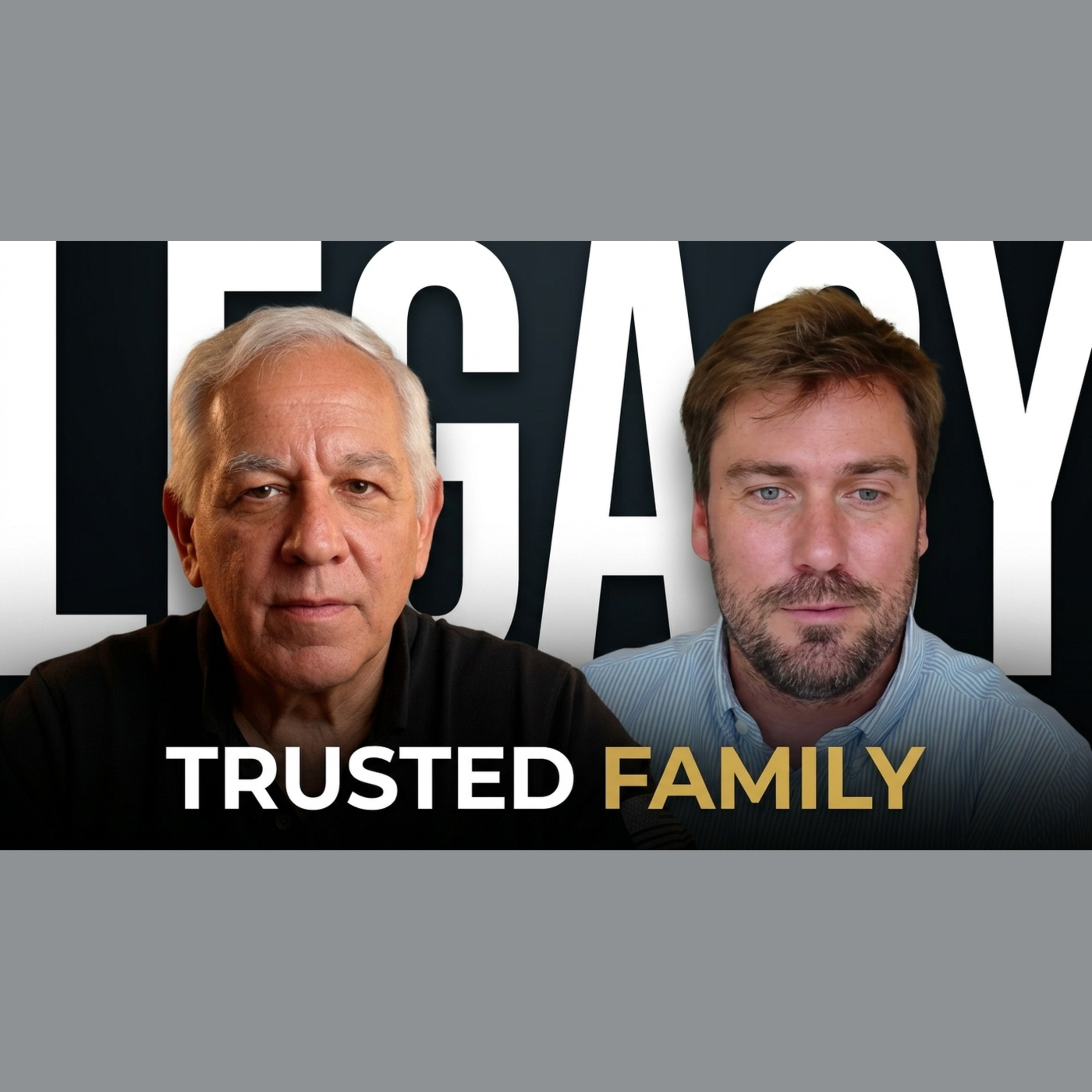
Arnaud De Coninck explains how Trusted Family helps family offices improve governance, communication, legacy preservation, shareholder alignment, and next-generation engagement through secure technology platforms
In this episode of Arthur’s Round Table,Arnaud de Coninck discusses how Trusted Family is transforming communication, governance, and engagement inside family offices and enterprising families. From preserving family legacy and values to aligning shareholders and educating future generations, this conversation explores how technology, governance systems, and intentional communication help families sustain wealth and unity across generations.
🎯 What You’ll Learn
Why communication is foundational to successful family enterprises
How family governance evolves across generations
The “four bank accounts” every successful family must manage
Why preserving legacy requires more than financial capital
How technology can improve shareholder alignment and engagement
Why next-generation education is critical for long-term success
How data and communication platforms reduce family conflict
🧠 Key Insights from Arnaud De Coninck
1. Family Enterprises Require More Than Financial Management
Arnaud explains that sustaining a family enterprise requires managing far more than investments and balance sheets.
Successful families must intentionally develop:
communication systems
governance structures
education processes
shared values and purpose
2. The “Four Bank Accounts” Define Family Success
A central framework in the conversation is the idea that families must invest in four forms of capital:
Financial capital
Human capital
Intellectual capital
Social capital
Arnaud argues that families often over-focus on financial wealth while underinvesting in the other three.
3. Legacy Is About Stories—Not Just Wealth
One of the major themes of the episode:
👉 preserving family history, values, and identity is just as important as preserving capital.
Without intentional storytelling and communication:
family cohesion weakens
future generations disconnect
purpose erodes over time
4. Governance Creates Alignment
Arnaud discusses how successful families establish:
family councils
owners councils
next-generation committees
governance processes
👉 to reduce conflict and create long-term alignment.
5. Technology Enables Multi-Generational Continuity
Trusted Family was designed to centralize:
meetings
governance materials
communications
family archives
educational resources
historical knowledge
👉 creating a permanent institutional memory for the family.
6. Communication Must Be Intentional
Families often rely on:
fragmented systems
But Arnaud explains these methods fail to preserve long-term knowledge and engagement.
7. Data Helps Identify Disengagement Before Conflict Emerges
A fascinating insight from the conversation:
Trusted Family helps families identify members who are becoming disconnected or disengaged before larger issues arise.
This allows:
proactive outreach
relationship repair
increased inclusion
8. Next-Generation Engagement Is Critical
Future generations need:
education
involvement
purpose
understanding of governance and legacy
👉 otherwise inherited wealth can become destabilizing rather than empowering.
9. Families Need Shared Purpose—Not Just Shared Assets
Arnaud highlights that many successful families eventually sell their operating businesses.
The key question then becomes:
👉 “What still holds the family together afterward?”
10. Security and Privacy Are Essential Infrastructure
Family offices increasingly require:
secure communication
permissioned access
centralized data management
protected institutional memory
especially as complexity and generational scale increase.
👤 About Arnaud De Coninck
Arnaud De Coninck is a leader at Trusted Family, a platform focused on improving governance, communication, and engagement for family offices and enterprising families worldwide. Coming from a Belgian family business background himself, Arnaud combines firsthand experience with deep expertise in family enterprise operations, governance systems, and next-generation engagement.
Want to learn more about Family Office Insights? Click Here.
Arthur (0:00): Hello, welcome everybody to another episode of Arthur's Roundtable. Super happy to have you with us today and grateful for everyone that's paying attention and sharing it. We really, really appreciate it. I have a long history with Trusted Family in that I met the founders many, many years ago in New York City, and we're super happy to have Arnaud with us today to talk about Trusted Family. It actually is it was an early effort to do something that everybody hoped that they had, and they bit the bullet and built the technology at a time when it was pretty hard to build the technology.
Arthur (0:34): And of course, it's gotten better and better now. And so we're super happy to have this chat with you today, Ornod. Thanks for doing this.
Arnaud (0:42): Yeah, thanks a lot. And really thrilled to be joining Arthur's round table podcast. You know, you guys do amazing things. So feel honored to be joining you today.
Arthur (0:54): Appreciate it. Let's, let's start at the beginning of your journey and then talk a little bit about how a trusted family all evolved from the beginning. That's okay.
Arnaud (1:06): A 100%. So trusted family's initial premise started over fifteen years ago when Edward Thiessen and Edward Yalsen, two next generation members of Belgium families, got together and realized that being part of an enterprising family is not just about numbers, right? It's how do we preserve the legacy? How do we preserve the stories? How do you preserve the family and help make sure that every generation feels united, feels involved, feels listened to in the enterprise ecosystem and so they got together.
Arnaud (1:44): Fortunately for us, Belgium is a tiny country, so every family knows one another. I've since then relocated to Austin. I'll talk a bit more about that in the podcast, but it's a bit of a change. And the real initial premise, as I said, is really to help families better communicate, better cooperate and better align shareholders and future owners of the enterprising families. I started my career at Procter and Gamble, so very different industry.
Arnaud (2:12): I met Edward Thiessen along the way. And I'm also fortunate myself to be a next generation member of a Belgium family business. The company is called Solve. We have two businesses. One is called Solve, one is called Science Co.
Arnaud (2:25): And we were actually the first users of the platform. So I first joined Trusted Family as a user, experiencing firsthand what it meant to get more information about the business, understand more the decisions and the decision making process and the governance. It was kind of eye opening for me the importance for us to communicate. And so when Edward was looking to expand higher internationally, I just felt it was a great opportunity to join the team and it's been, yeah, fourteen years now also for me. So it's been a while, it's been a journey.
Unknown Speaker (3:01): You're a customer at the beginning and now you're involved fourteen years in the business. Super cool. Yeah.
Arnaud (3:08): Yeah. And it's been a business that has continuously been shaping, right? I think we're in the middle of two industries that have shaped so much over the past decade. The family businesses, family offices have professionalized a lot, like there were very less single family offices ten, fifteen years ago than what you see now. Families are institutionalized, professionalized, organized in a way that wasn't the case at the previous generation, which was kind of more discreet.
Arnaud (3:36): The less we speak about us, the better. Today we realize that that is important, but it's impossible. Right. And which brings me to the second big shift that we're in is that we're working and involved in the family business sector that involved, but as a technology provider for that space. And as you alluded to it at the beginning of the session, right.
Arnaud (3:55): And especially today with AI, the way that you build code, work with code, engage with code has completely shifted over the years and not just recently, right? We've been seeing changing all over the years as to how the people consume the media and wanting information rapidly and making sure that the information is secure these days is equally important. So we've been juggling these two industries that have shaped a lot and it's been just fascinating to be part of it.
Arthur (4:24): So I don't know if this is fair, but at the beginning of the family office world, it was largely the Rockefeller group and Rock and Co that built technology to help the beneficiaries of multiple beneficiaries of trusts and so on and so forth. And, you know, we know a lot about them because they've been around for a long time and not, not to compare and contrast necessarily, but you were doing things that they weren't doing early on, just in making sure the beneficiaries got their checks and that the houses were taken care of and the bills were paid, but communicating the history and the legacy of the families. Is that fair?
Arnaud (5:10): Yeah, I think it is fair. And I think we were fortunate that very early we realized that, you know, there's not just the financial bank account where you withdraw and you deposit money that is important in the context of a successful family business that passes on to the sixth generation in my case, but we work with families sometimes that are already in twelfth generation. We work with very different types of families from the G2 to the G12, I would say is our oldest enterprise families. What we realized very early in the process is, so you've got the financial banks, which is super important. It needs to progress otherwise there's no family that can sustain down the line, right?
Arnaud (5:51): So that is really important. You need to continue diversifying, to continue building new businesses, continue being an entrepreneur, continue growing the entities and the companies for it to be sustainable. But there are three other bank accounts that are extremely important or often referred to as family capitals. There is the human capital or what I like to call the human bank to kind of create that analogy with the financial bank. So you have the human bank, which is about how do you communicate as a family?
Arnaud (6:22): What are the values of the family? And if you're not aligned on those matters at an early point that you don't know exactly what are those values and that vision that you want to pass on to the future owners, you are bound to fail, right? And it's very luckily for us, we really realized that it was very important to be aligned with our values. It was very important to communicate our values and it was very important to educate family members about our values and the way that future owners and family members were raised and how we communicate as a family. And then there's the intellectual bank account, right?
Arnaud (6:57): That's in that bank account, what you can deposit in there is everything linked to the family governance. Like how do you structure your family in a way that it will serve its shareholders and the family as a whole? And so you start seeing families that start creating family councils. You start having families creating owners councils, and then maybe there's a family creating next generation committees. And that's kind of a process you go through, but keep depositing information that intellectual bank or in that intellectual capital is extremely important for families to succeed and that fortunately for us and at Trusted Family, they realize that owners realize that at a very early stage, the importance of investing in that intellectual bank and depositing stuff in there.
Arnaud (7:41): And how can those committees and governing bodies kind of support the family also through education programs and others that you build for the family. And then there's the fourth bank account, which I believe is extremely important that our generation is that it's more about, it's not just about the wealth, it's about, you know, it's very different to be the creator of a wealth than to be the inheritor of a wealth. When you inherit the wealth, it's like, well, do you find purpose behind sometimes the money that you inherit? Right. And when you're the creator of it, you know exactly what you're building, but when it just falls on into your hands, like why me?
Arnaud (8:17): What's in it for me? I didn't do anything about it. Like I'm finding purpose is sometimes extremely difficult, which is why the fourth bank account that I like to refer to is the social bank. It's like making sure that there is a social bank that family members invest in together. I think companies need to invest in building social capital, but I think families also, in order to make sure that they can attract and engage and support every family member and every generation of their families to succeed in the long run.
Arnaud (8:46): So I think those financial, social, human and intellectual capitals, or what I call bank accounts are super important to keep depositing, keep withdrawing, but keep engaging in those entities to make sure that the family succeed across generations. And that's really how trusted family has been built to really support all of these initiatives and projects that our families are working around these different entities.
Arthur (9:10): It's really interesting to look at it that way. And then the absence of trusted family, how would you say that those bank accounts, the money's easy, right? That's pretty obvious. I mean, you can, there's a variety of people standing ready to manage your money or manage the money part of it. In the absence of trusted family, it was a little haphazard about how those other three bank accounts were organized, wasn't it?
Arnaud (9:42): Yeah. So it's, it's exactly, I think it's a great question out there, sir. So, I mean, you know, trusted family didn't revolutionize some, you know, we just made it much easier for families to operate. I think when we see families before coming to us from a human capital and communication standpoint, families before coming to us, they do use tools. They use WhatsApp, they use SharePoint.
Arnaud (10:05): Oh man, I started using SharePoint one month ago because we did a full integration with SharePoint. I still understand, don't understand how they're still being used these days, but they use SharePoint, they use WhatsApp to communicate, they use email. All of these are great, but email and WhatsApp, they're not creating the legacy of tomorrow. If you want your information, data is an asset. And you see it these days with all these solutions, data is an asset, an asset that needs to be secured stores for future generations and all those meetings.
Arnaud (10:34): You might think that organizing a next gen might just be once in the year of 2026 and then you can forget about it, but actually the topics that are discussed during that next gen, the materials that are shared during that next gen, the pictures even that are shared during that next gen are extremely important. And if you use WhatsApp or email, they'll be lost after the Lost nine screen, yeah. 30
Unknown Speaker (10:53): I mean, they might be out there, but you can't find them, right?
Arnaud (10:56): You can't find them, right? And being able to know and building that bank of data and that information and centralizing all of that library for the family is so crucial. And it's part of good transition and good succession in families. When you want to invite someone to the NextGen family, he'll be able to see all the other NextGen events that were organized over the past twenty years of his history. So it's really important, I believe, for every family to be able to centralize and structure in a way that is easy to find and well organized based on the permissions, because depending on if you're part of the family council, depending if you're part of the board, depending if you're part of a specific committee, you might not need to have access to different information, but man, how would it been?
Arnaud (11:40): It would have been much easier for me when I grew up to when joining a family council, to be able to see all the conversations, the topics, the legacy of what has happened in that family council so that I can educate myself, learn about everything that has done and also provide maybe suggestions as to how we could do things differently. Right. It was a blank sheet of paper when I joined the family council and it's still too much the case for a lot of our customers joining different committees or boards. It's a blank sheet of paper and it shouldn't be that way with the tools. So I think, and I'm just taking the example of the communication there.
Arnaud (12:14): Right. But same thing with the foundations, right. The foundations, like they do amazing thing and it's very rarely is the impact of those foundations actually shared to individual communities and articulated in a way that is compelling for every generation. So being able to speak the language also of every generation, I think is super, super important. So being on mobile is important, but also making sure that you own your data, whatever you use, these families are become because they're organizing themselves more and more.
Arnaud (12:45): They need the right tools to help them operate. And that's where I think trusted family really is kind of unique and sets apart because you could use Diligent for board. You could use SharePoint for the family office, but then how do these community platforms kind of engage with one another, communicate with one another? And I think that's where trusted family comes into play because we can really communicate and integrate with all these solutions that it be Dropbox, SharePoint, Microsoft, Google drive, Zoom, calendars, all of that needs to be synced in one single location that is secure to be able to operate.
Arthur (13:18): Is there any evidence from what you see anecdotally with the members who are or the customers or of trusted family. Is there any evidence of the what is sometimes referred to as the myth of shirt sleeves to shirt sleeves? And I'm not saying it's a myth. I'm saying it's some people suggest it's a myth. Some people say it's real where the first generation makes it, the second generation spends it, and the third generation loses it.
Unknown Speaker (13:51): I mean, that's some there's some sort of consistent storyline.
Unknown Speaker (13:57): I don't know
Arthur (13:57): how true it is. I'm just wondering whether do you see that evidence that that happens in the families that are with you or is part of the reason why it doesn't happen is because they are with you?
Arnaud (14:11): Yeah. It's a great question. I've heard a lot of, as you say, you know, some say that it's not really true, this whole shirt teeth to shirt leaf thing. I think it really depends because ultimately if a family believes together that it's the right decision to sell, we've got a lot of family businesses that have sold their businesses, but I think what's very important when you make a decision to sell the business is that you do it together as a family with alignment as to what will and will not the family be doing together in the future. Right?
Arnaud (14:43): Because I think the biggest mistake that you can have is, you know, selling a business just because of conflict, misalignment and just going for the first bidder and then not understanding what you can do together afterwards as a family because if you continue collectively investing together, everybody will be better off. You'll have access to better investments, you'll have access to better deals and so on and so forth. So I think we've seen that we have actually a lot of clients that have sold their businesses. I'm onboarding a new client actually now in The US who's sold their legacy business, but they have a family office with all sorts of diversifications or they have a family office with a lot of diversifications and their diversification has become much bigger than their legacy business. And they're like, okay, it's no longer really what is holding the family together.
Arnaud (15:33): It's there because it's our legacy. They don't have any problem at the future generation to sell that. And it's not a problem as long as there's, again, alignment as to where are the values, where are the visions. I think it really starts there in order for families to be successful. Right.
Arnaud (15:48): So I think I would say trusted family clearly helps because we have a way to centralize information, to create that harmony, to create that unity, to make sure that I think one of the unique features that we have on our platforms and the work that we do with our families is we are very good at understanding who are the people who are not necessarily the detractors, but the people who are less engaging with the family, right? If someone hasn't connected to the platform or hasn't seen key information, we have access to that information and the family office can take an action about it. And when I say an action, it's just about sending an email to someone, pick up your phone, go back to the traditional way of communicating, pick up your phone, take your car, go to see me, the person, invite the person for a drink and have a conversation with the family members to show that he or she cares, and that we care for every individual family member. I think that having access and having tools to access that data, I think is extremely important again, in order to avoid conflict and bring more unity and alignment.
Arnaud (16:56): So clearly their trusted family has an important role, but it's much more than that, right? Because if the families miss on their values or if they under invest in one of those four bank accounts that I was referring to, it could lead to conflict and therefore to misalignment and to having family members decide to split in a way, which as long as it's done collectively, I think it's a good thing.
Arthur (17:23): So yeah, it's related, but I often think about what you folks provide and do as a potential method of thwarting the back black sheep going off the rails. Cause we all have, right? Every family's got the, okay, I've got a trust fund. I'm going to go party in Ibiza. Shoot, I got the girl pregnant.
Arthur (17:46): What are we going to do about that? Or I got arrested for drug, whatever. I mean, everybody has those people in their family. Is there any evidence that having this coordinated platform, that it has thwarted those problems or brought people back in from going to the edge? I mean, naturally you would think it would, right?
Unknown Speaker (18:08): But
Unknown Speaker (18:09): Yeah. I think you, I think, and come back, would it make sense to maybe quickly share my screen here for a sec? So what I was thinking here is let me quickly show you. It should work. Yeah.
Unknown Speaker (18:21): Let's I think. Here it is. Perfect. Can you see it on screen? Perfect.
Unknown Speaker (18:26): Yeah. Can see it now. Yeah.
Arnaud (18:31): Perfect. So, coming back to that black sheep, what you're referring to, that's why I thought it would be easier here. It's like understanding the data, right? Our client success team spends a lot of time to understand, okay, well over the past, let's say since the beginning of the year, right? Since the beginning of the year, we are now in, it's frightening to say, let's just go for the tenth.
Arnaud (18:50): Well, what has happened since the beginning of the year on the platform? Who has the member who has engaged? Who are the session? Oh, look, there's a big deep in session between March and April. What happened?
Arnaud (19:01): What did we not do in order to build that unity here? What was the content that generated the most information? The announcements, which space, was it the shareholder space, the board space? Ah, that's because we had a board meeting last week. That's why there was more traction happening there.
Arnaud (19:17): And also, and this is where I think it is extremely important. It's like, who are the members that are engaging the most versus who are the ones that are engaging the least, right? On the specific timeframe. And here we're fine. People are connecting, they've seen six files here, one document, two surveys that they've completed, etcetera.
Arnaud (19:35): So this actually, I think would be a healthy family, but there's sometimes a great to live. Super critical to be able to understand that, to understand how are people engaging on the platform. And if people are not engaging, let's be smart about it. Right? If there was if Hermine was here and there was zero connection since the beginning of the year, I mean, she's getting married.
Arnaud (19:58): So maybe that's a reason. Right? She was been probably extremely busy, but let's call her. Let's show her that we can. Let's ask her, Hey, what can the family do for you to feel more engaged?
Arnaud (20:09): What can we do for your family? What can we do for your kids? What can we do for you? Is there a specific piece of content that you're curious about or interested in? Do you have passions?
Arnaud (20:19): Understanding that is super important so that we care and we can make sure that we can respond to the needs of each individual family member. And so that's one way of making sure that there's good alignment and good activity. Another way that there's good activity and good alignment is let's say you're organizing a board meeting, right? Let's just take here or whatever, let's take this share or what is it? This board retreat that we're organizing here, right?
Arnaud (20:46): So we can see it's happening in the agenda, have where it's happening, etcetera. And then you've got the event paths where you can add information from SharePoint, from Google drive, Dropbox surveys, etcetera. You can do whatever you want. Right. And I think here what's super important is organizing a meeting is great, but if people are not coming prepared for meetings, it's bad.
Arnaud (21:05): Right. And again, let's empower people to have access to engage with you. Right. So for every piece of content that you can have on the platform, you have visibility of statistics so that if you open a video, if you open a newsletter, if you open a document, if you open an article, whatever the topic, you can see who's interacting with that information. And the concept of this meeting, if you see that a board meeting or a shareholder meeting or an exchange gathering is happening next month and two or three people haven't had the time yet to see it, let's be smart about it, right?
Arnaud (21:36): Let's send a reminder to people. Let's be like, hey, you know, Hermine, she's the one that didn't interact the most or also put Magali in the mix, you know, why not? Here is our board document for tomorrow, you know, let me know if you have any questions.
Unknown Speaker (21:54): Little nudge, right?
Arnaud (21:56): Exactly. Little nudge, you know, hope baby Charlie as well, you know, be personal, try to interact with the person in a way that he or she will feel that you care. And I think this is, you know, families on how to communicate. Communication habits is one of the services that we do. One of the key points that we do with our customers, just to make sure that they interact with their family members appropriately.
Arnaud (22:27): So, clearly we're helping families drive more cohesion, stay more engaged, stay more informed, stay more supportive of these initiatives. But that only happens if you look at this data through the statistics or through documents and you really
Arthur (22:44): look at the data, it table stakes to have this super secure, but let's talk about the security a little bit. How do you guys use that?
Arnaud (22:55): Yeah. So there are three things that we do at trusted family, right? There's the platform, and I can talk a lot about it, and I'm happy to share more about the platform also, but the platform, we have different services
Unknown Speaker (23:07): for lost a little bit of your audio. Okay. It just, it just went off the rails a little bit. We're good. Can you hear me?
Unknown Speaker (23:17): Yeah. I think there's bandwidth, right?
Arnaud (23:21): And we do three things really as an organization today, right? The first thing that we do is the platform. Let me go ahead and share my screen again. I stopped sharing it. So it's the platform.
Arnaud (23:31): And again, we're onboarding a family in New York right now. It's just one family member and his three children. And the reason why he has a platform is because he wants a secure way to centralize their information, his wills, in case something happens, it's not all in his emails or all sorts of places. Right. And then we also, we have different packages for rising family enterprises in gen one, gen two, gen three, multi generational families, family offices.
Arnaud (23:58): We have a family success pillar that do amazing things, because they also, it's not just about the tool, it's about how can we help families empower and get the most out of their tailored platform, right? So we do activation games, we can audit their platforms, we can help them customize amazing newsletters, we can help them create entrepreneurship projects at Spotlight. We can help them engage with their next generation. And we're fortunate to be working with families in five different countries. We've got over 200 families that use our system and
Unknown Speaker (24:30): these
CRO
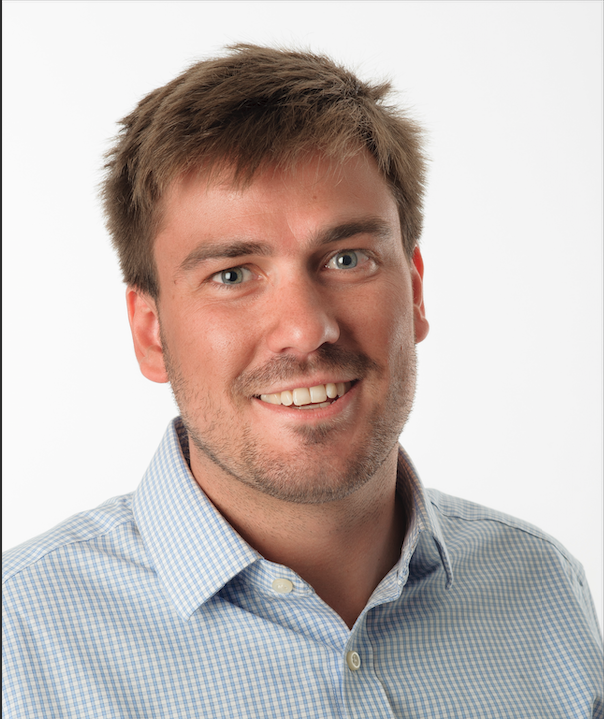
Arnaud serves as Global Chief Revenue Officer at TrustedFamily.com, where he plays a key role in shaping how leading families and their advisors leverage technology to strengthen governance, communication, and long-term continuity. Over the past 15 years, he has worked closely with hundreds of families across the globe. From 2nd generation entrepreneurs to complex multigenerational systems extending to G11 supporting them in navigating the evolving challenges of family governance, succession, and engagement.
Through this work, Arnaud has been entrusted to engage in some of the most sensitive and strategic conversations within family enterprises and family offices. His experience spans a wide spectrum of families, from 1st to 2nd generation wealth creators to some of the world’s most prominent Forbes-listed families across both business-owning and financial systems. He has worked alongside principals, family office executives, and next generation members, helping families professionalize their structures while fostering alignment, education, and long-term cohesion.
In parallel to his professional role, Arnaud is himself a next-generation member of the Solvay and Syensqo family enterprises, headquartered in Brussels, Belgium. These global leaders in advanced materials and chemical solutions contribute to innovations across aerospace, mobility, energy, healthcare, and environmental sustainability. This dual perspective, both as a practitioner and as a family member provides him with a nuanced and highly practical understanding of the realities families face…