Apple Podcasts
 Spotify
 YouTube
 The $17 Trillion Asset Hiding in Plain Sight | Rodrigo Vicuna


Key Takeaways
- Rodrigo Vicuna highlights that approximately $15 to $17 trillion of home equity sits largely untouched and outside of modern wealth management on American household balance sheets.
- Wealthie introduces the WISE agreement, allowing homeowners to trade a portion of their current home equity for capital placed into a managed investment account without taking on traditional debt or monthly payments.
- The financial structure ensures that if a home's value or the associated investment account falls, homeowners do not face conventional margin calls or forced liquidations.
- Underwriting for these agreements involves evaluating property value, existing debt, taxes, and insurance, allowing homeowners to invest up to 25% of their existing home equity.
- Personal experiences, such as watching his parents face financial hardship and lose their home after the 2008 financial crisis, heavily influenced Rodrigo Vicuna's mission to unlock illiquid home equity for better portfolio management.
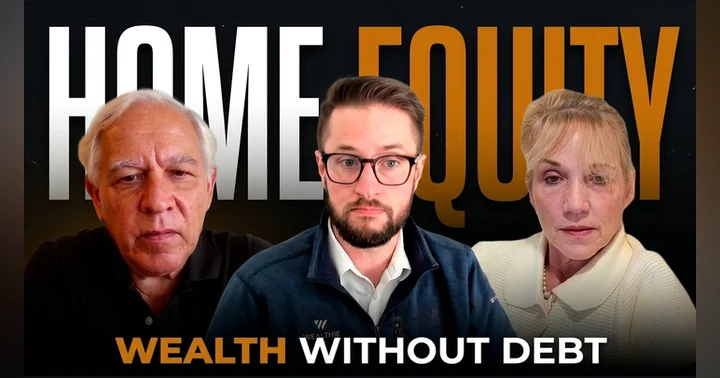
In this episode of Family Office Investing Podcast & Investor Insights | Arthur's Round Table, Arthur Bavelas is joined by Rodrigo Vicuna, founder of Wealthie, and Pamela Cytrom, founder and CEO of The Founders Arena, for a fascinating discussion about an enormous asset hiding on American household balance sheets: home equity.
Rodrigo argues that approximately $15–$17 trillion of home equity sits largely outside modern wealth management. Wealthie was created around a deceptively simple question:
What if homeowners could put a portion of that equity to work without taking out a traditional loan, making monthly payments, or paying interest charges?
Rodrigo's background spans fintech, lending, crypto, and venture-backed companies. After Wharton, he worked at BCG, where he helped develop early perspectives on fintech, crypto, algorithmic underwriting, and machine learning. He later worked on Wells Fargo's home-mortgage origination platform, built a multibillion-dollar consumer lending book, and served as CFO of BitGo, where he was part of the founding custodian team.
Today, he's applying that experience to a very different financial problem.
Wealthie has created what Rodrigo calls a WISE agreement — Wealth Investment Shared Equity agreement.
Rather than borrowing against home equity, a homeowner trades a portion of current equity in exchange for capital placed into a managed investment account. The homeowner retains responsibility for the home and doesn't make monthly payments to Wealthie. Settlement occurs when the home is sold, refinanced, the equity is bought back, or otherwise according to the agreement.
One particularly important part of the conversation concerns downside risk.
Rodrigo says that if a home's value falls, the homeowner doesn't face a conventional margin call requiring the home to be sold. Likewise, a decline in the associated investment account doesn't automatically trigger liquidation and settlement. Wealthie designed the structure around the idea that a home is both a place to live and an asset that often needs patient capital.
The underwriting discussion is equally interesting.
Rodrigo explains that Wealthie evaluates the property, existing debt, insurance, taxes, liens and other factors and uses automated valuation models to establish a property value. Wealthie currently allows a homeowner to invest up to 25% of existing home equity through the structure.
But the story behind the company may be even more important than the financial engineering.
Rodrigo describes how his parents lost their home following the 2008 financial crisis. Years later, after his father died, his mother faced financial hardship despite having substantial equity in her home. That experience shaped Rodrigo's belief that tying so much of a family's financial security to a single illiquid asset can create serious vulnerabilities.
The result is a much larger question:
Should Americans continue thinking about home equity primarily as something they access by selling or borrowing—or should the home become part of modern portfolio management?
That question has implications not only for homeowners, but for financial advisors, RIAs, banks, credit unions, mortgage companies, institutional investors, and family offices.
About Rodrigo Vicuna
Rodrigo Vicuna is the founder of Wealthie. His career has included BCG, consumer lending, fintech, crypto, and multiple venture-backed businesses. He served as CFO of BitGo and was part of its founding custodian team before building Wealthie.
Wealthie is an SEC-registered investment advisor that Rodrigo describes as enabling homeowners to invest a portion of their home equity into other assets without conventional debt, monthly payments, or interest charges.
Educational discussion only. Nothing in this episode constitutes investment, tax, legal, credit, or financial advice. Product terms, eligibility, investment results, tax consequences, and risks depend on individual circumstances.
Want to learn more about Family Office Insights? Click Here.
Frequently Asked Questions
Who is Rodrigo Vicuna?
Rodrigo Vicuna is the founder of Wealthie, a former BCG consultant, and the former CFO of BitGo who has an extensive background in fintech, consumer lending, and crypto.
What is a WISE agreement created by Wealthie?
A Wealth Investment Shared Equity (WISE) agreement allows homeowners to exchange a portion of their home equity for capital placed into a managed investment account without incurring monthly payments, interest charges, or traditional debt.
How do market downturns affect Wealthie's equity agreements?
If a home's value or the associated investment account declines, the homeowner does not face conventional margin calls, forced liquidations, or required immediate settlements.
What percentage of home equity can be invested through Wealthie?
Wealthie currently allows homeowners to invest up to 25% of their existing home equity through the WISE agreement structure.
Arthur Andrew Bavelas (00:01.588)
Welcome everybody to another episode of Arthur's Roundtable. Thanks for joining us today. And super grateful and big thank you to everybody that's paying attention, sharing, and we really, really appreciate it. So big thank you. So this is all Pam's fault. You're gonna find out in a minute why. And we're gonna talk to Rodrigo of wealthy, and so we're gonna start with the Rodrigo and give us a little bit of
who you are, your origin story. Just a quick intro, then we'll go to Pam and then we'll start back with you again, Rodrigo. Okay. Thank you for being here.
Rodrigo Vicuna (Wealthie) (00:31.724)
Yeah. Cool. Yeah, it's my pleasure and thanks for thanks for having me. so my story is I joke, I watched that Ben Aff like movie, The Accountant. Turns out, nothing like that. I decided to ditch that career and went to Wharton for business school and then started working at BCG where I helped build the firm's very first perspectives on fintech.
Pamela Cytrom (00:46.253)
Yeah.
Rodrigo Vicuna (Wealthie) (00:57.88)
Crypto and now what people call AI, back then algorithmic underwriting and machine learning. And I got laughed out of my very first client meeting. I got told FinTech is fake, crypto's fraud, hum or computers will never replace humans, and to go make slides. And I still had a lot of student debt. So slides I went and made. but while I was there, I helped build or rebuild Wells Fargo's home mortgage origination platform to help fend off of the attack from Rocket.
Pamela Cytrom (01:18.678)
Yeah.
Rodrigo Vicuna (Wealthie) (01:27.95)
as a result of that work, ended up moving down to Cheetah and building like a multi-billion dollar consumer lending book. And then found that I had a love for startups after building an accelerator while at BCG. And I just said, I gotta take the plunge. And so for the last call it eight years, eight and a half years, I've been a venture-backed exec. most notably, I was the CFO of BitGo, which just IPO'd in January and
I was part of the founding custodian team. And so we built that from zero to sixty billion in about two years. over my career, I've raised a couple hundred million and exited kind of multiple companies, turned them around, and now building wealthy.
Arthur Andrew Bavelas (02:10.428)
Awesome. Thanks for that. And it's no accident that Pam found this, 'cause she's really good at this, and you'll find out here. Pam, thanks for coming on and introduce introducing us to Rodrigo and Wealthy.
Pamela Cytrom (02:24.971)
Well, that that that is that is the best part of you know what we do is connection. So and thank you for having me back, Arthur. Our last podcast has turned into some great work that we've been able to do together, and that's what it's all about. So for the audience, I'm Pam Citrin. I am the CEO and the founder of the Founders Arena. TFA, as we call it, was built under one simple idea. great companies don't need more programming. They need the right people in the rooms.
So our goal was to look at later stage founders. And I say that we're not later stage in this sense of maturity and where they're going, who are either slightly commercialized, ready to commercialize, looking to raise capital, build strategic partnerships so we can enable them getting in front of the right people faster and move the business forward. And also what I find is a byproduct of that is that when you've got your founders and we've got up for a week in a room and they may be met with.
a Wells Fargo or a JP Morgan or Fidelity or any the people that support our pro programming, you know, that also sparks their ability to sell, right? It gives you energy. It gives you more strength when you're really getting in the rooms. They get in their own rooms, but multiplying that just gives that energy to the founders. But most importantly now with AI on the rise, our job is not, you know, we can't find the best, but we do have to remove the hay to find.
needles, right? So as we're looking at removing the hay, right, that's what we want to do for organizations. They can't do it as fast as we can. So it's not finding the needle. It's really accelerating those that have the most potential to get them focused on human beings relationships where they matter most. and you know I don't have favorite children at home or anywhere, but I will say that you know wealthy is a favorite in there because it did a couple, it's is slightly different than just tech, right?
So they're a great example of what we do. and our role isn't telling founders how to build their companies, it's trying to understand where they're going to accelerate, open the right doors for them, not just during the one-on-one time they spend with us, but we consider them part of our ongoing family, most of them, by the way. so success is about outcomes. Trust is about introductions. People trust people that they know. So introductions, customers, capital partnerships.
Pamela Cytrom (04:50.005)
and long-term sustainable businesses that we can help fulfill and build in wealth management. And thank you very much. And Oprah Rodrigo's been just great to have in the program and the feedback has been really good.
Arthur Andrew Bavelas (05:03.004)
great. Thank you. It's really interesting that sometimes people are focused on just raising capital and they forget that it can come from a customer, right?
Rodrigo Vicuna (Wealthie) (05:13.742)
yeah. Yeah. you know, I'll I'll I'll share like for for us specifically. so what does wealthy do? And it'll tie kind of into into that exact point. So we tell folks we solve the single greatest problem in American wealth. And that is that home equity is a 15, 17 trillion dollar asset class on homeowners' personal balance sheets, but outside.
Of modern wealth management. And wealthy is the first and only SEC registered investment advisor that allows a homeowner to invest a portion of their home equity into other assets, so like bonds in a mutual fund or ETFs and so on, without the use of debt, monthly payments, or interest charges. We effectively unlock home equity for wealth management to help.
Clients do more with what they have and their advisors help them hit their goals in more creative ways. And to so to your point, like, hey, money can come from clients. Actually, the guy who led my our our first fundraise is Marty Picknell, the founder and CEO of Mariner Wealth. And it was through his family office. And talk about someone who could potentially open up client doors and and and kind of opportunities there. And so that was massive for us, was we said, we don't.
wanna go down the traditional VC route, let's actually go down the client route, the customer route, the folks who know this industry and who can be valuable both as a potential future client, but also just as like a key expert in kind of what you want to build. That's the best type of investor in my view.
Arthur Andrew Bavelas (06:56.65)
So in in in that case, the aside from participating in the success of wealthy, he saw it as a potential de deal flow for his platform, right? Where he could manage some of the money that came out as a result of this. Is that fair to say?
Rodrigo Vicuna (Wealthie) (07:14.422)
Yeah, I yeah. And I I think it's I think this is kind of the conversation that we have with every single advisor, which is hey, advisor, you're overworked, you're struggling to find new clients. It's not like millionaires are getting minted every single day unless you work for anthropic or open AI or something like that, right? you're likely turning down good clients who just don't have enough to invest with you.
And worse than kind of those three things combined is that you have the great wealth transfer that's going to happen and the silver tsunami of people retiring every single day that's just going to lower the assets you have on platform. Wouldn't it be great if you could suddenly grow your assets under management 10, 20, 30 percent in a very organic new way with your current clients and bring more clients to the table?
all with a really creative solution. And I think that pitch not only resonated with Marty and, you know, folks that we met through that whole investment process, but also, you know, with Founders Arena, every single pro every single like VIP visit that we've had there has been pretty unanimous unanimously successful for us to kind of move on to a next stage where people think, hey, this is the future. Like there is no reason
The equivalent of fifteen percent of the entire US stock market should be unmanaged and wealthy solved that for us. We should we should we should work with these guys.
Arthur Andrew Bavelas (08:47.37)
Yeah, so let's let's dig into the construct because it when somebody hears what you say, you can extract some of the dormant cash in the equity in your house, but you don't have to pay the carry on it. That's like well, how's that happen, right? and so most people think about okay, I can do a home equity loan, I can improve my house with that, or
Maybe I can invest it in something that's an opportunistic thing like a business or something like that. So what tell us about the plumbing. How does all this work?
Rodrigo Vicuna (Wealthie) (09:27.234)
For sure. So we created a brand new product that we call a WISE agreement or a wealth investment shared equity agreement. In a nutshell, what it allows a homeowner to do is to trade a portion of their current equity today.
And put those funds into a managed brokerage account and invest those dollars with their current advisor or with wealthy. In exchange, they are trading a part of their future equity and future appreciation on their home. So one way, like we like to kind of explain it, is imagine you're at the investment table and you have 100 chips. That represents your entire net worth. And 50, 60, 70.
Of those chips are your home equity. Wealthy allows you to take 15 or 20 of those chips and put them into other assets that work in the way that you want it to work. So higher growth ETFs or bonds in a mutual fund or treasuries just to generate income. So now you're putting that dormant equity to work. And then when you sell your home, refinance your home.
Or wanna buy back the equity anytime before 30 years, you have the option to do that. And whatever those 15, 20 chips of home equity are worth in the future is what you pay, right? That's your cost of capital in this instance. So it's really like just trading out of one thing and going into the other without actually going through the full sell and settlement consequences on day one.
Arthur Andrew Bavelas (11:11.136)
So it to a person it would be attractive to say I can take this money and I can invest it in s some other asset other than the increased equity in my house. So my equity in my house that presumably would increase over time. And there obviously has to be a cost to that. How do you explain the c cost?
Rodrigo Vicuna (Wealthie) (11:32.728)
Ahead.
Rodrigo Vicuna (Wealthie) (11:36.642)
Mm-hmm.
Rodrigo Vicuna (Wealthie) (11:40.055)
Yeah, the way we explain the cost is one, we try to make it super transparently. We give folks tools and calculators for them to be able to like actually see, hey, you take out a hundred or two hundred thousand dollars or fifty thousand dollars. This is what the cost is and it depends on how your home appreciates and stuff like that. So the simplest way is to visually explain it over a thousand versus a thousand words. But if I have to go into the words front, it's basically this. You are sharing.
Pamela Cytrom (11:44.074)
Yeah.
Rodrigo Vicuna (Wealthie) (12:09.864)
A portion of how your home grows. In exchange for that, wealthy is giving you super patient investment capital to put to work in a way that meets your goals. You won't hear from us. We don't tell you when to sell your home. We're not telling you how to paint your house or anything like that. You are still.
Arthur Andrew Bavelas (12:15.902)
Well yeah.
Rodrigo Vicuna (Wealthie) (12:36.552)
functionally the owner and responsible for everything in the house, we're just helping you do an early trade. And the cost to you is a portion of whatever you traded. Right? and so that's the easiest way to explain it. And then the benefit for them is they understand my eggs were all in one basket, the single mailing address. And now I've taken a few of those eggs and put them somewhere else. So when I sell this basket of eggs, whatever the eggs that wealthy owns
That's gonna be wealthies and the remainder of those eggs are mine.
Arthur Andrew Bavelas (13:10.406)
really an attractive thing that you don't have a monthly payment, right?
Rodrigo Vicuna (Wealthie) (13:15.789)
Mm-hmm.
Arthur Andrew Bavelas (13:17.832)
Pamela Cytrom (13:19.17)
So Rodrigo, I'm gonna ask you one thing. I I I know the answer, but it was kind of the most common question that came up across our meetings. In fact, one of the guys at wealthy in the in the JP Morgan meeting I saw last last week, or before I was off my feet, I he brought it up again and he just geeked out on it, right? And he said to me, you I was geeking out on a little bit because he was the one kind of beast.
He he was a he's a private investor's got a fund, but he was a technical exited multi, multi-million dollar exit, right? But he was getting into the weeds of it. But the common question that came up across most of, if not all, of the visits, and I'm sure same thing in your room, right? Okay. What happens if my house goes down in market, right? Where's that falling into the outcome? There we go. So let's get that off the table so we can talk about everybody wanting to do this with you.
Rodrigo Vicuna (Wealthie) (14:13.068)
Yeah. Yeah, for sure. Unlike any type of like asset back line or securities-based line or like the more complex stuff that you see the top, top one percent come in. if your home goes down in value, nothing happens. We don't have what's known as a margin call, which is when whoever owns, let's say, the wise agreement in this case says, Arthur, your house went down 20%, time to sell your house, right?
That does not exist in our product. Similarly, if your investment account goes down in value, no one's gonna be calling you and saying, hey, time to liquidate and settle the trade. We ride with you up and down, right? And I think what I realized when creating this product was homes are two things. They're a place to live and they're a wonderful investment for people.
That just doesn't need to be the entirety of their investing. But if you're gonna keep those two things in line, you need to be patient and you need to be super consumer friendly. And that's how we design the product to be. So that regardless of the ups and downs of the market, you as a homeowner have the flexibility to stay in that home. You don't need to worry if your home went up 10% or down 10%. You need to worry about doing what's best and right for you for the long term for your financial goals.
And wealthy will be there at the end when you settle. That's it. It cannot be more simple than that.
Arthur Andrew Bavelas (15:46.665)
And then what happens if there's a first? You just do the the free equity calculation and the the if there's a mortgage it doesn't have any relevance on what you're doing. There just needs to be f f free equity, right?
Rodrigo Vicuna (Wealthie) (16:08.334)
That's right. That's right. So we allow people to invest today. We allow people to invest up to 25% of the equity that they have in their home. if you have a first or even a second, we're actually we can be comfortable with that. We don't really take positions beyond a third. we don't in we don't ask your existing mortgage provider or HELOC provider or any other players to subordinate behind us. We actually get behind them.
And so we don't impact their rights. So we don't trigger any covenants for them or anything like that. and we try to make it super simple. We are, you know, a different type of equity investor into the home. And we basically say, Hey, cool, you got this debt. We don't get we don't get any money for you paying down your mortgage or or your debt, right?
And we give you a patient op a patient capability to be able to invest and put this big chunky asset that's growing, you know, anywhere from two to four, two to six percent in really, really hot markets long term, and go put it into the SP 500, which is growing, you know, nine to, you know, then the last year was or this year to date, I think is like 15%, right? Like it's all about optionality and and flexibility.
and changing the way people think about wealth in their homes, right? It shouldn't just be this passive safety net piggy bank. It should be a trampoline into building something more for yourself to put it to work. And that's effectively what we do.
Arthur Andrew Bavelas (17:43.796)
Yeah. It's really a dormant asset un unless you leverage it, right? I think.
Rodrigo Vicuna (Wealthie) (17:49.495)
Yeah, unless you got so if you look at the history of like how people build wealth today with homes to access wealth, you sell it entirely. Well, you know, a lot of people don't necessarily want to do that. You have to take on debt, you know, and that can be really cumbersome. Monthly payments, interest charges, you have to do full pull downs, things like that. Or you have these other like really hard products called HEIs or or home equity investments.
And you know, those have a place in the market to be abundantly clear, but they're also really expensive. They're for people who don't qualify for any other traditional product and don't want to sell and they can charge up to 18 to 22 percent. And so we said there's gotta be something else different here. And part of it also comes from personal story of the fact that my parents in 2008 lost their house.
And we were foreclosed upon and we were homeless as a result. And my parents bought the house that I grew up in in 1988. In 2008, they lost it because they missed a couple hundred dollars in in mortgage payments, because they were small business owners. And it's one thing to say that that was the financial crisis. It's another when eight years later, my dad passes away suddenly, Social Security gets cut.
And my mom, despite having $150,000, $200,000 in equity in her home, gets a check for $3,500 and gets booted out. And I, as the youngest son, step in to financially support her. It just hit me like a ton of bricks to the face that the way we build wealth with our homes and tie our financial future to one mailing address is not good financial advice. And so we said, what are things that like we just categorically don't want in the product? Monthly payments.
crazy financing charges where you're getting charged six, eight percent, crazy, crazy costs per year, all these things. Like we just wanted to try to make it as consumer friendly and as palatable to capital markets and to find that like intermediary between the two. And I think we've really done that with wealthy.
Arthur Andrew Bavelas (20:06.336)
So you know, it's instructive to talk about what happens when things go wrong. So let's start with the underwrite. How do you underwrite this sort of thing, if if that's the right word to use?
Rodrigo Vicuna (Wealthie) (20:22.38)
Yeah, it definitely is. In across, let's say 100% of underwriting, right? Of all the things that we do and the and the and the magic behind the product, I would say 15 to 20% of it is the homeowner. The rest is really the home. We want to know like, is the home in good condition? Well, one, where is the home?
is it in a really high risk area like a flood zone or something like that? Then, you know, we have to look at insurance, you know, can we get named on it, etc., just in the event of a downside scenario, right? How much debt do you have on the home? Are you making those monthly payments? are you keeping the home in good order? Are you keeping insurance on the home? Are you doing kind of all the things that are responsible? Are you paying your taxes on the home? Is there a lien on the home?
Is there, you know, all that type of stuff. Once we underwrite that, we actually run it through what we what's known as an AVM, an automated valuation model. And we go out and we look at not only one, but sometimes multiple, and we say, what is a very confident price that we have in this house? So Zillow, for example, might say your home is worth half a million dollars or a million dollars. And our AVM.
Could say, hey, we have a 90% confidence or 95% or 80% confidence that it's worth 450 or 480 or 950 or 980 or a million fifty, right? It can go above the Zillow estimate just in that instance. And so we underwrite like all the qualitative elements of it, and then we price the home. And then the most important thing is we find out how much debt is on.
Pamela Cytrom (22:05.132)
It's
Rodrigo Vicuna (Wealthie) (22:17.292)
And we basically and then after that it's incredibly simple. Value of the home, your existing debt, that's how much home equity you have. So let's say it's a hundred thousand dollars or you know, five hundred thousand dollars. You multiply that by twenty-five percent, and that is what we're willing to allow you to invest in trade.
Arthur Andrew Bavelas (22:36.778)
So you've got a seventy five percent buffer, assuming you're at par and it doesn't depreciate.
Rodrigo Vicuna (Wealthie) (22:42.658)
Mm-hmm. Yeah, that's that's exactly right. Right. Like, and I think part of why we can be so much cheaper than other products on the market is I think for three reasons. One, there is so much kind of equity ahead of us. And yet if a home decreases in value substantially, we can still lose, right? Like there is still real risk of loss for the product, and there's no fixed amount that you have to pay us back.
Right? Like you do 100,000 bucks, it doesn't say the minimum you will owe us is 100,000. You could owe us 50 if your home depreciates in a insignificant value. Two, the way we manage risk is categorically better than any single real estate product in in my mind in the history of the market. And that's because not only do we have a lot of collateral on the home, but we actually collateralize against the investment account.
In the event of default. So if a homeowner stops paying their mortgage, or they don't pay their taxes, or they just generally commit fraud or whatever, we design the product to get out of the foreclosure process and out of what is a potentially bad or spiraling situation for the homeowner as fast as possible and as painlessly as possible. So we can close the investment account, pay back.
Pamela Cytrom (24:00.099)
Okay.
Rodrigo Vicuna (Wealthie) (24:09.122)
you know, all or the majority of the wise agreement. And then we can make a decision, can we just release the entire lien on the house? Well, in a really bad downside scenario where 15% of the market is defaulting, your money never went anywhere if you're a capital provider, because you know it's in the investment account. And then for the homeowner, it's actually really beneficial because they didn't go yellow it on a Rolex or a Patek Philippe or a BMW or gamble it away. It was put in a really responsible asset.
and so with those two things in mind, that gives us better risk. The third thing is we try to be conservative in our underwriting and and very disciplined in how we and how we look at things. and so we have kind of our own unique proprietary methodology, how we look at those properties. We integrate a lot of AI, which allows us to go into a broad, a broader form of the market than what you know, a smaller mortgage shop or something like that might traditionally look at.
you know, we really use a lot of technology to say we can go into places where potentially others might not be able to.
Arthur Andrew Bavelas (25:15.946)
So what happens when somebody attempts to take a second and it eats into that what let's just say is arguably static margin on the equity? Do you get alerted somehow?
Rodrigo Vicuna (Wealthie) (25:31.649)
Yeah, because we will so if it wasn't clear, we do put a lien on the house. As a result of us being on the lien, you know, if someone tries to one, they would have to try to seek to what's known as like subordinate us, which basically says, hey, they want to get in line ahead of us to get to get paid, right? so what we do is we actually say to make it simple for homeowners, say you have
Arthur Andrew Bavelas (25:48.17)
Right.
Rodrigo Vicuna (Wealthie) (25:58.657)
A million, I'm just gonna use million and five hundred thousand because they're big, easy numbers for for, especially my smooth brain to understand. So say you have a million bucks and a half a million dollars of mortgage and debt on the house. And over time you start paying down your mortgage, and one day you own $300,000 of debt on the property, and you want to refinance back up to $500,000. You don't even need to tell, we're we're fine because we attached ourselves to the $500K point.
If you try to go above and beyond that, then you have to tell us, and you can either settle the trade with us, or we can look to we can look to consider modifying the terms of the wise agreement. Very likely you're gonna settle with us. But we try to make it as consumer friendly and as and as easy for folks to be able to buy because we don't look at a home, let alone any of our partners as a one-time transaction. We think a home is a 30, 40 year wealth journey.
And so we try to provide that type of like flexibility it from our from our product approach from day one.
Arthur Andrew Bavelas (27:04.266)
So without disclosing anything proprietary, can we talk a little bit about how the capital markets look at this? 'Cause you have to get the capital from somewhere, right?
Rodrigo Vicuna (Wealthie) (27:12.398)
Yeah, for sure. so there is a lot of I would say like similar products because of these HEIs that exist out there in the world today. they're really different. They do what's known as kind of like an options call or an or an option product, which basically says, hey, they might exercise this option and
They add in crazy Forex structurings and stuff like that. it's great. They actually get rated. So there's a lot of securitizations around these types of products. And so you'll see that there's, you know, two, $300 million securitizations with big institutional, institutional investors. And then they get rated, you know, with triple B, double, you know, single A, double A. And so the beauty is that.
The market around home equity is actually like fairly established. What's not established is making a home equity product that treats your home like a wealth asset versus a one-time cash piggy bank safety net, right? And so what's neat is we've gone and tested this product and we get a lot of indirect feedback about how it could be placed. And a lot of people look at us as potentially
this potentially the safest real estate product that you could buy from an institutional standpoint once we hit scale.
Arthur Andrew Bavelas (28:43.432)
It's really interesting.
Pamela Cytrom (28:43.628)
Rodrigo, I have a question that that popped up that I actually haven't asked you. Right. and I'm curious if we think about, you know, savings of, you know, depending on who's got the product, right? But have you ever thought about a structure that since you're taking it out, it's going into obviously ideally income producing products, right? So if it went into those income producing products, right?
Rodrigo Vicuna (Wealthie) (28:48.321)
Okay.
Pamela Cytrom (29:10.52)
Have you thought on ones that might be a little higher risk in the portfolio, right? That the the the the some of that income actually goes back into the payments of some sort. So you're kind of am I making sense? So you got your income is using stuff, right? So in instead of that saying, hey, listen, what I'm gonna do with half that income we're producing, I'm gonna pay off either the first or the or the loan and have it go back in. That's allowing them to get the house off faster.
Rodrigo Vicuna (Wealthie) (29:22.902)
yeah. Yeah, yeah, yeah, yeah. Yeah.
Rodrigo Vicuna (Wealthie) (29:36.835)
Totally.
Totally. I so yes, and it's not something that's widely public, but happy to make it public here. We're actually developing this product that we call our mortgage accelerator. And what it allows you to do is imagine being imagine you have just a ton of equity and you're one of those homeowners who's sub four percent on your mortgage, which I think if I have the number correct.
Pamela Cytrom (29:45.815)
Okay.
Rodrigo Vicuna (Wealthie) (30:05.974)
It's close to like 60% of homeowners are sub-4% or 50% of homeowners are sub-4% on their mortgage. Well, it's not impossible to go out and take a couple hundred thousand dollars of home equity and go put it into from low-risk treasury yields all the way up to structured notes and make a mortgage an entirely interest-free product for them and pay off their mortgage faster. And so when we've modeled it, we've even in some cases found.
We could knock off 10 to maybe almost 15 years on a 30-year mortgage without the homeowner having to do a single thing, right? Beyond just the swap. Obviously, results depend on the homeowner, their interest, their, you know, et cetera, et cetera, et cetera. it's unique to those circumstances, but it's possible, right? And I think that's the power of putting home equity to work versus just keeping it.
dormant in the four walls of your home. Right? Like that's a creative problem.
Arthur Andrew Bavelas (31:06.342)
Actually it's super interesting you could take that and do one, as you suggest Pam, pay down the mortgage, or two, have it generating income.
Rodrigo Vicuna (Wealthie) (31:19.406)
Mm-hmm. Yeah. Yeah. And even say you don't have debt on the home, but you want to live more in retirement. Or, you know, I'll I'll share. I won't share the homeowner's the homeowner's name, but I remember in the earliest, earliest days of our product, when we were thinking through it. It was a homeowner in Las Vegas. He had two kids, a third on his way, two car payments.
Arthur Andrew Bavelas (31:20.832)
For the homeowner, right?
Rodrigo Vicuna (Wealthie) (31:48.043)
He and his wife made combined less than $120,000 a year. And he had around two to three weeks of cash savings. He was barely making ends meet. But he had $350,000 of home equity. And I asked him, what would it mean if we took out a hundred of that and put it into a simple treasury portfolio earnings?
Four percent, you got four thousand bucks extra a year. So, you know, a little over three, three hundred bucks a month extra. What would that do for you? And I remember him running his hands over his head, and he said, Rodrigo, I would get to stop debating: do I pay my bills or do I feed my kids? And I knew that look because it's the look my parents had.
When we were losing our home. And I think, you know, not at all a political comment, but you know, we're safety nets and kind of how involved or not is like society involved in people's personal financial situation. I really view this as a really creative way to be able to say this isn't just for the billionaire or the ultra high net worth individual or the person who's already in wealth. This is kind of a everyday person.
product as well to help you do more without debt to meet your goals. Right. And so that that income, that income can be just as powerful for that type of person as much as it is just someone in a good spot who wants to pay their mortgage off faster.
Arthur Andrew Bavelas (33:32.434)
I would say that it's more appropriate for the person that's trying to build the wealth as opposed to the person that's already wealthy, because there's other things, right?
Rodrigo Vicuna (Wealthie) (33:40.717)
Yeah. They might want real estate to hedge off everything else that they're already involved in. Though I will say I was funny story, I was sitting at the desk of call it a top 15 bank in the US, and the CEO tells me I bought a $20 million penthouse and guess how much in equities and broad form diverse assets I own? I was like, I don't know, you're baiting me. 10%. He was like zero. This guy's billionaire.
He's like zero. He's like, can you do a five or ten million dollar trade for me? I was like, well, if you're my family office that my long-term family office partner, yeah, sure I can, right? But like that's the that's the thing is it really depends on who that person is. The the simple fact is yeah, it really is home equity is in everyone's portfolio past us at a certain point. And so it's really again about doing more without debt to meet their goals.
Arthur Andrew Bavelas (34:25.044)
The fact pattern, yeah.
Arthur Andrew Bavelas (34:37.664)
So even though you have a lien on the house, is it show up as debt on my credit report? That's really important.
Rodrigo Vicuna (Wealthie) (34:46.39)
No. In fact, that's super important. And if you go down, if you go down the income route, right, you know, we could actually lower your debt to income ratio. So we could actually make you look and help you kind of be more credit worthy because effectively your your floor is is de-risked. The consideration there for that homeowner who just wants pure income is potentially the cost of our product.
Pamela Cytrom (34:50.412)
Yeah.
Rodrigo Vicuna (Wealthie) (35:15.79)
could be more than the income that's generated. So when you settle net net, it could have been more expensive. But along the way, you had 30, potentially, if you extend out to the 30 years, you had 30 years of income flexibility and more resilience along the path. And for certain people, that's the right decision, right?
Arthur Andrew Bavelas (35:36.523)
So having the combination of deploying the capital to the homeowner and putting it rather than just giving it to them and having it dissipated to whatever they want to spend it on, they're and you have a basically over collateralized perfected interest because you've got
Rodrigo Vicuna (Wealthie) (35:52.365)
what it is.
Arthur Andrew Bavelas (36:04.778)
teeth into the investment account, super interesting. The the capital markets must see that as a very low risk deployment of capital and presumably a low risk, a low cost of capital.
Rodrigo Vicuna (Wealthie) (36:24.076)
Yeah, I mean there's a reason a family office led our first round, right? Is because I think they viewed it in two ways. One, they had extreme familiarity with the world of wealth and the possibility of how that works. And the reason we are an SEC registered investment advisor.
and my co-founder Anthony, who's the ex-COO of Deutsche Bank's Mortgage Group and a legend in the space runs that entire side of the business, is because we view homes as wealth assets, and a lot of family offices understand that, et cetera. but then on the real estate side, right? Yeah, I mean, we've effectively created a really unique way,
To expose yourself almost to an index of properties versus a single mailing address. And that's as much of a problem for homeowners on this call or watch this as it is for institutions who say, I gotta go buy 50 homes to then be able to have my exposure to Kansas or the Southwest. No, you don't need to do that. Like wealthy, we can actually help create that exposure across across a market.
And that does not exist today, not at scale, right? There are some companies that are trying to do that and have some level of limited success with it, but no one has been able to crack like a broader distribution strategy and exposure strategy the way we have.
Arthur Andrew Bavelas (37:50.089)
And y you can't trivialize the infrastructure required to make sure people pay stuff, right? So you don't have the burden of trying to make sure everybody pays their monthly payments because there aren't any. Right.
Rodrigo Vicuna (Wealthie) (38:05.954)
There aren't there aren't any, and the you know, we can tie specifically down to the home that we did the trade on and connect that directly to the investment account of where the asset is, right? And so in so many ways, part of the innovate the innovation of what we created is the innovation of what we avoid. Right? It we avoid ongoing normal servicing as you might think about it. We avoid ongoing.
foreclosure battles because of a monthly payment, right? We avoid that consumer and that regulatory risk. We avoid the headline risk. In fact, I think the headline is I made great I made a solid institutional return that was responsible. And I helped a homeowner stay in their home for longer and build more wealth. Like that doesn't exist in in the world where institutions are buying homes and boxing people out of markets. Ours is
quite literally a do good, do well product that's attractive to both sides. And I think Yeah, and you get to stay in
Arthur Andrew Bavelas (39:09.266)
And stay in your home. Yeah.
Pamela Cytrom (39:11.302)
Well, I I also think guys, there's another, you know, you you both know me well enough to know that I my mind will work in other ways, right? But if I'm doing this, I'm taking this product and I am somebody that is not a Wall Street person, not an investment person, nothing else, right? And if I do get into a crunch where there is a little bit of hardship, right? You know, the fur you know, the ability to say this is my priority because this isn't only keeping me in my house.
This is also mindset-wise keeping me into retirement, right? So I, you know, as you look at the data over time, I I I would believe that it would give you a another sense of how that default rate goes down because there's a double incentive for me to make that payment because I know that it's helping me in more than one way.
Rodrigo Vicuna (Wealthie) (40:00.59)
That's right. And and actually, if you think about this, so you guys asked about Arthur, you asked, like, hey, what about my first mortgage? I would argue every single mortgage provider should be racing to ask their their homeowners, should you use a wise agreement? Right? Because now the home is that much more important from a wealth standpoint.
and diversifying it and helping and or just putting giving more financial flexibility to the homeowner. And in a world where you get refined out just from a small change, this is a way to actually expand the relationship if if you work with wealthy, this is a way to expand the relationship beyond just a mortgage and a place you cut, but rather a mortgage, a place you cut a payment to and a broader form of wealth.
Right? Like, because let's be clear, no one loves, no one at the end at on the first of the month is like, thank goodness I get to send my X thousand dollar, two thousand, five thousand, whatever mortgage payment to Y company, right? But if that company is now helping you do more or saying, Hey, I can actually lower this payment and help you do other things with the money you have in there, suddenly there's more value. There's more loyalty. You there the
mortgage itself behind it or ahead of it is credit enhanced. It actually is a safer pool of assets, right? and I think that's I think that's the takeaway for institutions.
Arthur Andrew Bavelas (41:26.409)
Right.
Pamela Cytrom (41:29.964)
Yeah, yeah. And
Pamela Cytrom (41:34.84)
Well think it's takeaway for institutions or even at the at at the bank level, right? You go in there and they try they still try to sell you CDs and shit in the bank, right? I mean like you know it it's an entirely different conversation that they have inside those branches that no one's walking into, but they all seem to be opening again. You know what I mean?
Rodrigo Vicuna (Wealthie) (41:42.755)
Yeah.
Rodrigo Vicuna (Wealthie) (41:50.873)
That's right. And banks are banks generally are limited from being able to do this on their own. We always get asked, like, can't a large bank come out and do this and I'm sure with a enough money can solve a lot of problems, right? so I'm not I'm not an arrogant enough founder to say no one can ever copy this. But since the two thousand four rule that was created,
Arthur Andrew Bavelas (42:04.234)
Right, for sure.
Rodrigo Vicuna (Wealthie) (42:14.936)
Back in the day, blocked this category from ever existing. And we're the only company that has ever figured out how to do this. I will say it's hard. It takes a lot of creativity and it takes a lot of courage to build something new in the world of finance. And now offering that to your home, offering that potentially to your members, we, you know, we have some credit, some major credit union partnerships combined, totaling over 25 billion in deposits from a couple firms.
the the cool thing is that like this can not only solve a balance sheet problem for a bank or a credit union, but it also solves a growth and like flexible and new product line problem that they have in wealth. Because if you look at wealth, there's this research that I saw from Tiburon Research in Chip Rome. Like two-thirds of all market growth in wealth is just the market, or two-thirds of all growth in the market.
and and AU and deposit and AUM growth is just the market. So what's that other one third? It's like you're battling out and seeing if you can steal someone's client or something. Nothing is organic. It is the categorical most difficult place to grow. And wealthy is really probably one of the only, if not the best, solution in that regard to help people do more.
Arthur Andrew Bavelas (43:24.277)
Yeah.
Arthur Andrew Bavelas (43:35.484)
If you were in a situation and you didn't have and you had equity in your house and it was an emergency, you could get a home equity loan and go solve the emergency. Is there a provision in the investment account, like borrowing against your 401k, to solve an emergency situation?
Rodrigo Vicuna (Wealthie) (43:56.771)
Yeah, so the way traditionally and most people are just gonna stay invested. We actually allow you to pull income, interest in dividend income from the account, right? And you know, we're working on this feature right now, and this is part of capital markets appetite as well, is hey, can we actually say your account is up 50% in three years or something, right? Yeah, help people take some chips off the table and be able to go do that.
Arthur Andrew Bavelas (44:20.778)
Take some chips off the table. Yeah.
Rodrigo Vicuna (Wealthie) (44:26.502)
Or can we actually inject a product behind that pool that then says, there's a hundred thousand bucks in here. You need 20. Here it is. And it's very, it's very cheap for you. And it's cheaper than you'd go get from these other guys because again, multiple sources of collateral, right? It's that's the beauty of I think reimagining what is possible with this dormant asset, is that it's not just this one-time trade.
Arthur Andrew Bavelas (44:42.346)
Smart. Yeah.
Rodrigo Vicuna (Wealthie) (44:54.892)
or this one time trade to wealth, but it's the one time trade to wealth to then being able to use it in your everyday. And that's what we're like uniquely building. And it starts with the product that we describe, but it builds up in a really fun pyramid.
Arthur Andrew Bavelas (45:09.778)
And if you sold the house four years after executing this trade and you're in the money, at least to the extent that you thought you would be, what's that look like? Like how do you unravel the trade?
Rodrigo Vicuna (Wealthie) (45:15.436)
No.
Rodrigo Vicuna (Wealthie) (45:27.104)
It's super simple. when your home goes to escrow to be able to sold to be to be sold and transferred to the buyer in this instance, we get notified of it. You as a homeowner should also tell us, hey, I'm putting my home on sale. Like we track that and you know, we'll proactively reach out if that's the case, if we if we find if we find out. and then cool, your home is worth X, our share of it is Y, escrow.
Kind of settles it all out and sends that money why to us. And then we pay back investors in that in that instance, right? And they're thrilled, right? So it's it we try to just inject ourselves in the normal process. It should not be meaningfully more complicated for you at the sale of your home. And you get to stay invested. You don't have to liquidate your investment account. You can stay a wealthy client. You can use then those funds to go.
Pamela Cytrom (45:58.895)
No.
Rodrigo Vicuna (Wealthie) (46:25.73)
you know, help you buy the next house and or, you know, stay invested. Stay invested and, you know, just use your home funds, right? Like we give maximum flexibility.
Arthur Andrew Bavelas (46:33.332)
Yeah, that that investment account is no longer encumbered.
Rodrigo Vicuna (Wealthie) (46:37.75)
It's no longer encumbered. It doesn't need to remain invested. You can liquidate it at that point. you can kind of do whatever you need to do. And I think again, like it's all about like flexible, friendly, and like trying to make it as simple and clear as possible to folks.
Arthur Andrew Bavelas (46:54.622)
I don't want to get too deep, but can you hypothec investment account?
Rodrigo Vicuna (Wealthie) (47:00.074)
you could hypothecate the account. I've seen rehypotheation. The the hard part about hypothecation is then people want to rehypothecate because that's when you start making the asset wheel turn really quickly. so we could I think that's that instance where like you have an a sudden urge or a need or something like that and you need to access something. You need to access like a portion of it. That would be like a small portion of hypothecation, right? That we can
Arthur Andrew Bavelas (47:10.537)
Right.
Rodrigo Vicuna (Wealthie) (47:29.388)
We could consider today the hypothecation feature is not available, but it's something that we definitely talk.
Arthur Andrew Bavelas (47:36.225)
Yeah, I could totally see oversimplifying it for the homeowner, but being super sophisticated in the background with some interest rate swaps and you know, all c you could do all kinds of really interesting stuff to enhance the enhance the rate of return without materially changing the risk profile.
Rodrigo Vicuna (Wealthie) (47:42.701)
Mm-hmm.
Rodrigo Vicuna (Wealthie) (47:53.218)
yeah.
Rodrigo Vicuna (Wealthie) (48:00.6)
For that's right. And here's another one. If you just want just like a consumer oriented example, we I was interviewing this guy who was an engineer at at Apple, had you know, call it two million dollars, a million and a half dollars of Apple equity, and he wanted to buy a home. And I was like, Okay, well you're gonna have to sell that and you're gonna have to pay this big tax bill and stuff like that. Or one kind of unique use case that we could develop for them is
Why don't you place some of that Apple stock or some of your portfolio with us? And we'll just give you the cash to go out and buy. And then like we effectively manage the exact same trade in a way, right? And so we actually have this feature that we call the AUM swap. Because we find that people want to go into really different things. They want to go into annuities or they want to go into derivatives or they want to go into life insurance or long-term care or
Pamela Cytrom (48:41.418)
I know.
Rodrigo Vicuna (Wealthie) (48:59.992)
They just want to go build their own hedge fund portfolio by themselves on some AI-driven website. Cool, right? Or they just need money. So what we've done is we've actually said, hey, if you have other assets that would meet the safe, simple, and responsible guidelines of what we would normally allow you to invest in, you can put that and post it on the other side of the trade near one for one, right? Or 1.25 for one. And we'll just give you the money unencumbered.
And now actually that's a purely liquid form of home equity at a cheaper rate. that allows you to have basically a lot more flexibility about what's in what's in your home. You just pay your own file. And that advisors and advisors can continue making money on that portfolio. We tack on our fees as well, right? But now all this stuff is just fungible, Arthur. When I think my crypto background gave me an ability of seeing.
Arthur Andrew Bavelas (49:41.364)
That's super cool.
Rodrigo Vicuna (Wealthie) (49:57.697)
everything is atomic, everything is fungible, everything is tradable. Then why not build products that allow that? And so that's probably when I explain that concept to people, they're like, you can do what?
Arthur Andrew Bavelas (50:09.95)
Yeah. So it actually makes me think about the target market is somebody who has little or no encumbrance on their house and you can do a dual trade. You can you can perfect your interest in some of the upside of the house and then provide non coupon capital to do other stuff. Did I get that right?
Rodrigo Vicuna (Wealthie) (50:24.184)
Mm-hmm.
Rodrigo Vicuna (Wealthie) (50:34.594)
Yeah, that's ex that's exact. Yeah, I think that's right. And you know, our product is more expensive the more debt you have on a property. It's less expensive the less debt you have on a property, right? Because there's effectively more risk. But that said, for the capital providers as well, it's you know, that risk return is categorically better for them as well. And so we really view it as, especially with like folks like family offices, this is not a one time like
Hey, come fund this one thing that I'm building. It's a you want to own and be a part of a platform that is unlocking the single largest, most illiquid asset in the world and generating a whole new way of using it, right? And so home equity for an unencumbered homeowner is the exact same thing. It's a you have a lot of equity. You don't need to cash it all out today.
Cash out of material port a portion of it. And then if you want to do another wise agreement, we're open to that, right? If there's equity there, we're happy to help facilitate that trade too.
Arthur Andrew Bavelas (51:40.778)
Yeah. And I'm imagining it could also be a hybrid if there's substantial equity over your twenty five percent threshold, then you could deploy some of the capital into the investment account and take some in cash.
Rodrigo Vicuna (Wealthie) (51:59.211)
yeah. yeah. Right. And so, and it's, you know, you should seek your own, like not financial advice, you should seek your own tax tax advice and and and so on. but generally around this industry that has already done billions of dollars of home equity investment swaps, they're generally tax favorable to folks, right? Like most most firms out there publicly talk about it being a deferred tax payment.
So it's something that you worry about and settle into the into the future.
Arthur Andrew Bavelas (52:31.23)
Yeah. Super cool. Pim, did we miss anything?
Pamela Cytrom (52:37.004)
You know, I I I don't think we miss anything, but but I do have a you know we're here. This is a this is an amazing audience. Arthur's reputation is unprecedented in what he does. But you know, I wouldn't be doing my job to with with Rodrigo in the program of saying, hey Rodrigo, you got this great audience. Very family officer, like you said, you did a great job. So if I said, you know, if anybody's listening, right, aside from being able to use the product.
What are the other things that you need? Because as the audience, as as we started at the beginning, you know, these are not companies that are startup in the sense, right? You've got a business, you're running money in that. But what are the things outside of somebody coming in, you know, looking at the product from you? Are there other things that you need in the market? I would think the flyover states would be very good business for you.
Rodrigo Vicuna (Wealthie) (53:26.636)
Yeah, absolutely. Well, before I answer that, I will say also, huge fan of Founders Arena. You guys have been a fantastic partner for us, right? And I think opened up doors and opportunities and even being able to have conversations like this, which are massive for us, right? and so like bottom of my heart as a founder builder who's putting his soul into a company, like that means a lot to me. yeah, I mean stuff stuff that we that you know we're really looking at is one.
Arthur Andrew Bavelas (53:36.085)
Nice.
Rodrigo Vicuna (Wealthie) (53:56.441)
partnerships with family offices, true long-term, true long-term relationships towards making home equity a truly liquid product and usable product for Americans, helping them do more without debt to hit their goals. I think the second, I think the second thing for us is also just generally building like a deeper relationship in the real estate in the real estate industry, right?
It just starts with single family or multifamily commercials out there too, right? And being able to speak to and get advice from it get advice from folks. I think the only reason we've been successful is we've had the kindness of people willing to share their thoughts and ideas about where to take the product, how to fit it unique for them, landlords.
you know when we've met folks there and saying, hey, we can slice a cut of your entire portfolio of properties. And that was an idea that came from a landlord, right? And we just frankly had the fortune of interviewing to be able to say, Hey, let me let me sit on your side of the table and be and be helpful here. And so those are the types of things that are
Pamela Cytrom (55:09.954)
So I'm in there on that point, Rodrigo. Okay. And there's nothing about controversy, but I think we should kind of look at probably a bad word, but maybe the slum word kind of people, let them take those assets and put that money back into making those homes and those places better for the people that they use them.
Rodrigo Vicuna (Wealthie) (55:28.29)
yeah. yeah. and even, you know, exploring relationships with the with CDFIs, if you're commu familiar with a community development financial institution, you know, I will say we this is when we knew we were onto something. We had one pitch with one of the largest CDFIs in Texas and I think overall in the US. And in one call, they were like, we should really explore a multi-million dollar letter of intent here.
And like see if this fits for our homeowners. And then suddenly now we're potentially a CRA eligible product because we're helping people way below the AMI do more. And you look at like guys like Larry Fink and other big finance names, they are motivated by the fact that people are underinvested in retirement. You know, I think it's something like 28 or 38% of homeowners don't even have a retirement account.
Arthur Andrew Bavelas (56:04.362)
Yeah, that's that's big. That's big.
Pamela Cytrom (56:07.736)
Yeah.
Rodrigo Vicuna (Wealthie) (56:25.868)
The number of homeowners I've spoken to who tell me they can't invest or don't have a retirement and that's just not in the cards for them is mind boggling because they think and are like depressed of the American dream they thought they had, not realizing they traded off their retirement at the exact same time. We can help kind of reshift and rebalance them towards something more.
Arthur Andrew Bavelas (56:45.264)
Yeah.
So in the context of a a good family office investor, are they are they looking at what's the dura duration and what's a good cost of capital for you?
Rodrigo Vicuna (Wealthie) (57:03.81)
For us, so it's easier to say, you know, when we build out all of our simulations around the product and you looked at all the heuristics around the product. what we tell people is based off of an average appreciating market, et cetera, we should expect around almost a 10 and a half percent net IRR with an average duration of a little over six years, six to six and a half years, right? Because we catch people.
in their homeownership journey and there's always the four Ds of home ownership, right? There's diamonds, dependence, divorce, and death. And so life catches up, life catches up to folks. But we give people that long-term view because they think of their homes generally as long-term assets. And so and then you have we have the highest collateralization rate of any real estate product that I know of.
Arthur Andrew Bavelas (57:36.724)
Divorce.
Rodrigo Vicuna (Wealthie) (57:58.115)
Which is for every dollar you put in when we originate, there's four X of dollars and one X liquid dollar ahead of you that in a downside default scenario, you're protected.
Arthur Andrew Bavelas (58:09.898)
Yeah, super cool. All right. That was awesome. Thanks for doing that. I could I could go on for a while, but I have to go. Pam, thank you for kindly introducing Rodrigo. I really appreciate it. And then thank you for the smart work and commitment, you can tell. It's very clever.
Rodrigo Vicuna (Wealthie) (58:14.818)
Thank you so much.
Rodrigo Vicuna (Wealthie) (58:19.757)
Fair.
Pamela Cytrom (58:20.149)
Yeah.
Rodrigo Vicuna (Wealthie) (58:27.852)
Arthur, thank you for the time.
Pamela Cytrom (58:34.914)
Rodrigo, you you just gave me an idea of of an introduction that I think I can facilitate. are we on the record are we still recording, Arthur? okay.
Rodrigo Vicuna (Wealthie) (58:35.086)
Appreciate
Arthur Andrew Bavelas (58:43.198)
We are. Yep. Thanks for everybody for joining us. Till next time.
Rodrigo Vicuna (Wealthie) (58:47.042)
Thanks everyone.

Co-founder & CEO
Rodrigo Vicuna is the Co-Founder & CEO of Wealthie, the first and only SEC registered investment platform that allows homeowners to invest home equity into other assets - without debt, monthly payments, or interest.
Before Wealthie, Rodrigo built a distinguished career as a venture-backed executive in the FinTech, crypto, and AI sectors. Rodrigo is the former CFO of BitGo (NYSE: BTGO), where he grew assets under custody from $0 to $60B+ in under two years. Rodrigo has raised over $200M in venture financing, scaled multiple startups beyond $100M in annual revenue, and set up a successful exit in 2024.
Rodrigo began his post-MBA career at The Boston Consulting Group. He holds a BA in Economics from UCLA and an MBA from The Wharton School. Rodrigo lives in the Bay Area with his wife, two daughters, and occasionally well-behaved labradoodle.