Apple Podcasts
 Spotify
 YouTube
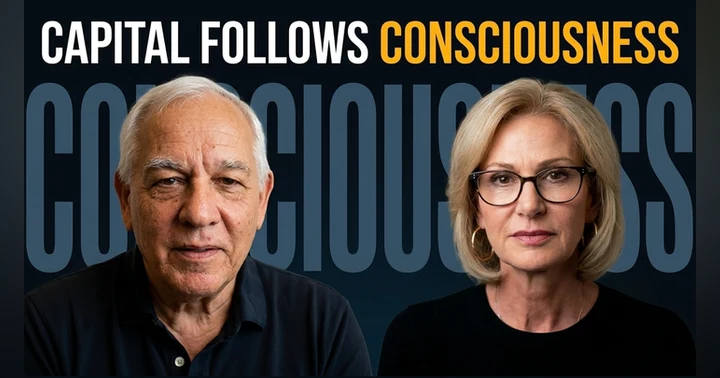
 Why Capital Follows Consciousness | Cate Wilkes
Key Takeaways
- Cate Wilkes and Arthur Bavelas explore how capital naturally follows the consciousness, character, and self-awareness of the investor rather than purely mechanical financial strategies.
- Through 638 Capital, Cate emphasizes that private markets rely heavily on relationships, trust, and reputation as primary currencies since public prospectuses and open-market disclosures are often limited.
- Evaluating potential partners requires looking beyond financial qualification to assess humility, respect, motivation, and alignment of core values.
- Money should be approached as a tool that replicates human effort and serves a broader purpose rather than standing as the ultimate objective itself.
- Recognizing when a business relationship is not the right fit allows allocators to walk away cleanly, proving that not every opportunity needs to become a forced transaction.
In this second conversation with Cate Wilkes on Family Office Investing Podcast & Investor Insights | Arthur's Round Table, Arthur Bavelas and Cate move well beyond traditional conversations about capital.
The central question is not simply:
How do you raise or deploy money?
It is:
Who are you becoming as you do it?
Cate's background spans banking, mortgage finance, Fannie Mae, conscious human development, and now private capital through 638 Capital. After leaving corporate life in 2018, she worked with Bob Proctor and his team on global expansion before moving into private capital. That journey shaped her belief that financial structures alone are incomplete if we ignore the human beings who inhabit them.
Cate explains that when she entered the private-capital world, she found abundant discussion of ROI, tax structures, governance, succession, and strategy—but kept asking:
Where is the human in all of this?
That question sits at the center of 638 Capital.
Cate describes the firm as a gateway into private-placement relationships and platforms, with a philosophy built around access, trust, reputation, character, and long-term capital positioning. But for Cate, the real question is not simply whether capital can be multiplied.
It is:
What will that capital ultimately be used to create?
Arthur and Cate discuss:
• Why capital follows consciousness
• Why relationship and reputation are forms of currency
• How character influences capital relationships
• Why access in private markets is relational
• The difference between genuine purpose and virtue signaling
• Why motives matter
• How to decide when a relationship is not the right fit
• Why money should be viewed as a tool rather than the objective itself
• Why generosity and capitalism are not contradictions
• How money can replicate human effort
• Why identity influences decision-making
• How mindset shapes outcomes
• Why transaction-only thinking can limit long-term opportunity
• The value of putting people before transactions
• How a small number of strong relationships can drive the majority of business
• Why capital may be easier to raise when service comes first
• Why mutual qualification matters in business
• How intention and attention shape behavior
• Why procrastination may be useful feedback
• The importance of self-knowledge in leadership
• Why continuous growth matters more than retirement as an endpoint
• The role of reciprocity in relationships
One of the strongest parts of the episode is Cate's explanation of relationship as currency.
She describes evaluating people not only on financial qualification, but through a broader human lens:
Are they respectful?
Are they humble?
Are they demanding?
What is their reputation?
Who surrounds them?
What is actually motivating them?
Cate's approach is not to make a rigid moral judgment, but to understand whether there is enough alignment and trust to continue the relationship.
That matters because, in private capital, transparency and access often emerge over time.
There may not always be a public prospectus, annual report, or open-market information package available at the beginning of the relationship.
That makes trust, judgment, and reputation especially important.
Cate describes one prospect who became increasingly demanding for information she was not authorized to provide. Rather than force the relationship forward, both sides ultimately concluded that it was not the right fit.
That becomes a recurring theme throughout the episode:
Not every opportunity needs to become a transaction.
The right answer can be:
No harm. No foul. Not a fit. Move on.
Want to learn more about Family Office Insights? Click Here.
Frequently Asked Questions
Who is Cate Wilkes and what is 638 Capital?
Cate Wilkes is a private capital leader and former corporate executive whose background spans banking, Fannie Mae, and global human development work with Bob Proctor. She leads 638 Capital, a firm that serves as a gateway into private-placement relationships with a strong emphasis on character, access, and long-term capital positioning.
What does the phrase 'capital follows consciousness' mean in private investing?
The concept suggests that the mindset, identity, and personal growth of an investor or founder directly influence their financial decisions, deal outcomes, and what their deployed capital ultimately creates in the world.
Why are relationships considered a form of currency in private markets?
In private equity and venture capital, transparency and access often develop over time through trusted networks rather than public prospectuses. Consequently, reputation, character, and mutual alignment become critical assets for unlocking exclusive opportunities.