Apple Podcasts

 Spotify

 YouTube
Pamela Cytron's Fintech Relationships.How Entrepreneurs Build Fintech Realtionships.
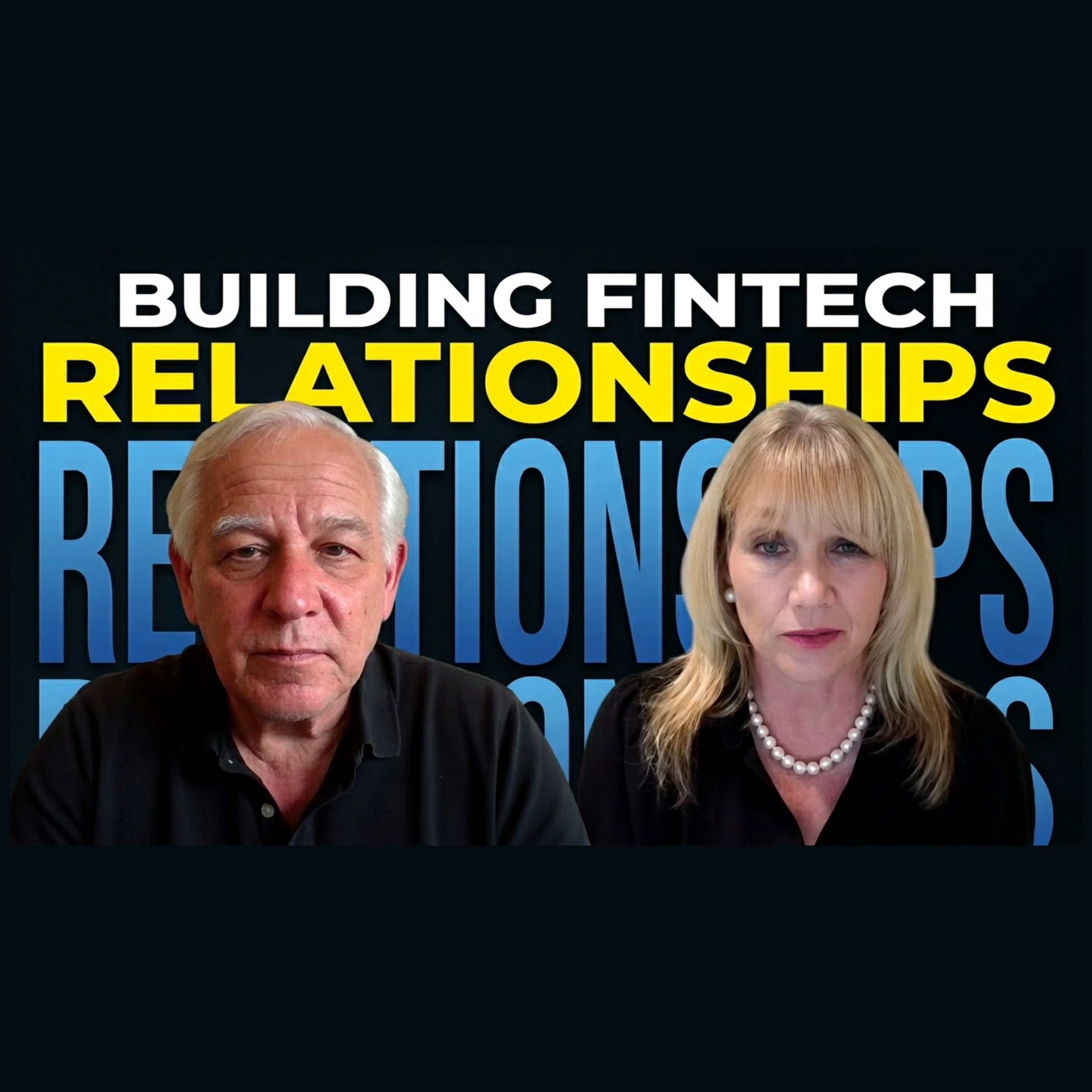
Explore how traditional relationship-building skills are still vital in today’s fast-evolving financial technology landscape. Pamela Cytron shares insights on modern sales strategies, the importance of trust, and innovative approaches to wealth management, wellness, and startup growth.
In this episode:
• Pamela Cytron’s journey from FinTech early adopter to wellness advocate
• The evolving art of relationship-based sales versus automation
• How COVID-19 emphasized the importance of personal connections
• The significance of understanding buyer behavior and decision-makers
• The role of mentorship, curated networks, and small group interactions
• The future of wealth management, including fintech sector focus and tokenization
• The impact of AI on jobs, data privacy, and operational efficiency in finance
• Wellness innovations in family offices and the importance of personalized health data
• Strategies for startups to accelerate growth and secure strategic partnerships
Timestamps:
00:00 - Introduction to Pamela Cytron and her unique perspective on finance and wellness
02:03 - Pamela’s background in early FinTech companies and her passion for startups
03:53 - Relationship-building in sales during and post-COVID-19 era
05:07 - The importance of authentic communication and traditional sales skills
06:41 - Trust as the core driver of purchase decisions in financial services
07:35 - The challenges of commoditized products and the need for personalized selling
09:58 - How COVID-19 changed the startup landscape and founder mindset
11:12 - Lessons from the LDS community on resilience and rejection handling
12:38 - The transformation of wealth management opportunities and sector focus
15:12 - The significance of focusing on specific sectors within FinTech
16:47 - Innovation in wealth tech, behavioral finance, and financial literacy gaps
18:58 - Accelerating startup growth through VIP programs and strategic feedback loops
20:57 - The changing dynamics of pilot programs and sales cycles in finance firms
22:23 - Proper engagement strategies for large organizations and InfoSec considerations
23:57 - The importance of early commitment fees and behavioral dynamics in sales
26:18 - The future impact of AI on jobs, especially mid-market roles
28:11 - The evolving role of AI as a translator and frontline communicator
29:43 - The critical need for humans to verify AI insights and maintain wisdom
32:08 - The relationship between accelerator programs and relationship-building skills
33:47 - The art of scheduling meetings and maintaining authenticity in outreach
35:42 - The discipline required in sales and proper qualification of prospects
37:50 - Innovations in family office wellness, health data, and longevity solutions
40:18 - Trends in private equity, roll-ups, and the importance of infrastructure upgrades
43:02 - Declining interest in traditional wealth management entry points
44:12 - The rise of behavioral finance tools and the reshaping of wealth wisdom
46:36 - Lessons from successful founders and the importance of real product-market fit
48:39 - The value of curated dinners and community-building among fintech leaders
50:10 - The potential of tokenization, blockchain, and democratizing access to assets
52:44 - The role of blockchain in data privacy, transparency, and wellness insights
55:28 - The growing market for wellness resorts and personalized health services
57:31 - Final thoughts on relationship-building, community, and innovative finance
Want to learn more about Family Office Insights? Click Here.
0:01 Hello, welcome everybody to another episode of Arthur's Round Table. Thank you for everybody for joining in today and listening to some of the other podcasts we have. Super appreciate it. So I'm really happy to have Pamela with us today. We're going to talk about some very interesting things and also she has an accelerator and she is going to speak about some Wellness issues as well in the context of business and, and otherwise I, I imagine, right. Yes, absolutely. Thank you, Martha. You're. Welcome, Pamela. Please, please start it from the beginning. Well, I, I'll, I'll, I'll, I'll keep that as brief as possible because I've been around a long time. So by accident, I fell into fintech in my late teens while I was out trying to figure out a way to support myself early in my early in my journey.
0:52 So I have been blessed to be in the financial services technology space. I, I like to tell people I was in there before there was a hashtag. I was also in there when I was selling 4050 enterprise systems a year before all the regulations caught up with, with us. And in terms of selling technology, that was. Sun right or sun guard or something, right? Yeah, well, I funny enough, Arthur Sun Guard spun out of an oil company many, many moons ago and the first one of their first financial technology acquisitions was a company in Chicago called Catalactics. And that was kind of the beginning of what became the financial services empire at Sungard.
1:34 I said my first 100% club, there were like 10 people there. I had three tours of duty at Sungard. I had to leave as a young person to come back to do a bigger job, to go somewhere else where they where they saw me a little bit differently. The last 100% club I was at at like 5000. So I kind of started my career in the early stage and I found a place for that. I was also one of the early employees at s s and C Technologies, which is now a very large billion dollar company. So but I was always in at the early part. So I have a bit of a passion for early stage companies, but because I've been able to see the life cycle, not just from acquiring them, I've seen the good and bad what happens with acquisitions coming in that aren't the right fit at the right time.
2:21 So I've got to see a lot. But I've also always been on the sales side on business development. I mean, I ultimately, you know, ran sales teams, ran operation, ran companies, started my own. But I do believe that the sales mentality that I started with from telemarketing when I was like, I was very young is probably the best foundation that one could get. Because to be an entrepreneur, there are many things that we can talk about there, but I think you got to be a little bit crazy, right? We build things, we spend our own money, we work crazy hours. We we build things for people that they're not even sure they want. And then we try to get money from people who want to put us through the trenches.
3:01 So I think anybody that's an entrepreneur needs to be a little bit crazy. Take Wild. Risks, right? Yes. But most recently I had exited my last company in 2020 and it was really an interesting time because it was right as this Covic thing was starting. Mental health was already on the rise massively before that, right? The headlines, the foundations. And then we run into this COVID thing and, you know, how do you sustain your, your, yourself through that? And the new innovations were coming out of it. But I was at a point of getting a lot of calls from a lot of founders because I'm a little bit older than a lot of the founders are today.
3:41 And I found myself, you know, always focusing because what COVID demonstrated was you have to have a pipeline. Those that had revenue, those that had pipeline business did not stop, it just got. Also, did you find it to be true that had you been pressing the flesh and building relationships that you didn't need to meet those people through COVID because you already knew them and so they were accustomed to to who you were and they would be willing to do a Zoom call and do business with you? A. 100%, yeah, 100%. There was also, you know, they spend more time.
4:22 But what I loved about it was if I took the insights out of that, one of the things that I think is slowly missing and part of the reason we started the nonprofit Founders during accelerator, which I'll come to in a second, was we, we have gotten so focused behind a screen, right? Whether it's this screen, whether it's the screen you and I are on. But people that haven't ever had to pick up a phone and cold call are really kind of got it out, right? You know, rejection is, you know, the biggest part of life, right? And, and So what I found was, is that we were getting lazy in our pipeline development. We were getting lazy and asking, right? We we keep because information is so plentiful, right? And money was cheap for a long time too, right? Say that again.
5:11 Money was cheap for a long time also. It was cheap, it was spread around, but people lost the art of creating relationships. I went back in time and I looked at all of my my biggest deals and my worst deals and I dissected them and said, what did they all have in common? And an interesting thing for me as a woman on Wall Street, the most successful deals I did were with men, with daughters, hands down, all the way across the board, right? It's not a girl or a boy thing. It's just a behavioral thing, right? But you know, the other thing that's been lost is setting up meetings, right?
5:53 The art of a meeting when you used to have to go through the assistant or go back and forth with the calendar, that was the part of the sales cycle that you learned something about them. Maybe they were on vacation, maybe they were there, maybe they had another meeting. But you also were able to create formidable relationships with, you know, the number twos or whoever was setting up the meeting. And I believe more so than ever that we have to shift back to some of those traditional sales skills because how in the world are we going to sell artificial intelligence if we're not using authentic intelligence? Because artificial intelligence will be rolling the dice. Does it work right? Even all the banks and wealth managers and family office surveys, all that stuff that they do right at the end of the day, they're going to they still buy who they trust.
6:44 And I, I believe in my heart and maybe it's wishful thinking, but I do think that that ability to have one-on-one conversations, be in environments with people, more curated events and how we go back to a little bit of that personalized personalization when we're selling something because, you know, products are almost becoming commoditized. There's a family office, I don't know if you saw it, that came out the family office, you know, chart accounting, performance, all management, trust in estates, kind of all in one platforms, your bill pay, your cash management, right? We've got all these different things and there'll be many, many more, right?
7:27 But it's still going to fundamentally be the relationships behind those things that will get them sold, in my in my humble opinion. No doubt. I I don't think it's wishful thinking. I think that there's a generation of people that haven't taken a few arrows to their back or had to collect 150 no's to get a yes. And so I think there's there's some things have come too easy. But I will tell you, the engineers who build the products that also might be the entrepreneur think that the product comes first. The salespeople say that until something's sold, nothing happens. So it depends on where you sit, right? It does fit on any way you sit.
8:14 But as I tell the engineering founders, right, anytime I meet them, they think that they can hire somebody like me or you people have been selling, right? They don't know how to sell. So they're building the best and the brightest and they're gonna they're gonna hire somebody or they're gonna do a fractional sales manager, a fractional sales person. And I encourage them that's the worst decision they can make too early. I agree because because it's not necessarily they can get through the quirkiness, we can work through that, but at the end of the day, it's what they miss because no one's going to be able to articulate the question back to the engineer that he's going to get it quite as well. So whether you're the sales founder or the engineering founder, those early meetings need to be the direct feedback.
8:56 That's not going through a feedback loop, that's going directly to that person. And you know, and I tell technical people, listen, they'll know you're technical, OK? They'll actually trust you more than they'll trust someone like me, right? Because you're not making it up. But what they don't know. And actually, I don't think many people, our, our younger generation knows very much. They, they don't understand how to take rejection. OK, the Hundred knows. Exactly. Because everything they can take their feet to only hear what they want to hear. There's no controversy. I think it's part of the environment and COVID had an impact in a lot of ways.
9:37 And I think a lot of people were sitting home and trying to make sense. I mean, COVID was sea change in many ways for people, but a lot of people sat home and said, wait a minute, what am I toiling away for every day? Maybe I can do something different. And you know that that clearly manifested itself in a lot of people starting businesses and that sort of thing. But I, I don't, I, I'd like to share with you a little story. I, I'm a New Yorker, but I ended up spending a lot of time during COVID travelling across the country and internationally, but spent a fair amount of time in Utah. And I didn't know anything about Utah except I'd been there a few times. And what was really interesting is that I met dozens and dozens of really smart people who were former LDS Mormons and current Mormons.
10:32 And one of the things that came through loud and clear was the people who went on mission, which is part of your obligation as an LDS person, are the ones that are, that are not only the best salesman, but the best build business builders because they are selling something so amorphous that you can't wrap your your hands around it, never mind your mind. And you know, they're knocking on doors and trying to convert people to LDS and they know what it's like to take rejection and they never take it personally. So it was an interesting dynamic that was built as a result of being part of that community. Yeah, I tell people, and they probably have a whole white paper on this, right. But you know, I tell people view totally messed up your call. You're cold calling somebody or you were meeting them, right? You could call them the next day and they're not going to remember you called them, OK, Like you're not that important. They're not going over to the water fountain. They're not calling their friends. And this idiot Pam just called me and messed up all our words, you know, Oh my God, I said, and if that happened, Hallelujah, because they're talking about you, right? But I, I, I, I think these tools of communication and authentic communication is kind of what the wave is. And I also believe because technology, you know, as much as everything's moving at the speed of light, technology is and to the point of the byproduct of COVID, of people realizing I can start my business.
12:01 I've got more independence than I thought I did. I can work from all these things that they, you know, you, you graduate college, you go to you, you go to a job, you work, you do your things right. And so it really did allow people to reframe a bit of their life cycle and what they were good at and what they weren't good at and find other things to do that coupled with AI now where everybody thinks they can be a founder and create their next thing on ChatGPT or Claude, right? So that ability evaluate software and businesses is going to be a different skill set going forward because you can build much faster. But if you're talking about building solutions for the family offices or wealth management or finance, right, you know, yeah, you can start in your garage, but there is a lot behind that. So the person that just says, well, I don't like this cash app, I can build a better cash app, right? You know, maybe you can from a user experience point of view, but there's a lot of rails that go on behind. So that's why I think this ability of, of, of a new class of, of, of craft coming back to truly, I think the sales profession has been lost and that makes me sad. I, I did a, do one of my projects during COVID. I went back and dissected all my sales cycles from the time I started, and I believe that I've lived through 6 transformational sales cycles and we're in the 7th and this 7th 1 is like nothing I've ever seen.
13:33 So I'm really excited. I'm here to see it, right? And some of them were based on different things changing. Some were, you know, the mainframe to the Microsofts, to the apps. I mean, there's technology things, there's changes in the market, there's changes in globalization. I mean, there were, you know, fundamentally real issues that did that. But the one thing along the way that changed and the more capital people got and the more they were less scrappy. Right. The art of the relationship got lost. I mean, my first start up I had no money. I'd been in multiple companies. You know, I did a deal with a global bank for a 7 figure check without any money in the bank, right?
14:19 I tell people that they think I'm I'm smoking crack or something. It's like what? Right. But they didn't, they bought, they knew the team, they knew the problem. I was able to show them the ability that it worked, right? It wasn't, you know, it wasn't just, Oh my gosh, they liked it and they bought it. But it was the courting of the relationship. It was the fact that that system that I built, I had sold when I was 18 years old. So it wasn't like something I just built came up with. So I think the origins of people's stories. So when I look at, so the emphasis of the founders arena was I believe that one we have to start looking at the sector and the sector, OK. And what I mean by that is fintech has been the catch all bucket for anything having to do with finance, whether it's payments, buy side, sell side asset, it just became this big thing.
15:10 It started out as payments, right? But in there you've got banking, credit unions, family offices, wealth management, front office, back office, consumer, you've got all this. So I believe that we really had to focus, look at opportunities where we were the sector, in the sector. And so I started with wealth management and I started with wealth management for a number, a number of reasons. First and foremost, the theory that wealth is only for the rich, OK, So the tools and automation and services that were available or not available across the board. So, and while you know, there's, you know, your big wealth management areas, your big family offices, also what's happening to create wealth?
15:58 Because all of a sudden these influencers and I owe money, OK, You got money floating around to young people that if they just put a little bit away, if not all of it, right, they've they're set for retirement in a way that there may not be Social Security. Another opportunity. There may not be another opportunity like the one they have to make money, right? Right. And if you're an influencer, you got some product, right and you're going at it, that might have less of a life cycle, right? If you're young and you're wrapping young products or you're, you know, so I, but I felt that we were, we were so focused on the transformation of wealth, the greatest transfer of wealth of all time.
16:39 How long have we heard that? That's been happening for 20 years, right? He was talking for 20 years. Anyway, the wealth creation is happening, but we do not have tools and we do not have guardrails for that. So it was how do we look at wealth management in the sector? In the sector, certainly in the traditional ways where we're, you know, we're, you know, that the, the, the S, S and CS and the other, you know, products that have been servicing for so long Advent years ago, which is now, you know, SSNC, you know, I'm, you know, the institutional side is there and it still needs improvement, as you and I both know. But I, there was this missing market for, you know, and we've also lost, you know, financial education in, in schools, for the most part, financial literacy is down.
17:24 So it was wealth management shouldn't just be for what we perceive as the rich. Wealth management should be a category that's for wealth creation for what that means to you, right? And it also went in, but it was as much about being able to create that community. So if you're in a sector, in the sector, right? So, and my mission was to create product makers and product buyers in the room. Now, our organizations have raised a lot of capital that have come through the program, but that's because we invite people around. But when they come to the program, there's no curriculum, OK? It's purely built on what we call VIP visits. So you're a startup founder, you have to be in market. So they have to have sold something to someone, OK? This is not seed, right?
18:17 The average AR in our program is about two and a half million. When they come in, there's been higher, there's been lower. We've had a public company, but we've put 30 companies through our program in the 1st 2 1/2 years. We're about to do our 6th program in 2 1/2 years. We've had five formidable exits out of these companies that have come through and millions of dollars of revenue that has been made, right. And I mean, these aren't, you know, Unicorn exits. But as you and I know, there's not a lot of unicorns built from scratch. It's mainly that it's rare and it takes time. So was it fair to call it an accelerator?
18:58 I do call an accelerator, call something else if I couldn't, if I could, but it is an accelerator, but it is a growth accelerator, OK. And so the whole program is if you go, you know you come in and we do what's called one-on-one VIP visits. So our next score, it's going to kick off in April and the day they show up, they've got everyone from UBS to an SEI to all these people that are there to meet them one-on-one to go through that. So they get that one-on-one and then we get the back feedback. They get a lot of feedback, but then we can get the feedback right. Guys, this isn't a fit for you, but that's OK. You know, you're going here. So they're shrinking the sales cycle.
19:39 They're finding out a better angle of who their ideal customer profile is. They're getting, you know, very good feedback. And when they do get it on the hook, right, if it starts to slow down, I can call them up and say, wait a second, you were pretty ambitious about this company, right? And in the other part of that, you know, process is it's making companies realize that if you run through a better process, it does not have to take two years. Is that there was a time, Pamela, that big companies like that, especially in the regulated business would hesitate to do pilots because the the legacy systems were too antiquated. They upset the incumbent people.
20:32 But then they started opening up and doing pilots because their technology was easier to implement and they could do a side project and see if it would help and then the investor or take over the company for that matter. Has it become even easier for these big companies to digest something that might help them in processes? Now I. Don't think it's become that much easier honestly, but what I think is. Bad, right? The sales cycle. But it doesn't have to be. And the problem is, is the sales cycle is has gotten longer and longer, not because they don't know how to buy, but because we've said, OK, now we got to go Infosec and now we got to go here.
21:16 And after Dodd Frank, we got all these rules about under, you know, stability and what are you in, right. So what I encourage founders to do, and I do, and I do it myself. I mean, no matter how what, no matter what my title is, I've always carried a bag. Because if you don't carry a bag, you don't know how the world's buying. And how are you tell what to tell people how to sell. But you know, my process is, is if you get them on the hook before you start spending your resources and your money doing pilots or all of that. And I'll come to that in a second. You know, the people that have the ability to make or break you coming into the bank aren't necessarily your economic buyer, OK? It's some guy in technology who's not got any skin in this game or any money, or it's the person in procurement who's checking the boxes, right?
22:04 So now this is in the larger firms, you know, I mean in the in in the major ones. But I said to people, go ask them, OK, can I talk to procurement and can I get through the infosec? Because if you're going to get shut down there, what is 4 or five or six more weeks of a stale cycle? And another, you know, if it's a pilot, a 90 day pilot, right? So what I encourage people to do and I don't like, I don't like PO CS because I'll tell you the mentality, it's behavioral. It has nothing to do. You know, words, verbs, they all map, right? But I asked people up front in an early sale when you're not in market, I call it a commitment fee and I call it a trial license instead of a POCPOC for whatever reason behaviorally makes people think I'm supposed to figure out what's wrong with this instead of saying this is a trial license.
23:00 And when you sell it as a trial license, and I'm only asking you for a minimal commitment fee that you can, you know, you have to pay me because, you know, small software companies don't understand. They already know you don't need money. They already know you're risky. OK. So showing bad financial responsibility early in the sales cycle really is an endorsement to your skills. So if they're not willing to pay you, I'm not saying millions of dollars of course, but no commitment. Fees you, you've termed it the right thing. It's your willingness to commit something that we don't have that you do. You've got cash, we've Got Talent OR some sort of innovation. So why don't you share some of your cash to to make so we're more responsible entrepreneurs, right? And you know, the two things I would do if they asked, would you, will you credit this against our purchase? And I would always say yes, but I'm going to credit you in year 3, OK?
23:58 Because if you credit them immediately, you've just taken from Peter to pay Paul, you know you've just formed that financial model. And I've never had anyone say no, right, right. But when they're testing as if they think it's a trial license versus APOC, one goes from trying to break it and find all the flaws to seeing what works for them Today. Some mysteries should be. It's really simple. Yeah, I like that. Is there still didn't get built here. Push back from the tech department. You still got, you know, I, I, I, I, I, I have a word for them. I won't say it because we don't edit this.
24:39 So there are still some of those old timers out there that think that they can build it all, you know, and then they went through a little bit of a, a cycle where they all created an innovation group, right? And then run innovation contests and then they bring all these start-ups in, right? And then they say we'll pilot you. I mean, it was freaking, I'm like, you're doing the research for them guys. It's like, you know, but I think you're getting I I think that they've realized a bit. So I don't think the pushback is as bad as it is. You still have the subconscious ego that's there, but they can't give up. I mean, because the bureaucracy inside some of the even the middle market companies, right?
25:24 They can't hire the people fast enough. They can't keep the talent. And you know, and they can't create the same kind of collaboration as earlier stage companies can because you need some of the wisdom that you and I might bring to the table. But you need the youth and you need the new tool and you need the guys that know the new tools that don't know anything about Fortran or COBOL, right, to be able to say that's not sustainable. So I, I, I, I I think it's much better to answer your question. And and what there's also an element for the incumbents to worry about their jobs, right? There's some small company comes in and says, you know, we can eliminate half your IT department. I know that's a extreme example.
26:10 Then the guy heading up that department, it's got to explain to the board why he hadn't done that prior, right? Yeah, that, that goes back to my sales philosophy, though. It depends on who you're selling to, right. And This is why you have to have real conversations with real people. I mean, I I've had buyers, guys that I've known for years. They're like, Pam, I'm buying this, I'm retiring in five years. No way. Ain't taking this under my wing right now, right. So you have to be able to understand not what they need, not what they want, but you have to be able to get into the behavioral aspects of the buyer, right? And if your buyer is like that, right? And so, and it's not just one buyer, it's your coach in that organization.
26:50 I'm a Miller Hyman girl, right? So you got your coach, your economic buyer, all of those. But in an enterprise, you, you have to find the people that are looking at it and, you know, it's about productivity. And I think I, I don't believe that that's going to be as big of a factor anymore because everybody thinks a is going to take their jobs anyway. OK, well, that it, it, it happened a little bit, right? But you know, in large organizations, and I say this slightly tongue in cheek, I have never seen anyone in implement a bunch of software in a huge bank that saw some big redundancy action going on 'cause they don't know how to do it right, 'cause they keep all that old stuff running.
27:31 But I, but I think in the AI world, right, I, you know, these kids talk about, oh, there's no entry level jobs. They're taking my jobs. I'm like, we got to really stop, pause and think about this. Because if we eliminate all entry level jobs. Right. I think the jobs that'll be the most impacted are going to be mid market jobs. I, I, I just, that's going to be the thing because if we stop hiring new people, we have no succession planning and still humans need to run organizations. So if, if we only use what we've gotten above, well, there's going to be an end to that fairly in, in, in not the so distant future. So I think, you know, when I talk to people about it is we need to put, depending on what the AI is, it needs to go on the orchard. And once you put it on the orchard and the people around it, that's how you will start to really see where the redundancy will come from, what the human in the loop has to do versus what the technology's going to do. But I don't.
28:35 Yeah, I have a son. He graduated college. He got a job at Emy. He's doing early stage EMY work. You know, I haven't seen I, I was so happy my daughter went a different route. She went more the, you know, the Gen. Z route. I'm, you know, I do influencing and all that. She took a little different route, but my son kind of went to college, got a job, but it gave me such a breath of fresh air to see that he's actually learning baseline stuff. He's learning it faster, perhaps. I mean, what he's done in six months, it's crazy, but there's still that learning that they're doing to get critical thinking. That's great. Now, critical thinking is woefully missing in in in many of the generations, I think.
29:22 But that's a subject for another time. Yeah. What do you think is the, you, you mentioned it in kind of in a different way, but the way I've been told and, and agree with is that there's the AI is going to accelerate a lot of things, but you can't program AI for wisdom and that people need to check everything. And so that skill set of checking everything that the AI spits out, I think is going to be highly valuable. Yeah, in fact, you know, the the shift, it's funny when my when my my son was going to school and he did a lot with computers and this and that. And I said, listen, you're more of an outside guy than you are an inside guy.
30:12 But learn the baseline because it's going to be the the, the people that can be on the front forwarding side, not just the tech guy. That's the brilliant brains behind it. But it's going to be the translator between the AI and the customer and all of that. I said, but if you don't have, I mean, I didn't have a computer, I can't read a line of code. And I built multiple software companies, right? And I've always had the first thing I've done is put my code in escrow. But I had said to him that fundamental knowledge of the baseline of what you learn to be a computer engineer, if you keep, if you go into the business side, I think it'll be an interesting skill set to have. So I think that it's going to be the translator, the communicator that's going to sit between that AI from sales to implementation to customer facing. I mean, you know, everybody on the planet is not going to be able to onboard to a system with AI. I mean, there's still people at various capabilities and they're, you know, we're in it.
31:08 We live it every day. The AI capabilities that people are seeing in their everyday lives, OK, We're not even close to what we, what has to happen in a bank, a manufacturing company. And I'm not talking manufacturing company billing robots. I'm talking about the back office of the manufacturing company, supply chain, all of that stuff. There is an incredibly valuable role for AI in it, but that's the stuff that's much further down the path and the stuff that we're seeing in front of us every moment. Totally. It's far more sophisticated and AI, let's face it, has been going on for a long time. It's just gotten a lot better. What do you see in your, Well, let me first ask you this. How do you express your feelings about relationship building and salesmanship in the context of your business? Is it primarily through the accelerator? My my business itself or I I must have answered the question. Either 1 So you have a, you have an opinion about, you know, you have to build relationships, you have to learn a skill set. So how do you how do you impart that to people? I That's a big part of our program, right? So as, as our founders are coming in, right? You know, one of the things I ask when they first come in, and we certainly have our favorites and people that come around and love our program, they've bought from, you know, many of our vendors.
32:39 But I also, the first thing I always ask them is who, who's not in your universe that you want to be in your universe, right? We all have these how I want to sell the Morgan Stanley, I want to sell the, you know, Goldman. I mean, you know that, you know, my favorite is JP Morgan. Everyone else I want to sell. I'm like, no, you don't, You really don't. No, right. But I, that's part of the train that we, yes, we set them up one-on-one meetings, but the time I personally spend with them or any founder, right? If I'm going to spend time with the founder, I, I like to spend my time explaining to them, you know, your ideal customer profile, Who is it? How do you get to them? But how are you authentically getting these relationships? You can't have any more stuff in your inbox. I mean, there's just so much stuff. Do not, I think the worst invention on the planet next to 23andMe was calendarly.
33:35 Now I realize that is pretty. Offensive, right? It's a it's a great tool, but it's offensive in the context of, you know, you're not so important that I don't want to go back and forth. You just right, right. Yeah, but it it's. Like people say, how do you reach me? I said. I'm going to tell you how not to reach me. Don't ever send me a calendar lately anywhere because, you know, now I get it. If I I I use it for myself, I'll look at my calendar right. And and do that. But the art of scheduling a meeting is part of building that relationship. Oh, I can't do Tuesday. I gotta my kids playing soccer. It just it gives you small talk that people have totally missed exists in getting to know someone. Yeah, super interesting and so over. I mean, the other thing is my favorite thing right now with outreach, cold outreach from people. OK.
34:27 You know, I think people don't realize that none of these AI apps have time. They don't know time. OK, so I will put back in an e-mail I cannot do Tuesday or Wednesday and then it automatically comes back because it's answering with AI. It says Tuesday at 2:00. Yeah, right. It doesn't understand time. Yeah, yeah, Super interesting. But yes, I like to coach around the fundamentals, just introducing people to people for the sake of introducing them, right. But so if you can start to work with founders in terms of, you know, understanding what they know about the sales process because you know, engineers and and product people, OK, the sales cycle is just as disciplined of a process is building your system. And it should have the same level of commitment, the same level of research, the same level of MVP, the same level of trials and errors.
35:24 Before you go out sending an e-mail or running an ad or showing up at a conference that you're spending $10,000 to put a booth at. Before you understand what the discipline of your sales cycle needs to look like. Do you do you get pushed back on that? Oh, yeah, Well, I don't get pissed, but I got eye rolls, right? People think it's just, you know, I call enough. I mean, yeah, the philosophy is if you throw enough stuff up against the wall, it will stick. Yes, you still have to be building Rapid Pipeline, but rapid pipeline is not creating a list of 1000 companies in AI with their buyers and their LinkedIn profiles and then go blast it out. That's that's that's not curating your first go to market list.
36:08 Totally right. Are you focused on tech for these fintech companies or are you focused just on technology businesses that are looking to have those banks etcetera become customers of theirs? No, I am. I am focused on finding the best cool things out there, right? And one of the things that you're seeing in wealth management and, and, and this will, you know, wealth management, people think that wealth management and family office sit in the same bucket. Many people do when they start building wealth tech systems, OK, when they're starting to build, but there is there are they are aligned and they are cousins, if you will. But there are very different things within the wealth management and a pure wealth management play that's going to an advisor versus a product that's going to a family office. Yeah, right.
37:01 But what I'm seeing a lot of I I think money, money is going to be table stakes. That was part of the reason I was, you know, focusing on wealth management. So it doesn't become an elite issue. It's an it's an area of abundance, OK, but running money is table stakes, right? So what are the other things, right? And while family offices do this pretty well, right? They've got their legacy, they've got succession, they've got, you know, they they look at other things. But you know, in the advisor world, you know, the straight advisor world is not as much. But I'm seeing behavioral products. OK, what behavioral things are right? I've seen, you know, different products relative to starting to collect one of the things I'm working on, right.
37:45 How do you start keeping all of your Wellness and and vis A vis health data in the privacy of your own vault and not someone else's? Because we know how disconnected it is and everyone's trying to solve them. That's right. Everyone says the master health record. And the point is, is that maybe it'll be done, probably not in my lifetime, right? But people should start doing it, right? They're getting influenced by Wellness products on Instagram that they don't even use these products, right? So I think that the ability to start creating that personalized vault that represents your health and your wealth and something in the family office market, right?
38:25 They can look at, you know, genetics and things like that. Not at 23andMe, but they'll be able with technology, right? To be able to start collapsing this in a way that's private to us as a person or a family, right? And be able to give it to who we want with the permissioning versus everyone else giving it to whoever they want. It started pretty hot and heavy in the family office world. Concierge medicine. I mean, there's, I know 22 doctors that they're making $30 million a year just on the twenty, $30,000 a year per person just to make sure they're on call when it's needed. And it's like a rounding error.
39:06 Rate's free, you know it. It doesn't really amount to that much money. Yeah. So to close up, yes, I look at solutions that are either front, middle, back office or you know, client onboarding, client generation, compliance, risk, all you know. So we look across the sector from back office performance, you know, private assets, trust in estates. So we look across all of the verticals that sit within the wealth management universe, but there's also new ones, you know, starting which are more in behavioral and how people are looking at things that they buy and how their minds working. I mean, you know you got 14 year old kids recommending stocks on Instagram. That's it.
39:52 It just it signs at times. How about I'm asking this for selfish reasons? So I've been involved in a financial service roll up. It was wildly successful. And there's a fair amount of interest in private equity aggregating registered investment of virus because of the sticky recurring revenue. Do you see a lot of those transactions continue to be done? I do, but I think what you should talk about, right, is that, you know, when that whole trend started, if you think about the catalyst that they were talking about, right, technology, you know, there's a big technology I'm gonna merge and my technology spend, you know, that was one of the motivators in the roll ups, right, financially speaking.
40:44 Yeah. OK. That has not happened as much as they think. So I have been saying this for decades. If you're doing a roll up, that is the best time to plant in new infrastructure, OK, Because you think about it, you know, I'm going to go from this old dog to that old dog or that old dog to that, you know, whoever's got the power in the transaction usually win the the technology war, right? But how about we've got a new stack that's for the future with this roll up business and start putting new clients on the new platform and then slowly migrating over the other ones. Because what's happening is they're not taking out the costs that they thought, right? And they're still winding up with different reports and they're still lining up with different onboarding. And they're still doing that.
41:32 So I, I, I don't see it stopping, but I do think that they can start to look at like laying this new foundation of tech that new clients come on to and stop this. I'm going to convert you to me or me to you, because that's what doesn't give it the economy and the scalability that those mergers could do, in my opinion. Yeah, that makes sense. How about the succession in that industry where few people are getting into the registered investment advisor or wealth management business out of school? Is that still trending down? I don't know. I, I've met some of the most interesting, like I met one of the guys that I associated with. He's got a wealth management firm in Atlanta and he started in his parents basement during COVID going after startup founders.
42:23 Now you think if you're starting a wealth management practice, you're going to go with somebody who's only spending their money, not collecting it. OK, you know, but he's scaled so well because founders don't know about, you know, like in my first company, the first thing I divested in was my, I bought whole life when I was 20 because my buddy was selling it and it accumulated no penalties, no nothing, pay myself back, right. So he really built his practice around what do you already have how to use that money? Why is it, and I'll tell you in my first start up, I made a million mistakes about using my own money. Mm hmm, right. I've seen other ones. So I still I I see it, but I think where the supply is going down.
43:06 If you think about how that worked, right, people were going out, there would be insurance brokers, right? They were selling disability whole life, those kind of products, the kind of that retirement end of wealth management. And many of the people that I know that have incredibly successful wealth management businesses, you know, moved out of that. But that was their getting their hands dirty, building their list. So I don't think as many people are going into that profession because that profession is getting highly automate. MM Hmm. Right. So I think that the the landing pad or the, you know, where you seed yourself out isn't there as much. So I think we can do more education in that. And I also think that younger people think that this is just something that we do on Weeble or or Robin Hood. Yeah, I know, right?
43:50 Yeah. Or not understand what it's about. Say it again. I said, you know that, yes, but but advice is still a necessary part of that. You have different ginges in life. You have a baby. I mean, just the whole circle of life. And we used to get our wealth management boards and they'd come in with a little circle and put all the bots there. Right. And and say that you're never going to get that from a robo. Yeah. But I also think that's why the robo thing went up and basically tanked it it. It went flat and wealth was it. Wealthfront was probably one of the first technology driven and then it got acquired by Fidelity or something like that.
44:32 Usually the case, right, they saw something in in the customer base. So what do you, what do you, what would be helpful to you and the accelerator from the audience, for example? Well, what I, you know, people meet founders all over the place, right? And what every founder needs, no matter if you've done it once, twice or three times, right? You're always, you always want to meet new people. But what I, what I find is, is that the, the, there's not a shortage of founders. In fact, this exercise that we recently went through with our, our qualification process, I got more applications than ever before, but the quality of them was AI generated.
45:22 OK. So I think all of us and what I like to see is when you meet a good founder, right? And, and, and your audience is in is in the space that I play in all day long, right? But when you meet a good founder, even if you don't want to do business with them, right, you know, send them to me or I would know who to send them to because I think that our ability to find the qualification is going to continue to get harder and harder. I agree. And so that's finding the good founder. And it takes a village to prop up a good founder. It's not just one person or two people, right? It's how you give them access and how we vet them from all angles because I think it's going to take the community for these next companies to succeed at the level that we need them to, to continue to automate the industry because of all the noise.
46:17 So how do we, how do we send each other the proper signals? Yeah. Exactly. But in bad, yeah. And these are later stage companies that you're interested in? I like to see companies that have already demonstrated, you know, product market fit. They sold something to someone and got some money, not consulting money, right? And I don't care for a dollar or $1,000,000. OK, they got someone to pay them. I, I have a great story. It's probably going to be in our next cohort, but I gotta, I, I wrote an article about selling and this guy called me up. He reached out to me on LinkedIn and I answer all my Linkedins by the way. And I and, and, and he wrote to me and I wrote back and I did a call with him and he says to me, I've got 5 prospects.
47:02 They want to buy for me, blah blah blah blah blah. I just need money. I'm like, well, what kind of money? He goes, well, I just need capital because as soon as I get the capital, they'll buy from me and I'm like, OK, do they really like what you're doing? Yeah, those. Those weren't real buyers, yeah. No, they actually they were because what happened was I said, OK, I'm going to tell you if they're real buyers. They'll give you the money. Go ask them all for a commitment fee. Yeah, OK. Four out of the five gave him the money. I got this big box. He just. Didn't know enough to ask, that's all. He didn't know enough to ask, right? Yeah. Right. He's programmed now these younger people are programmed to say I got a start up this I I got people that like it, but now I got to go get money for them to buy it from me.
47:47 It's a myth. It's not true. And he called me, I mean, and literally 3 weeks later, he sent me a gift in the mail, you know, and said and, and he wasn't ready for our program, but I think he's going to be this time. Yeah. You know, it's interesting, we have, we get about 200 applicants a month, which is wild that it's that much. We've been doing the deal flow for the Family Office Insights investors for a long time. And what's encouraging is now a lot of them are better. But I attribute that to two things. One is the the way they get to us is largely through the family offices who are already invested in them. So our filter's pretty good.
48:42 But even Even so, of the 200, we say no immediately to 100. Bad idea, Dumb idea? Doesn't make any sense, right? Well, a lot of people come out, they think they've got to. And I always tell people there's a difference between a product and a feature. That's true. And a lot of people build features, particularly those that have come out of an organization, a big organization. They're the best at building them. They come out of an organization, They've been there for a long time and they were doing this one thing every single day. But that was their own job. And so they want to automate that. But they didn't. They never understood the workflow, that they were only a piece. That's a very good point.
49:23 Yeah, it's a very good point. And then the second thing that we see, it's little counter to what you said only because there's some really brilliant stuff going on, not only in sort of new innovation type things, but old school stuff like real estate. Like, there's some brilliant stuff going on that we see for people that have been around a long time or reasonably long time that are leveraging the Dickens out of data and are able to narrow their scope into assets that make so much more sense than sort of winging it, you know, and hoping that the asset class is going to produce all the goodies that it normally does.
50:10 Well, and, and those kind of assets being made more generally available to people outside of just the people who knew how to buy them. That's right. I think it's a huge asset, right. I have to believe, I think that we should completely do away with the venture capital market. And I think I, I, I, you know, there's a new Stock Exchange starting here in Texas. And by the way, I live in New York and in Texas, but just think if you could organize startups, right? And so, you know, crowdfunding, we funder, which is a, is a more of an institutional funding platform, right? But then it's the pipeline for the exchange, right? So it's just like, you know, because the the seed money and I'll probably piss a big bunch of people off, but you know, seed money. That's why I've like, get your early money from your clients, because seed money isn't the smartest money, right? Depending on depending on.
51:06 The newer than just a seed fund. Yeah, yeah. The the venture business has suffered from flushing 93% or more just so the hope that in two or three years you get a Unicorn and it's not a good model and they've suffered that. On the other hand, you've got the big venture capital firms that are in a completely different world because institutional money's going to throw money at them no matter what because they have to check on the box. But that's a different world all together. You know, what we're seeing is that the tokenizing things is not what people think, at least my opinion.
51:47 People think it's crypto now, it's blockchain. And the reason why Blackstone and State Street want to tokenize thing is because they want to get rid of 150 analysts, because if they put it on a smart contract, then it's immutable and you don't have to have everybody checking all the numbers all the time. And if you do that, it's that. That really to me is the benefit of why people have adopted these big firms have come out and said we want to tokenize stuff. It's not because of the the crypto Bros that are tokenizing things just to pull the rug on people. It's a whole different thing. No, it's a technology.
52:28 I started looking at blockchain around data years ago. Right. And there's still the issue with how much data can go on the chain, but the token can go on the chain, right. So I, I think that, you know, I've just built a platform around privacy for Wellness for that using the chain, but you know, giving a human a whole immutable record of, of their data right on that way. But it got it got caught up in all of that stuff. Crypto and blockchain became synonyms. Yeah, it's true. You know, the Wellness thing. It's totally books and I'm not promoting it in the just wanted to mention to you since we talked about it before the podcast and currently there's a heightened awareness and desire to figure out what to do about your Wellness and longevity across the board, especially in the family offices that we're dealing with. And, for example, old school, you know, Canyon Ranch is holding a reception in New York City this week. And in that room is a panel of family office executives in single family offices talking about what they're doing for the matriarch and patriarch in the family to accelerate their ability to execute on a Wellness paradigm that makes sense. And of course, Canyon Ranch is
53:58 interested because they had been around for so long and they're actually building a new place in Texas and they're friends of mine. So that's another thing, you know, But we put a serious Family Office principles on the panel and filled the room with those type of people as well because they're super interested in knowing what's going on. I was at a Wellness resort a couple months ago and I kid you, I was down in Mexico and you got there. You didn't realize it, but this was a family place and so, but there was no Elmo vibe. OK, No Elmo vibe. Yeah, yeah, yeah. They had meditation for children and a spa for the children that was in the jungle.
54:39 And I was looking and I'm saying I, you know it, you know, but it wasn't it was beautiful. It was like a Canyon. I mean, you know what I mean? I mean it was, but it had a water park. But it was very tasteful and it was off, right? You didn't know that it was there, but it really went in my mind that says this is for kids. I mean, they're trying to find ways. I mean, my kids just got the phone, right? They were the first ones that got the phone. We didn't know what to do, right. I think that there's things being put into the Wellness thing of people that are mindful to it about how they are going to adjust these kids from a mental Wellness as much as a physical Wellness around the tools and what their life's going to make. And I think it's more important than ever that we have we're present in our Wellness journey a little bit more than we have been in the past.
55:28 Yeah, there's a big trend for that. There's no doubt about it. In fact, what somebody, you know, I'm sure Carson, the Carson Group, huge roll up he's done. He's, you know, he built a big business. He financed a part of a 465 acre Wellness ranch in in Virginia. He's just starting to build now. Yeah. Well, I think that we all have opportunities, but I do think that conversations like ours, you know, sitting down and meeting people, but I think they'll be smaller, not the big money twenty 20s.
56:08 I think they could be more curated and being able to be, you know, authentic. So instead of thousands of people going to something, I think that we'll find. I've been running in New York. I called the innovators table and a maximum of 22, usually 18 to 22, and just different people in the ecosystem. No one's selling anything. But you got the banks and a couple founders and venture money people, right? And even family style and nice family restaurants in New York, right? But that way people can move and they can talk to people. And so far, the return on those dinners for the people that have attended have been pretty extraordinary. I mean, even the last one, I invited somebody at the last minute that was in a different industry from from financial services that she's a good friend and she was in from Canada and I ran into her in New York and somebody had cancelled.
56:58 So I said, oh, come to my dinner tonight. And even at that dinner, she got funded. Well, yeah. So I think those those kind of meetings are going to be really important and we have to be able to put multi generational people in the room. No doubt. Yeah, Yeah, there's, there's, I think that having and the the skill of building the relationships and actually putting small groups of people together will be exponentially more valuable than it's been in the past. And it's been very valuable in the past. Yes. Pamela, anything else you'd like to share? Share before we wrap it. Up I would just like to tell you it's pleasure. It's more like I was on a zoom conversation with you. So I, I appreciate that.
57:43 I hope that some of my thoughts and, and perspectives can help some of your, your viewers. And if anyone has, you know, questions about my crazy thinking, you know, I answer all my Linkedins and I'm, I'm pretty accessible out there, but I only learned from having conversations like this. So I thank you for having me on today. Yeah, I'm super grateful you're doing this, and we'll make sure that we push it out to everybody and share it with you. And I'm super grateful that we did this together. Thank you, Pamela. Thank you, Arthur. Thank you everybody for joining us today. Bye, bye. OK, that was awesome.