Apple Podcasts
 Spotify
 YouTube
 The Future of Family Offices: Governance, Talent & Industry Trends with Brian (The Mack Podcast)
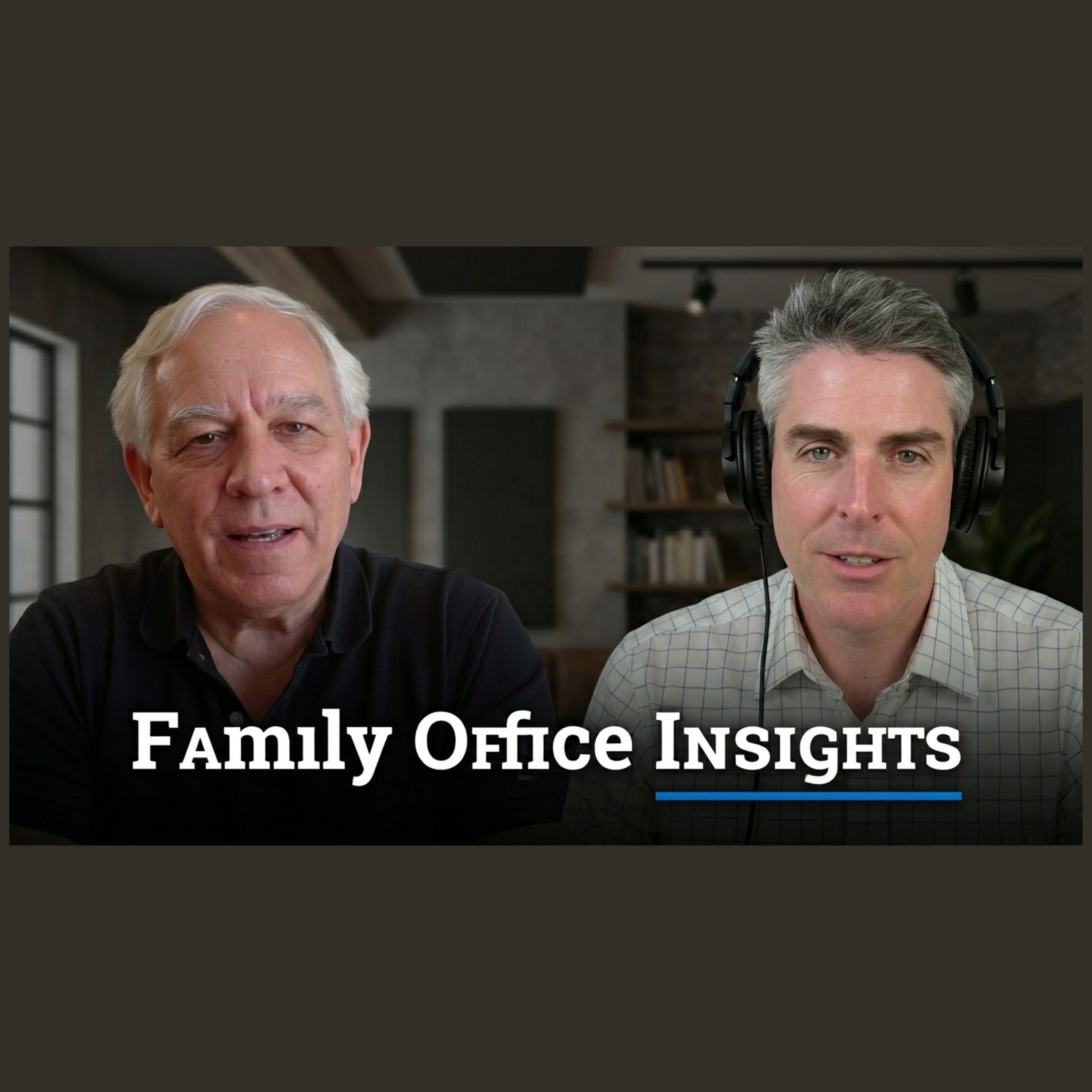
In this episode of Arthur’s Round Table, Brian from The Mack Podcast shares insights into the future of family offices, focusing on talent, governance, and evolving industry trends. We explore how family offices are professionalizing, competing for top talent, and adapting to changes driven by private equity, technology, and generational shifts in wealth managementWhat You’ll Learn
How family offices are evolving in structure and strategyWhy talent is becoming the biggest constraint in the industryThe growing importance of governance frameworksHow private equity is influencing family office investingThe role of technology in modern wealth managementCareer paths and opportunities within family offices
In this episode of Arthur’s Round Table, Brian from The Mack Podcast shares insights into the future of family offices, focusing on talent, governance, and evolving industry trends. We explore how family offices are professionalizing, competing for top talent, and adapting to changes driven by private equity, technology, and generational shifts in wealth managementWhat You’ll Learn
- How family offices are evolving in structure and strategy
- Why talent is becoming the biggest constraint in the industry
- The growing importance of governance frameworks
- How private equity is influencing family office investing
- The role of technology in modern wealth management
- Career paths and opportunities within family offices
Key Insights from Brian
1. Talent Is the Bottleneck in Family Offices
As the number of family offices grows, competition for experienced professionals is intensifying, especially against investment banks and private equity firms.
2. Governance Is Becoming Institutionalized
Family offices are increasingly adopting structured governance models, including formal investment committees and decision-making frameworks.
3. Private Equity Is Reshaping the Landscape
The influence of private equity is pushing family offices toward more sophisticated investment strategies and co-investment opportunities.
4. Technology Is Driving Operational Change
From reporting systems to AI-driven insights, technology is becoming a core differentiator in how family offices operate and scale.
5. Family Offices Are Becoming Strategic Platforms
Modern family offices are evolving beyond investment vehicles into full-service platforms focused on long-term family strategy, governance, and legacy.
👤 About Brian (The Mack Podcast)
Brian is a family office industry expert and host of The Mack Podcast, where he explores talent, governance, and strategic trends shaping the family office ecosystem. His work focuses on understanding how family offices recruit talent, structure teams, and adapt to a rapidly changing investment landscape.
📊 Topics Covered
Family office talent placement and recruitment
Governance structures and organizational design
Private equity influence on family offices
Technology and AI in wealth management
Risk management and fiduciary responsibility
Career paths in the family office space
🔗 Related Episodes (ADD LINKS)
Family Office Governance & Investment Strategy (Stephan Gerwert)
Navigating the Future of Family Offices
Venture Capital Strategies for Family Offices
📜 Transcript
(Add full transcript here – major SEO boost)
🚀 Why This One Is Especially Powerful
This episode targets a macro keyword cluster:
future of family offices
family office governance
family office talent
Key topics
Family office talent placement and career paths
Governance and organizational structure in family offices
Impact of private equity and technology on wealth management
sound bites
"Linda Mack is a legend in the family office space."
"Executives in family offices need to be service-oriented."
"Any family needs a fiduciary who sees the whole picture."
Chapters
00:00 Introduction to Family Office Insights
02:05 Brian's Journey into Family Offices
03:48 Understanding Family Office Talent Placement
06:04 Challenges in Succession Planning and Career Paths
09:14 Navigating Off-Limits in Talent Recruitment
11:07 The Evolution of Family Office Relationships
13:47 Investment Strategies and Co-Investment Trends
16:42 Competing with Investment Banks for Talent
18:39 Institutionalizing Governance in Family Offices
22:27 The Role of Technology in Family Offices
26:30 Holistic Risk Management in Family Offices
29:17 The Evolving Landscape of Financial Relationships
32:18 The Impact of Private Equity on Family Offices
35:55 Navigating Family Dynamics and Professional Roles
38:21 The Role of the Consigliere in Family Offices
42:06 The Challenge of Finding Top Talent
Want to learn more about Family Office Insights? Click Here.
Arthur Andrew Bavelas (00:01.644)
Hello, welcome everybody to another episode of Arthur's Roundtable. Super grateful for the Family Office Insights community stepping up, participating, listening, sharing it. And we want to thank you for that. It's been a lot of fun doing these podcasts and we appreciate people listening, of course, and then sharing it accordingly, if it makes sense. We have a guest today that many of you might know. He has his own podcast with the firm.
And then he's prolific, if I can use that word, and posting interesting things that have to do with family offices, LinkedIn, for example. So super grateful to have you, Brian, today. Thank you for doing this.
The Mack Podcast (00:45.27)
Yeah, thank you for the opportunity. great.
Arthur Andrew Bavelas (00:47.36)
Yeah, so let's start at the beginning with your career path, your journey, that sort of thing, if you don't mind.
The Mack Podcast (00:53.39)
Sure, happy to do it. So I'm from upstate New York originally. I went to a small all boys military school, ended up going to college in New England. Lacrosse got me into school, which is good. And ended up meeting my wife in college. So we went to the same school and she's from Nashville originally.
So we both did the Northeast thing for a little bit. We both went to grad school in Boston and then moved back here to Tennessee 20 years ago. Now, my wife's family has a family office here in Tennessee. She's the oldest member of G2. So I got familiar with that ecosystem through my father-in-law, who's the patriarch and our CIO actually met Linda at an event.
I mean, this is 15 years ago back when the industry was a lot different than it is today through an organization called the Institute for Private Investors, which at the time it was kind of Charlotte. Yeah, exactly. So this is when Charlotte was running it. again, for people listening who haven't been in the space a long time back then, and Arthur, know, but it was really Fox and IPI were kind of the big, you know, Linda and Charlotte go way back. They're very close.
Arthur Andrew Bavelas (01:56.074)
Well, a fire, right? Yeah.
The Mack Podcast (02:15.118)
I met Linda at an event and knew her through the IPI community for a long time, but I didn't really understand family office or I didn't know anything about search. So fast forward, I practiced a lot for a couple of years. I was a real estate investor for a period of time. And then through a series of serendipitous conversations and introductions, I got reintroduced to Linda and she was looking for a successor for the firm. And things really moved pretty quickly from that point.
where we were able to structure something that made a lot of sense for both of us. And it's been great. We've been busy. It's a phenomenal business. the family office world is, as we were talking before we went live, just go and gangbusters, very dynamic, a lot of growth. And then there's a huge need for human talent out there. So it's been a lot of fun. It's a lot of work, but I'm very grateful for the business and the opportunity that Linda gave me.
Arthur Andrew Bavelas (03:11.391)
Yeah, it's great to see how that evolved because Linda has been, if the audience doesn't know Linda Mack, right? Has been, yeah, I mean, she's been around from the beginning and highly respected and made a lot of inroads sort of creating the space.
The Mack Podcast (03:19.16)
She's a legend, yeah.
The Mack Podcast (03:32.876)
Yeah, she started the business 24 years ago. and you can imagine what, you know, family office back then wasn't even a term people used. And, so she's been doing search for a long time and has built just a huge amount of, of brand equity in, the, in the space. And it is very highly respected, which I'm super grateful for it. Cause I can kind of step into that and, and stand on her shoulders in many ways. but she's a great practitioner and.
knows the family office market better than anybody.
Arthur Andrew Bavelas (04:04.053)
Yeah. So let's talk a little bit about the business if you don't mind. We chatted a little bit this before going live as you mentioned another subject of what are you focused on and it's only single family office talent placement.
The Mack Podcast (04:08.12)
Sure.
The Mack Podcast (04:21.55)
That's right. Yeah. So we're a retained search firm. So we do a retained search for, um, C-suite executives for single family offices. So for people who maybe don't understand some of that jargon, people pay us a consulting fee basically to go out there and help them find professionals to run their family office in the leadership position. So CEO, president, chief investment officer, uh, chief financial officer, increasingly general counsel, COO, but
those kind of C-suite type folks. And we work across the country, so we cover the whole U.S. and everything from de novo, first generation, newly created family offices all the way through larger multi-generational family offices that have been in place for a long time and everything in between.
Arthur Andrew Bavelas (05:09.513)
Yeah, there's, there's I think in general, a talent gap in many industries. Are you finding that your competitors once you have a candidate that might be a good candidate for a single family office, are they generally considering one or two other types of opportunities regularly or is it all over the map?
The Mack Podcast (05:38.862)
It's an interesting question. would say on the, for CEO president roles, those folks are either already in family office roles and wanna stay there, or they've committed to making that move away from out of industry into the family office market. But for CFO and CIO, we definitely have candidates that get pulled into traditional private equity asset management.
know, potentially alternative investment structures that does happen much more in New York and Chicago than some other markets. but increasingly these folks are family office practitioners and they want to stay in the space and they're making a move for, you know, idiosyncratic reasons, depending on kind of their own personal situation.
Arthur Andrew Bavelas (06:31.785)
Yeah, and this is kind of my uninformed only anecdotal experience is that oftentimes we saw in the past where a family, single family office would hire somebody to come in and fix succession planning, legal structure, technology structure. They come in and fix it and then there's no ROI after that.
And so there was there there seemingly was a not clear career path for that type of role. But are you seeing that change?
The Mack Podcast (07:10.166)
It's still a challenge, think structurally to your point. These are, I don't know what the right terminology is, but they're odd jobs because ultimately you will never be the final decision maker just if you're not a family member, right? And you serve the family. So I think you have to be service oriented and you have to be clear-eyed about that going in. I think the families that are aspirational and want to build really enduring structures are giving.
executives more opportunities for personal and professional growth. And I see that more with say, a CFO who is now serving on the investment committee, or, you know, the general counsel who's now on the committee for a private trust company. I think there's more cross pollination than there was siloing before. But I think where the industry really struggles is, you know, just by nature of how these
Arthur Andrew Bavelas (07:58.772)
Yeah.
The Mack Podcast (08:08.652)
families or offices are organized, if you're a call it a junior executive or a middle bench professional, sometimes you have to go out to go up because there's nowhere to go, right? If you want to move forward, which is when our phone rings oftentimes.
Arthur Andrew Bavelas (08:26.867)
And will you play somebody out?
The Mack Podcast (08:30.04)
So yeah, so in the business, many search firms have what's referred to as off limits. So they have a conflict or a client says, hey, you we're not going to, you can't recruit somebody from XYZ firm. It's very commonplace in the corporate world. One of the advantages we have being an independent boutique is we have very limited off limits, very low number of off limits.
The way that we approach it is we would never recruit somebody we placed, obviously. We would never recruit anyone at a family where we did a search within a prescribed amount of time, usually like a year, right? Because we get to know those professionals intimately and it's just not fair. But, and then some families, interestingly, I have this today with a client in New York, financial services family, they had extensive relationships on Wall Street with a lot of these big families.
And their off limits is pretty long, frankly, because they want to maintain those investment partnerships or those relationships. So in the more mature, bigger money markets, you see more off limits. Other than that, it's pretty rare. Outside of maybe branches, right? Where a family, like, I won't name names, but some of these bigger families that have multiple family offices for multiple branches.
Those are typically off limits. You don't want to go to Thanksgiving dinner and know that you poached your cousin's CFO or something. But it's one of the advantages we bring is we have kind of very few off limits typically.
Arthur Andrew Bavelas (09:57.938)
Yeah.
Arthur Andrew Bavelas (10:06.293)
You know, I won't name names either, I'm a New Yorker, right? And so I met a lot of people in New York. We've got lots of members of Family Office Insights that are representing family offices, not necessarily the matriarch or patriarch, but of course we have a bunch of that too. And so somebody referred me to a professional inside a very large family office.
wildly successful. Not only is the family office, but his role. And I had no really, I was happy to take the call and have a conversation, but I wasn't really the right person to ask about the next career step for them. There was one, but it's interesting because he was in the role that arguably would not, there wouldn't be any further for him to go. And
The Mack Podcast (10:51.596)
Yeah, yeah.
Arthur Andrew Bavelas (11:04.977)
So does that happen often? And it might be fine. Like in my view, he was, know, unless he had some passion or, you know, couldn't satiate an income need or something like that, he was in pretty good shape, right?
The Mack Podcast (11:21.944)
Yeah, I mean, I'm seeing more more forward thinking, professionalized family offices, just having a realization that they're going to lose talented people, right? If there's nowhere for them to go, if there's not a pathway, and you still get some, especially some first gen financial services people who, if they have a professional leave, it's not a great conversation. But most of the time, most of these families say,
Arthur Andrew Bavelas (11:37.899)
Thank
The Mack Podcast (11:51.704)
We're so happy for you. We hope you're super successful. Let's build a relationship between our family and this family you're moving to and let's learn from each other and help each other. it's, and I think you're seeing more externalization and forward facing approaches by these family offices who want to know what great looks like having more experience shares, certainly more deal flow, which I know is your world. I mean, you're just seeing this, maybe we're going down a rabbit hole, but I'm a believer that this next
cycle of capital formation will be family to family office, co-investment, syndication, clubbing, to cap table with a lot of these management teams and companies. And so from that perspective, I think a lot of families just realize it's just great to have that relationship. Let's keep it positive. As long as the candidate's professional about it, which we talked to lot of folks and I rarely see burn bridges, but it does happen sometimes.
Arthur Andrew Bavelas (12:50.667)
Yeah, it's interesting. see in our deal flow that first of all, 70 to 80 % of it given the month comes from the family offices who are invested in something that they would like others to at least know about and potentially co-invest. And so it's not like the old days, let me just say, Brian, where the single family offices had to pretend that they were
not setting up a fund and wanted to meet family offices to invest in it. They're openly doing it now and which is refreshing, right? They didn't have, they can just come out and come clean and say, yeah, we know this space and we're setting up a fund and we want other people to invest in it or co-invest whatever that happens to be. There seems to be a lot of that going on right now.
They certainly do not want to burn a bridge with other family offices. They want to embrace them, right?
The Mack Podcast (13:54.776)
Yeah, totally agree. And we're seeing families set up, you know, new co third-party structures sometimes to be public facing, just for deal flow and for marketing purposes. I think that's what you'll start to see more and more of is a bifurcation between maybe the mothership and some of the back office administrative functionalities of some of these family offices that remain quiet. But the deal teams will be forward-facing and be in the market actively.
you know, raising co-investment capital. There's obviously some real complications from a regulatory and I'm not going to be giving legal advice here. I've well retired my license, but I think that's what you'll see more and more of to your point. I think families are realizing that if they have subject matter expertise and some type of idiosyncratic leverage they can bring to a deal that other families will follow if they take the lead, if they have that pre-existing relationship.
Arthur Andrew Bavelas (14:53.353)
Yeah, and if somebody has not made their money, let's just say it's only second generation where you're still lingering effects of having some sort of domain expertise. And so they exploit that. It seems to be comforting to another family who may not have that expertise, want to make an expression in that asset class, right?
The Mack Podcast (15:22.83)
Yeah, 100%. I think what I'm seeing most families do is pivot towards a portion of their portfolio being, for lack of better term, cheap beta, right? Either through OCIOs or kind of dedicated internal investment folks that are managing managers or allocating capital to a portfolio construction. And they're putting aside a discrete pool of risk capital where they want to put it to work to create alpha within a certain, like you said, discrete
domain where they have high conviction or they just have some type of internal alpha generation leverage that they can pull or to work with families that do have that skill set and they just have alignment there. That's what I'm seeing kind of big picture trend wise.
Arthur Andrew Bavelas (16:07.721)
Yeah, totally makes sense. Are you just one item from talking about the challenges, the competition in the talent pool? Is it possible to compete with the New York City investment banks for a chief investment officer or investment banking professional that can just print and make a few million bucks or?
Arguably you can't do that in a family office. that that melding together at all?
The Mack Podcast (16:44.204)
Yeah, I think families are realizing that the advantage they had in the capital space in terms of duration and flexibility relative to the traditional private equity model, they're now realizing they have the same on the compensation side. we're seeing, know, the challenge within some of those firms you referenced is there's only so much carry to go around.
And you know, those GPs, I mean, a lot of those GPs have their own family offices. It's been a phenomenal business for them. They don't just give it away. And so there's a bit of a logjam there. And I think with this most recent cycle of just lack of liquidity and lack of exits in the private equity world have led a lot of professionals to realize, maybe I should look outside of industry and family offices can give them a huge amount of upside, typically with more
with more structure around deferred compensation as a retention tool. It's kind of what we see, which makes sense because these are expensive people and they're hard to find. So once you get them, you want to keep them, which is what we advise our families to really think through. And there's some really interesting things happening on that from a tax and legal perspective with some great service providers. But it's always going be hard to replicate some of those really big tickets that some of those MDs can get. That being said,
you know, their quality of life is rough. And, you know, those trades can go both ways as you know. So I think there's a bigger realization moving forward that a lot of these families are competing directly with private equity, investment banking, venture capital, traditional private equity. And they can from a balance sheet perspective and an investment deal flow perspective.
Arthur Andrew Bavelas (18:15.157)
Yeah.
Arthur Andrew Bavelas (18:37.909)
Totally makes sense. It's not exactly the same thing, but I was told my kids, having seen my entrepreneurial ups and downs, it might be a good career path to go, and I call it the Goldman Sachs trade, and I'm not picking on them, it could be anybody, but go into Goldman Sachs, give them 10 years, they make 300 million bucks, you walk away with 10.
but you walk away with a Rolodex that you wouldn't otherwise have been able to build without their brand. And then go do something on your own, or in this case, it may also apply, bring those relationships into a family office that's doing co-investments, and that gives you real leverage as a candidate, I imagine.
The Mack Podcast (19:22.988)
Yeah, I think you're spot on increasing what we're seeing and even explicitly written out in our position descriptions is, well networked, community building. And to your point at this, at this stage of where we are on private capital investing, it's about access and allocation. And you want to be the first phone call because there's so much capital in the system right now that.
just because you can write a big check doesn't afford you any competitive advantage relative to other people, right? So it comes down to, yeah, I know XYZ because we used to work together here and I've done a lot of favors for him or we have a good relationship and I get a first phone call when the next SpaceX secondary gets put on the market or something like that. That's totally what it's about, yeah.
Arthur Andrew Bavelas (19:57.814)
privilege to get to know you.
Arthur Andrew Bavelas (20:19.763)
Yeah, super interesting. What about the, you probably can talk to this better than most in terms of the single family office institutionalizing their governance and structure and, you know, board of directors and all that kind of thing. There's, you know, there's been some meaningful progress made in that where they're treating
especially post second generation, think maybe you can speak to that of creating a real business.
The Mack Podcast (20:59.086)
Yeah, I, again, um, I think you're spot on. We're seeing more and more family offices, um, maybe from a hiring perspective, want to bring people in. And it's interesting when they use the verbiage like this, but it's people that are business leaders that understand how to run a P and L and have comfort with, you know, having a three to five year budget, which just wasn't the case with a lot of family offices before, right? It was.
year to year, there was no strategic plan. You know, they didn't have their own budget. It was just, this is what it costs to fund it every year. And they didn't think about it as revenue generative or net neutral or a loss leader from some bigger. And so you're seeing completely a hundred percent a need for and a desire for more family office leadership that run the family office, like a real business. And I think, I think it flows through on the, on the
Arthur Andrew Bavelas (21:33.44)
Yeah.
The Mack Podcast (21:59.246)
P &L side, but then obviously the governance component is joined with that, right? Who had a hard decisions to get made. How are we going to allocate resources? How do we think about our long-term capital allocation plans? All of that kind of comes together. And we're seeing more multi-generational families revisit it, especially from a services perspective. In other words, what are the core services we're going to provide versus
a fee for a cost to certain households or family members who might have more needs than other people or more desires or more comfort with putting more. So it's more of an equitable distribution as opposed to a straight equal distribution of those costs. Yeah, it's very typical once you get the G4, G5 because they realize we can't walk everyone's dog anymore. know, it's just, it's not feasible and you know,
Arthur Andrew Bavelas (22:43.147)
That totally makes sense.
Arthur Andrew Bavelas (22:52.373)
dog.
The Mack Podcast (22:57.164)
that might be better to outsource to a third party. And so that's a very typical. And obviously with the maturing industry of the family office, we're seeing more of those roles, which is interesting.
Arthur Andrew Bavelas (23:12.021)
So is there a...
just historical relationship driver that you've been focusing on single family offices as opposed to multi-family offices.
The Mack Podcast (23:30.382)
I think one of it is just that's the business that Linda built, right? And then I think because we're just so niche, you know, in the world of search, think, I think specialization really matters. And frankly, you know, I know some fantastic multifamily offices, some really good high quality boutiques, and even some single family offices that are registered just because of the legalities of their structuring and all of that.
The challenge is for a multifamily office that has true outside capital, be it public, if they're publicly traded or if have a private equity sponsor or even if they're partner owned, there's two sides to the business, right? There's the operating company. What does the business look like? And then there's what does the family service look like? And for us, that's just a very different mandate than what we are used to. So we just have not.
And there's so much &A in the space. It is hard for me to track, honestly. It's just moving super fast. Yeah.
Arthur Andrew Bavelas (24:33.291)
Super fast. Yeah. It's so what do you see? It's it's hard to talk about. Family offices without touching on the technology stack story, right? And how much money from private equities poured into that? Hope that there will be money in doing the tech part of.
the organizing the data and providing reporting. Do you have any insights with that?
The Mack Podcast (25:11.32)
Yeah, mean, I think technology and talent are the two biggest challenges for family offices today. Absolutely. And, you know, it's interesting, you know, we saw it on the investment side first, probably with Adapar, you know, just the investment reporting and even that space kind of like RIA.
There's so much &A in that world too. There's Arch, there's Archway, there's Adapar, there's all these new products coming online. It's hard for me to keep track of and I'm in the space every day. And you can tell that that's a big market, right? If private equity guys are not stupid, they're putting this money to work there. It's interesting is that despite the amount of resources and time put into it, there still is no silver bullet to really have customized consolidated reporting between investment reporting and the GL.
Arthur Andrew Bavelas (25:44.743)
Yeah, it's a lot.
The Mack Podcast (26:06.284)
There's great solutions for both, but ultimately even big, really sophisticated families I talked to, they end up doing customized consolidated for their households and their family members. And it's, still a huge amount of brain damage and you know, AI gets thrown around a lot, but given the nature of this data, it's really hard. You have to be very comfortable with how it's ring fenced in order to, leverage it fully. And I just don't think.
I just don't think families are there yet with that trust factor.
Arthur Andrew Bavelas (26:38.527)
I don't think they're there either. It's really interesting to see at least the ones anecdotally that I've seen that are starting to embrace AI, they will absolutely not use a public LLM. And so if you're going to have a private LLM, then you have to decide whether you have to hire the talent to do that, right? And then security, et cetera, et cetera.
The Mack Podcast (27:04.876)
Yeah, I mean, it's always this buy versus build conversation with families and, you know, maybe if you have a big operating company, you're an embedded family office or you come out of the cyber software world, maybe you have internalized resources, but I see most families just say, like, I'm going to third party this because it's moving too fast. And, you know, they just have kind of like a rolling RFP of making sure that they're using the best in class solution out there.
They might have an IT department internally, but the days of doing it all yourself is like way gone, I think. It's too complicated.
Arthur Andrew Bavelas (27:41.195)
Yeah, it just makes me think that you're not that you would ever consider being in the placement of IT people, but that.
The Mack Podcast (27:49.966)
I have, so it's interesting you say this because I've got an email in my inbox from a friend who does a more domestic staffing search and she's got a director of security search. It's not a fit for us probably, but she wants to just kind of talk about it. I've never seen a spec like that before, but that's what this is. It's fascinating. It's cyber, IT, even a little bit of physical security. So it's definitely a trend that's going to come for sure.
Arthur Andrew Bavelas (28:17.513)
Yeah, I wouldn't want to compete against Google and Facebook and AWS, you know?
The Mack Podcast (28:23.534)
Well, it's, it's, it's like being the manager of a country club. You only get yelled at when like the greens aren't good and the stakes undercooked. Like it's a very high risk job. You know, it's I think, you know, from a whole host of reasons, it makes sense to, you should have somebody who owns it internally. Right. I think you should say, Hey, chief operating officer or CFO or general counsel, like you own this, but we're going to give you a budget to, to, run it with third party groups.
Arthur Andrew Bavelas (28:41.939)
responsible yeah yeah
Arthur Andrew Bavelas (28:52.619)
You know, it's interesting, I listened to a podcast with Lex Frieden for the guy that founded OpenClaw. And even a guy that's as sophisticated as that, when he was building OpenClaw was getting hacked, you know, within seconds of him putting something out there on his private LLM. And...
So you're super vulnerable if you don't have somebody that really understands all this stuff.
The Mack Podcast (29:25.186)
Yeah, it's, and it's moving fast, right? And I think families have kind of landed at.
Arthur Andrew Bavelas (29:29.375)
Really fast.
The Mack Podcast (29:34.572)
It's almost like there's a chief risk officer internally now. And some of them have called them that otherwise, otherwise it's a de facto title that the general counsel, the COO has, but they're looking at risk holistically and assigning probabilities and allocation of capitals relative to the probabilities. So there's, physical insurance, health, cyber. It just, they're
You could drive yourself crazy trying to be perfect in this space. So think it's about mitigation and reasonable cost at this point.
Arthur Andrew Bavelas (30:05.567)
Yeah. Also, one of the things that I experienced, and I'm wondering if it's still true in your experience, is that oftentimes larger single family offices, or maybe even not larger, it would have a relationship with a money center bank in their family off, multi-family office silo or their wealth management silo for
a couple good reasons. One, they get access to balance sheet if needed for debt. And they also could blame somebody that had a balance sheet to sue if something went wrong. Are you seeing that?
Arthur Andrew Bavelas (30:50.377)
And I know that's a little contentious, but that's what I saw,
The Mack Podcast (30:55.02)
Yeah, I mean, think I'm seeing less of that. You know, it's interesting. on the service provider side, a lot of these big, and I won't name names, but a lot of these big, what you and I would refer to as bulge bracket. Although I don't know if that's even a term people use anymore, but.
Arthur Andrew Bavelas (31:09.643)
That's the term what we used at one time, Brian, yes.
The Mack Podcast (31:12.994)
Back when I was, know, when you could actually pick up the phone and like sell stocks. in any event, I think the audience gets the drift, but these firms, even the really big ones, they kind of cycle in and out of whether or not they want to be in the family office business. It's really tough to track. And like, I know it because I hear from families and I talked to families all day and I, and they'll say, this team left or they're cutting resources here or they're no longer interested in.
Arthur Andrew Bavelas (31:29.419)
True, yeah.
The Mack Podcast (31:43.496)
So I see more families having three to five relationships with different lenders. And you and I both know some of these banks as part of their DNA. They just have, they've, put their foot forward with certain things, right? Like JP Morgan's always going to lead with their balance sheet. They're just very aggressive. They love lending. They understand operating companies. They understand private business. Goldman's always going to lead with investments, right? I mean, that's just their
how they came up and Morgan Stanley is more of a wealth management planning firm. That's just kind of part of their, their DNA. But even then, even then from an executive perspective, these businesses kind of, come in and out of the business. And so I think families are just keeping more options on the table and working with different counterparties now.
Arthur Andrew Bavelas (32:20.073)
All set.
Arthur Andrew Bavelas (32:33.973)
You alluded to it earlier, but there's a lot of activity where private equity, private debt are stepping in to AUM firms because the recurring revenue is so sticky and doing roll-ups and that sort of thing. I was involved in a meaningful way and I'm grateful for it when, back at the beginning when Jessica Bibliowicz, Sandy Wiles' daughter,
rolled up into NFP, a lot of financials, AOM, registry, rest advisors, insurance firms. And it was the beginning of that type of consolidation because the recurring revenue was there. Are you seeing that affect the single family offices? It's like when you get a mortgage with Wells Fargo or whatever, I'm picking on them, but.
And two years later, it's been sold three times and you don't know who your mortgage is with anymore. Are you finding that phenomenon?
The Mack Podcast (33:35.884)
Yeah, I think just like we're seeing across all of these service providers, just the private equity has changed the landscape, right? Where, I mean, I was talking to a friend in public accounting. He had spent five years building out a really nice solid boutique multifamily office or a family office solutions group within a, within a top 50 public accounting firm, right? Great, great guy. know what they're doing. I sent him referrals.
They got gobbled up by a big firm and now it's chop shop time, right? So I think that's the bigger challenge is it's not, and this is where maybe to talk my own book, but it's true. I think one of the benefits of having a real professional family office executive in your family office and representing you as a fiduciary is not only to run RFPs and bake-offs and keep people honest and push them on fees and keep their feet to the fire.
But when you have a relationship with a big firm, it's knowing the teams and the individuals within the firm who are really good because the variability of skills and experience is pretty broad nowadays, I think.
Arthur Andrew Bavelas (34:48.881)
Yeah. And they're going to move, right? And so you.
The Mack Podcast (34:53.486)
Yes. Yeah. I mean, the money moves, right? And, and you know, you're hearing rumblings about private equity getting involved with law firms now. And so, you know, what you see in play out with public accounting, I think you'll see play out with law firms and there'll be winners and losers in that market. And there'll be massive lift outs and big kind of bonus comps paid out to these groups. And that's just the world we live in.
Arthur Andrew Bavelas (35:02.175)
Yeah, totally.
Arthur Andrew Bavelas (35:16.851)
Yeah, I mean in some ways it's good depending on where you sit, right?
The Mack Podcast (35:23.33)
Yeah, it does solve this problem of where we're seeing a lot of financial and professional services and maybe to dovetail with this broader conversation of compensation increasing in family office world. I mean, there just aren't enough professionals who are my age to step into these roles and there aren't enough professionals who can provide liquidity to the older partners across these firms. So there needs to be some type of release valve. Otherwise they just wind down.
Arthur Andrew Bavelas (35:47.497)
Yeah.
And the law firms were the ones that suffered because of their structure from that because the new partner would end up financing the retirement benefit for the older partner that was going to play golf, right, or whatever. And that is kind of like social security. It's underfunded, right? Unless you're a rainmaker as a new partner,
The Mack Podcast (36:05.006)
That's
Arthur Andrew Bavelas (36:19.007)
There's no way that you're gonna be able to make a lot of money.
The Mack Podcast (36:23.082)
Well, and you know, not to get on my soapbox, but this is also part of this family office conversation that think people discount is, listen, you can say whatever number you want to throw at me about inflation, but if you pay private education, if you have best in class healthcare, which sometimes is private, and if you have private homes and you have travel, lifestyle and concierge costs, those things are
well north of whatever inflation handle you're seeing in the market. And so these people, part of the conversation around compensation is just, it's expensive to live these days like that. I I'm right there in the thick of it with two boys who are 13 and 10. And it's painful freight's no joke these days.
Arthur Andrew Bavelas (37:10.677)
Yeah, yeah. No, isn't. Look, we're grateful for the lifestyle that we enjoy, it needs fuel, right? It just doesn't.
The Mack Podcast (37:18.008)
Totally.
The Mack Podcast (37:22.414)
I'll put it, you know, put it this way. My 10 year old is in, he's going to be in fourth grade next year. I'm paying more for fourth grade than my parents paid for me to go to college. Which like, I understand inflation, but that's pretty rapid. Yeah.
Arthur Andrew Bavelas (37:34.089)
Yeah, isn't it wild? Yeah.
Arthur Andrew Bavelas (37:39.049)
Yeah. Yes, it's pretty rapid. Yeah, it outpaces the general inflation rate for sure. Yeah.
The Mack Podcast (37:46.062)
Yeah. Yeah. Yeah. And then you get cost of living and quality of life. And then, you know, lot of these searches, when we do relocations, just if you're in South Florida or, you know, some other markets, finding a place for these people to be able to live, to buy a home and then education, right? There's no spots in these schools. It's hyper competitive.
And if you have a trailing spouse, because most of these are dual income homes nowadays, households, it just, you know, we earn our fee. it's complicated. got, there's a lot of things to solve for.
Arthur Andrew Bavelas (38:24.821)
So wait a minute, what the hell is a trailing spouse?
The Mack Podcast (38:28.34)
So if you, if I relocate you from New York to Palm beach, for an opportunity with a family in your dual income household, we've also got to find a job for your wife. And if I'm, if I'm taking you to a market, like I'm not, I feel bad. I'm from Albany, right? So let's pick on Albany. I reload you to Albany. Well, it's not the most dynamic economy in the world. If your spouse is a big
Arthur Andrew Bavelas (38:40.947)
Right, right.
The Mack Podcast (38:55.466)
law firm partner or partner in accounting firm or a venture capital person or something, what is she going to do there? You know? Yeah. And you're depending on her income to live. So you're seeing more like super commuting setups or families that are just, families are realizing it might be a three to five year transition. They just, have to be more flexible there just with the realities of on the ground.
Arthur Andrew Bavelas (39:01.355)
What is she gonna do, yeah?
Arthur Andrew Bavelas (39:22.291)
Jesus Brian that fact pattern that you presented alone. You're not getting paid enough to do that.
The Mack Podcast (39:27.874)
Yeah. Well, you know, you socialize these things with the families early on. And again, I mean, if you want somebody my age, like that's just how it is. Yeah. Yeah.
Arthur Andrew Bavelas (39:38.731)
It's a reality. What about
Are you seeing people come out of making a lot of money in the investment bank with talent and relationships that are in their 60s with all that experience and relationship capital? Are those people that are interested to the family, interesting to the family offices or, you know, just too old?
And this is going to be public, so you don't say whatever you don't want to say. I don't care what I say because nobody can sue me. I don't, I mean, again, anybody can sue me, but they're not going to. It's just for hiring people. Yeah.
The Mack Podcast (40:26.018)
Yeah, for the record, we can't be ageist. I think the problem that presents itself with, and we see lots of families try that. A couple of things that are problematic. One is unless the family office still has an operating company making fresh distributions, there's limited amount of capital. And once those deal teams, those deal guys,
Arthur Andrew Bavelas (40:30.259)
Right, okay.
The Mack Podcast (40:51.596)
like they're off cycle or the returns aren't there or the exits aren't there and there's no fresh capital they leave. Right? So that's a challenge for them. Whereas in some of these bigger firms, there's always more pools of capital to draw on. And so I think they get bored and then they go and the family is stuck with these investments. The other thing is just from a families think about success differently, right? I mean, those Wall Street people who live and breathe by
Arthur Andrew Bavelas (40:57.321)
They leave, yeah.
The Mack Podcast (41:21.774)
their annual bonuses or IRR, that's how they think about the world, which they should, right? mean, that's how that's alignment with their stakeholders. That's the alignment with their stakeholders. Like that's, we're very clear-eyed on what we're doing here. Families think about things differently, right? Even very, very intentional investment oriented families, success may look like, you know, hitting great metrics, but also we can still have Thanksgiving dinner together. And I think a lot of these professionals really struggle with
Arthur Andrew Bavelas (41:28.959)
That's the construct, yeah.
The Mack Podcast (41:52.526)
with that component and also the fact of like, hey, Sunday morning at four o'clock in the morning, you get a call that Billy got a DUI, you need to figure it out. It's people like, it's not my job. I'm here to put money to work. And so we're really looking for people who not only will take the call, but they want that phone call. And I think it's, those industries attract different personality types and not everyone's a fit for the family side.
Arthur Andrew Bavelas (42:05.311)
Yeah, I'm not doing that. Yeah. Yeah.
Arthur Andrew Bavelas (42:16.425)
Yeah, that is really interesting perspective. What about the consigliere role? the traditionally the lawyer general counsel has always been the sort of last word in making sure that things were done in the best interest of the family. Even if it's an outsource type situation. Is there a
non-lawyer consigniary role that makes sense. And I think lawyer makes a lot of sense, by the way. I really like that role a lot. In fact, for the record, I've had my journey from being broke to having some money was all a result of good lawyering. So I'm all for lawyers and happy to pay them.
The Mack Podcast (42:48.973)
Here we are.
The Mack Podcast (43:12.352)
Yeah, we're seeing war. mean, Linda coined this term, the expert generalist in the industry. And you know, it's, it's grown in how often it's used, which is great. Cause I think it's very applicable. We often see that when we try to describe to somebody as that consigniary and somebody that understands, we always describe it when, when first gen founders have trouble understanding what we're trying to solve for them.
We often will use it as you don't need another person in your org chart reporting to you. You need somebody who sits above the balance sheet that sees everything on the investment side, everything in the operating company side and all of your personal affairs and understands the whole picture. And they're acting as your fiduciary in the room with all these counterparties that only have part of the picture in mind. And I think anybody of substantial wealth needs somebody who wakes up in the morning and thinks about their interests first. Cause even these great service providers
they may not have the whole picture, right? And they have other clients. Yeah, I mean, it's, you know, I've got multiple searches going on every day. I do the best I can for my clients, but you know, it is what it is. Like it's the nature of the business. And I think these families could really benefit from somebody having, when they wake up in the morning, they think about what's in the best interest of the client and act as their fiduciary.
Arthur Andrew Bavelas (44:14.547)
And they have other customers, right? Yeah.
Arthur Andrew Bavelas (44:37.993)
I've endless amounts of occasions where people that family office people that I speak to that are considering something, it could be anything, they immediately say, well, who can I pay to really look at this, drill down to the details and make sure that all the stuff is in order and
is appropriate for my fact pattern. That happens all the time.
The Mack Podcast (45:12.65)
It happens all the time. And that's where I think you've seen a shift from mindset of some of these older families where they used to have the administrative support back office type entities, right? These family offices were somewhere where a trust officer would go for a sunset cruise and they would pay the bills and make sure the taxes were done. You've really seen a shift in mindset from being that cost center that has to be managed to if we bring in really top level talent, they will help us not step in these potholes.
There'll be a strategic thought partner and sit shoulder to shoulder with us when we have to make these hard decisions. And that's part of the reason these people are hard to find. Cause you're looking for somebody who has knowledge and experience across all the facets of wealth management and asset management. And we could go into the hyper specialization of financial services and professional services, but you've experienced this yourself. The rotation programs just don't exist any longer. People get pigeonholed very early on.
Arthur Andrew Bavelas (46:05.563)
Yeah.
The Mack Podcast (46:10.198)
And so we ended up recruiting from family offices because oftentimes it's the only people that have that breadth of experience across tax, accounting, investment, legal. They can't get it anywhere else nowadays.
Arthur Andrew Bavelas (46:16.107)
to breathe.
Arthur Andrew Bavelas (46:21.735)
I pick on the accounting business because we so often seen, especially in a growing family office where the accountant just does the taxes. And then all of sudden there's a tax bill in the next year. And the question comes, well, what could we have done in the prior year to mitigate these taxes this year? And the accountant said, well, you didn't ask us to do that. So you need to.
The Mack Podcast (46:49.75)
Yeah, yeah, scope of service.
Arthur Andrew Bavelas (46:51.531)
So you need somebody to have anticipated that there's a path that might have mitigated that, but you have to anticipate it in advance, right?
The Mack Podcast (47:01.794)
Totally, and that's when people, when we have a lot of calls of people say, I need a controller. think, okay. We go and we talk, well, tell me what they would do and what you're solving for and why this role and why now and scope and responsibilities and remit. And again, we go back to, do you want somebody who, do you want another direct report in your org chart? Or do you want somebody to take on the direct reports for you and be strategic and proactive as opposed to reactive and taking orders from you?
And it's always like, well, I want the former. Well, that's a CFO and you're going to have to pay accordingly. know, sometimes people don't like that answer, but.
Arthur Andrew Bavelas (47:34.119)
Right, yeah of course.
Arthur Andrew Bavelas (47:41.013)
Yeah. Is there a sufficient, probably not a fair question. What you just said is that talent pool exists in a single family office presently. Is there another place you can pull that from?
The Mack Podcast (47:59.566)
I mean, some of these really, really high-end service providers who really know what they're doing. mean, if you take accounting, we'll keep picking on them. know, some of these mandatory retirements they have are, I didn't fully understand until I got in recruiting, but I mean, some of these folks get cut loose at 56. And they've got a lot of runway, right? So we certainly have, and those firms actually have dedicated relationship managers that we know that
because they obviously want to keep that relationship with the client. And it's a great way for the firm to have a relationship. And so we get put in touch with those folks quite a bit. But yeah, it's very limited in terms of the people that I think actually do like fantastic work these days, who are of an age where they still have 20 years of runway in front of them. They just, the Baby Boomers, there's just so many of them.
then there aren't enough of me, but my cohort out there.
Arthur Andrew Bavelas (49:02.047)
Yeah, I likened it to my situation. I've had to do all that stuff myself. So I've seen the plumbing. I know how the sausage is made. I've had, you know, arguably the wide cross section of problems to solve. But I'm not going to go work for anybody. I'm going to do it for myself on some level, right? Not that I'm
you know, in a completely different situation. you know, once you've got the talent and the experience to do that, you either did it for somebody else in an outside family office, it seems, or you did it for yourself and you're not going to go work for somebody, right? Yeah. I just interviewed somebody who is in a
in Europe, an expert generalist for one of the very big accounting firms. And it was fascinating to see how he's structured that because he has a bench, right, that he can call on within the organization. So it's somewhat different than what we're talking about, but he's got talent to call on. it's kind of an outsourced expert generalist. Super interesting to talk to him. Yeah. So Brian, this has been awesome.
The Mack Podcast (50:16.408)
Mm-hmm.
The Mack Podcast (50:22.798)
Yeah, thank you for the time. I know we've, I've been a long time fan of the work you do. So I appreciate the opportunity to come on and you know, that's great. There aren't many podcasts out there that I think actually do a great job in this space, but you're one of them. So thank you for all the work you do for the community. Yeah.
Arthur Andrew Bavelas (50:22.909)
Thanks.
Arthur Andrew Bavelas (50:28.747)
I was super kind of you to say that. Yeah.
Arthur Andrew Bavelas (50:39.477)
Yeah, really appreciate that. Yeah. We're going to keep on doing it. It's been fun and I super, super appreciate you being here.
The Mack Podcast (50:48.246)
Yeah, of course, absolutely. If I can ever be helpful to you or anyone in your community, let me know.
Arthur Andrew Bavelas (50:53.673)
Yeah, we'll make sure people know how get in touch with you. LinkedIn is an easy place,
The Mack Podcast (50:56.28)
Great. Yeah, I just, mean, as you said, prolific is probably a kind word, a bit of a madman on LinkedIn. And I do respond, so hit me up. That's how we connected, so happy to do it.
Arthur Andrew Bavelas (51:02.805)
Yeah.
Yeah. Yeah. Super. Thanks everybody for being here.
The Mack Podcast (51:09.848)
Thanks Arthur. Alright, thank you sir, bye.