Apple Podcasts

 Spotify

 YouTube
The Hidden Cost of Being at the Top | Tim Brown


Key Takeaways
- Extraordinary professional success and wealth can often lead to a unique sense of isolation for family office leaders and ultra-high-net-worth individuals.
- Tim Brown emphasizes the critical difference between having a massive network of thousands of contacts and having a small circle of genuine, trusted relationships to call in a crisis.
- Communities like Somos 22, Fortaleza, and Firefly strictly prohibit investment solicitation to ensure members can build authentic connections without hidden fundraising agendas.
- Mental fitness requires intentional daily practices such as mindfulness, walking, gratitude, service, and creativity to combat the emotional pressures of leadership.
- Family office principals, next-generation members, and professional managers all benefit significantly from peer-driven roundtables that offer strict confidentiality and shared experiences.
Success can create extraordinary freedom. But it can also create a kind of isolation that few people ever see.
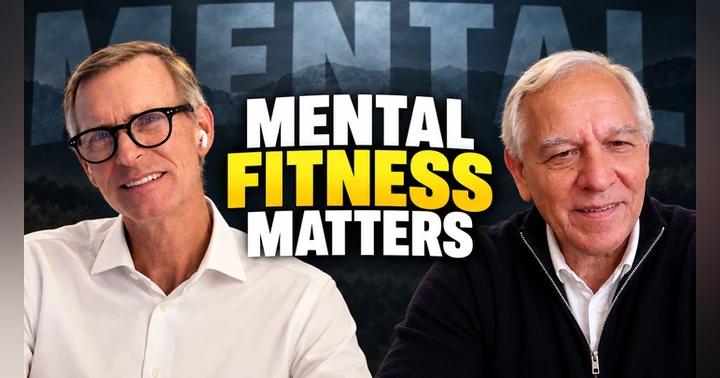
In this episode of Family Office Investing Podcast & Investor Insights | Arthur's Round Table, Arthur Bavelas welcomes back Tim Brown, CEO and co-founder of three family office communities, for a deeply personal conversation about leadership, mental fitness, trust and the importance of genuine human connection.
Tim works with family office principals, next-generation family members and professional managers who carry significant responsibility, often in environments where confidentiality makes it difficult to speak openly about the pressures they face.
He raises a powerful question: You may know 5,000 people, but how many could you call during a difficult moment and know they would answer?
That distinction between having a large network and having meaningful relationships is central to Tim's work.
Through Somos 22, Fortaleza and Firefly, Tim is building communities designed around peer learning, trust, confidentiality and relationships that extend beyond business transactions. He explains why his communities prohibit investment solicitation and why genuine relationships need room to develop without a fundraising agenda.
But the conversation goes much deeper.
Tim shares his own experience with depression, the personal work that followed and the practices that helped him develop what he now calls mental fitness. He discusses gratitude, walking, mindfulness, service, creativity and the importance of intentionally building habits that support a more fulfilling life.
Arthur and Tim explore why professional success does not protect anyone from stress, why leaders need trusted peers outside their immediate organizations, and why the person making the investment decisions deserves as much attention as the assets being managed.
Tim also introduces Catalyst 22, a planned seven-hour, peer-driven roundtable focused on mental fitness within the family office community.
Topics include:
• Why leadership can become increasingly isolating
• The difference between networking and genuine trust
• Mental fitness and the habits that support it
• Why family office principals and executives need peer relationships
• How confidentiality creates space for honest conversations
• The role of mindfulness, movement, gratitude and service
• Why success does not eliminate emotional pressure
• Building family office communities without investment solicitation
• How shared experience can improve perspective and decision-making
About Tim Brown
Tim Brown is the CEO and co-founder of Somos 22, Fortaleza and Firefly, three communities serving family office principals and professional leaders. Through in-person gatherings, smaller trusted groups and virtual peer connections, his work focuses on helping family office participants develop meaningful relationships, share experiences and learn from one another.
Tim is also the author of Jumping Into the Parade, a book inspired by his personal journey toward greater joy, awareness and fulfillment.
#FamilyOffice #MentalFitness #Leadership #FamilyWealth #FamilyOfficeCommunity #MentalWellbeing #PeerSupport #ArthursRoundTable
This episode shares personal experiences and perspectives for educational purposes. It is not mental health treatment or medical advice. Peer support can complement, but does not replace, professional care.
Want to learn more about Family Office Insights? Click Here.
Frequently Asked Questions
Who is Tim Brown?
Tim Brown is the CEO and co-founder of three family office communities—Somos 22, Fortaleza, and Firefly—and the author of Jumping Into the Parade.
Why do Tim Brown's family office communities prohibit investment solicitation?
These communities ban pitching and fundraising to allow genuine peer relationships and trust to develop naturally without underlying business transaction motives.
What is the focus of Catalyst 22?
Catalyst 22 is a planned seven-hour, peer-driven roundtable designed to focus specifically on mental fitness within the family office community.
How does confidentiality impact family office leaders?
Strict confidentiality creates a safe, honest space where leaders can openly discuss the heavy responsibilities and pressures they face without compromising their privacy.
Arthur Andrew Bavelas (00:01.069)
Hello, welcome everybody to another episode of Arthur's Roundtable. Big shout out to everybody who's kindly paying attention, listen in. And we've just started doing these. I think we're 120 episodes in, and I've enjoyed doing them. They've been a lot of fun and lots of friends and great guests on, and returning back for a second time. And we'll see what happens. AMaybe you won't come back for a third. Tim Brown is with us again today and super happy to have you back, Tim.
Tim Brown (00:31.788)
Hey, thanks a lot Arthur. Great to be back. I was I was pretty excited when you invited me back. I you know, you never know.
Arthur Andrew Bavelas (00:39.107)
You don't ever know, do you, right?
Tim Brown (00:45.142)
No, you sure don't. but it's a real pleasure to see I can't believe I was I I was in your hometown and that we didn't have our calendars aligned. That was a bummer.
Arthur Andrew Bavelas (00:56.683)
He I have a good excuse. My daughter got married, so it wasn't happening. I had I I would have loved to be there, but I flew back to the East Coast and to New York and I was the dutiful father and was super happy to do it. Yeah. Yeah, I know I know you are. Yeah. So let's let's just
Tim Brown (01:01.826)
Ha ha ha ha.
Tim Brown (01:18.762)
Absolutely. I was just giving you I was just having five.
Arthur Andrew Bavelas (01:26.413)
give context to the folks here just a little bit about who you are and what you're up to and the convenings that you put together just briefly and then we'll get into to whatever you want to talk about.
Tim Brown (01:42.604)
Yeah, thank you so much. I am my name is Tim Brown. I grew up in Denver, Colorado. And I live in Miami now, which has been really great to be here for for a variety of reasons I love. And I am the the CEO and co-founder of three family office communities. The first is Somos 22. We have just over 3,000 members.
And this year we'll do over 80 in-person events. And as Arthur knows, because we talk and also follow each other, I post a lot of of some of the travels and and sometimes it can be exhausting, maybe, just being on the road so much. But I I sure love what I I do. I had just this unbelievable opportunity to be a guest lecturer at LSU yesterday, but that's a whole different thing. So anyway, I I chair, yeah.
Arthur Andrew Bavelas (02:37.975)
Wow, that's amazing. Yeah. Wow. Tell us about that. Go ahead, tell it. Tell us about that. Yeah. Yeah.
Tim Brown (02:41.345)
I was awesome. you know, really one of the the all-time legends in the family office world, Rip Reeves, who's the chairman now of Institutional Investor and was the CEO of Institutional Investor, and we got to be friends and he said, you know, it'd be sure fun for you to come to my finance class at at Louisiana State University. And
And give it a presentation on Family Office. And I said, Well, you know, I've never been to Baton Rouge. That'd be kind of cool to come up that way. And and it sure was. He took me around campus in this purple 1986 CJ7 that he had painted with yellow stripes. And he's got this big LSU tiger over the spare tire in the back.
Arthur Andrew Bavelas (03:29.997)
Jeep. Yeah. Yeah.
Tim Brown (03:39.08)
And so I I arrived at this purple Jeep to its class, which is just awesome. And then I got to look at this this classroom of sixty-six future leaders of the United States sitting out and us having this conversation about all the different types of family offices and you know, just how many companies around the world are are owned by families. You know, it's really the backbone of the world.
at the end the day and all the opportunities I saw for them in that space. It was so much fun. Their questions I wish when I was twenty one, twenty-two years old that I had had questions as thoughtful as that that class at LSU. They were they were very brilliant.
Arthur Andrew Bavelas (04:26.027)
I was gonna ask you how engaged they were when I was that age, as I'm sure it was the case with you, I was just chasing skirts. I wasn't really interested in what anybody was saying in front of the room, right?
Tim Brown (04:37.761)
Yeah, well I I you know, I think you and I would have gotten along just fine back then. But the everybody here in this class was just incredibly brilliant, bright, engaged, a lot of thoughtful questions about the future and when I would would answer one question, another one would pop up and it just kept kind of building all the momentum and
Arthur Andrew Bavelas (04:42.731)
Mm-hmm.
Tim Brown (05:06.765)
Like I said, it was just a real privilege to be able to stand in front of that room and and a lot of have reached out to me on LinkedIn now, which is also pretty special.
Arthur Andrew Bavelas (05:16.503)
Yeah, it's and maybe it's just because of my advanced age, but kids are so smart these days. Like I sound like an old curmudgeon, right? These days kids are so smart. it it really is incredible how articulate they are and thoughtful and seemingly like but sounds like you experienced it.
Tim Brown (05:42.231)
It sure did. Yep. so it was it was a lot of fun. It was a lot of fun. Thanks for asking.
Arthur Andrew Bavelas (05:48.503)
You bet. Thanks for sharing. So Somos, what else? Tell tell the group. There's a couple other things to talk about, right?
Tim Brown (05:56.642)
Yeah, you know, and then I in addition to what we do at SoMost Twenty Two, which is really a hundred percent focused on how do we go deeper together with colleagues in the family office world, whether that be leading gen principals, next gen principals, or professional managers, you know, the idea is there's a lot of responsibility driven isolation in the family office world because it you get trust wrong.
The downside to that is truly asynchronous. And so you find a lot of folks have, you know, what I would call networks that sometimes could be more familiar, more local, more flat in nature, because you end up getting to know people where your children go to school or your country club or you know, just other organizations that you're a member of or a part of that are local. But that may not be as big of a sample size of of those that are.
principals or or those leading family offices. And so our mission is how do we create peer-to-peer learning experiences without external content where it's all peer-to-peer generated through experiential architecture. And that's SOMOS twenty-two. the other community that I I lead that's connected to SOMOS twenty-two is called Fortaleza, which is Fort Fortaleza in Spanish is Fortress.
And it comes from the reflexive verb for the lacer say to strengthen oneself. And I'm a big believer that we are the, you know, truly the average of our five closest friends, like Jim Rohn quoted and said. And you know, I was talking to a gentleman, and I'll get to the third community. You know, me, I kind of go off on these tangents. I was talking to a gentleman not too long ago, and he said, Well, you know, Tim, I'm not so sure I need to go to family office events that you guys are hosting. And I said, Well, why is that?
And he said, well, you know, I already know 5,000 people. And I said, well, I'm just kind of curious of those 5,000 people, if you're in a high pressure situation where you may be in a little bit of a state of fear and where you need to talk to someone right away, are there five people out of that 5,000 that you can pick up the phone and call right now and you know that they're going to pick up the first time you try to call them? And he said, no. And I said, well, that's the reason why I started four delays is I had that same issue.
Tim Brown (08:19.987)
and so, you know, this is about a smaller group of people that know you so well holistically from the inside out that when you do call, people are engaged and there's an accountability and a loyalty to the people in the community. you know, that it's harder to to to do that when you have thousands. So this is only a group of a hundred and twenty-five and that will grow to be a hundred and twenty-five. That's it's not that number yet. And then
The one I'm like super excited about too is is Firefly, which is this virtual family office community. It's global, and I designed it for those that want to pay it forward in our industry. So it's it's really taken off. Like I think we have 177 families now in the last eight weeks. And it's designed as a place where you can go.
You know, where hey, I'm I'm curious if anybody's invested with this general partner before, or hey, I'm gonna be traveling to this country and I'm interested in X, Y, and Z, or you know, looking for a technology stack and our our family office. We've created these cohorts now of five people that get together for two hours and each person has 20 minutes to present a business issue that the family office is facing, and then you've got a panel.
of everybody that's invested in your cohort. And then the cohort decides if it wants to stay together after those two hours. But we have over a third of our members in Firefly that committed to being in these cohorts. We're in the process of spinning out number 14 right now. We do eight-week update calls that are an hour and a half and we use the meeting room technology and Zoom so that you get to know people and engage again at the qualitative level, the human level as part of this.
and a bunch of other things, but it's you know, we even have a little channel for when you're traveling and you can say, Hey, I'm gonna be in New York or LA or Park City, I wanna meet up with different folks. and and they can say, Hey, great, reach out, let's do that. So it it kind of bolts on to all of the in-person things that we do within Fortaleza at SOMOS twenty-two. But anyway, that's my very long-winded overview.
Arthur Andrew Bavelas (10:37.535)
I think it's super helpful. Thanks for sharing. Did you have to build a tech stack for Firefly or just bolt on household items to make it?
Tim Brown (10:47.501)
Yeah, yeah, really just bolting on household items and just trying to make it super easy for people. And you know, I write messages to the group a couple of times a week and I I just I love it. We really have a great membership of of members. It's it's fun.
Arthur Andrew Bavelas (11:05.375)
And I don't mean to present a complication or something that could go off the rails, but you know, I know few family offices that aren't also in the business of raising money for co-investments and trying to get other investors. Have you been able to and maybe you don't want to thwart that type of activity, but if you were wanting to thwart it, have you been able to
get people to understand that it's not a solicitation platform.
Tim Brown (11:37.378)
We do. Yeah, that's rule number one is that there are no investments or capital raising on Firefly. it's the same way that we do things at Somos twenty two. If somebody wants to do that and they have a relationship that's well enough with somebody, those things are just going to happen organically, but we don't but we don't we don't use the platform for that. We have a very strict rule on that, in addition to Chatham House rules around confidentiality and some other things.
Arthur Andrew Bavelas (11:44.259)
Yeah.
Arthur Andrew Bavelas (11:53.837)
Totally, totally. Yeah.
Arthur Andrew Bavelas (12:04.343)
Yep, super cool. Nicely done. They're working hard.
Tim Brown (12:08.786)
thank you. Yeah, trying.
Arthur Andrew Bavelas (12:10.433)
Yeah. Yeah, all all you have to do is like executing is everything, right?
Tim Brown (12:18.135)
Well, I think just I you know, I'm gonna turn fifty seven in a couple of weeks and you know, I I've been writing about this a little bit lately. I just think, you know, by nature you get older, you get more reflective about things. I think it's maybe that awareness that time is not infinite, that time is finite, and that you know, every day really matters and every day seems to go by faster. And so
Arthur Andrew Bavelas (12:47.031)
Hey, did we
Tim Brown (12:47.847)
If if you believe that we're in our highest and best selves as human beings when we're creating, which I do, you know, C.S. Lewis put that in my head. I didn't come up with that. But I really believe that we are in our highest and best selves when we're creating and I love what I do because I get to create every day. including, by the way, you get to to help create better outcomes in the world by families getting to know each other in a way where they're able to lean forward and go build some things together.
and that has a a real positive ripple effect in the world.
Arthur Andrew Bavelas (13:22.359)
No no doubt. Thanks for sharing that. It's it this this is your program, but me I tell you, I've had people say to me, So, you know, aren't you gonna go into the into the sunset and you know doing what you have done? And I'm going, Why would I why would I stop doing this? It's like way too much fun, first of all, and stuff happens.
And the creative part of it is the joy. Like like w what am I gonna how how much golf can I play, right? Or whatever. Right. Yeah, it's no I I can't even imagine stop doing what I'm doing. or some version of it, of course. So let's let's let's talk about where we I don't know if we ended up mentioning this on the last podcast or we did it post podcast, but let's
Tim Brown (14:08.106)
Absolutely.
Arthur Andrew Bavelas (14:19.107)
talk a little bit about mental health and your views and thoughts on that.
Tim Brown (14:25.931)
Yeah, wow, thank you for that. you know, my my first book jumping into the parade when I I first started writing that book in 2012. It it was kind of interesting as I wrote that book. I'd never been through the process of writing before. And I had a wonderful editor, Debbie. I could not have asked for a better editor than Debbie what she did. but it was it was
Arthur Andrew Bavelas (14:27.715)
Mm-hmm.
Tim Brown (14:55.689)
Really, my story around what I now call mental fitness. It was how do we develop the tools, how do we create the choices that really bring a lot of joy in our life and kind of help us through periods that maybe harder. You know, I went through a some some times where I felt very depressed, as an example. And I learned that
a lot of the habits that I had used that kind of took me down what I would call a little bit of a corkscrew towards that that feeling of depression. Again, I'm I'm speaking from my experience only, not the anyone else's. that there were tools that that as I was practicing them, like praying for other people, you know, I'd go out on w walking meditations and pray for a hundred plus people and come back exhausted.
Or calling one person a day to see how their day was was going, or you know, having a gratitude journal of all of the things that brought me joy, or I had a clicker and and every time there was something that I was grateful for through the course of the day, I would click that and then look at what the number was of all things in my life that I could be grateful for. So, you know, the idea was you get more of what you focus on. And when you focus on, hey, I'm gonna be an owner.
from again, I'm speaking from my perspective because everybody's journey is different. But from mine, I had been running a a fairly entrenched victim operating system, not an owner's operating system at the time. And I was really relearning a lot of the ways that would that would open up my life to much more joy, to much more fulfillment, and and stop giving my power away in in other ways.
And so you know, if I wrote the book today, right? I mean, it came out in October of 2014, it'd be a real different book. But that's where I was at the time. And my goal was to positively impact a million lives with that book. And you know, I think I think I did I got close to that probably by the time I I look back at it. But I think the important thing to this conversation is it's led to
Tim Brown (17:21.255)
many things after that, you know, including an event that we're gonna do in Somos twenty two in early January, which I think is the first of its kind in the family office world where we're gonna do a a seven hour round table focused on mental fitness. and where we really talk, you know, as I mentioned everything we do is peer to peer in Somos twenty two. you know, we're not gonna be there giving
clinical or psychological help, but what we are going to be doing is going deeper together as a group and talking about a lot of things that maybe sometimes can be harder to talk about. And you may feel alone and then you you can't talk about that. And then all of a sudden you get into a group and you start having these conversations and you realize, wow, you know, there's a lot of other people who feel the same way that I do. And I want to lean in and hear more about
their own journey and I wanna share pieces of my journey. and it's that idea of human beings and how I don't mean to sound woo-woo, but it is true. It's how interconnected we really are.
Arthur Andrew Bavelas (18:33.859)
It's it is true. Yeah.
Tim Brown (18:37.055)
You know, it doesn't matter where you are in the world or what religion you are. I I think all parents love their children as an example. and that family is important no matter where you are. And I think people have times all over the world where they're happy and where they're sad. and there's just a we learn a lot through that interconnectedness.
Arthur Andrew Bavelas (18:59.181)
So can we go back to the book for a second, you had I wanna just
And forgive me for my words. While you were spiraling down to depression, you had utilized tools that help you come out of that. And those were the tools that you articulated and just mentioned some of them and mentioned them in the book as well.
Tim Brown (19:27.841)
Yeah, I for me, I I hit my rock bottom at the end of November of two thousand eleven. and I reached out to a coach that I started working with in in Colorado, Stephen McGee, in the beginning. And he really helped me get f focused in those early days. I would go on to also work with other coaches that were different things that they did, including, you know, spiritual related. But
it it really gave me the framework that you know how we hold our story really matters. And you know, a lot of times we're so, you know, at least in my experience, I was so focused on the past and carrying things forward. And you know, the reality is you can't change the past, but you can change how you feel about the past. and it's the same thing with your with
Arthur Andrew Bavelas (20:23.619)
Yeah.
Tim Brown (20:27.093)
you know, the the the thought patterns that we have in our head and you know the way that your brain can get grouped in a certain way of thinking, you have the ability to rewire your brain by being focused and and having different healthy habits about how you think about things and the positive language that you use and the the the people you surround yourself with and the different you know different ways that you stretch yourself to keep l learning and growing and
creating and serving and all of those things really help bring a lot of joy. Creating and serving and loving are all things that I have found my own path that have brought me a lot of clarity and a lot of freedom. A lot of freedom.
Arthur Andrew Bavelas (21:17.013)
Isn't it true what they say, whoever they are, that it's not what happens, it's what you do with what happens, right?
Tim Brown (21:22.422)
Yeah.
Tim Brown (21:28.903)
that's right. You know, you get to that gets back to what we said. I think that life is neutral. You know, it's up to us to decide how we're gonna use every experience. You can use it for your upliftment and your learning and your betterment, or you can use it to hold you back. It doesn't mean that every experience in life is is a painful. There can be some very painful experiences in life, but sometimes all you can do is just try to learn from it, pick yourself back up and keep moving.
You know, there were times where it's interesting, one of my teachers, Laura Love, you know, her her mother and I were having this conversation, and Laura Love's mother said, you know, sometimes you just need to get one foot after the other, just go out and walk. And you know, you just spend an hour walking and just kind of clear your head. And there's just something that happens, I think, by thinking about things with the movement. It's kind of funny, you know, Arthur, though another
Arthur Andrew Bavelas (22:15.159)
Hold on.
Tim Brown (22:28.117)
observation I'll give to you. When you're in a situation where you've got to talk about a difficult subject with another person, I had found that when you're walking with somebody shoulder to shoulder, it's a lot easier to resolve open issues. There's something about not having to necessarily have eyesight to one another, but being physically present.
And also hearing each other's voice, but how do you just kind of work through things a lot better by doing it that way versus sitting stationary?
Arthur Andrew Bavelas (23:04.779)
I could I could see that. I mean, again, this is common knowledge, but you know, if you get up and move, things change, right? Just moving. You know, we walk every day after the gym. I think we've talked about this. you know, even if it's in inside, depending on the weather, but that meditative walking
You know, the two of us, and we don't even have to say anything to each other. It just is the movement, and it's after a workout. So it's sort of like you know, chilling out after ex expending a fair amount of energy. But the whole process of the walk and your brain and no agenda, it's it's meditative, right? It's super cool.
Tim Brown (24:00.853)
It sure is. Yeah. And you know, so it's, you know, back to the topic of mental fitness. There are just like you think about building a muscle, there are things that you can do to help create fitness to it. And just the same way that you have, you know, physical fitness, you can create mental fitness the same way you can create spiritual fitness. Right. But it comes down to different
habits, different practices that you're doing on a regular basis and
Arthur Andrew Bavelas (24:36.545)
It has to be intentional, doesn't it?
Tim Brown (24:39.053)
Totally. Yeah, it doesn't happen by accident. No. No, it doesn't. So I'm excited. You know, as I mentioned, January 7th, we're we're doing this thing called a catalyst 22, which is a round table that'll be seven hours long. And you know, the main idea of it right around mental fitness is we spend a lot of time managing assets and businesses, but how much attention do we give to the person that's making those decisions?
Arthur Andrew Bavelas (24:41.325)
Yeah. Yeah.
Tim Brown (25:09.045)
know, and my belief is that er everybody, doesn't matter who you are, carries something. You know, s and I I think when you're are when you're on the outside looking in at that person, I think it's it's easy to confuse around success, and that success doesn't make someone immune to stress, uncertainty, or difficult seasons in their life.
And you know, I think that's why you you hear that you you hear that statement about it being lonely at the top. And I think when pressure comes on, it does affect how we show up in the world, right? It can influence our patients, our listening, our relationships, it can influence our decisions. And when you're in such an opaque, siloed and private world that we live in in the family office world, you know, the reality is.
We need people we can be honest with and and who are you gonna call when you don't have it all figured out? You know, I mean I think that's the one issue with a professional manager that we're challenged with is that you know you can't go patriarch with everything. It just you can't. and and you're not gonna go to your subordinates with everything and you can't take home to your your your spouse or partner everything.
Arthur Andrew Bavelas (26:26.381)
Yeah.
Tim Brown (26:38.013)
so where do you go? And that's why I think you know that whole thing it could be lonely at the top. And so, you know, I'll I'll just sort of come back to since we were talking about building muscle. I I think that there are small habits. They they they well they seem small, but they're not when you cumulatively add them up, right? And those small habits deserve a lot of attention, right? Rest, movement, time to think.
meaningful connection with other people. You know, you think about places, you know, ge I'm talking about geographically or or even places where, you know, you feel safe and how do you create that space for it? So there's a lot of elements like that.
Arthur Andrew Bavelas (27:23.479)
Yeah, all that is super interesting to talk about. You know, nature never disappoints. You know, just being out in nature just changes the your cell structure. Like something happens, right? and it's it's undeniable. this as you mentioned, the circle of trust, let's just call it that, shrinks as you become a target for those nefarious.
Tim Brown (27:30.583)
Yes.
Arthur Andrew Bavelas (27:51.544)
people that are out there that are always trying to get their slice. And I'm just talking about money for a second. And then isn't it true that once you get to know somebody, even if it's casually, it's no surprise that they have experienced things that are traumatic or uncomfortable. And it's not much different, even though the fact pattern might be
Tim Brown (27:57.463)
Yes.
Arthur Andrew Bavelas (28:20.619)
and what you have. And I'm asking three questions and then isn't it such a rewarding conversation when you you can talk to somebody that can say, I know how you feel
Tim Brown (28:37.729)
Yeah, I I think, you know, the reality is, like you just said, we can learn from one another. and it's that interconnectedness. You know, somebody else's experience many times can help us recognize something in our own lives and our own path. and and I think it also brings out something that I would call pattern recognition. and how
Different decisions that we've made have led us to that point. And we may not see it in the beginning, right? and I don't want to get too deep on this, I could, but just in terms of things that I've learned over the years. No, I mean, you know, it's a it's another thing too, right? I mean, is you're doing the work and you're creating an ascension of awareness, right, as you're doing the work.
Arthur Andrew Bavelas (29:19.469)
Go ahead. Yeah, go ahead. Yeah.
Tim Brown (29:34.689)
You know, you start to see things differently as you as you have more reps in, as you have more perspective, as you have the ability to elevate above. maybe before you thought of things two dimensionally, now you have the ability to to think about things three dimensionally. Does that make sense, right? You you know, yeah.
Arthur Andrew Bavelas (29:54.68)
Totally makes sense. Yeah. In in fact, I would say, and again I I'm more interested in hearing from you. I would say that experience is a good teacher. When you augment that with experience of others, it allows you to see the pattern recognition that you wouldn't otherwise have seen in your prior construct, whatever that was.
Right.
Tim Brown (30:25.749)
That's right. Definitely. Yeah, well well said. Well said.
Arthur Andrew Bavelas (30:30.241)
Yeah.
Arthur Andrew Bavelas (30:35.703)
We just both umed. Go ahead.
Tim Brown (30:38.317)
Yeah.
well well we're we're having a technology at the moment. I'm not sure if it's on your end or on mine, but there's some kind of a lack.
Arthur Andrew Bavelas (30:49.697)
Hey. Yeah, there's a pixelation on your end. Mine thing mine says I'm in good shape. Can you hear me all right or is it breaking up?
Tim Brown (30:59.181)
I I can, I can. Let's just we're just gonna go. I I'm just looking at my speed check here. I'm at six hundred and forty megs. So I'm not sure what the issue might be on my side, but maybe we can just keep keep talking here. I'm gonna turn video on and off. I love this, right? This is so much fun how we're just making it happen on the fly here.
Arthur Andrew Bavelas (31:11.169)
Yeah.
Arthur Andrew Bavelas (31:21.911)
Totally. So mine is not as fast as yours two fifty.
Yeah.
Tim Brown (31:31.437)
Yeah, so I yeah, I don't know. That's well anyway, well that's that's sure fun to to be able to talk through all of these these things with you because I get a lot of joy talking about how we become more mentally fit. and I appreciate all of your your yes.
Arthur Andrew Bavelas (31:47.309)
So t Tim.
Yeah, yeah, no, Tim, the isn't it true that almost to anybody you speak to or their family that there's been some sort of mental health issue, whether it's tagged as mental health or not?
I mean, so everybody's subject to this sort of thing and in their families in some way or another. Have you found that to be the case?
Tim Brown (32:23.159)
I have, but I I I think there's also a stigma attached when people
Arthur Andrew Bavelas (32:28.523)
No doubt. Yeah.
Tim Brown (32:29.261)
Right. And and I that's why I I personally move from I understand why why people say mental health and and but I I really think the proactive way the the I'm gonna be an owner of it is talking about mental fitness and how we lean into it. and you know, I'm gonna be careful with the word embrace it, because I don't mean embrace like
that you like being in that state, but you embrace that you are in that state and that you need to lean in and you need to do the work to get out of it. I read there's this great there's this great audible by a a a gentleman that will is he may still be practicing at at Harvard Medical School.
And it was a huge, huge thing for me. I I must have listened to his book several times. I don't know, twelve, fifteen times. Yeah, and it but and and it's a long, long listen. It's called The Science of Mindfulness by Ronald Siegel.
Arthur Andrew Bavelas (33:36.567)
That's a lot. Yeah.
Tim Brown (33:48.034)
And he was phenomenal. Like I learned so much through his audible book. And I would go for these long walks and you know I'd listen to an hour of it. And it would take me, you know, a a month to get through his whole audible book and then I would start it over again. but it really helped me see things at the time. You know, again, it's not as you're ascending of awareness as you're ascending into
you know, doing the work, just things start to reveal themselves differently. And and that book was a was a big game changer for me and what I learned from it.
Arthur Andrew Bavelas (34:29.409)
Yeah, so isn't it amazing that you can think about something in the abstract and then read a book and then you go, holy cow, that's it. Right? It just brings it right to the surface and people have the ability of articulating things in a way that now it makes sense to you. Robert Siegel, what was the name of the book again?
Tim Brown (34:52.34)
Absolutely.
Tim Brown (34:58.005)
Yeah, it it's the it's an and I think he he the he actually wrote a book too. but I only did the audible version. It's called The Science of Mindfulness.
Tim Brown (35:15.489)
Yeah, but it was it was also like you think about
You know, being busy can keep us from checking in with ourselves, right? So he was part of you know, so he was talking about the mindfulness as I mean he talked about a lot of things, but that was one thing in particular was was that. And, you know, how am I actually doing? And you know, when when you're in a position that a lot of people come to you, you know, being available to everyone can leave little time for yourself.
Arthur Andrew Bavelas (35:27.479)
Totally.
Tim Brown (35:51.214)
Maybe that's just a fact, you know, especially for those that carry a lot of responsibility on their shoulders. and anyway, so it was just he he he he brought a lot of things to bear. I mean, I read a lot of different books and did a lot of different work, but that was one of the ones that really stood out for me. Another one that is phenomenal, phenomenal. It's intense that I have to. I can't believe we're going down this conversation right now.
is an another one called Awareness. Book is called Awareness from a a a gentleman named Anthony DeMello. well he's now a deceased gentleman, but he he it was one it's one of the best books ever written. But it's also one of the
Arthur Andrew Bavelas (36:33.931)
I think I read that I think I read that book.
Tim Brown (36:37.281)
Yeah, it's sobering, let me tell ya.
Arthur Andrew Bavelas (36:38.593)
Yeah. I f I found I think I told you this, but I was on a an unintentional journey about ten years ago where I read Paramahatsu Yogananda's autobiography of a yogi.
Tim Brown (36:57.015)
Wow, that is cool.
Arthur Andrew Bavelas (36:58.519)
And then I that book led me to another book and then led me to another book. And I think this awareness was one of them. And in that year, I read a hundred and thirty books that one led me to another in sort of this, you know, self-discovery period, right? and the
Tim Brown (37:23.116)
Yes.
Arthur Andrew Bavelas (37:28.279)
I think if the the th the to be woo woo about it, the universe was pushing me. Like it just kept on saying, All right, here's the next one, here's the next one, here's the next one was amazing.
Tim Brown (37:42.477)
I I love it. I'm so glad you shared that. What a journey to have that many books that you read in that period of time. That's wow.
Arthur Andrew Bavelas (37:44.183)
Yeah. Yeah.
Arthur Andrew Bavelas (37:49.828)
crazy and one was more enriching than the other. And one of the things what one of the authors that I love is Joseph Campbell. And when you were talking about mental fitness and not necessarily embracing it, what it made me think of one of the things he said was so simple. He said, Life is full of sorrow, embrace it. Right? Which is an oversimplification of
Tim Brown (38:03.372)
Yes.
Arthur Andrew Bavelas (38:20.001)
Yeah, it's gonna happen, so deal with it and deal with it, you know. What well you say, get the tools so you know how to deal with it, right?
Tim Brown (38:28.971)
Absolutely. Absolutely. Well I what a I we oughta do just like a series like I you ought let me interview you, Arthur, about all those books that you read. And I'll do a a ten part series on that.
Arthur Andrew Bavelas (38:42.583)
Well it's Yeah, it was it was wild. And and and of course at the same time I was doing yoga and I went and saw have you ever heard of the hugging saint Ama?
Tim Brown (38:58.945)
No, no I haven't.
Arthur Andrew Bavelas (39:01.163)
So this amazing woman in India that let's assume everything she's doing is for the good. She's done a bunch of orphanages. But her stick is that she travels all over the world and she fills the room, I mean the big amphitheaters with people who just want to come and get a hug from her to feel her energy. Like this is a thing that happens worldwide.
And it doesn't matter whether it's real or not, right? Whatever that hug is like. but one of the magic things about when you go see Ama is you people stay there for three days, and there's all this wonderful Aravetic food, and the monks are paying playing the music all day and all night. It's like this amazing energy. and
Anyway, so th that sort of in that same year I was able to get a hug from Alma and it was just it w it was it wasn't sort of a perfunctory requirement, but again the universe just said, All right, Alma's coming to New York City, why don't you go get a hug? Right? It was wild. Yeah.
Tim Brown (40:20.235)
Yeah. I love that story. That might have talked about making my day. That's awesome.
Arthur Andrew Bavelas (40:25.73)
Yeah.
Yeah, I I would I would say that like I said, independent of anything else, going to see Ama just for the vibe in the room, the energy, is worth it. Like even if you don't there there are people that wait a day in line to just go up and get a hug. But anyway, you don't need to even do that. Just go there is worth it, right?
Tim Brown (40:51.298)
yes, yeah. Super cool.
Arthur Andrew Bavelas (40:55.651)
Yeah. So what's what's going on? I don't mean to be malicious, but mental health has been trending. Like just I can't remember her name, but the the Olympic athlete, female Olympic gymnast, bailed. yeah, and so I mean there's been a a highlighted awareness of
Tim Brown (41:15.847)
yeah. Yep. I know you're referring to.
Arthur Andrew Bavelas (41:26.987)
Not just shut up, sit down, deal with it, but actually do something with it, right? Do something about it. So to speak.
Tim Brown (41:41.848)
Yeah, that is interesting. And you know, you're I think there's probably there's probably a lot of factors with that. you know, the the easy one though, right, is I I just think social media in general has made it a lot, you know, just easier to to get the word out like that. and you know, and also to have different followings for people within those those affinity groups.
Arthur Andrew Bavelas (41:57.806)
Totally. Yeah.
Tim Brown (42:12.232)
yeah, I've I'm sure some of it too is just around I I think
People are thinking about
how who they are holistically, I think much more so than maybe we we were twenty years ago.
Arthur Andrew Bavelas (42:36.471)
I don't think there's any doubt about it. Between eating well, f exercise like physical fitness, all that stuff is I think in in s in some cases, do you think I think it's obvious, but do you think it's you know, everybody was staying at home with COVID, had time to think. Like one of the most valuable things is daydreaming, right? Just like you said, when
people are tugging on you as the boss. There's really not much time for yourself. Like I value my daydreaming time as the most valuable time that I have.
Tim Brown (43:18.901)
I I it definitely you know it's it's interesting. I think the the pandemic where people had to stay home during COVID and you had you know so much loss and isolation to and and all these routines that affected people wildly. And and I think the in some respects, you know, you couldn't just
distract yourself like you had to be present with it. It's kind of interesting, right? I can find when I'm swimming, I swim a lot. If I have something that's really bothering me on my mind, I, you know, you can run but you can't hide. And when you're in the swimming, when you're in a swimming pool swimming, like it's just you and whatever's going through your head from wall to wall as you're swimming in the labs.
Arthur Andrew Bavelas (44:01.942)
Right.
Arthur Andrew Bavelas (44:10.775)
Yeah. I totally that's so cool because that's the way I think about downhill skiing. I used to race motorcycles. And in either one of those cases, and I'm not sure it's as deadly with swimming, but if you're focusing on anything else while you're flying down the mountain or racing a motorcycle, you're screwed. Like
Hyper focused on what's going on in front of you and nothing else matters, right?
Tim Brown (44:43.799)
Yeah, that's right. That that is right. it's interesting too how things like like racing motorcycles or whatever, or I I think scuba diving is the same way. Where you know, so you you lose track of things because your attention is required to be so incredibly focused, right? on things. That's kind of cool. I didn't know you raced motorcycles. You're
Arthur Andrew Bavelas (44:56.717)
Yeah, totally.
Tim Brown (45:13.249)
You're quite the renaissance man, Arthur, th all the stuff you've done.
Arthur Andrew Bavelas (45:15.927)
Well this was quite some time ago, Tim.
Tim Brown (45:20.861)
Ha ha ha ha.
Arthur Andrew Bavelas (45:23.379)
I was s super passionate about it. it's definitely an adrenaline junky thing for sure. Yeah.
Tim Brown (45:34.453)
my gosh. Well well good deal. well here. we're back on video now. That's good. We're yeah. Well yeah, yeah, it's been it's it's been frozen for about ten minutes.
Arthur Andrew Bavelas (45:45.16)
I didn't know we were off. Wow.
Arthur Andrew Bavelas (45:51.446)
I no kidding. Yeah. I wonder if well it's hard to say whose side or the it might be Riverside too because it's a little dicey from time to time. Your your picture's perfect right now, meaning it's not pixelated or anything. Yeah. So what what's the what's the let's talk about the the January event that you're having. What's
Tim Brown (46:05.258)
Awesome.
Arthur Andrew Bavelas (46:17.993)
What what is the type of person that would benefit from being there? And more importantly, who would you want to be there?
Tim Brown (46:28.395)
I I think it's anybody in our industry that are carrying a lot of responsibility for, you know, day-to-day. or frankly, anybody in our industry who are looking for community and who want the ability to to be able to go deeper with people that
That have a lot of perspective about the pressure that they're under where they come from. you know, our industry isn't that well known outside of those who are in it. So I think there's something that makes it more welcoming to a degree, or or you can get trust faster or deeper, maybe just by having those things in common professionally of what you do, since they are so vertically oriented.
like that. but
Arthur Andrew Bavelas (47:25.015)
Yeah. And somewhat sim similar but not the same. Yeah.
Tim Brown (47:31.275)
Yeah, so I I think what we're trying to do is is you know have people really recognize that peer support and professional support each have a place. and that you know the the goal is you leave the round table. It's all been peer-to-peer driven conversations. You begin to recognize your own pattern, your own stories, you get you understand what people are doing. And I just think it gives you
or perspective, right? And you know the the nice thing is you don't have to share everything in your life to have an honest conversation with people around the room. You you you could choose what you want to talk about in that regard. And I think as you feel more comfortable, there may be things that that you feel that you want to share. and that's the beauty.
Like I said, this isn't a this is not I'm not a professional therapist, this isn't a therapy session. This is simply a lot of people getting together and having a conversation within a a a high confidentiality construct about some of these things that we can be challenged with. And there's just not a lot of time that we talk about, you know, that joy also deserves room on your calendar. and not just
every single meeting and
Arthur Andrew Bavelas (49:00.887)
Yeah.
Tim Brown (49:01.357)
That's what do you notice? What comes up?
Arthur Andrew Bavelas (49:04.343)
When people so far that have engaged and said they were coming, they're engaging knowing that this is an opportunity to to discuss these things. And from what you've said so far, they're not only willing but a anxious to do that. I mean, I guess what I'm saying is people are know know what they're getting themselves into.
And they want to do it.
Tim Brown (49:36.938)
I I think so. and it I think what you'll find is this will naturally attract those that are curious, but also naturally attract those who are willing to do the work required to that's why they're seeking something like this. so it's we'll see how it goes. It's the first time that we've ever done something like this and I'm sure we'll learn a lot the first time.
Arthur Andrew Bavelas (49:54.199)
Yeah.
Arthur Andrew Bavelas (50:07.575)
Yeah, so we'll obviously people are gonna hear about it if they listen to this, but maybe we'll make about a point to tell some others that would benefit as well.
Tim Brown (50:17.325)
Yeah, thank you. Thank you.
Arthur Andrew Bavelas (50:19.883)
I want to talk about what also not right now because I have to go to put that on record, but and I'm not asking you to disclose anything because I'm gonna disclose it, is that there's a lot of work, you know, you say you you you've said regularly you have to do the work, and it's absolutely true. It's just like the simple example is if you don't go to the gym consistently, then it's not gonna work, right? So
Tim Brown (50:25.409)
Okay.
Arthur Andrew Bavelas (50:50.179)
we've seen a lot of people experience ayahuasca and plant based medicine, that sort of thing. And I have done a bunch of it, and I think it's e exponentially been more valuable, exponentially valuable to me, and I'm just saying that out loud. I'm just wondering whether you've seen that in some of your conversations with people as something that's not to use a bad word, trending.
Tim Brown (51:18.389)
Yes, I've had a lot of conversations where people have experience shared that. and and generally the feedback I've I've received from them is that they found they found I haven't done that personally, but that they found that it was helpful for them. but I I don't personally have any experience with it.
Arthur Andrew Bavelas (51:43.211)
Yeah, I do. It's been awesome. so one more data point for ya. yeah. So all right, with that high note, Tim, this has been awesome. I really really really appreciate you. And I look forward to talking offline. We should we should do that soon. Yep. Yeah. Yep.
Tim Brown (51:50.146)
Yeah.
Tim Brown (51:57.389)
Thanks Arthur.
Tim Brown (52:08.344)
We'll do that. I agree. All right, Arthur. Talk soon. Yeah. Be well. Bye.
Arthur Andrew Bavelas (52:11.64)
Thanks everybody for joining us. Take care. Bye.