How to Build a Family Knowledge Graph for Intergenerational Wealth Transfer
A family knowledge graph is a specialized artificial intelligence framework that maps, connects, and contextualizes a dynasty's history, decision-making rationales, and operational values. By turning scattered audio recordings, meeting notes, and historical documents into a searchable, living intelligence system, family offices can prevent the generational wealth erosion that typically occurs when institutional memory vanishes.
Key Takeaways
- Traditional family office wealth preservation focuses strictly on financial assets while completely ignoring undocumented institutional knowledge, decision-making rationales, and historical context.
- A family knowledge graph uses artificial intelligence to connect disparate data points like video recordings, meeting minutes, and audio transcripts into an interactive legacy archive.
- When patriarchs or matriarchs experience memory loss or pass away without proper knowledge capture, families routinely suffer costly strategic missteps during asset distribution.
- Implementing modern knowledge intelligence platforms requires rigorous consent, robust data privacy protocols, and secure enterprise architectures tailored to family offices.
- Multi-generational success relies on teaching heirs not just how to manage money, but why original wealth-creators made foundational business and investment decisions.
The Hidden Crisis of Undocumented Family Capital
For decades, family offices have obsessed over balance sheets, portfolio diversification, asset allocation, and tax-efficient trust structures. Yet, the greatest threat to a multi-generational dynasty is rarely a bad market downturn or an aggressive tax policy; it is the silent evaporation of wisdom. When an entrepreneur or family patriarch builds an empire, they carry thousands of unwritten rules, foundational stories, strategic failures, and relationship dynamics in their heads. When retirement, cognitive decline, or sudden passing occurs, that knowledge vanishes instantly.
Traditional estate planning treats wealth as purely numerical. Heirs inherit bank accounts, real estate holdings, private equity stakes, and venture capital portfolios. However, they rarely inherit the context behind those assets. Why did the family enter a specific emerging market in the 1990s? Which philanthropic partnerships matter most to the family's core values? What unwritten governance agreements kept sibling rivalry from destroying the operating business? Without answers to these questions, the next generation often makes costly strategic blunders, liquidates high-performing legacy assets out of ignorance, or falls victim to predatory advisors.
Why Traditional Memoirs and Scrapbooks Fail
Historically, wealthy families attempted to solve this problem by hiring ghostwriters to produce glossy leather-bound family history books or commissioning genealogical charts. While these artifacts look impressive on a shelf, they are fundamentally static. A book printed in 2015 cannot answer a complex governance question that arises during an emergency board meeting in 2026. Furthermore, families are dynamic ecosystems. New businesses are launched, governance rules evolve, regulatory environments shift, and younger generations add their own perspectives. A legacy system must be as living and breathing as the family office itself.
How AI Knowledge Graphs Transform Legacy Preservation
Enter the artificial intelligence knowledge graph. Unlike simple document repositories or cloud folders, a knowledge graph maps relationships between entities—people, places, assets, decisions, and historical events. Modern intelligence platforms designed for elite allocators leverage large language models, audio transcription, and video indexing to transform raw human communication into structured, queryable data.
Imagine a family office archiving decades of annual family assembly recordings, advisory board meeting minutes, and informal video interviews with the founding generation. An AI knowledge graph ingests these heterogeneous inputs, extracts key themes, links individuals to specific historical transactions, and indexes the underlying philosophies of the wealth creators. If a younger family member wants to understand why the family office maintains a strict veto on venture capital investments in a certain sector, they can query the platform and instantly retrieve the exact meeting transcript from 2012 where the patriarch explained the rationale following a major portfolio loss.
Capturing Tacit Knowledge Before It's Too Late
The most valuable knowledge inside a family enterprise is tacit—it is intuitive, unstated, and deeply personal. Tacit knowledge includes the subtle gut feelings an investor has about a long-term business partner, the unwritten boundaries of family trust, and the emotional resonance of philanthropic commitments. Capturing tacit knowledge requires proactive, structured engagement. AI-driven platforms facilitate this by prompting family members with contextual questions during recorded audio or video sessions, making the process feel like an organic conversation rather than an intimidating deposition.
Operationalizing Knowledge Management in the Family Office
Deploying a knowledge graph within a family office requires careful coordination among family members, chief investment officers, general counsels, and private wealth advisors. Because family offices handle hyper-sensitive financial and personal data, security and consent are paramount. Enterprise-grade legacy platforms must utilize zero-retention AI models, localized data storage options, and granular permission controls to ensure that sensitive family disputes or proprietary investment strategies are never exposed.
Advisors play a critical distribution role in this ecosystem. Wealth managers, estate attorneys, and family office executives are uniquely positioned to recognize when a client is at risk of losing institutional memory. By introducing structured legacy intelligence tools, advisors can deepen their relationship with both the current wealth holders and the emerging heirs, positioning themselves as indispensable strategic partners rather than transactional asset managers.
Conclusion
Preserving family wealth across multiple generations requires more than rigorous tax planning and prudent asset allocation; it demands the preservation of the wisdom, values, and intentions that created the capital in the first place. By adopting AI-powered knowledge graphs, family offices can bridge the gap between financial inheritance and generational wisdom, ensuring that future leaders are equipped not just with money, but with meaning.
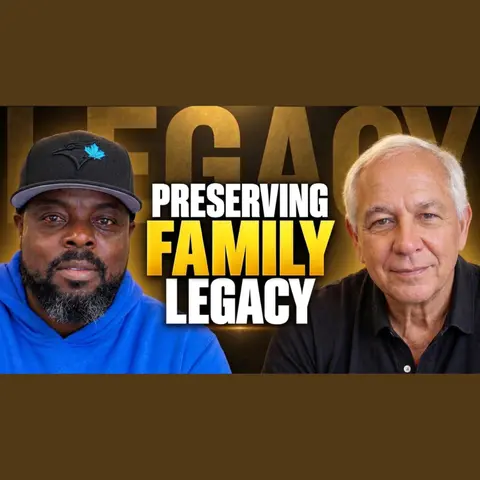
To explore this topic in greater depth, including how innovative platforms are changing the future of family offices, Listen to the full episode of Arthur's Round Table featuring Ayoola Gbade-Bello.
Frequently Asked Questions
What is a family knowledge graph?
A family knowledge graph is an AI-powered system that maps and connects a family's history, decisions, values, and institutional knowledge using unstructured data sources like meeting transcripts, videos, and historical documents.
Why do traditional family offices struggle with knowledge transfer?
Traditional family offices focus almost exclusively on financial assets and legal structures, often ignoring undocumented tacit knowledge, decision-making rationales, and historical context that disappears when older generations age or pass away.
How do family knowledge graphs maintain data privacy?
Enterprise-grade legacy platforms use strict data privacy controls, including zero-retention AI models, private cloud environments, and granular permission settings to ensure sensitive family and financial data remains secure.
How can family advisors assist with legacy preservation?
Trusted advisors such as estate planners, wealth managers, and family office executives can introduce legacy intelligence platforms to clients, helping bridge generational gaps and ensuring seamless continuity of institutional memory.

How to Pitch Family Offices Without Sending Unsolicited Pitch Decks